 0
0
 0
0
You did everything right. You showed up. You stayed. You didn’t run off, didn’t blow the savings, didn’t have to come crawling home with an apology on your lips. And somehow, watching someone else get the party — the grace, the second chance, the warm welcome after they messed everything up — leaves you standing outside, arms crossed, wondering why staying faithful never felt like enough.
If that feeling is familiar, you already know the story of the prodigal son — the younger brother who took his inheritance, wasted it, and came home to a party. But that story has a second half most people skip. And the older brother in it might be the most honest mirror Jesus ever wrote.
The Story Everyone Forgets Has Two Sons
Jesus tells this parable in Luke 15, and most of the attention goes to the younger son — the one who demands his inheritance early, essentially telling his father “I wish you were already dead,” then squanders it all in a distant country. That’s the version everyone remembers. The rebellion, the pig pen, the long walk home.
But Jesus didn’t end the story there. He kept going, because the parable was never really about the younger son alone. It was about two sons, two ways of losing your father, and only one of them looks like sin from the outside.
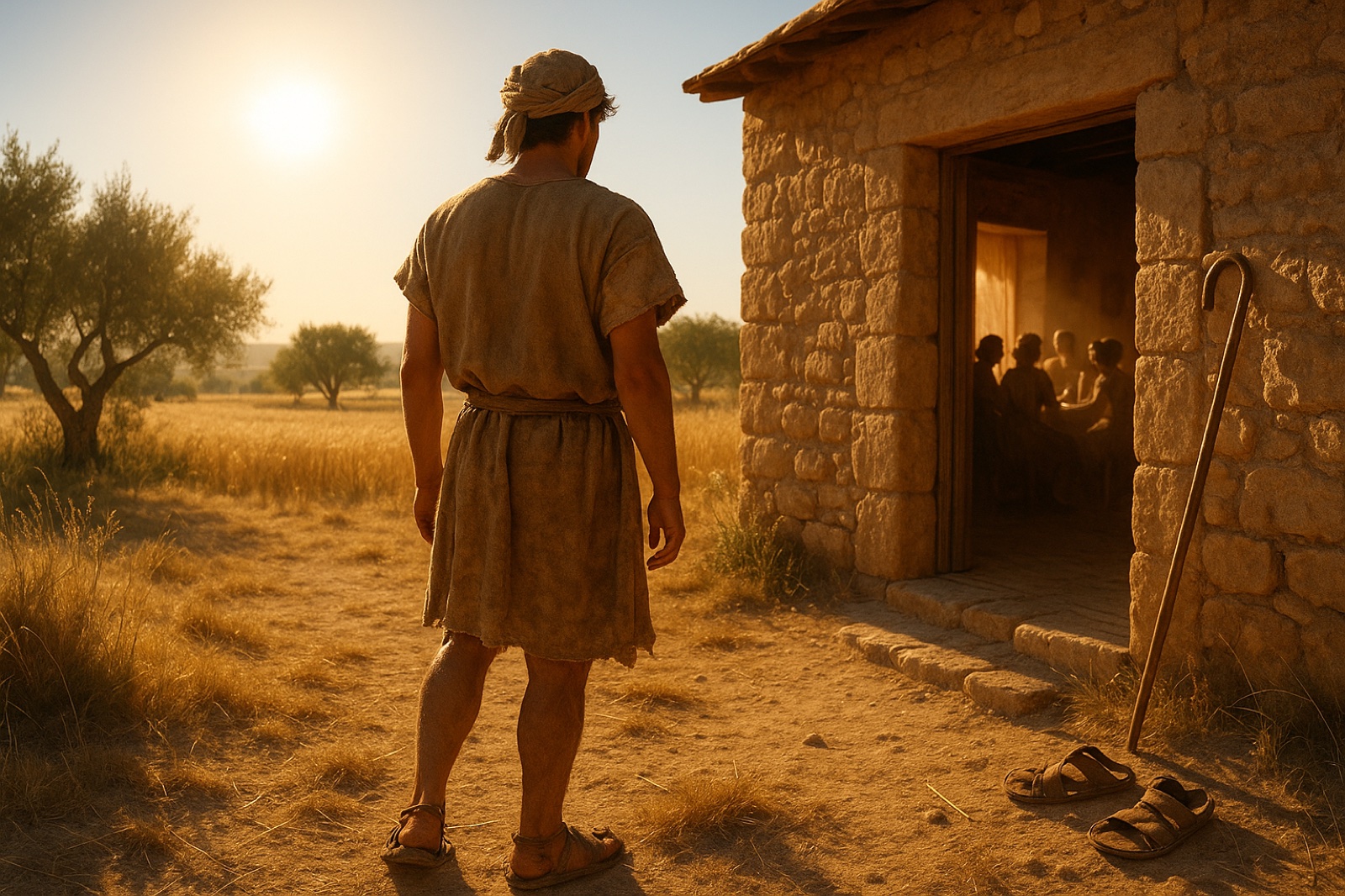
While the younger son is out wasting everything, the older son stays. He works the field. He keeps the rules. He does not ask for anything, does not complain, does not leave. By every visible measure, he is the good one. And Luke tells us exactly where he is when his brother comes home:
“Now his elder son was in the field: and as he came and drew nigh to the house, he heard musick and dancing.” (Luke 15:25, KJV)
He’s not in the house. He’s outside, coming in from work, and the first thing he hears is a party he wasn’t part of planning.
What the Older Brother Actually Said
He asks a servant what’s happening. He’s told his brother is home safe, and their father has killed the fatted calf to celebrate. And this is where the parable stops being a story about someone else and starts being uncomfortably specific:
“And he was angry, and would not go in: therefore came his father out, and intreated him. And he answering said to his father, Lo, these many years do I serve thee, neither transgressed I at any time thy commandment: and yet thou never gavest me a kid, that I might make merry with my friends: But as soon as this thy son was come, which hath devoured thy living with harlots, thou hast killed for him the fatted calf.” (Luke 15:28-30, KJV)
Notice what he doesn’t call his brother. He says “this thy son” — not “my brother.” He’s already cut the relationship in his own mind. And notice the word he uses for himself: “serve.” Not “live with you.” Not “walk with you.” Serve — like an employee listing years of unpaid overtime.
In that culture, the older son’s complaint wasn’t baseless. Under Jewish inheritance law, once the younger son took his portion early and left, everything remaining legally belonged to the older brother already (Deuteronomy 21:17). Every calf, every field, every coin in that house was already his. He wasn’t wrong about the math. He was wrong about what kind of house he thought he was living in.
You Can Stay Home and Still Be Lost
Here’s the line that turns the whole parable inside out. The father doesn’t argue with the math. He doesn’t tell his older son he’s wrong to be upset. He says something far more revealing:
“Son, thou art ever with me, and all that I have is thine. It was meet that we should make merry, and be glad: for this thy brother was dead, and is alive again; and was lost, and is found.” (Luke 15:31-32, KJV)
“Thou art ever with me.” That was true this whole time. The older son had total, unrestricted access to his father — every day, every meal, every conversation — and never once asked for a kid to celebrate with his friends. He didn’t hold back because his father said no. He held back because somewhere along the way, he stopped believing this was the kind of relationship where you could ask.
That’s the Turn most people miss on their first read of this story: the younger son got lost by leaving. The older son got lost by staying — and treating a relationship of pure belonging like a transaction he had to earn. He was standing inside his father’s house his entire life, with the door to everything his father owned wide open, and he never walked through it. Not because it was locked. Because he never believed it was.
That’s a different flavor of lost than the wild-living, far-country kind. It doesn’t look like sin. It looks like duty. It looks like showing up, keeping score, and quietly resenting the people who get grace you decided you had to earn. If you’ve ever done everything “right” and still felt distant from God — not angry at Him, just flat, going through the motions, unable to actually enjoy being His — this is your story too. You don’t have to run away from God to lose the sense that you’re actually close to Him.
You don’t have to leave home to get lost.
What to Actually Do With This Today
- Name one thing you’ve never asked God for because you assumed the answer was no. Not a vague “bless me” prayer — something specific. A kid to make merry with your friends, in your own words. Say it out loud, today, even if it feels strange to ask.
- The next time someone else’s good news comes up today — a promotion, an answered prayer, a fresh start you didn’t get — practice saying “I’m glad for you” out loud before you feel it. Say the words as an act of the will, not a feeling you’re waiting to arrive. The older brother’s real failure wasn’t his anger; it was refusing to walk into the party at all.
- Reread verse 31 with your own name in place of “son.” “[Your name], thou art ever with me, and all that I have is thine.” Sit with that sentence for sixty seconds before you move on with your day.
Comparison culture makes this harder than it needs to be — if scrolling past other people’s wins tends to leave you flat rather than glad, this guide on overcoming comparison and jealousy is worth a slower read. And if you want to sit longer with what it means to actually rejoice with people instead of just tolerating their good news, this piece on choosing gratitude over jealousy picks up right where this leaves off.
A Prayer for When You’ve Stayed but Still Feel Distant
God, I’ve done my best to do this right, and I don’t know why it still feels like I’m standing outside the party. I think I’ve been keeping score without meaning to — counting what I’ve earned instead of just being close to You. I don’t want to be angry at the people You’re being kind to. Help me actually believe I’m already all the way inside Your house, with nothing left to prove. Teach me to walk through the door instead of standing at it. Amen.
Let’s Talk About It
Is it harder to resent someone else’s grace, or to admit you’ve been treating your own relationship with God like a job instead of a home? Say what’s true for you in the comments.
Share This If It Landed
- “The younger son got lost by leaving. The older son got lost by staying and never believing he could ask for anything. Different road, same distance from home.”
- “‘Thou art ever with me, and all that I have is thine.’ The father never said no. The older brother just never asked. #BGodInspired”
- “You don’t have to run away from God to lose the sense that you’re close to Him. Sometimes you just stop believing you’re allowed to ask.”
Questions People Ask About the Older Brother in the Prodigal Son
Who was the older brother in the parable of the prodigal son?
He’s the elder son in Luke 15:11-32, the one who stayed home, worked the family land, and never left or broke his father’s rules — but who grew angry and refused to join the celebration when his younger brother returned.
Why was the older brother angry in the prodigal son story?
He felt he had served faithfully for years without reward, while his brother — who had wasted the family’s money — was celebrated the moment he came home (Luke 15:29-30). His anger was really about feeling his obedience had earned him nothing.
What does the father say to the older brother?
In Luke 15:31-32, the father reminds him, “Son, thou art ever with me, and all that I have is thine,” and explains the celebration was fitting because his brother “was dead, and is alive again; and was lost, and is found.”
What is the lesson of the older brother in the prodigal son?
You can stay close to God in every visible way — never rebelling, never leaving — and still miss out on actually experiencing His love if you relate to Him as a transaction to be earned rather than a relationship you already have.
Does the Bible say what happened to the older brother after the parable ends?
No. Jesus ends the story with the father’s invitation still open and the older brother’s response unresolved — a deliberate choice that leaves the listener, not a character in the text, to decide how the story ends.