 0
0
 0
0
The candle has been on the kitchen counter about three weeks. First it got moved for the mail. Then for the grocery bags. Now it is behind the fruit bowl, and you have not lit it since the second week of the month.
So you went looking for a prayer candle holder. That is a more honest instinct than it looks, because the problem was never the candle. The problem is that the candle does not have a place.
Which Prayer Candle Holder You Need Depends on the Candle
Most guides skip this, and it decides whether you need to buy anything at all.
- A taper — the tall thin one — needs a true candlestick: a socket that grips the base, with a cup wide enough to catch drips.
- A pillar is free-standing, so it needs no socket, just a flat heat-safe tray wider than the candle, because a pillar can slump outward as it burns down.
- A votive or tealight genuinely has to sit inside something. Commercial votives are made to liquefy all the way across, so without a snug glass cup there is nothing holding the wax in. Pick a cup only just wide enough; a too-wide one lets the pool drown the flame. (If what you picture at the words “prayer candle” is a rack of little red cups at the side of a church, that is this tradition, and the Latin behind it is worth knowing.)
- A jar or container candle — what most scripture candles are — already has its holder. The glass is the vessel. It needs no stand, just a surface: a stone tile, a cork or wooden trivet, a ceramic saucer. The base gets hot, and a bare wood table will take the mark.
If your candle is a verse candle in a glass jar, that last line is the whole answer. You are not shopping for a holder. You are shopping for a place to set it. (A tall seven-day glass candle is the same story at a longer scale — here is how those are meant to be used.)
The Safety Rules That Actually Matter
Worth getting right once, then forgetting about. The National Candle Association’s published guidance is short, and most of it turns out to be about placement:
- Trim the wick to ¼ inch before each use. It keeps the flame low and the soot down.
- Use a holder that is sturdy and will not tip, set on a stable, heat-resistant surface.
- Keep candles at least 12 inches from curtains, bedding, books, and anything else that can burn.
- Keep multiple candles at least 3 inches apart so they do not melt each other.
- Burn in a well-ventilated room, and never leave a burning candle unattended.
- Do not burn a candle all the way down. Stop when about ½ inch of wax is left.
Trim it, space it, set it somewhere steady, watch it. Almost every candle rule is a rule about where the thing sits. Choosing the candle works the same way — start from the spot it will live in and the words you need to see there, and see which verse candle fits.
The Bible’s One Line About Candles Is a Line About the Holder
Jesus said this in the Sermon on the Mount:
“Neither do men light a candle, and put it under a bushel, but on a candlestick; and it giveth light unto all that are in the house.” (Matthew 5:15, KJV)
Notice what is missing. Nothing about the wax, the wick, the scent, or the size. The whole sentence is about two possible locations: under something, or up on something. That is the only decision the verse makes.
And here is the detail that is easy to read straight past. The word behind “bushel” is modios, and it appears only three times in the New Testament — here, in Mark 4:21, and in Luke 11:33. It was not a cupboard, and not a basket for hiding things. A modios was a dry measure of roughly a peck, about nine litres: the household bucket you measured out grain with. (An English bushel is about four pecks, so the King James word is generous with the size.)
Which changes the picture. This is not somebody deliberately hiding a lamp. It is a lamp that ended up under the dinner bucket — the light covered by the ordinary business of feeding everybody. That is exactly how your candle ended up behind the fruit bowl. Not rebellion. Groceries.
Pick the Place First, Then Buy the Holder
Reverse the usual order. Decide the spot, then buy whatever that spot needs. It comes down to one question: when do you actually pray? Not when you mean to. When it really happens.
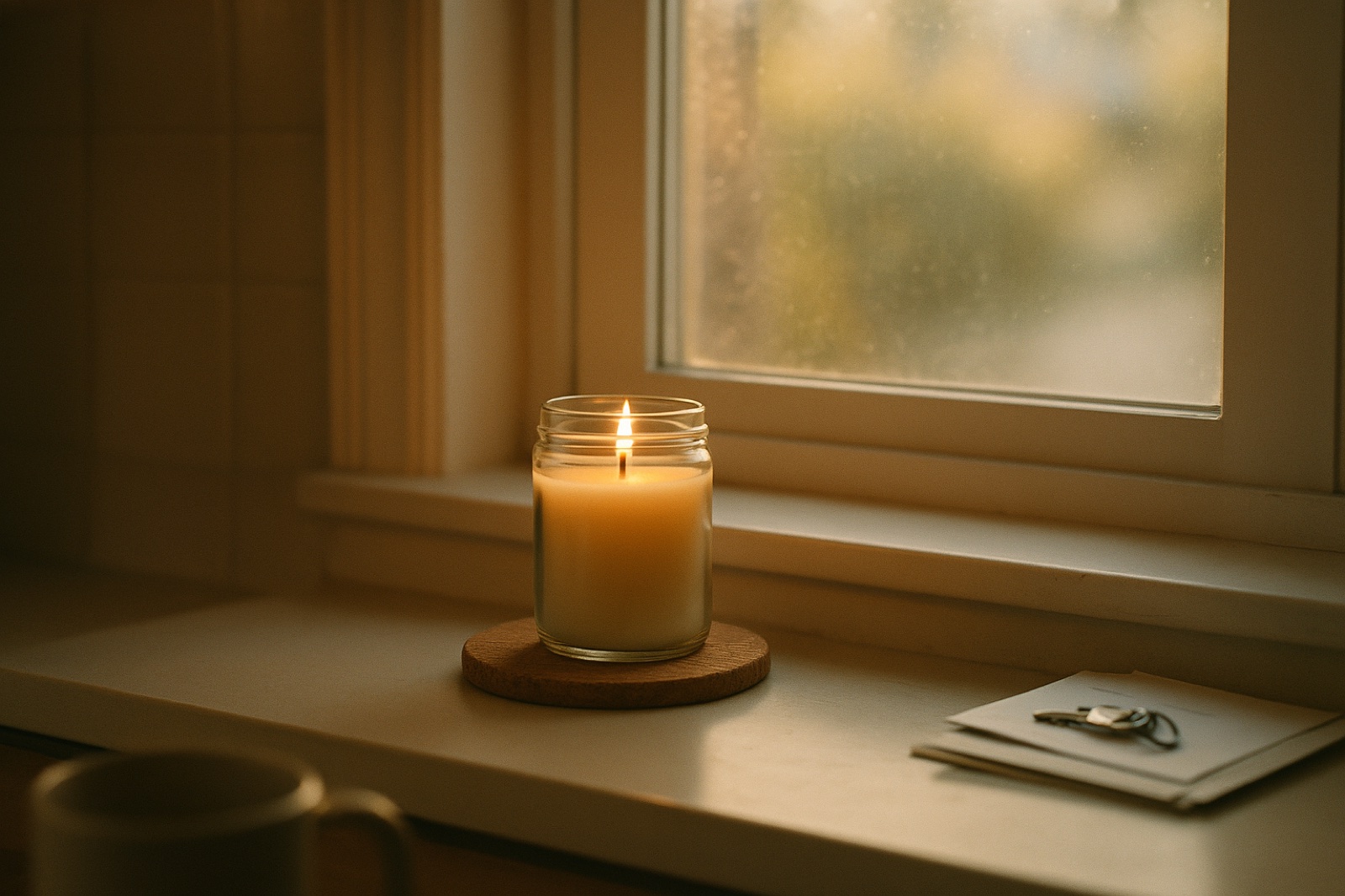
- First thing, before anyone else is up. The kitchen windowsill, or the corner of the table where you drink your coffee. It needs a tile or a trivet, and a patch where nothing else gets set down.
- Last thing, lights off. The nightstand — stable base, a foot of clearance from the bedding, and a firm rule that the candle goes out before you do.
- In the quiet after the house settles. The side table beside the chair you actually sit in. A small coaster, nothing else on the table.
Then protect the spot. A surface that collects keys and mail is a modios waiting to happen. The real job of a holder is to make one patch of your house mean this is where the light goes. A candle you can see from where you make coffee gets lit on ordinary mornings. A candle in a cupboard gets lit at Christmas. Same candle, different shelf.
When the Holder Is Already Built In
That is the quiet advantage of a scripture candle in a glass jar: the holder question is settled, so the only things left to decide are the place and the words. The MyCandlePrayers candles are 9 oz eco-friendly soy candles with a 50–60 hour burn time, in a reusable glass vessel. The glass is the holder. Set it on a trivet by the window and that part is done.
What earns it the spot is what is on the front: a Bible verse in faith-centered artwork, at eye level, in the place you chose. That is the thing a plain candle cannot do. You are not only lighting a flame before sunrise; you are reading one line of scripture before sunrise, every morning, because you put it where you would see it. Each candle also carries a QR code that opens 100+ written prayers sorted by need — strength, healing, peace, gratitude, guidance, protection, with no app or account required. That matters most on the mornings when you sit down, light it, and find you have no words of your own.
And when the wax is gone the glass stays. The jar you bought as a candle ends up being the candlestick. (More on why the glass is the part you keep.) There is no single right verse — choose the one that fits the season you are in, or the one the person you are buying for is in.
A Prayer for the First Time You Light It There
God, I have picked this spot. Let it stay a place where I remember to look up. When the mail piles up and the week gets loud, bring me back here. Keep me honest about how much I need You, and steady when the day runs away from me. Thank You that You are already in this room, before the match is ever struck. In Jesus’ name, amen.
A holder does not do anything, and neither does the flame. A candle is a reminder and an act of prayer, nothing more. All a holder does is keep the reminder where you can see it — which, going by Matthew 5:15, is the entire job.
Questions People Are Asking
Q: What kind of prayer candle holder do I need?
A: It depends on the candle. A taper needs a candlestick with a socket that grips its base. A pillar needs a flat, heat-safe tray wider than the candle. A votive or tealight needs a snug glass cup, because commercial votives liquefy all the way across and the cup is what holds the wax. A jar or container candle needs no holder at all — just a heat-resistant surface under it, like a stone tile or a cork trivet, because the base of the glass gets hot.
Q: Where should I put a prayer candle in my home?
A: Put it where prayer already happens, not where it looks best. Think about when you actually pray — first thing with coffee, last thing before bed, or in the quiet after the house settles — and set the candle in that exact spot, on a heat-safe surface with about a foot of clearance from curtains or bedding. Then keep that patch clear of mail and keys. A candle you can see gets lit; a candle in a cupboard does not.
Q: Does a prayer candle holder have any spiritual power?
A: No, and neither does the flame. In Christian practice a candle is a reminder and an act of prayer, not a mechanism — nothing is triggered or activated by lighting one. The old church words say as much: “votive” comes from the Latin for a vow or promise, and “vigil” means keeping watch. Both describe what the person is doing, not what the wax is doing. God hears prayers with or without a candle in the room.
Q: Which prayer candle should I choose?
A: Choose by the verse rather than the look, and match it to the season you or the person you are gifting is in — strength, hope, peace, courage, trust, protection, or marriage. The MyCandlePrayers line puts a Bible verse on the front of each candle in a reusable glass vessel, with a QR code to 100+ written prayers organised by need, so you can find the candle built for exactly this prayer. Current pricing and shipping details are shown on that page.