 0
0
 0
0
It is four in the afternoon. Something in you goes looking.
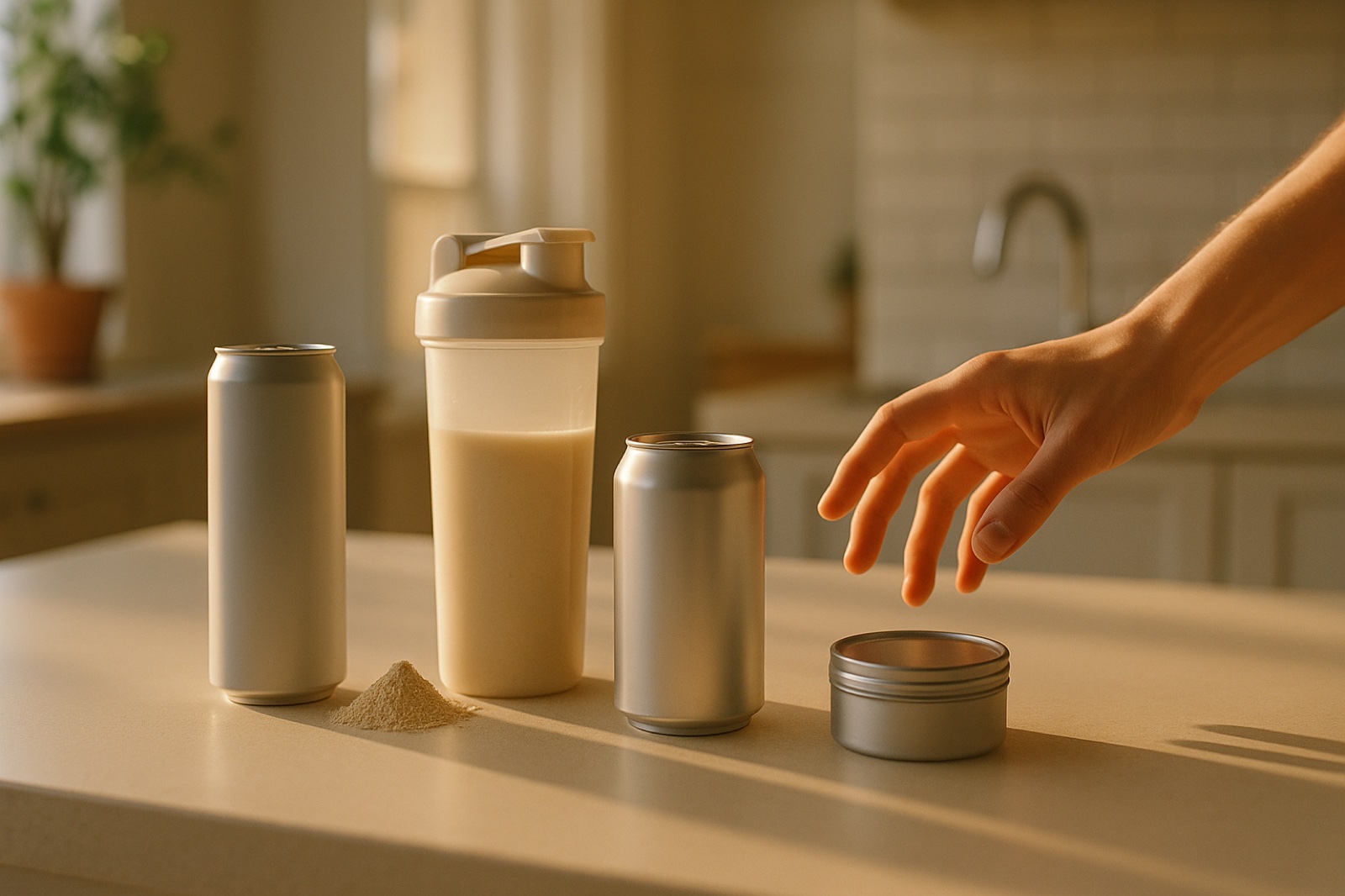
Not for anything dramatic. Just — something. A cold can. A pouch tucked behind the lip. A shake with a big number printed on the side. Something to hold, something to open, something that makes the next two hours feel different from the last two.
Most people never notice that moment. It happens underneath the level of a decision.
It is worth noticing now, though. Because a very large number of people have just changed what they reach for. And almost nobody has stopped to ask whether they changed the reaching.
Young People Are Drinking Less — And That Part Is Real
Start with the good news, because it is genuinely good news.
Gallup’s July 2026 survey of 1,200 US adults found 54% saying they drink alcohol. That ties last year for the lowest reading since Gallup first asked the question in 1939.
And it is not only that fewer people drink. The people who still do are drinking less. Gallup’s respondents who drink reported an average of 3.2 drinks in the past week, down from an average of 3.9 across the five surveys before it.
Younger adults moved fastest. In Gallup’s 2025 reading, 50% of US adults aged 18 to 34 said they drink, down from 59% just two years earlier.
So this is not a mirage. Something real left. If you have swapped a bottle for a sparkling water, or walked away from drinking altogether, that is a genuine good and nobody should complicate it for you. For a person in recovery, the swap is not a lifestyle trend. It is the difference between one kind of life and another.
Hold on to that. The rest of this is not an argument against it.
So What Grew Instead?
Here is where it gets interesting. In roughly the same window that drinking fell, three other things climbed — and all three are things you reach for at a particular hour.
Nicotine pouches. A study network backed by the US Centers for Disease Control and Prevention found use among young people rose to about 3.5% — still a small share of them, but close to four times what it was in 2022. Retail sales of pouches in the United States climbed more than 250% between January 2023 and August 2025.
Energy drinks. Industry sales tracking reported in Beverage Industry’s 2026 category report put US energy drink sales up just over 15% year on year — a category already measured in tens of billions, still growing at double digits.
Protein. Protein supplements and meal replacements grew by double digits over the same year, in both units sold and money spent. Protein is now printed on ice cream, on coffee, on water.
Three different products. Three different aisles. One shape.
Each of them is something small, portable and repeatable that you put in your body to change how the afternoon feels.
That is not an accusation. It is just the shape.
The Part That Is Not Printed on the Label
Now the detail that surprised me, and that almost never makes the trend pieces.
Nicotine pouches are usually explained as an off-ramp. A cleaner way out of cigarettes. The swap that ends the dependence.
The long-running Population Assessment of Tobacco and Health study — run by the US National Institutes of Health and the Food and Drug Administration, following the same individuals since 2013 — looked at whether that is actually happening. Through 2024, fewer than 1% of adult smokers had switched completely from cigarettes to pouches. About 2.2% had moved to using both.
A 2025 review by Cochrane, the group that assesses medical evidence, concluded that the evidence pouches help people quit or cut down is limited. Not disproven. Limited — meaning nobody has yet shown it works the way the promise implies.
Read those two numbers next to each other. The swap that was supposed to be an exit mostly turned out to be an addition.
That is worth sitting with, because it is the clearest evidence we have that a substitution and a release are not the same event. One changes the object. The other changes you. It is possible to do the first for years and call it the second. Something similar shows up in the research on what actually happens in the brain when someone quits drinking — the story is far less tidy than willpower makes it sound.
The Scorecard Changed. The Reaching Did Not.
So why did the drinking fall?
Gallup asked. In 2025, 53% of US adults said drinking in moderation is bad for your health — up from 28% in 2018. Among 18 to 34 year olds, it was around two thirds.
That is the real engine. Not a generation deciding it wanted to be less dependent on things. A generation deciding that this particular thing scores badly on health.
And look at what won. Caffeine that promises focus. Protein that promises strength. A pouch that promises the hit without the smoke. Every single replacement markets itself as the responsible option. Every one of them scores better on the new test.
Which means the test changed, and the reaching did not.
You can watch this same move in almost any part of modern life. The thing gets swapped for a better-rated version of the thing, and the swap gets counted as freedom. A while back a widely covered study tried to name the exact amount of money that would make people happy, and the same pattern was hiding inside it: the number was never the problem, because whatever the number is, the wanting is what is doing the work.
There is a very old line of thinking about this, older than any product category. It shows up in a conversation at a well, in the middle of an ordinary errand on a hot day, where someone points out something obvious and slightly annoying about water: you drink it, and an hour later you are thirsty again. That is not a flaw in the water. That is what the water is for. The trouble only starts when you expect the water to end the thirst permanently, and then blame yourself when it does not.
Some thirsts, the idea goes, are not drink-shaped at all. And people who have spent time with God tend to describe the difference not as wanting less, but as no longer needing the four o’clock fix to hold the afternoon together.
You do not have to buy that. It is just an old observation that happens to fit the data unusually well.
Something Small You Can Actually Try
You do not need money, an app or a spare hour for this one.
For one week, do not change what you reach for. Just notice the moment before.
Write down the hour. Write down what happened in the twenty minutes before it. Tired? Bored? A conversation that went badly? Nothing at all?
Most people find the same window appearing again and again. Same time, same trigger, different product.
That is useful information, and it is free. Once you can see the moment, you have a choice inside it that you did not have while it was invisible.
If the pattern turns out to be a stress pattern rather than a habit pattern, our free How Anxious Am I? assessment takes about two minutes and will tell you more than a week of guessing will.
And then the afternoon is just an afternoon again. You will still reach for things. Everyone does. But you will know what you are reaching for, which is more than most people ever find out.
Questions People Ask About This
Are young people really drinking less?
Yes. Gallup’s July 2026 survey of 1,200 US adults found 54% saying they drink alcohol, tying the lowest reading since Gallup began asking in 1939. In Gallup’s 2025 reading, 50% of US adults aged 18 to 34 said they drink, down from 59% in 2023. Drinkers also reported fewer drinks per week — an average of 3.2, down from 3.9 across the five prior surveys.
Why are young people drinking less?
Health perception is the clearest driver in the survey data. Gallup found that 53% of US adults in 2025 said drinking in moderation is bad for your health, up from 28% in 2018, with roughly two thirds of 18 to 34 year olds holding that view. The shift follows years of updated public health messaging that reversed earlier claims about moderate drinking being protective.
What are people using instead of alcohol?
Three categories grew notably over the same period. Nicotine pouch use among young people rose to about 3.5%, close to four times its 2022 level, with US retail sales up more than 250% between January 2023 and August 2025. US energy drink sales grew just over 15% year on year in 2026 industry tracking. Protein supplements and meal replacements grew by double digits in both units and spending.
Do nicotine pouches help people quit smoking?
The evidence so far does not support that. The Population Assessment of Tobacco and Health study, run by the US National Institutes of Health and Food and Drug Administration, found that through 2024 fewer than 1% of adult smokers had switched completely from cigarettes to pouches, while about 2.2% had moved to using both products. A 2025 Cochrane review concluded the evidence that pouches help people quit or reduce smoking is limited.
Is swapping alcohol for energy drinks or protein drinks healthier?
There is no direct head-to-head research answering that, and the honest answer is that it depends entirely on the person and the amount. Reducing alcohol has well-documented health benefits. Energy drinks carry their own caffeine and sugar load, and high-protein products vary enormously in quality. Swapping one daily habit for another is not the same thing as not having a daily habit — which is a separate question from whether either product is harmful.
A Question Worth Sitting With
Here is the one I keep turning over. If a generation swapped alcohol for caffeine, nicotine and protein and the health numbers genuinely improve — does it matter that the underlying habit stayed the same? Is a better-rated habit a real win, or just a quieter one?
I genuinely do not think there is one right answer here. Tell me where you land in the comments — I read them.
If Any of This Sounded Familiar
Share it with someone who has been doing the four o’clock reach:
Everyone congratulated us for drinking less. Nobody checked what we started reaching for instead. Turns out the scorecard changed and the reaching didn’t. https://bgodinspired.com/index.php/personal-growth-and-life-skills/why-young-people-are-drinking-less/
Nicotine pouches were sold as the way out of cigarettes. The long-running US government study found fewer than 1% of smokers actually switched over completely — about 2.2% just added them. A substitution and a release are not the same event. https://bgodinspired.com/index.php/personal-growth-and-life-skills/why-young-people-are-drinking-less/
I did the thing where you write down the hour you reach for something for a week. Same window every single day. I had no idea. Really uncomfortable and really useful. https://bgodinspired.com/index.php/personal-growth-and-life-skills/why-young-people-are-drinking-less/