 0
0
 0
0
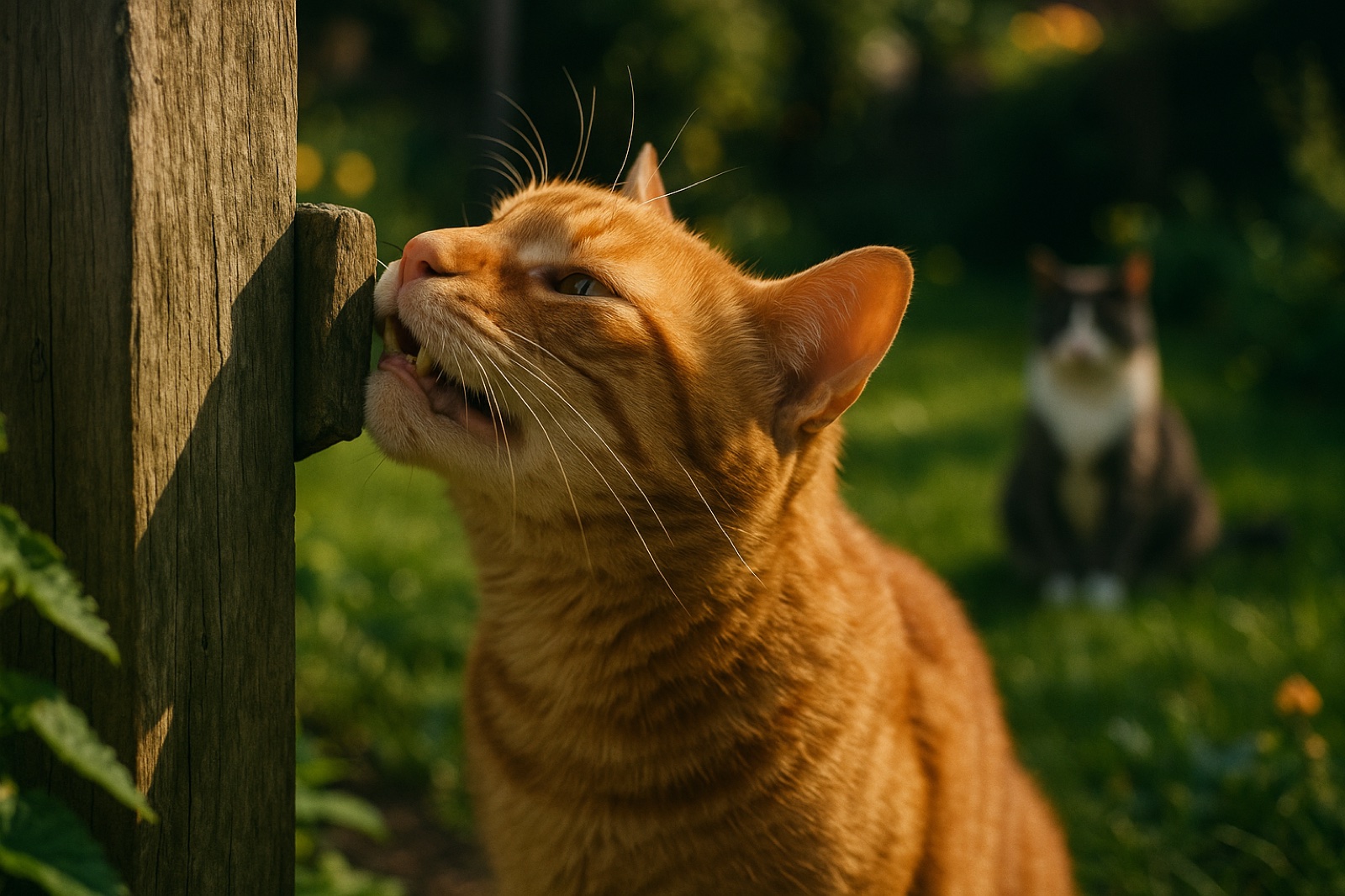
Put a cat in a room where another cat has been, and it will sniff one spot for a long time. Then it may do something odd. It lifts its head, opens its mouth a little, and curls back its upper lip. It looks like a grimace. It is not. The cat is reading a message.
For a long time, nobody knew exactly what that message said, or how it could stay readable for so long. Now a team of scientists thinks it has found the answer to how cats recognize each other by scent. It is a chemical name tag, made of 13 unusual fats, and it barely fades.
How Cats Recognize Each Other: The Chemical Name Tag
The study was led by Professor Masao Miyazaki at Iwate University in Japan, working with researchers in Germany and Spain. It was published in the journal Current Biology in 2026.
The team started with a simple question. Cats clearly tell each other apart by the smell of their urine. But most smells do not last. They drift away, break down, and change as the hours pass. So how can a cat sniff a spot and still know who left it?
The answer seems to be a set of 13 molecules called branched-chain fatty acids. Every cat’s urine had them. But the mix was different from cat to cat, like a recipe with the same ingredients in different amounts. And inside the same cat, the recipe stayed about the same.
There was a second thing that mattered just as much. These 13 molecules are slow to evaporate. Many other smells in urine change quickly once they land on something. These hang on. That is what makes them useful as a signature. A name tag is no good if it rubs off in an hour.
One more surprise: when the researchers searched the scientific record, they found no earlier reports of these same fatty acids in the waste or scent of any other mammal.
How Scientists Asked Cats “Who Is This?”
You cannot hand a cat a survey. So the team watched what cats did.
When a cat smells the same urine again and again, it gets bored. It spends less and less time sniffing. But when the researchers swapped in urine from a different cat, the interest came back. That tells you the cat noticed: this is someone new.
The cats also made that lip-curling face more often for urine from cats they did not know. That face has a name. It is called the flehmen response. It helps push scent toward a special smell organ in the roof of the mouth.
The researchers used that face as a clue. “After confirming that cats can distinguish individual urine odors, we used the flehmen response as a clue to identify urinary molecules that may contribute to individual scent recognition,” the team explained. In other words, the cats pointed the scientists to the molecules.
Then came a careful test. The researchers held the other fats in the urine steady and changed only the mix of these 13 molecules. The cats could still tell the difference.
And the memory lasts. According to the study, cats still seemed to recognize a particular cat’s scent even after gaps lasting months.
A Century-Old Mystery Inside Cat Kidneys
This is the part of the story that was hiding in plain sight.
For more than a hundred years, scientists have known that cat kidneys are packed with tiny droplets of fat. Far more than you would expect. Nobody could say for sure why they were there.
This study offers a possible reason. The droplets may act like a storage cupboard for those same branched-chain fatty acids. The kidney holds them, and the urine carries them out.
“Lipid droplets in the cat kidney have been known for more than a century, but why cats have so many of them has remained a mystery,” the researchers said. “Our findings suggest that one of their functions may be to support a stable chemical signature in urine.”
Notice the careful words: one of their functions, and may. The team does not yet know exactly how the fats get from the kidney into the urine. That is still an open question.
Do Lions and Tigers Have a Scent ID Too?
Maybe. The researchers found related compounds, and the same kind of kidney fat droplets, in several wild cats. The list includes lions, tigers, leopards, jaguars, lynxes, the Iriomote cat, and the Tsushima leopard cat.
But here the scientists are honest about the limit. They have not shown that wild cats actually use these molecules to recognize each other. Having the name tag is not the same as proving that anyone reads it. That is a question for future work.
Still, it is a striking picture. From the cat asleep on a sofa to a tiger in a forest, the same family of animals may carry a signature built right into the body. You can see a similar kind of quiet surprise in the new penguin species that stood unnoticed in plain sight for years before scientists realized what they were looking at.
Why a Scent That Doesn’t Fade Matters
Think about what this means for a cat. A cat walks its patch of ground. It finds a mark. Even if that mark was left a while ago, it can tell who was there. A friend. A stranger. A cat it has not met in months, but still remembers.
That is not a small thing. It means a cat’s world is full of names. Not sounds, like ours. Smells. And the names stay put long enough to be read.
Animals keep surprising us this way. They seem to carry more recognition, and sometimes more feeling, than we give them credit for. A while ago, researchers filmed a humpback whale staying beside her stillborn calf for hours, which raised the question of whether animals grieve. Recognition and memory seem to run deep in the living world.
And maybe that is why this story lands the way it does. Most of us know the fear of fading. Of being forgotten when we move away. Of being known only for what we do, and replaced when we stop doing it. Of walking back into a place after a long time and finding that nobody remembers our name.
There is a very old belief, older than any lab, that each person is known like that cat’s scent is known. Not by a job title or a follower count, but as this one, and no other. Made on purpose, known by name by the God who made them, and not forgotten when they have been away a long time. People have held onto that idea for thousands of years, especially in seasons when they felt like they didn’t belong anywhere.
A cat does not need to earn its signature. It does not have to keep it up. It is simply there, part of how the cat was made.
So the next time you see a cat sniff a spot and make that funny, open-mouthed face, you will know what is happening. It is not disgust. It is recognition. Somewhere in a few drops of fat, stored in a kidney and carried out into the world, is a name that has not worn off.
Discussion Question
Which do you think matters more to feeling at home somewhere: being recognized, or being remembered after you have been away? Tell us in the comments. We read every one.
Share This
“Cats recognize each other by a scent ID made of 13 rare fats that barely fade. Their kidneys have held a mystery for 100 years, and this may be the answer. https://bgodinspired.com/index.php/nature-and-creation/how-cats-recognize-each-other-scent-id/”
“That weird open-mouthed face your cat makes after sniffing something? It’s reading a name tag. Scientists just figured out what the name tag is made of, and it lasts for months: https://bgodinspired.com/index.php/nature-and-creation/how-cats-recognize-each-other-scent-id/”
“Didn’t expect a cat study to make me think about what it means to be known and not forgotten. Worth the read.”
Questions and Answers (Q&A)
How do cats recognize each other?
Cats recognize each other largely by scent, especially the scent of urine. A 2026 study in Current Biology, led by Professor Masao Miyazaki at Iwate University in Japan, found that cat urine contains 13 branched-chain fatty acids whose mix differs from cat to cat but stays fairly constant within one cat. Because these molecules evaporate slowly, they act like a lasting chemical name tag.
Why do cats make a funny open-mouthed face after sniffing something?
That lip-curling, open-mouthed face is called the flehmen response. It helps move scent toward a special smell organ in the roof of a cat’s mouth. In the 2026 Iwate University study, cats showed the flehmen response more often when sniffing urine from unfamiliar cats, and researchers used that behavior as a clue to find the molecules involved in recognizing individuals.
Why do cat kidneys have so much fat in them?
Scientists have known for more than a century that cat kidneys contain unusually many tiny fat droplets, but the reason was unclear. A 2026 study in Current Biology suggests that one function of these droplets may be storing branched-chain fatty acids that give each cat’s urine a stable chemical signature. Exactly how those fats move from the kidney into the urine is still unknown.
Can cats remember another cat’s scent for a long time?
Research suggests they can. In a 2026 study led by Iwate University in Japan, cats appeared to recognize a particular cat’s urine scent even after gaps lasting months. The scent itself also lasts: the 13 branched-chain fatty acids that make up each cat’s signature evaporate more slowly than many other urine odors.
Do lions and tigers recognize each other by scent the same way?
Possibly, but it has not been proven. A 2026 study found related compounds and similar kidney fat droplets in lions, tigers, leopards, jaguars, lynxes, the Iriomote cat and the Tsushima leopard cat. However, the researchers state that whether these wild cats actually use the compounds to recognize specific individuals has not yet been demonstrated.
Source: Ichizawa, Miyazaki and colleagues, Current Biology (2026), DOI 10.1016/j.cub.2026.07.045, as reported by ScienceDaily.