 0
0
 0
0
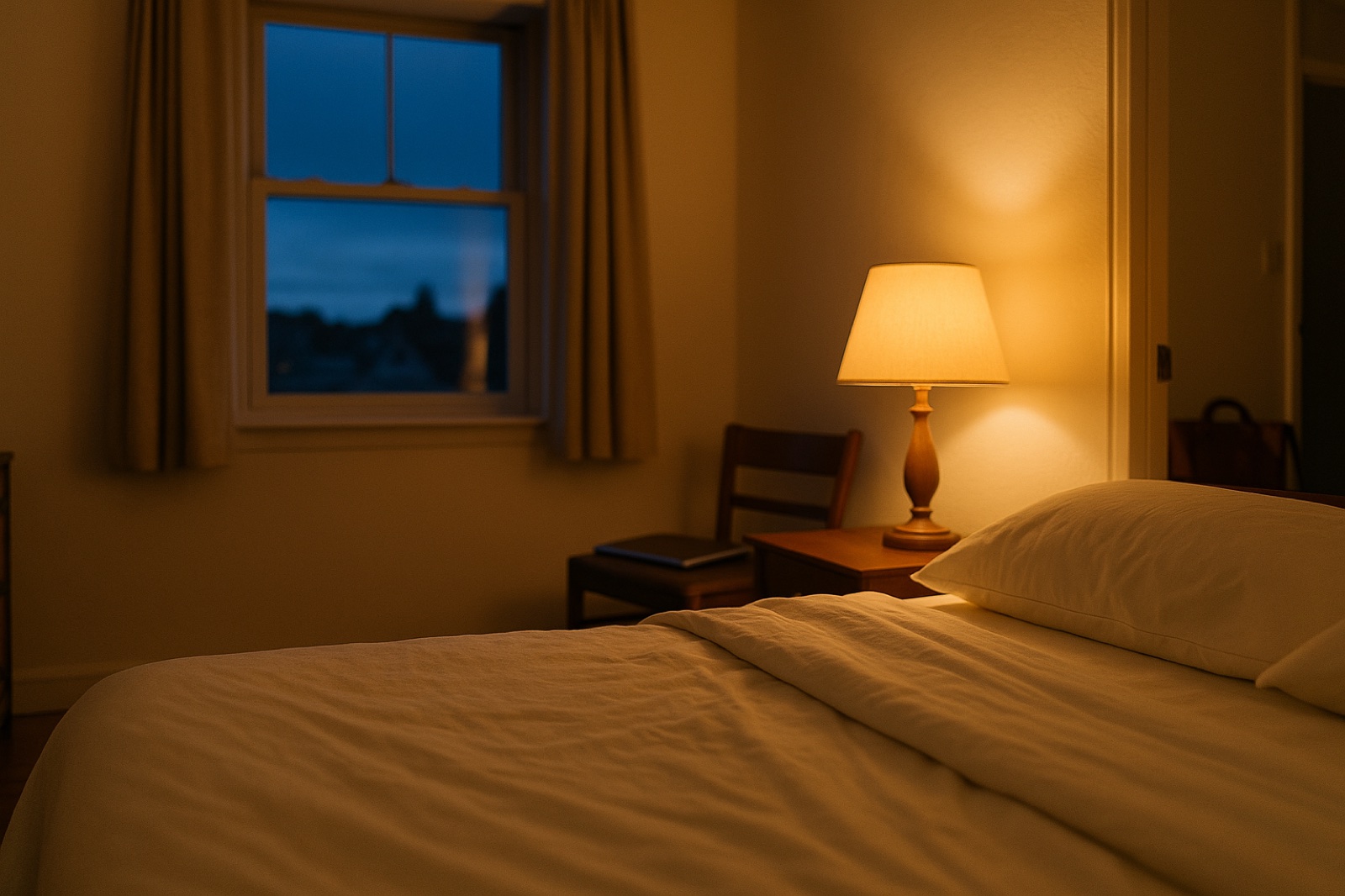
The light changes first. Late on a Sunday afternoon the sun sits a little lower than it did an hour ago, and something in your chest notices before your brain does. You are still off. Nothing has happened. Nobody has asked you for anything yet. And there it is anyway — that low, familiar weight.
Here is the strange part about Sunday night anxiety, and it is the part almost nobody says out loud: it is usually worse than Monday. By mid-morning the next day you are in it, moving, answering things, and the dread that sat on your chest the night before has mostly gone quiet. The hardest part of the week happens before the week does.
That is not a character flaw, and it is not you being dramatic. There is a fairly specific reason your body does this.
What Sunday Night Anxiety Is Actually Made Of
Your body has a standard way of getting you ready for a day. Shortly after you wake up, a stress hormone called cortisol rises sharply. It is not a malfunction. It is the switch that gets you upright and moving, and everybody has it.
What is interesting is that the size of that rise is not the same every morning.
In a large study of British civil servants, researchers measured that morning cortisol rise on working days and again on weekend days, and found it was clearly bigger on work days than on rest days. Same people. Same beds. Same bodies. Different mornings.
So your body is not simply reacting to a hard day. It is preparing for one. And it starts preparing before the day arrives.
The Detail That Changes the Whole Picture
If that were the whole story, everyone with a job would carry the same Sunday weight. They do not — and the reason why is where this gets genuinely useful.
A separate group of researchers looked at who actually shows that weekday spike, and found that it tracked the worrying, not the workload alone. People who reported high, ongoing overload and who described themselves as chronic worriers had the steeper weekday rise. People who did not report that pattern showed much less of a gap between their weekdays and their weekends.
A smaller exploratory study pushed on the same idea and pointed the same way: cortisol was higher on Monday morning than on Sunday morning, and the effect showed up most in people who had demanding jobs and reported a lot of anticipation of the week ahead. It was a small study and worth holding lightly. But it lines up with the bigger ones, and all of them are saying a version of the same sentence.
The thing your body is responding to on Sunday evening is not Monday. Monday is not there yet. It is responding to your rehearsal of Monday.
That is why the feeling is heavier at nine on Sunday night than at nine on Monday morning. On Monday you are dealing with one hour at a time, and hours are manageable. On Sunday night you are dealing with all of them at once, in advance, in the dark, with no ability to actually do anything about any of them. You have taken delivery of the entire week while holding none of the tools for it. It is a very close cousin of the feeling that shows up when everything feels like too much — the weight is real, but the date stamped on it is wrong.
It Was Never About Sunday
Here is the detail that settles it, and it is a little bit funny once you see it.
The dread is not attached to Sunday. It is attached to the last free night before the work starts, whichever night that happens to be.
In Saudi Arabia, Qatar, Bangladesh and a number of other countries, the weekend falls on Friday and Saturday, and the working week opens on Sunday. The heavy night there is Saturday night. In the Maldives the working week runs Sunday to Thursday, so it lands on Saturday evening as well. In Brunei, Friday and Sunday are both days off, which splits the week in two and hands people a second one.
And then there is the cleanest example of all. On 1 January 2022, the United Arab Emirates changed its official weekend from Friday–Saturday to Saturday–Sunday. Overnight, an entire country’s “eve of the working week” moved from one night to a different one. Nothing about the feeling changed. Only the night carrying it did.
Which tells you something worth keeping: the weight is not coming from the day of the week, or from the season, or from your particular job. It is coming from a shape — rest that runs out, followed by work that begins. You feel it on whichever night that seam happens to fall.
And that is worth pausing on, because it means the problem is not that you have a bad attitude about Mondays. It is that of the two things in the pattern, rest has been placed in the position of the thing that ends.
Rest Was Not Always the Thing at the End
Most of us hold a picture of the day that looks like a straight line: you wake up, you spend yourself, and then — if you have earned it, if you got through the list — you rest. Rest is the reward at the far end. Which is exactly why Sunday night feels like standing at the edge of a cliff. You are watching your supply run out.
But there is a much older way of counting a day, and it runs the other direction.
In it, a new day does not begin when you wake up. It begins at sundown. Evening first, then morning. Which means the very first thing you do in a brand-new day is sleep through a large part of it. You do not finish the day by resting. You start there. By the time your eyes open, the day is already hours old, and you had absolutely nothing to do with those hours — they were simply given to you, already underway, already counted, before you contributed a single thing to them.
In that arrangement, work is not the price of rest. Rest is the place you are sent out from. And the people who kept that calendar were not being poetic about it. They believed the day was something God had already started without them, and that turning up rested was not a reward for finishing well — it was the ordinary condition of being alive in a day you did not have to build.
It is a small reversal. It changes almost nothing about your Monday. It changes quite a lot about your Sunday.
Three Things That Actually Help on a Sunday Night
None of these cost anything, and none of them require a spare hour you do not have.
- Write the week down, badly. Not a plan — a list. The dread runs on things that are unnamed and therefore unlimited. Four scrawled lines on the back of an envelope will usually shrink an entire week down to something with edges. Most people find the list is shorter than the feeling was.
- Name the actual hour. Almost all Sunday-night weight belongs to one specific moment in the coming week — a conversation, an inbox, a number, a person. Find it and say it out loud. The rest of the week is usually innocent, and it has been getting blamed.
- Move the start of your day to the night before. Not by doing more, but by treating the evening as the beginning of Monday instead of the end of Sunday. Lay something out. Go to bed at a time you chose rather than a time you collapsed into. It sounds cosmetic; it is not. It quietly reorders which side of the line rest sits on.
If you genuinely cannot tell whether what you are carrying is a normal Sunday or something that has quietly become bigger than that, our free How Anxious Am I? assessment takes about two minutes and will give you a straighter answer than guessing at eleven o’clock at night will.
One more, if the nights are the hardest part: it is worth knowing that sleep needs are a range rather than a single magic figure, and the gap between what people actually need and what they think they need is often the quiet thing making Sunday worse than it has to be.
Where This Leaves You
Next Sunday the light will drop again around the same time, and you will probably feel the same tug. That is fine. It is a body doing exactly what bodies do — leaning forward into something that has not arrived.
But it might help to know what you are standing at. Not the end of your rest, with the week waiting to take it away from you. The beginning of a day that started without you, in the dark, hours ago, and is already partly spent — and none of that part was work.
The week begins tonight, while you are asleep. That is not a threat. That is the good news in it.
Common Questions About Sunday Night Anxiety
Why does Sunday night anxiety feel worse than Monday morning?
Because on Sunday night you are anticipating the entire week at once with no ability to act on any of it, while on Monday you are handling one hour at a time. Research on the morning cortisol rise found it is larger on work days than rest days, and larger still in people who describe themselves as chronic worriers — which suggests the body is responding to the rehearsal of the week rather than to the week itself. Anticipation, not the workload, is doing most of the work.
Is Sunday night anxiety normal?
Yes. It is extremely common among people who work a standard week, and it has a measurable physical basis: studies of the cortisol awakening response consistently find a difference between working days and rest days in the same people. It is not evidence of a disorder or a bad attitude toward your job. If the feeling persists through the week, does not lift once work starts, or interferes with sleep for long stretches, that is worth raising with a doctor.
What is Sunday night anxiety called?
It is most often called the “Sunday scaries” in everyday speech. It has no formal clinical name of its own — it is generally described as a form of anticipatory anxiety, meaning distress produced by an expected event rather than a present one. That distinction matters, because anticipatory anxiety usually peaks before the event and eases once the event actually begins.
Do people in other countries get Sunday night anxiety?
They get the same feeling, but not always on Sunday. The dread attaches to the final rest night before the working week, whichever night that is. In countries with a Friday–Saturday weekend, such as Saudi Arabia, Qatar and Bangladesh, the working week opens on Sunday, so the heavy night is Saturday. The United Arab Emirates moved its official weekend to Saturday–Sunday on 1 January 2022, which shifted the country’s “eve of the week” from one night to another.
How do you stop Sunday night anxiety?
The most effective free steps are to write the coming week down as a rough list so it stops being unlimited, identify the one specific hour or conversation that is generating most of the weight instead of blaming the whole week, and treat Sunday evening as the start of Monday rather than the end of the weekend — choosing a bedtime and setting out what tomorrow needs. The goal is not to feel nothing on a Sunday night. It is to stop carrying five days at once on a night when you can act on none of them.
Your Turn
Which do you think does more damage over a lifetime — the work itself, or the hours we spend bracing for it before it starts? People are surprisingly divided on this one, and the arguments on both sides are good. Leave a comment and tell us where you land.
If This Was Useful, Pass It On
- The “Sunday scaries” isn’t about Sunday. Where the weekend is Friday–Saturday, it lands on Saturday night. The UAE moved its weekend in 2022 and the feeling moved with it. It’s the seam, not the day. https://bgodinspired.com/index.php/health-and-wellness/sunday-night-anxiety/
- The thing that finally made Sunday nights make sense to me: your body isn’t reacting to Monday. Monday isn’t there yet. It’s reacting to your rehearsal of Monday — which is why 9pm Sunday is heavier than 9am Monday every single time. https://bgodinspired.com/index.php/health-and-wellness/sunday-night-anxiety/
- Read something today that rearranged my week: there’s an old way of counting days where the day starts at sundown, so you sleep through the first part of it. Rest isn’t what you earn at the end. It’s where the day starts. Sunday night hits differently now. https://bgodinspired.com/index.php/health-and-wellness/sunday-night-anxiety/