 0
0
 0
0
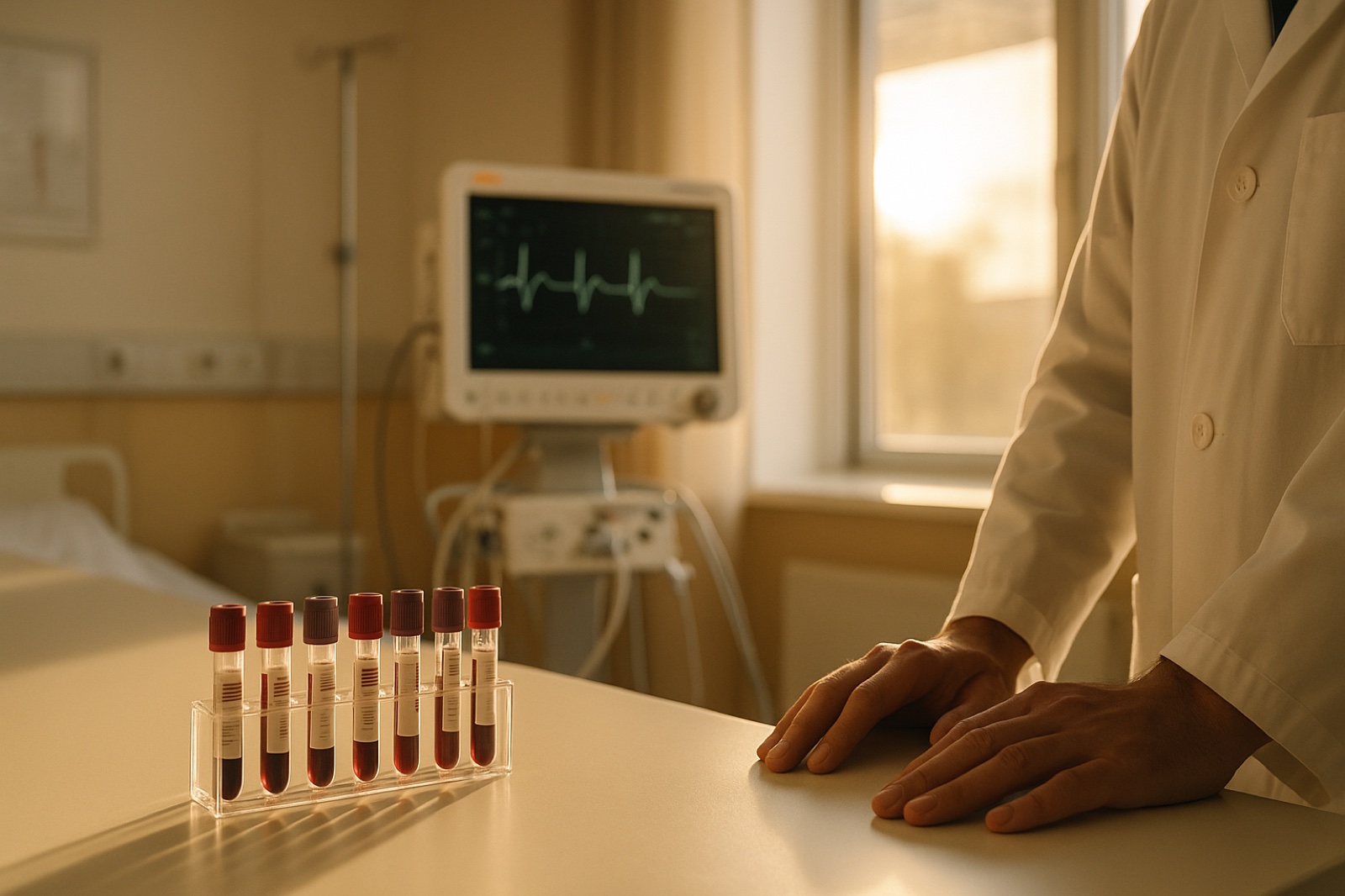
The chest pain is real. The ambulance is real. The trace on the machine is abnormal, and the blood tests show the markers that mean heart muscle has been damaged.
Everything says heart attack.
Then the catheter goes in, the dye runs through, and the arteries are clean. No blockage. Nothing to open.
That is broken heart syndrome, and for roughly two in every hundred people who arrive looking like a heart attack, it is what actually happened. The heart really was hurt. It just was not the plumbing.
What Broken Heart Syndrome Actually Is
The formal name is takotsubo syndrome. The word is Japanese, and it is not a medical term at all. A takotsubo is an octopus trap — a round pot with a narrow neck. During an attack, the main pumping chamber of the heart balloons out into almost exactly that shape.
It is more common than most people think. It accounts for about 2% of everyone who arrives at hospital with a suspected heart attack, and for as many as one in ten women who arrive with acute coronary syndrome. It affects women after menopause more than any other group.
The trigger is stress — sometimes emotional, sometimes physical. Hence the nickname.
And here is the problem doctors have had with it for thirty-odd years: on paper, it is almost impossible to tell apart from the real thing. Same chest pain. Same abnormal heart trace. Same raised cardiac enzymes in the blood. The one difference — clear arteries — could only be found by going in and looking.
The Blood Score That Finally Tells Them Apart
Going in and looking means cardiac catheterisation: a thin tube threaded up to the heart so the arteries can be seen directly. It is invasive, it carries its own small risks, and it is not available everywhere in the world at three in the morning.
On 31 August 2026, a team from the Universities of Zurich and Greifswald published something that could change that first step. Writing in the European Heart Journal, they described a tool they call the BioTAK score — a way to identify takotsubo from a blood sample, before the catheter.
They worked with data from more than 3,600 patients who had arrived with either acute coronary syndrome or takotsubo, drawn from a Swiss registry and from an international takotsubo registry that has been collecting cases since the early 2010s. They used artificial intelligence to work out which combination of blood markers carried the most useful information, then built a score from biological sex plus those markers.
In a validation group of nearly 1,800 further patients, the score sorted close to 90% of them correctly — before anyone went near a catheter.
The researchers are careful about what this does and does not do. The score is not a replacement for catheterisation when catheterisation is medically necessary. What it could do is spare some people an invasive test they never needed, and get the right answer faster for the rest.
The Detail That Did Not Make the Headlines
Two of the markers in the score are new to this condition, and one of them is the interesting one. It is involved in switching on a family of small signalling molecules that regulate the body’s stress response, anxiety, the tone of the blood vessels, and the automatic nervous system — the part of you that runs your heartbeat without ever asking your permission.
That points somewhere specific. The findings suggest this condition develops through mechanisms separate from atherosclerosis — the slow furring-up of the arteries that sits behind an ordinary heart attack.
Which means the damage is not arriving through the pipes at all.
It is arriving down the wiring, from the brain.
That is a strange sentence to read about an organ we usually think of as a pump. It also lines up with something else we have been learning the hard way: that sustained stress is not only a mood. It leaves marks in tissue. Researchers have found the same thing looking at how childhood stress changes the brain decades after the stress itself has ended.
It Is Not Simply Sadness — and It Is Not Harmless
The nickname is doing a lot of work here, and it is worth being honest about how much.
In the international registry’s published group of 1,750 patients, a clear emotional trigger was found in 27.7% of cases. A physical stressor — surgery, an infection, an asthma attack, an accident — accounted for about 36%. Around 7.8% had both. And in 28.5% of cases, no trigger was ever identified at all.
Researchers have also recorded cases set off by good news rather than bad. A wedding. A reunion. A birth. There is a name for it in the literature: happy heart syndrome.
So the thread running through all of it is not grief exactly. It is a surge of stress signalling — however it arrives, from wherever it comes — reaching a heart that cannot absorb it.
The second thing the nickname hides is more serious. This is not the gentle cousin of a heart attack. In that same registry, in-hospital death was around 4.1%, and the risk of serious complications while in hospital was similar to that of an actual heart attack. Longer-term survival has been reported as comparable to — and in some analyses worse than — survival after a heart attack.
“Broken heart” sounds like poetry. The condition is not.
If This Is You, or Someone You Love
None of the above is a reason to panic, and none of it is a diagnosis. But there are a few plain things worth knowing, and all of them are free.
- Chest pain after a loss is still chest pain. Do not wait to see whether it passes, and do not talk yourself out of it because you think you are just upset. Get emergency help. You do not need a referral, a diagnosis, or money in your pocket to be taken seriously with chest pain.
- Say what happened. If there has been a death, a shock, a serious illness or an accident in the last days or weeks, tell whoever is treating you. It is not oversharing. It is clinical information, and it is one of the things that helps them work out what they are looking at.
- Treat the weeks after a loss as a medical season, not only a sad one. Sleep when you can. Drink water. Eat something, even when you do not want it. This is not self-care advice; it is the same advice you would be given after any other injury.
- Let one person know where you are each day. Not for company — for safety. Grief makes people quiet, and quiet people who feel unwell tend to wait too long.
If you are the one holding everyone else together right now, that has a cost of its own, and it is worth reading about compassion fatigue before it flattens you. And if you cannot tell any more where ordinary strain ends and something heavier begins, this short free “How Anxious Am I?” assessment is a quiet way to take your own temperature.
People Described This Long Before Anyone Could Measure It
Here is the part that is hard to shake.
Almost every language on earth has a phrase for a heart breaking. For a long time we have filed that under poetry — a nice image for a feeling, with no body attached to it.
But the oldest writings people still reach for when someone dies never treated it as an image. They describe a heart as something that genuinely breaks. And then, in the same breath, as something God binds up — the way you would bind a wound, not the way you would console a mood.
Whoever wrote that had no scan, no registry, no blood markers. They just watched what happened to people after a loss, and reported it plainly. It is an odd thing to read in the same week a blood test found the signature of the injury they were describing.
What to Take Home
None of this makes grief safer, and it does not make it shorter.
What it settles is an argument you may have been having with yourself. If your chest has felt tight since the funeral, if something has felt physically wrong in a way you cannot explain and you have been telling yourself to stop being dramatic — you can stop telling yourself that.
The heart is not a metaphor. It is an organ, sitting inside a body that has just been through something.
Be gentle with it. And if it hurts, go.
One Question Worth Sitting With
We are comfortable taking a broken bone seriously and much less comfortable taking a broken heart seriously — even now that the damage can be measured in blood. Why do you think that is? Is it the person hurting who refuses to count it, or everyone around them? Tell us what you think in the comments.
Share This
- Broken heart syndrome isn’t a figure of speech. It puts people in hospital looking exactly like a heart attack, and doctors can finally spot it from a blood sample. https://bgodinspired.com/index.php/health-and-wellness/broken-heart-syndrome-blood-test/
- Turns out the damage in “broken heart syndrome” doesn’t come through the arteries at all. It comes down the wiring, from the brain. Worth a read if you’ve ever been told you were just upset: https://bgodinspired.com/index.php/health-and-wellness/broken-heart-syndrome-blood-test/
- Nearly a third of broken heart syndrome cases have no identifiable trigger, and some are set off by happy events. The nickname is doing a lot of work. https://bgodinspired.com/index.php/health-and-wellness/broken-heart-syndrome-blood-test/
Questions People Ask
What is broken heart syndrome?
Broken heart syndrome, known medically as takotsubo syndrome, is a sudden heart condition in which the main pumping chamber of the heart balloons out and stops working normally, usually after severe emotional or physical stress. It causes chest pain, an abnormal heart trace and raised cardiac enzymes, so it looks like a heart attack — but the coronary arteries are not blocked. The name comes from the Japanese word for an octopus trap, a round pot with a narrow neck that the affected heart resembles during an attack.
Is broken heart syndrome the same as a heart attack?
No. A heart attack is caused by a blocked coronary artery, usually from atherosclerosis. In broken heart syndrome the arteries are clear, and research published in the European Heart Journal in August 2026 indicates the condition develops through mechanisms separate from atherosclerosis, involving stress signalling between the brain and the heart. The two conditions are almost identical on initial tests, which is why doctors have traditionally needed cardiac catheterisation to tell them apart.
Can broken heart syndrome be detected with a blood test?
Partly, and this is new. On 31 August 2026, researchers from the Universities of Zurich and Greifswald published the BioTAK score in the European Heart Journal. It combines biological sex with several blood biomarkers, selected using artificial intelligence, and was built using data from more than 3,600 patients. In a validation group of nearly 1,800 patients it classified close to 90% correctly before cardiac catheterisation. The researchers stress it is not a replacement for catheterisation when that test is medically necessary.
Can you die from broken heart syndrome?
Yes. Despite the gentle-sounding name, it is a serious condition. In the international takotsubo registry, in-hospital death was around 4.1%, and the risk of serious complications during the hospital stay was similar to that seen after an actual heart attack. Longer-term survival has been reported as comparable to, and in some analyses worse than, survival following a heart attack. Anyone with chest pain should seek emergency medical help rather than waiting to see whether it passes.
What causes broken heart syndrome — is it always grief?
No. In the international takotsubo registry’s published group of 1,750 patients, a clear emotional trigger was identified in 27.7% of cases, a physical stressor such as surgery, infection or an accident in about 36%, both in around 7.8%, and no identifiable trigger at all in 28.5%. Positive events such as a wedding or a reunion can also set it off, a pattern researchers have named happy heart syndrome. The common factor appears to be a surge of stress signalling reaching the heart, rather than sadness specifically.