 0
0
 0
0
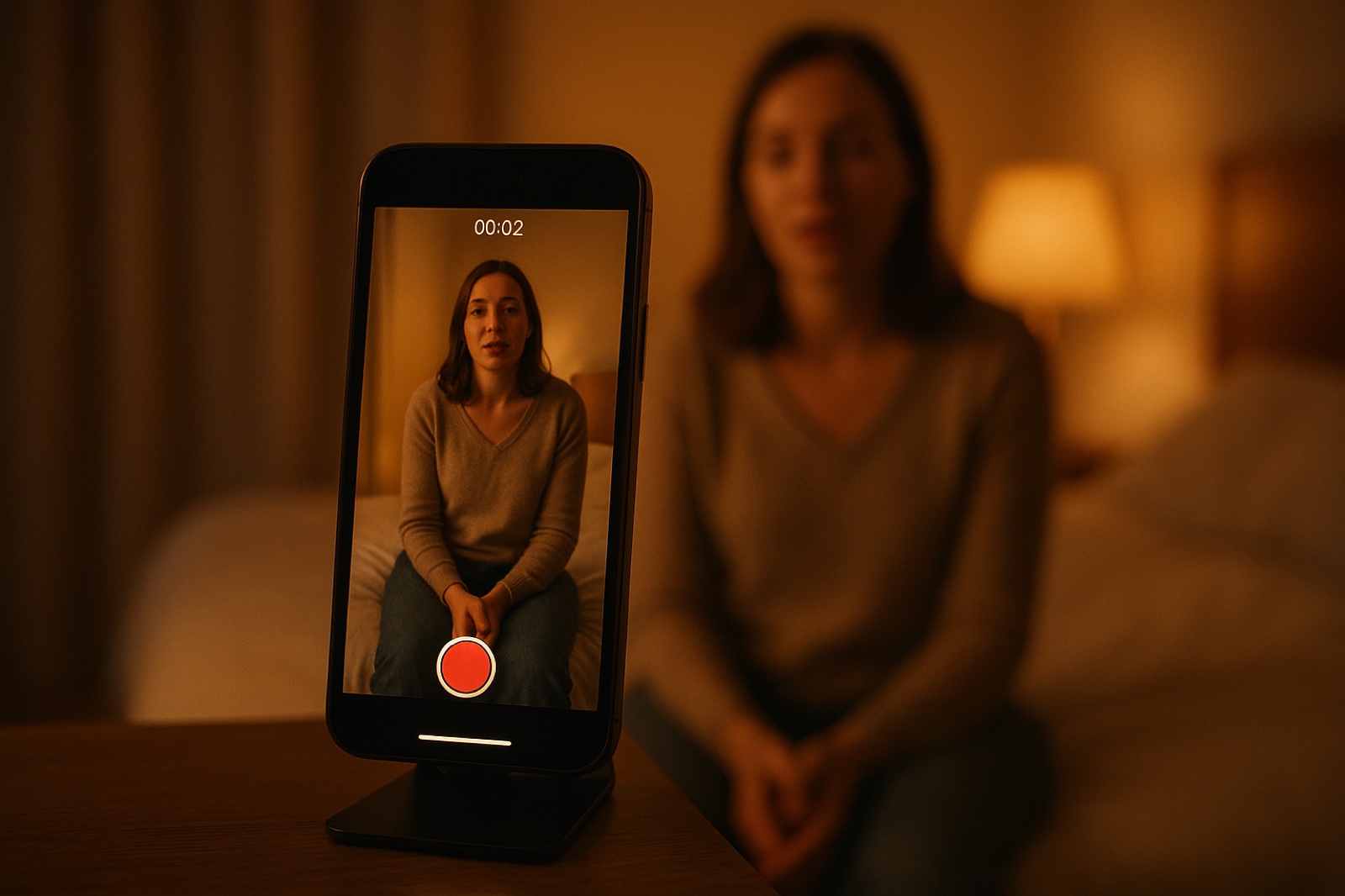
Sometime in the last few weeks, your For You Page probably served you one of these: someone sitting cross-legged on their bed, phone propped against a lamp, staring straight into the camera before saying some version of, “I never told you this, but…” Then the video cuts — hard, on the beat — to the same person, makeup suddenly done, hair suddenly fixed, saying the thing out loud for the first time.
It’s called the “I never told you this but” trend, and if you’ve scrolled TikTok this month, you’ve probably seen it a dozen times. People are using it to admit things they say they’ve never told anyone — not a parent, not a best friend, not a therapist. A stranger’s algorithm, and a stitched-together fifteen-second video, is where the confession is landing first.
It looks like just another content format. It isn’t, really. It’s one of the oldest human behaviors on earth, wearing a very new outfit.
Why We’re Confessing to Strangers Instead of the People Who Know Us
Here’s the strange part: the people getting these confessions aren’t the ones closest to the confessor. They’re strangers — thousands, sometimes millions of them, who will never meet this person, never sit across a table from them, never bring it up again next Thanksgiving.
Psychologists actually have a name for a version of this: the “stranger on a train” effect. It’s the well-documented tendency to open up more freely to someone with no ongoing stake in your life than to someone who does. There’s no relationship to protect, no fear of how the confession might change the way someone treats you tomorrow. The stranger disappears at the next stop. On TikTok, the stranger is the algorithm itself — present, watching, but consequence-free in a way your own mother isn’t.
The format reinforces it. That hard cut in the middle of the video — from raw and unfinished to composed and resolved — mimics a transformation arc. It gives viewers, and maybe the confessor too, a sense that admitting the thing already fixed something. The reveal feels like resolution, whether or not it actually is one.
The Science Actually Backs Part of This Up
This isn’t just a TikTok quirk with no basis in reality. Psychologist James Pennebaker spent decades studying what happens when people put hidden, difficult experiences into words — mostly through private writing exercises in controlled studies. The findings were consistent: people who disclosed a suppressed experience, even just on paper to no one in particular, showed measurable drops in stress markers and better physical health outcomes months later. Keeping something locked away costs the body something. Naming it, out loud or on the page, tends to lower that cost.
So there’s real science behind the instinct driving this trend. Confession, in some form, does appear to help.
But most of that research is about private disclosure — a journal, a therapist’s office, a closed conversation. The research on public, performative disclosure to an audience of strangers is much thinner, and what does exist is more mixed. A recent study out of Stanford found something similar in a different context: people who disclosed personal struggles to AI chatbots didn’t necessarily feel less alone afterward — some felt worse, because the disclosure had nowhere real to land. A separate study found the same pattern with people confessing secrets to chatbots instead of people: the relief of getting it out doesn’t always translate into the relief of being truly known.
What Confession Was Actually Built to Do
That gap — between saying it and being met in it — might be the real story here. Posting a confession to an audience of strangers gets you the first half: the words are finally out, the weight is finally spoken. What it can’t always get you is the second half: someone who heard it specifically, who can respond, who remembers it exists next week and checks in on you about it.
There’s an old idea, older than trauma therapy, older than the confessional booth, older than TikTok by about two thousand years, that draws a very specific line here. It says healing isn’t just found in admitting a hidden thing exists — it’s found in bringing it to someone in particular, someone who receives it and carries part of the weight with you in return. In that older framing, confession was never designed to be a broadcast. It was designed to be an exchange: one person’s honesty, met by another person’s presence.
Which might be exactly what the TikTok trend is reaching for without quite landing on it. The relief people describe after posting is often real — but it’s frequently followed by something else: refreshing the app, watching the comment count, waiting to see if the confession mattered to anyone specific. A thousand strangers’ likes aren’t quite the same weight as one friend’s hand on your shoulder. The old instruction was never “confess to everyone.” It was closer to “confess to someone who will actually stay.”
If a confession leaves you in that in-between place — still carrying guilt over something, even after saying it out loud — the thing still missing might not be a bigger audience. It might be forgiveness, offered or received, from someone who’s actually there. bgodinspired has a short, free assessment built for exactly that moment: Am I Ready to Forgive?
If You’re Feeling the Pull to Post Your Own
None of this means the trend is wrong to exist, or that everyone doing it is chasing an empty gesture. The impulse underneath it — to stop carrying something alone — is a healthy one. It’s just worth pausing on before you hit publish:
- Before typing the caption, ask: is there one real person in my life I could say this to first?
- Try saying it out loud to that person — even messily, even without the right words — before or instead of filming it.
- If the honest answer is that there’s no one safe to tell yet, that’s worth noticing too. That might be the more important thing to work on before the next confession video.
Maybe the trend isn’t wrong so much as it’s incomplete. The internet will always be there tomorrow to receive whatever you decide to say into a camera. It’s just not the only audience — and it’s worth asking whether it’s the one that will actually stay.
What do you think?
Do you think people find it easier to open up to strangers online than to the people who actually know them — and why do you think that is? Tell us in the comments.
Share This
- Why do I trust strangers on TikTok with secrets I’ve never told my own best friend? This actually explains it.
- The “I never told you this but” trend isn’t just a content format — it’s an ancient human need wearing a new outfit. Wild read.
- Turns out confessing on camera and confessing to a real person aren’t quite the same kind of relief. This made me rethink my FYP.
Common Questions
What is the “I never told you this but” TikTok trend?
It’s a viral TikTok video format where creators sit down, say “I never told you this but…” on camera, then hard-cut to reveal a personal confession or secret they say they’ve never shared with anyone before — often paired with a visual transformation like changed lighting, makeup, or outfit, and a dramatic music cue.
Why do people confess to strangers online instead of people they know?
Psychologists call this the “stranger on a train” effect — it can feel safer to reveal something to someone with no ongoing relationship to protect, because there’s no fear of how the confession might change things tomorrow. TikTok’s algorithm adds another layer: the audience feels present but consequence-free, which lowers the emotional barrier to disclosure.
Does confessing secrets actually reduce stress?
Research on expressive disclosure, going back to psychologist James Pennebaker’s studies in the 1980s, has found that putting hidden experiences into words, whether through writing or speaking, can lower stress markers and even improve physical health outcomes over time. Most of that research involves private disclosure rather than public performance, so the benefits of a broadcast-style TikTok confession aren’t necessarily identical.
Is public confession the same thing as real emotional healing?
Not necessarily. Some research on disclosure without genuine relational follow-through, telling an audience rather than a specific person who can respond and stay present, has found people can end up feeling exposed without feeling truly connected. A recent study on people confiding secrets in AI chatbots found a similar pattern.
What does the Bible say about confession?
The Bible frames confession less as a broadcast and more as an exchange: being honest with someone else specifically so that person can carry part of the weight with you, not just witness it from a distance. It’s described as a relational act rather than a performance, which is part of why an idea that old still applies to a brand-new platform like TikTok.