 0
0
 0
0
Every morning she rings the bell, and every morning he opens the door to a stranger.
He does not say hello. He asks her a question about a number. On the first day it is her shoe size. She says 24, and he is pleased. Twenty-four, he tells her, is the factorial of four: 1 × 2 × 3 × 4. A sturdy, honest number. Then the day goes on, and eighty minutes later she is gone from him again.
That is the whole set-up of The Housekeeper and the Professor, the 2003 novel by the Japanese writer Yoko Ogawa, translated into English by Stephen Snyder. If you have just finished it and are searching for the housekeeper and the professor meaning, you probably already know it is not really a book about maths, or baseball, or memory loss. It is a book about a question that sits under all three. What is kindness for, if the person you give it to will never remember you gave it?
What The Housekeeper and the Professor Is About
The Professor was a brilliant number theorist. In 1975 a car accident damaged his brain. Since then, his memory holds new things for only eighty minutes. Everything before 1975 is still there. Everything after it drains away, all day, every day.
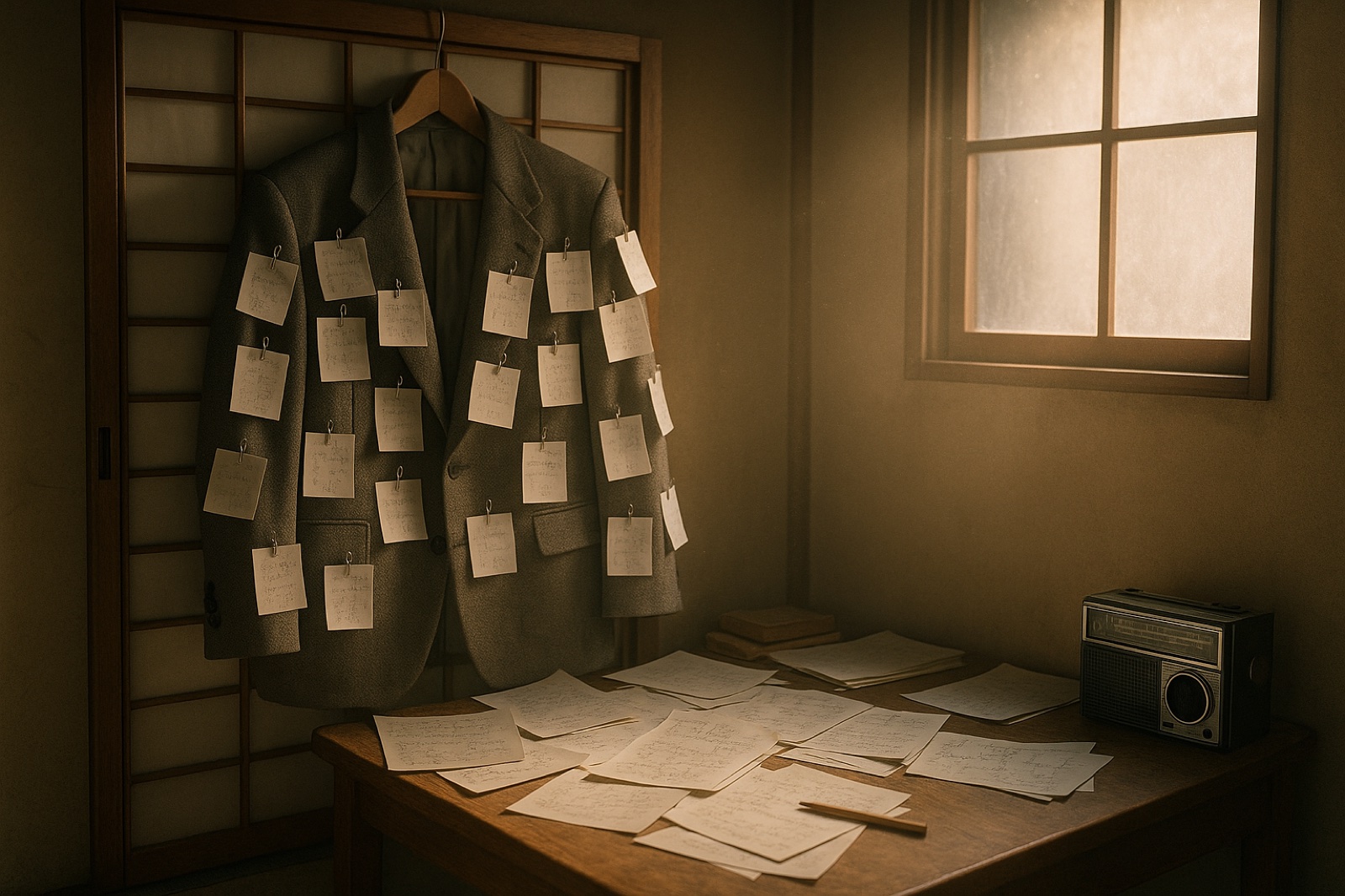
He copes with little paper notes clipped to his suit. One of them tells him his memory only lasts eighty minutes. Another, added once she arrives, says there is a new housekeeper, with a rough drawing of her face.
The housekeeper is our narrator. She is 28, a single mother, sent by an agency that has already had to replace nine housekeepers in this house. She is the tenth. She has a 10-year-old son. When the Professor finds out the boy waits alone at home after school, he is horrified, and insists the boy come to the cottage instead. He gives the boy a name on sight. The top of his head is flat, like the square root sign, so he calls him Root.
And that is nearly all the plot there is. Meals get cooked. Homework gets done. The radio plays the Hanshin Tigers. The Professor teaches the two of them why some numbers are beautiful. A rift opens with the Professor’s sister-in-law, who lives in the main house, and it closes when the Professor writes Euler’s identity on a scrap of paper. Later his memory fails further, and he moves into a care home. They keep visiting. Root grows up to become a maths teacher.
That is a very small story. It is also, somehow, one of the most loved novels to come out of Japan this century. It won the first Japan Booksellers’ Award, the prize voted on by the people who actually sell books, and it was made into a film in 2006. So what is it doing that a summary misses?
The Numbers Do the Work Names Usually Do
Here is something easy to miss on a first read. None of the main characters in this book has a real name.
The narrator is never named. The Professor is only ever “the Professor”. His sister-in-law is only “the widow” or “the sister-in-law”. The one person at the centre of the story who gets a name is Root, and his name was given to him by the one man who cannot remember giving it.
But the numbers are named with total care. Her shoe size. Her birthday. The number on his watch. A ballplayer’s shirt. Ogawa takes the attention a novel usually spends on names and spends it on numbers instead. And that choice makes sense for these people. A name is something you have to remember. A number, to the Professor, is something you can work out again from nothing, any morning, and it will always come out the same.
The best example is the one fans remember most. The housekeeper’s birthday is 20 February: 220. The Professor’s wristwatch, a prize he won at university for his thesis, is engraved with the number 284. He lights up when he sees them together, because 220 and 284 are amicable numbers.
Add up every number that divides evenly into 220 (not counting 220 itself) and you get 284. Do the same with 284 and you get 220. Each number is built entirely out of the other one’s parts. They are the rarest kind of friendship in arithmetic, and the book lays one down between these two strangers before they have even met.
Notice what that means. Their friendship does not depend on his memory. It is true about them whether he remembers her or not. He can rediscover it from scratch, and every time he does, it will still be true.
Baseball, and a World Held Still on Purpose
The baseball thread is where the novel’s tenderness gets sharpest.
The Professor loves the Hanshin Tigers, and above all their great pitcher Yutaka Enatsu, who wore the number 28. Twenty-eight is a perfect number: 1 + 2 + 4 + 7 + 14 = 28. Of course the Professor’s hero wears a perfect number.
But the Professor’s world stopped in 1975, and the story takes place seventeen years later. Enatsu retired long ago. The Professor does not know. So when the housekeeper and Root take him to a real Tigers game, they spend the evening quietly steering him away from the truth. They are not lying to trick him. They are guarding the one world he can still live in.
That is the novel’s quiet ethic in one scene. Love here does not try to drag the Professor into the present. It goes and meets him where he is, and it does that again, and again, and again.
The Kindness Nobody Will Remember
Now think about what this costs the housekeeper.
Most love builds up credit. You show up for someone, and they remember that you showed up, and over the years that memory turns into trust. It becomes a history. It becomes “us”.
She never gets any of that from him. Every good thing she does for the Professor is wiped out by the next afternoon. She will cook his favourite meal and he will not know it is a favourite. She will sit with him through a fever and the next morning she is a stranger at the door again. The note on his sleeve calls her the new housekeeper, and to him she always will be.
What makes the book so moving is that she keeps choosing him anyway. Not once, in a big dramatic decision, but daily, in small practical ones. And the novel never pretends this is easy or pretty. It is just what she does.
And something odd happens. The love does build up, just not in him. It builds up in her, and in Root, and in the sister-in-law, and in a boy who grows up to stand in front of a classroom teaching children why numbers are beautiful. The Professor cannot keep a single day of it. But none of it is lost.
If you have ever looked after someone whose memory is going, you know that exact ache. (If that is where you are right now, this short, free caregiver burnout check might help you see how you are really doing.)
New Every Morning
There is an old poem that knows this shape of love very well.
It was written in a ruined city. Jerusalem had fallen, and the writer of Lamentations sat in the wreckage trying to find anything left to hold on to. Halfway through, the poet admits they have almost forgotten what peace even felt like. And then comes one of the most famous lines in the Bible: God’s mercies never come to an end. They are new every morning (Lamentations 3:22–23).
We usually read that line as a pretty sentiment. Ogawa’s novel makes you feel how strange and costly it actually is. A love that is new every morning is a love that does not wait to be remembered. It does not keep score of what it already gave. It turns up at the door again, as if for the first time, because the person on the other side needs it to.
And here is the uncomfortable part. In that poem, we are not the housekeeper. We are the Professor. We are the ones who forget, who wake up with yesterday’s kindness gone, who need to be met all over again. The poet does not say they remembered it all along. The poet says they called it back to mind, and that is when hope came back. The mercy was already standing at the door.
The Housekeeper and the Professor Ending, Read Again
That is why the ending does not feel like a tragedy, even though, on paper, it is one. The Professor ends his days in a care home, reachable only a little at a time. The visits keep coming anyway, and the book ends not in grief but in something close to peace.
The Professor spent his life on numbers because they could not be taken away. Twenty-four is still the factorial of four. 220 and 284 are still friends. Nothing that happened to his brain can change that.
By the last page, the housekeeper and Root have proved something the Professor never could have written down: that love can be like that too. It does not have to be remembered to be true. It just has to be chosen again tomorrow morning.
If you loved this one, you may also like our reading of Klara and the Sun, another quiet novel about someone whose whole life is caring for another, and Before the Coffee Gets Cold, a Japanese novel about how little the past actually needs fixing.
Discussion Question
Is the housekeeper’s choice to keep the Professor’s 1975 world intact (hiding that Enatsu has retired) an act of love, or does it treat him like a child? Where do you land? Tell us in the comments.
Questions About The Housekeeper and the Professor
What is The Housekeeper and the Professor about?
The Housekeeper and the Professor is a 2003 novel by Yoko Ogawa about a young single mother hired to keep house for a retired mathematician whose memory has lasted only eighty minutes since a 1975 car accident. Through numbers and baseball, she, her son Root and the Professor build a deep friendship that he can never remember, and the novel asks what kindness is worth when it cannot be remembered.
What does 220 and 284 mean in The Housekeeper and the Professor?
In The Housekeeper and the Professor, 220 is the housekeeper’s birthday (20 February) and 284 is engraved on the Professor’s university prize watch. They are amicable numbers: the proper divisors of 220 add up to 284, and the proper divisors of 284 add up to 220. The pair stands for a friendship that stays true whether or not the Professor can remember it.
Why is the boy called Root in The Housekeeper and the Professor?
In The Housekeeper and the Professor, the Professor nicknames the housekeeper’s 10-year-old son Root because the flat top of the boy’s head reminds him of the square root sign. Root is the only one of the novel’s main characters with a name at all; the housekeeper, the Professor and his sister-in-law are never named.
How does The Housekeeper and the Professor end?
At the end of The Housekeeper and the Professor, the Professor’s memory fails further and he moves into a care home. The housekeeper and Root keep visiting him, and Root grows up to become a mathematics teacher. The ending is gentle rather than tragic, because the love the Professor could not remember has lasted in the people who gave it.
Who is Enatsu in The Housekeeper and the Professor?
Yutaka Enatsu was a real star pitcher for the Hanshin Tigers and the Professor’s hero in The Housekeeper and the Professor. He wore number 28, a perfect number. Because the Professor’s memory stopped in 1975, he does not know Enatsu has long since retired, and the housekeeper and Root protect him from finding out.
Share This
None of the main characters in The Housekeeper and the Professor has a real name except Root, and he was named by the one man who can’t remember naming him. Ogawa gives numbers the care novels usually give to names.
220 and 284 are each made from the other’s parts. The Housekeeper and the Professor puts that friendship between two strangers before they even meet, and it stays true whether he remembers her or not.
The Housekeeper and the Professor is about a love that never gets credited. She is a stranger at his door every single morning, and she keeps choosing him anyway.