 0
0
 0
0
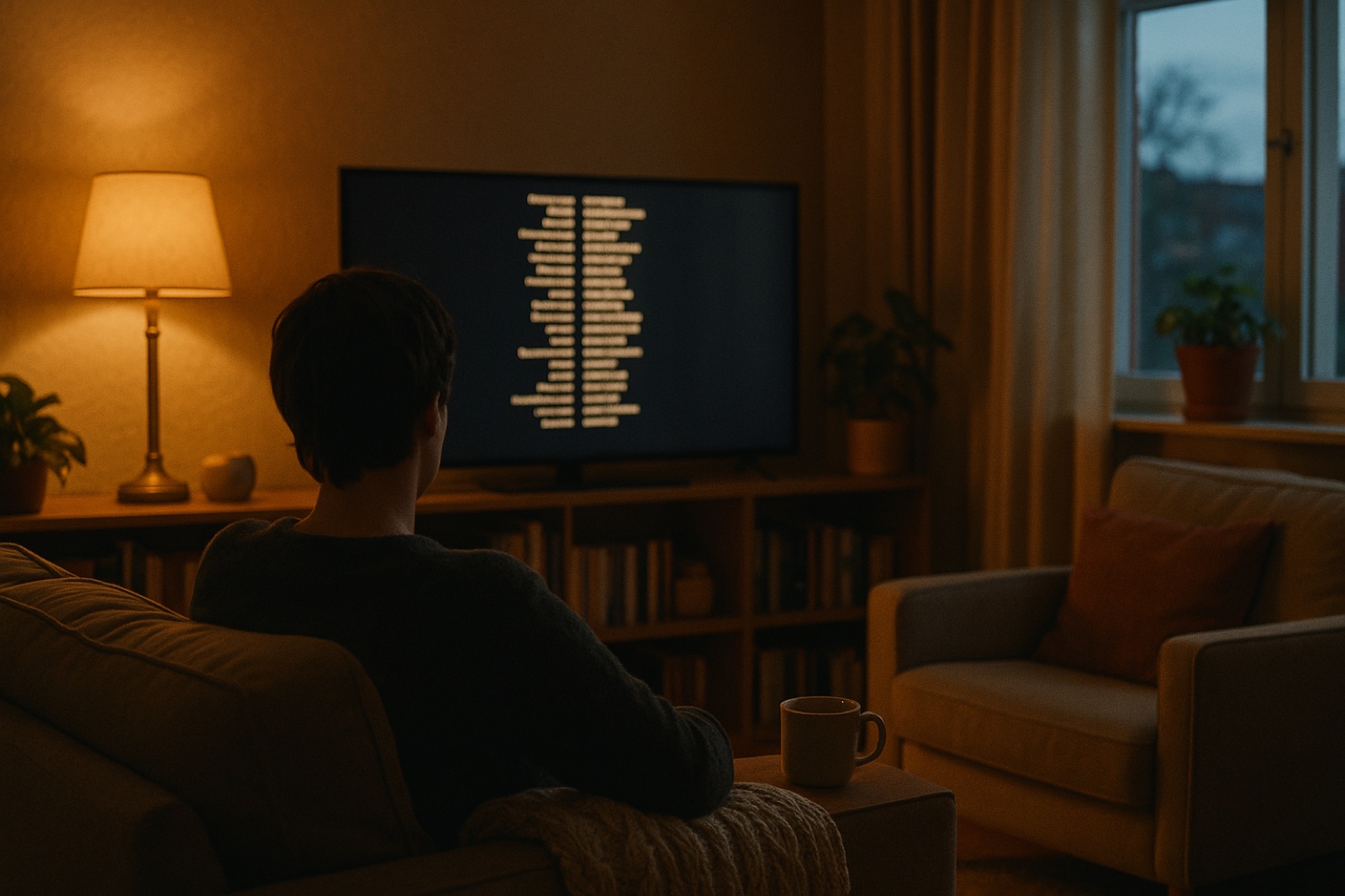
The last episode ends. You sit through the credits without moving. Then you open the app again, scroll for ten minutes, and close it without picking anything.
Nothing is wrong. Nobody died. But the evening has gone flat, and it stays flat for a few days.
It is one of those things people quietly type into a search bar late at night — why do I feel empty after finishing a show. After a series. After a book. After a game. There is a name for the feeling now: post-series depression. And the part that surprises most people is that it is not just an internet word. Researchers built a way to measure it.
What post-series depression actually is
Post series depression is the flat, hollow stretch that arrives after a story you were deeply inside of comes to an end. Notice what it is not. It is not disappointment with how a show ended — that is a different feeling, the one that fuels a week of arguing online about whether the finale earned itself. You can love an ending completely, the way a lot of people love the way the ending of Dark lands, and still feel hollow afterwards.
The problem is not the ending you got. The problem is that there was one.
In 2019, three researchers — Rita Kottasz, Roger Bennett and Tom Randell — published a study in the journal Arts and the Market doing something nobody had bothered to do before: building and testing an actual measurement for it. They interviewed fans first, then ran surveys, and ended up with a validated 15-item scale.
Kottasz has described the feeling in plain words: “a feeling of emptiness and upset when a series or something that you really love is finishing or ending.”
That is worth a second of your attention. Before that work, this was mostly a thing people joked about in forum posts. Now it has a scale — which means it turns up consistently enough, across enough different people, to be measured at all. Whatever you are feeling, you are not being dramatic about a television programme.
Why some endings hit and others do not
The best clue is older. In 2006, Keren Eyal and Jonathan Cohen surveyed 279 students shortly after the final episode of Friends aired, and looked for what predicted the distress.
It was not how much television someone watched. It was not how the finale was received. The strongest predictor was the intensity of the viewer’s one-sided relationship with their favourite character. Commitment to the show mattered too. So did loneliness.
Researchers call those one-sided bonds parasocial relationships — a connection you form with someone who cannot form one back. And here is the thing your brain does not seem to fully register: over four or five years and eighty hours of watching, it does not file a character as fiction. It files them as somebody you know. Same face, same voice, same running jokes, same reliable appearance in your living room week after week. The filing system was built long before screens existed, and it has no separate drawer for people who are not real.
So when the series ends, you are not losing a plot. You are losing a set of relationships — and losing them in the strangest possible way, because there is no goodbye. A real ending is mutual. Somebody knows they are leaving. This one is entirely one-sided: the show does not know it left, and there is no last conversation to have. Your mind has to process a departure with none of the equipment a departure normally comes with. It is not surprising that it takes a few days.
The same machinery is running quietly in the rest of your life too — the way you attach, what you do when someone leaves, how quickly you reach for the next thing. If you have never looked at how yours is set up, there is a free attachment style quiz here that takes a few minutes.
The line in the research nobody mentions
Here is what I did not expect to find.
Tucked into that 2019 paper’s own account of why the scale is useful is a note about who it is useful for: it can help marketers segment entertainment markets and work out how to extend people’s purchasing of related merchandise and experiences.
Read that again. The first serious instrument built to measure this particular ache was framed, in part, as a tool for selling more things to the people who have it.
That is not a scandal, and it is not hidden — the researchers said it openly, and a great deal of research is framed for the industries that use it. But it does tell you something honest about the room you are sitting in when the credits roll. The emptiness is real. It is measurable. And the first answer the world has ready for it is a product. The next series. The box set. The spin-off. The merchandise.
Which is worth knowing, because the universal instinct after a great show ends is to immediately start another one — and that instinct is being met, very efficiently, by an entire industry that would love you to.
What actually helps
First, a note on certainty, because you will run into a lot of confident advice on this. You will read that binge-watching causes it. The research genuinely has not settled that — different studies point in different directions, and the honest answer today is that nobody has pinned it down. What does show up consistently is depth. The longer you were attached and the closer the bond, the harder the ending lands.
What seems to help is small, free, and takes no special circumstances:
- Name it out loud. “I finished it and I feel flat” does more than it sounds like it should. Most of the distress in this comes from the sense that the feeling is ridiculous.
- Do not start another one the same night. Not as a discipline. Just so the ending gets to be an ending instead of a gap you papered over.
- Go back to one scene, not the whole thing. Rewatching a single favourite scene tends to feel like visiting. Rewatching the entire series tends to feel like avoiding.
- Tell one actual person about it. Not a comment thread — a person. The loneliness finding in the Friends study is not decoration.
- Watch the clock, gently. A flat few days is ordinary. If the flatness is still there weeks later and has spread into things that have nothing to do with the show, it was probably never about the show, and that is worth taking seriously with someone you trust.
There is a pattern here that shows up elsewhere too. When people are asked why sad songs feel good, the answer they actually give is not sadness — it is nostalgia. A longing for something that was, dressed up as an ache. Post-series depression seems to run on the same fuel.
The part that is bigger than a television show
There is a much older idea about this, and it has been sitting around a long time before streaming existed. In the ancient wisdom writings, the suggestion is that people were made with something set inside them on purpose — by God, in that telling — a sense of the whole, of forever, planted in a creature who only ever gets pieces of it. In that reading the ache is not a malfunction. It is a piece of equipment working exactly as designed, in a place too small to satisfy it.
Which would explain the oddest thing about post-series depression: the feeling is plainly out of proportion to the loss, and everyone who has it knows that. You are not really grieving a show. You are noticing, for a few days, through a door a show happened to leave open, that you seem to be built for company that does not end.
Some people find that thought unbearable. Others find it the most hopeful thing they have heard in a while. It is probably worth working out which one you are.
Give it a week
The practical version is smaller than all that, and it works either way.
The flatness passes. It usually passes sooner if you let it be what it is for a few days rather than immediately covering it with the next thing. And the reason it hurt at all is not a weakness in you. You are able to care, genuinely, about people who never existed, on the strength of nothing but a story told well.
That is a strange and rather good thing to be able to do. It means the machinery works.
Give it a week. Then go find something else worth being inside of.
What do you think?
Here is the one I would actually like your opinion on: is caring that much about a fictional character a sign that something in a person is working, or a sign that something is missing? There is a decent case on both sides, and people land firmly in both camps. Which one are you? Leave a comment and tell me — I read them.
If this was familiar, pass it on
- Turns out the empty feeling after a series ends has a name and an actual research scale. It is called post-series depression, and the strongest predictor is not how much you watched — it is how attached you got to one character. https://bgodinspired.com/index.php/entertainment/post-series-depression/
- I always assumed the flat few days after finishing a great show was just me being dramatic. It has been studied. And the detail that stuck with me: the first tool built to measure that ache was pitched partly as a way to sell people more merchandise. https://bgodinspired.com/index.php/entertainment/post-series-depression/
- “You are not really grieving a show. You are noticing you are built for company that does not end.” Best thing I have read about why the last episode leaves a hole. https://bgodinspired.com/index.php/entertainment/post-series-depression/
Questions people ask about post-series depression
What is post-series depression?
Post-series depression is a non-clinical term for the emptiness, flatness and longing some people feel after a television series, book series, film saga or video game they were deeply invested in comes to an end. It is not a recognised medical diagnosis. It was given a formal definition and a validated 15-item measurement scale by researchers Rita Kottasz, Roger Bennett and Tom Randell in a 2019 study published in the journal Arts and the Market.
Is post-series depression a real mental illness?
No. Post-series depression is not a clinical diagnosis and does not appear in diagnostic manuals. It describes a common, usually short-lived emotional response rather than a disorder. A flat mood for a few days after finishing a beloved series is ordinary. If low mood lasts for weeks, spreads beyond the ending of the show, or affects sleep, appetite or daily functioning, that is worth discussing with a doctor or mental health professional, because something other than a television series is likely involved.
Why do I feel empty after finishing a show?
The leading explanation is parasocial attachment. Over many hours and often many years, a viewer forms a one-sided bond with characters that the brain processes in ways similar to a real relationship. In a 2006 study of 279 students conducted after the final episode of Friends, researchers Keren Eyal and Jonathan Cohen found that the strongest predictor of distress was the intensity of the viewer’s relationship with their favourite character. Commitment to the show and the viewer’s loneliness were also predictors. The ending removes those relationships without any of the closure a real goodbye provides.
How long does post-series depression last?
For most people it is a matter of days rather than weeks, and it fades on its own as normal routines take over. There is no established timeline in the research, partly because the phenomenon has only been studied formally since around 2019 and the existing studies are mostly surveys of self-selected fans. If the feeling persists for several weeks or deepens, it is generally a sign that the ending of the series surfaced something else rather than caused it.
Does binge-watching cause post-series depression?
The evidence is not settled. Studies examining binge-watching and post-series depression have pointed in different directions, and no firm conclusion can currently be drawn about whether watching quickly makes the aftermath worse. What research does consistently associate with stronger post-series depression is the depth of attachment — how intense the bond with the characters was, and how committed the viewer was to the show — rather than the speed of consumption.