 0
0
 0
0
People still argue about the last few minutes of La La Land. Not the plot — the feeling. If you have gone looking for the La La Land ending explained, you are probably not confused about what happens. You know what happens. You want to know why it lands the way it does, hours later, while you are washing up.
Here is the short version of the answer, and it is not really about the film.
The ending works because it shows you something your own mind does every single day, and it shows it to you in a form you cannot look away from.
The La La Land Ending Explained, Scene by Scene
Damien Chazelle’s 2016 film follows Mia, an actress who keeps failing auditions, and Sebastian, a pianist who wants to open his own jazz club. They fall in love. Their careers pull in opposite directions. They come apart.
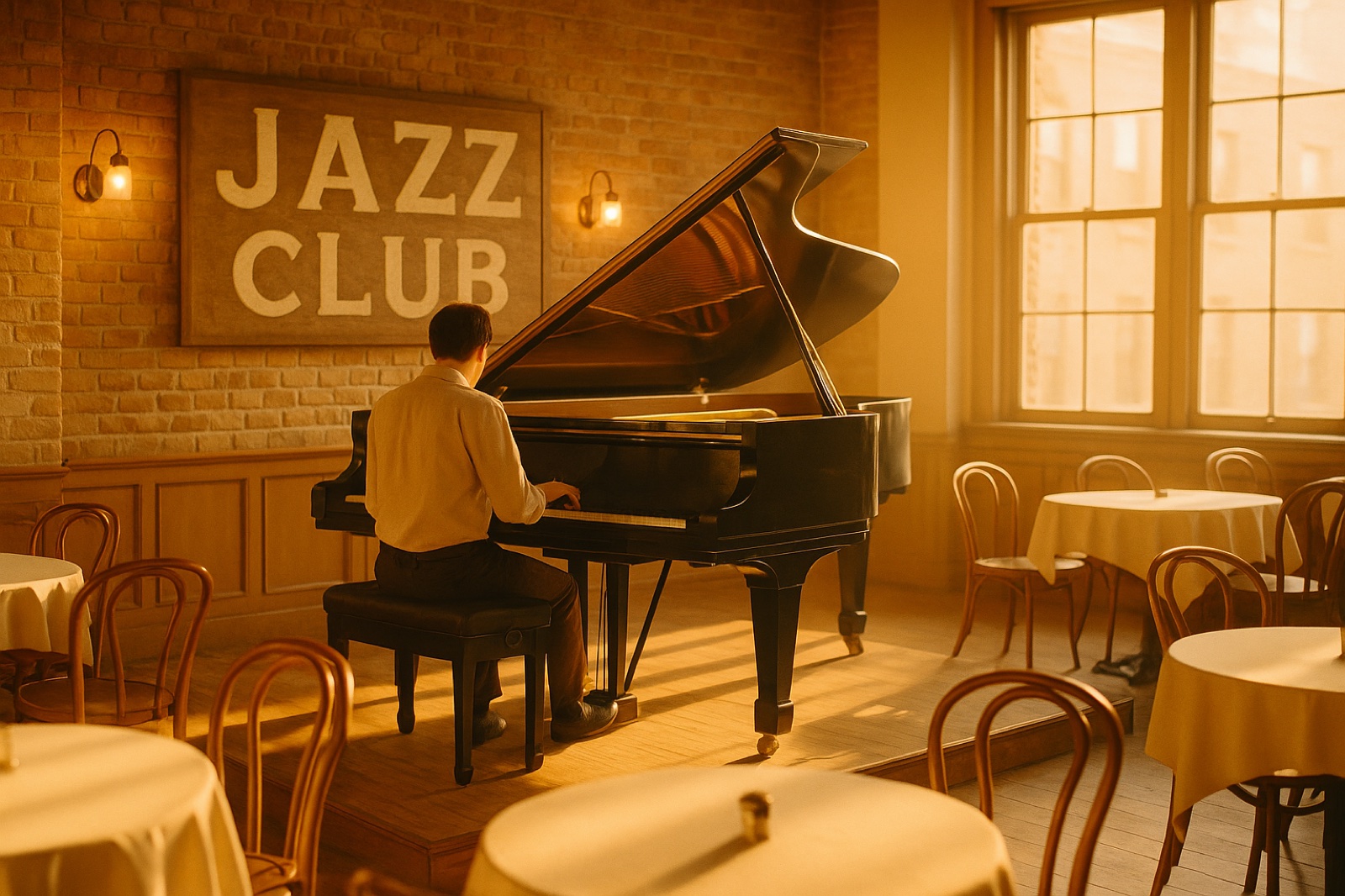
Then the film jumps forward five years. Mia is a working actress now. She is married to someone else. She has a child. One evening she and her husband duck into a jazz club almost at random, and the man at the piano is Sebastian. He got his club.
He sees her. He plays their song.
And then the film does the thing. It stops the story and runs a long, wordless sequence showing the two of them together — the version where it worked. They marry. They travel. There is a child. It is beautiful, and it is fast, and none of it is real. Then the music ends, we are back in the club, and Mia stands up to leave. They look at each other. She smiles. She goes.
That is it. That is the whole ending. And it wrecks people.
The change is much smaller than you remember
Go back and watch what the montage actually changes. This is the part most people misremember.
It does not rewrite their whole lives. It changes one moment. Early in the film, Sebastian walks past Mia and knocks her shoulder without stopping. In the fantasy, he stops. He kisses her instead.
That is the divergence. One second of behaviour in a crowded room.
Everything else in that gorgeous imagined life hangs off a single missed kiss. And that is exactly why it hurts. The film is not telling you that you needed a different personality, a different country, a different family. It is telling you the other life was one small thing away. Your brain finds that unbearable, because a small thing feels like something you could have controlled.
That is the mechanism. Not the romance. The size of the gap.
The fantasy quietly takes something away
Now here is the part almost nobody notices, and it is the reason this ending is cleverer than its reputation.
Watch what happens to Sebastian’s club in the daydream. He does not have one. In the imagined life, he turns down the path that funded it and ends up playing piano in somebody else’s club, in Paris. The dream he spent the entire film chasing — the actual thing he built — is gone from the fantasy. Deleted, silently, while you are busy crying about the wedding.
The film smuggles the cost in and never points at it.
Which means the montage is not a fair picture of the other timeline at all. It is an edited one. It keeps the love and removes the trade-off. It shows the gains and quietly bins the price.
Chazelle has said the ending was deliberate — that most of the great love stories do not end happily ever after, and that a relationship ending is not the same as the love ending (as reported here). But the sharper trick is the editing. He did not give us the other life. He gave us the highlight reel of the other life, which is a different thing entirely, and it is the same thing our minds hand us at two in the morning.
Why your mind runs this montage too
Psychologists have a plain name for this: counterfactual thinking. Imagining how things might have gone instead.
The most famous demonstration of it involves Olympic medals. In a 1995 study published in the Journal of Personality and Social Psychology, researchers Victoria Medvec, Scott Madey and Thomas Gilovich looked at footage of medallists from the 1992 Summer Olympics and found something odd: bronze medallists looked happier than silver medallists.
Objectively, silver is better. But the silver medallist is running a montage where they won gold. The bronze medallist is running one where they finished fourth and went home with nothing. Same podium, opposite films playing behind the eyes.
Researchers later re-checked it using automated facial-expression software on medal-stand photographs from the 2000 to 2016 Games, and found the same pattern. Bronze smiles more than silver. It is not a quirk of one afternoon in 1992.
So the thing that decides how a person feels about their own life is often not the life. It is which alternative version they happen to be comparing it against.
And here is the catch, the one La La Land understood: nobody ever runs an honest comparison. The version in your head is always the edited cut. It has the other job without the commute. The other partner without the argument on the third year. The other country without the loneliness of being new there. It has Sebastian’s love story and it has quietly removed his club.
You are not grieving a life you lost. You are grieving a life that was never on offer in that form, because you only ever screened the trailer.
This is the same machinery behind a lot of ordinary suffering — the loop where you cannot stop picturing a version of events you did not live, whether that is your partner’s past or the career you did not take. And it feeds the older question underneath it all, the one about whether you have measured up, when “enough” was never a fixed number to begin with.
The one question that never gets answered
There is a moment I keep thinking about in connection with this, and it comes from an unlikely place.
Near the very end of one of the gospels, a man has just been told something hard about how his own life is going to go. He takes it in. Then he turns around, sees a friend standing a little way off, and asks about him instead. What about him? What happens to his life?
He is asking to be shown the other timeline. Not his — someone else’s, which is the same instinct wearing a different coat.
And Jesus does not answer the question. He redirects it. What is that to you? You follow me.
It is easy to read that as a brush-off. I think it is closer to mercy. It is the only place I know of where somebody asks, out loud, to see the life running alongside their own — and the request is simply declined. Not because the answer would be bad. Because the answer belongs to a life that is not theirs to live, and holding it would not help them live the one that is.
Whoever wrote that down had noticed the same thing Chazelle noticed. We do not actually want the other timeline. We want to stop being responsible for this one.
What to do with the montage when it starts
You cannot stop the daydream arriving. You can finish it honestly, which is different, and free, and takes about ten seconds.
When the reel starts — the other job, the other person, the other city — do not argue with it. Just add back what it removed. Ask what that version costs. Who is not in it. What you currently have that it quietly deletes.
Most of the time the montage falls apart on its own once you make it pay its own bills. Not because the other life would have been worse. Because it was never the life the reel was showing you.
Mia does not get an answer at the end of that film. She gets a look, and a small smile, and then she walks out into her actual evening with her actual husband, carrying something she cannot explain to him. That is not a tragedy. That is most of us, most weeks.
The last thing she does is smile. It is worth noticing that the film gives her that, and gives it to Sebastian too. Two people looking straight at the life they did not get, and choosing, in the same second, to be glad about the one they did.
If films are the way you tend to think things through, you can dig into that thread further with our free Movies & the Bible assistant — it opens in ChatGPT and it will happily take apart whatever film has been sitting with you.
A Question Worth Sitting With
Is the ending of La La Land a sad ending or a happy one? Plenty of people are certain it is one and cannot understand how anyone hears it as the other. Which side do you land on — and did the montage make it more painful or less? Tell me in the comments. I genuinely want to know how it split.
If This Said Something, Pass It On
- Just learned that in La La Land’s “what if” montage, Sebastian never opens his club. The perfect life quietly costs him the one thing he actually built. https://bgodinspired.com/index.php/entertainment/la-la-land-ending-explained-2/
- I always thought the ending of La La Land was about a missed romance. It is really about how the mind edits. The daydream keeps every win and deletes every trade-off. https://bgodinspired.com/index.php/entertainment/la-la-land-ending-explained-2/
- The reason the La La Land ending hurts is not the breakup. It is that the whole other life hangs off one missed kiss — and small things feel like things you could have controlled. https://bgodinspired.com/index.php/entertainment/la-la-land-ending-explained-2/
Questions People Ask About the La La Land Ending
What happens at the end of La La Land?
Five years after Mia and Sebastian separate, Mia is a successful actress, married to another man and with a child. She and her husband walk into a jazz club at random, and Sebastian — who has opened the club he always wanted — is at the piano. He plays their theme, the film runs a long wordless fantasy of the life they might have had together, and then returns to reality. Mia and Sebastian exchange a look and a smile, and she leaves.
Is the montage at the end of La La Land real?
No. The extended sequence showing Mia and Sebastian marrying, travelling and raising a child together is imagined, not a flashback or an alternate reality the film treats as real. It plays while Sebastian performs their theme in the jazz club, and the film cuts back to the actual present as soon as the music finishes.
Why do Mia and Sebastian not end up together in La La Land?
Their ambitions pull them apart. Mia’s acting career takes her abroad for filming, while Sebastian tours with a band and later opens his own jazz club in Los Angeles. Notably, the film’s own fantasy sequence suggests the cost of staying together: in the imagined version, Sebastian never opens a club of his own and plays in someone else’s venue in Paris instead.
Why does the La La Land ending make people cry?
Largely because of how small the change is. The imagined timeline diverges from the real one at a single moment — Sebastian kisses Mia instead of brushing past her early in the story. A tiny, seemingly controllable difference produces an entirely different life, which is far more painful to watch than a difference caused by fate or circumstance.
What does the final smile between Mia and Sebastian mean?
It is generally read as acceptance rather than regret. Both characters have achieved what they set out to achieve, at the cost of each other, and the shared smile acknowledges both halves of that at once. Director Damien Chazelle has described the ending as intentional, on the view that a relationship ending in practical terms does not mean the love ends.