 0
0
 0
0
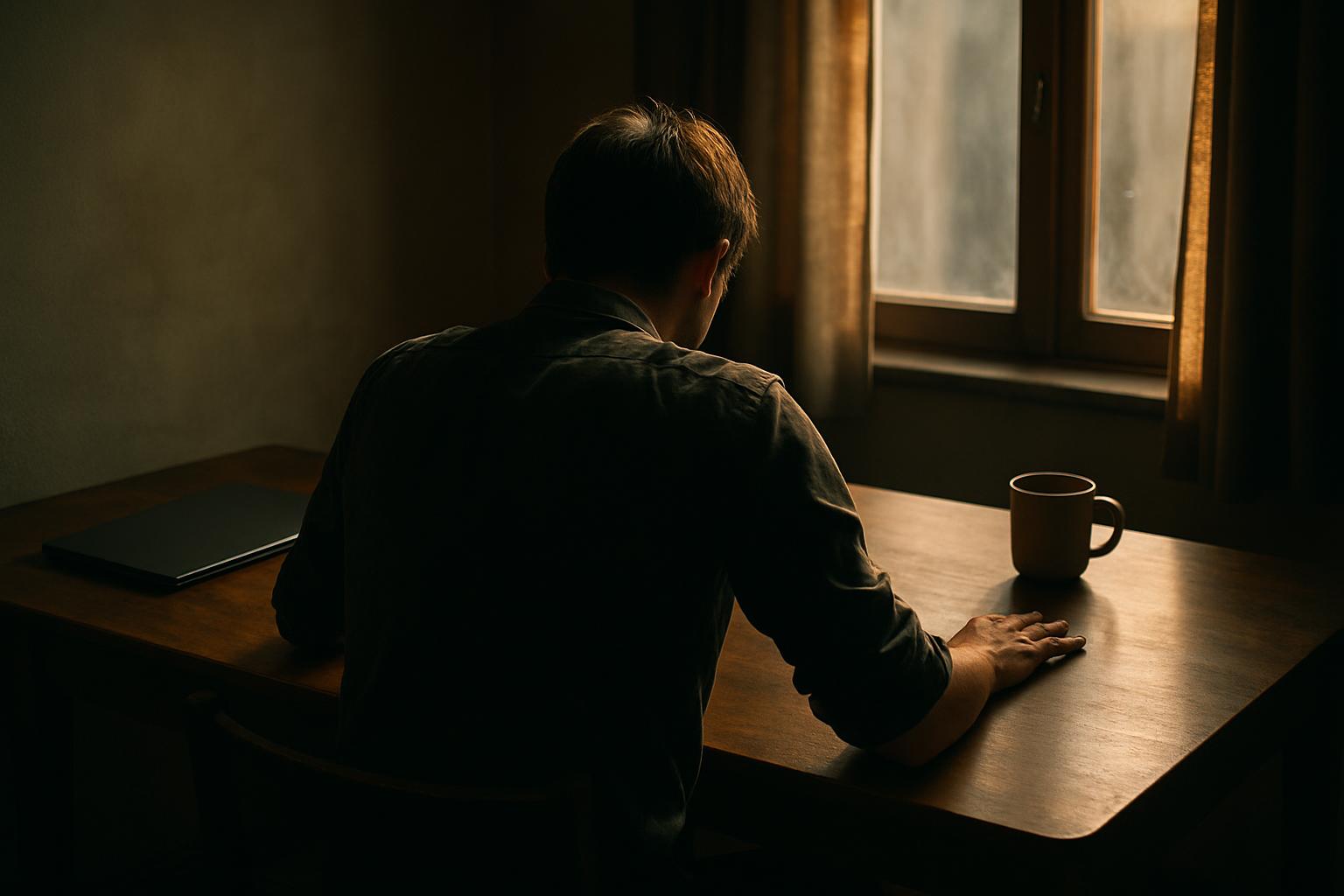
You finally sit down.
The laptop is closed. The dishes are done. The kids are in bed. The TV is off. You’re physically still.
But something keeps running.
Your mind is still cycling through tomorrow’s list. Your shoulders are still up near your ears. That knot behind your shoulder blade? Still there. You’re sitting, but you’re not stopped.
And somewhere in the back of your mind, a question floats up that you’ve maybe wondered before but never quite landed on: Why did God rest on the seventh day?
He’s God. He spoke galaxies into existence. He doesn’t get tired. He doesn’t need a nap.
So what was He doing?
The answer is in the Hebrew word. And it might be the most important design specification in the entire Bible.
What Genesis Actually Says
Let’s look at the text. Genesis 2:2-3:
“By the seventh day God had finished the work he had been doing; so on the seventh day he rested from all his work. Then God blessed the seventh day and made it holy, because on it he rested from all the work of creating that he had done.”
That word “rested” — in Hebrew, it’s shabbat (שָׁבַת).
We hear “Sabbath” and think: day off. Sleep in. Maybe go to church. Relax a little.
But shabbat doesn’t mean “slow down.” It doesn’t mean “take it easy.” It doesn’t mean “reduce activity.”
It means to cease. To stop completely. To desist.
Not a nap. Not a pause. A full stop.
The word carries the idea of bringing something to a complete halt. Like a machine that powers down entirely. Like a factory that goes dark and silent.
This is important because we live in a world that has trained us to think rest means “less.” Less work. Less effort. Less intensity. But shabbat isn’t less of something. It’s the absence of it.
God didn’t slow down on the seventh day.
He stopped.
But Here’s the Thing — God Doesn’t Get Tired
Isaiah 40:28 says it plainly: “The Lord is the everlasting God, the Creator of the ends of the earth. He will not grow tired or weary.”
God didn’t need to stop. He wasn’t depleted. Creating everything that exists didn’t take anything out of Him.
So if He didn’t need rest… why did He do it?
This is where it gets interesting.
What Your Brain Does When You Actually Stop
Neuroscientists have been studying something called the Default Mode Network (DMN). It’s a network of brain regions that becomes active when you’re not focused on the outside world.
Here’s what they’ve found:
When you “slow down” — when you reduce activity but keep your mind partially engaged — the DMN doesn’t fully activate. Your brain stays in a kind of half-state. Processing, but not restoring.
But when you stop completely — when external demands cease and your mind is allowed to wander freely without task — the DMN lights up. And this is when your brain does its most important restoration work:
- Processing memories
- Consolidating learning
- Self-reflection and identity formation
- Creativity and problem-solving
- Emotional regulation
The research is clear: reduced activity is not the same as cessation.
Your brain — and your soul — need you to actually stop. Not slow down. Stop.
This is why you can take a “rest day” and still feel exhausted. Why you can have a “relaxing” evening scrolling your phone and wake up unrested. Why vacations where you’re still checking email don’t refresh you.
Slowing down isn’t stopping. And your body knows the difference.
The Hebrew word knew this thousands of years before the neuroscience caught up.
If you’ve been feeling that kind of bone-deep exhaustion that doesn’t respond to weekends, you’re not alone. Americans are breaking under strain like never before — and an ancient king wrote about this exact territory.
What God Was Actually Doing
Here’s what starts to come into focus when you sit with this:
God stopped first.
Before the Law was given. Before Moses. Before the Ten Commandments carved the Sabbath into stone.
Before sin entered the world. Before anyone was tired from labor or broken from toil.
Before any human being existed who would need rest — God modeled it.
He built stopping into the architecture of creation itself.
Day one: light. Day two: sky. Day three: land and plants. Day four: sun and moon. Day five: fish and birds. Day six: animals and humans.
Day seven: stop.
It’s built into the rhythm. It’s woven into the fabric of how the world was made. Not as an afterthought. Not as a recovery from exhaustion. As a design specification.
God knew what He was making. He knew that humans would be creatures who forget to stop. Who push through. Who convince themselves that one more hour, one more task, one more effort is what’s needed.
So He demonstrated stopping before any of them existed to need it.
He didn’t just command rest later. He showed it first.
The Sabbath isn’t a rule God added because we’re weak. It’s a rhythm God established because He knew what we’d need before we ever took our first breath.
This is what Jesus was pointing to when He said, “Come to me, all you who are weary and burdened, and I will give you rest.” The Greek word He used carries that same depth — not just relief, but restoration.
And this connects to the Hebrew concept of shalom — the wholeness and completeness that can only come when things are as they were designed to be.
Stopping is part of the design. It always was.
What This Means for You This Week
You probably can’t take a full day of Sabbath this week. Most of us can’t, at least not the way we’d like to.
But you can practice stopping.
Not slowing down. Not reducing. Stopping.
Even ten minutes of complete cessation — no phone, no task, no input — is different from an hour of “relaxing” while half-engaged with something.
Your brain knows the difference. Your nervous system knows the difference. Your soul knows the difference.
God didn’t rest because He was tired. He rested because you would be. And He wanted you to know what stopping looks like before you ever needed to do it.
If falling asleep has become hard — if your mind won’t quiet even when your body is still — you might find the Night Peace Framework helpful. It’s a simple practice built around the kind of complete cessation we’ve been talking about.
The rhythm is already there. It was built into the first week of everything.
You just have to step into it.
Actions to Take
- Set a 10-minute “full stop” timer today. No phone. No screens. No tasks. Sit or lie down and let your mind wander without direction. Notice how different this feels from “relaxing” while half-engaged.
- Tonight before bed, name the moment you stopped today. If you can’t name one, that’s information. Tomorrow, build one in on purpose.
- Pick one evening this week and declare it “off.” Not reduced activity — off. Let the people in your household know. Practice the actual cessation that shabbat describes.
Journaling Prompts
- When was the last time you truly stopped — not slowed down, but stopped completely? What did that feel like in your body?
- What keeps running in you even when everything external is still? What is it that won’t let you stop?
- If God modeled stopping before you ever existed, what does that tell you about how He sees your limits?
A Prayer
God, I’m not good at stopping. I slow down sometimes, but I don’t think I actually stop — and honestly, I’m not sure I know how anymore. You built this rhythm into the world before I was ever here. Help me trust it. Help me stop fighting the design You made. I want to rest the way You showed me to, not the way the world taught me to. Amen.
Discussion Question
What’s the difference between slowing down and actually stopping in your own life? When have you experienced genuine cessation, and what did it do for you? Share in the comments — your experience might help someone else find permission to stop.
Share This Article
Post 1 (Twitter/X):
God didn’t rest because He was tired. He rested because I would be — and He wanted to show me what stopping looks like before I ever needed it.
Post 2 (Facebook/Instagram):
I always thought Sabbath rest meant “slow down.” But the Hebrew word shabbat means to cease completely. There’s a difference between reducing activity and actually stopping. My brain knows it. My body knows it. I think my soul has known it all along. God modeled this rhythm before any human existed to need it. It’s built into the design.
Post 3 (Twitter/X):
Why did God rest on the seventh day? The Hebrew word isn’t about napping. It’s about stopping completely. He was modeling what we’d need before we ever existed.
Common Questions
Why did God rest on the seventh day if He doesn’t get tired?
God rested not because He needed to, but to demonstrate a rhythm He knew humans would need. The Hebrew word shabbat means to cease completely, and by stopping on day seven, God built this pattern into creation itself — before any command was given and before any person existed who would need rest. He was modeling what genuine stopping looks like.
What does the Hebrew word for rest actually mean?
The Hebrew word is shabbat (שָׁבַת), and it means to cease, desist, or stop completely. It’s not about slowing down or reducing activity — it’s about bringing something to a full halt. This is different from our modern idea of “resting” while still partially engaged with tasks or screens.
Is there scientific evidence that we need complete rest, not just reduced activity?
Yes. Neuroscience research on the brain’s Default Mode Network shows that this system — responsible for memory processing, self-reflection, creativity, and emotional regulation — only fully activates during complete cessation of external focus. Slowing down keeps the brain in a partial state; stopping completely allows the restoration process to happen.
Does this mean I have to observe a full Sabbath day to get real rest?
While a full day of rest is the biblical ideal, even short periods of genuine stopping — complete cessation of tasks and input — are different from hours of “slowing down” while half-engaged. The principle is about the quality of cessation, not just the quantity of time. Ten minutes of true stopping can be more restorative than an evening of reduced activity.
Why is the Sabbath mentioned before the Ten Commandments?
God built stopping into the fabric of creation in Genesis 2 — before the Fall, before the Law, before any command was given. This shows that rest isn’t just a rule for weary people; it’s a design specification woven into how the world was made from the very beginning. The command in Exodus points back to something that was already true since day seven.