 0
0
 0
0
Every Sunday, right after the service ends, there’s a stretch of ten or fifteen minutes where everyone is supposed to “fellowship.” Coffee gets poured. People stand around in loose circles near the doors. Someone asks how your week was, and you say “busy, but good,” because that’s what you say. Then you drive home, and somewhere in the parking lot, the loneliness you walked in with is still sitting right where you left it.
If that sounds familiar, you’re not broken and you’re not doing church wrong. It’s actually a lot more common than most people admit — even researchers have found people hiding real loneliness behind busy, connected-looking lives. You’ve just been handed the wrong picture of what the Bible actually means by fellowship. The word behind it is koinonia, and once you understand the real koinonia meaning in its original context, you’ll realize the coffee hour was never it.
So What Does Koinonia Actually Mean?
Koinonia comes from the Greek word koinos, which simply means “common” or “shared.” Not “friendly.” Not “polite.” Shared — as in, held jointly, not owned separately. When the New Testament uses koinonia, it’s almost never describing two people making small talk. It’s describing something they now hold in common that they didn’t hold in common before.
The clearest picture of it shows up early, right after the church itself begins. Acts 2:42 says:
“And they continued stedfastly in the apostles’ doctrine and fellowship, and in breaking of bread, and in prayers.” (Acts 2:42, KJV)
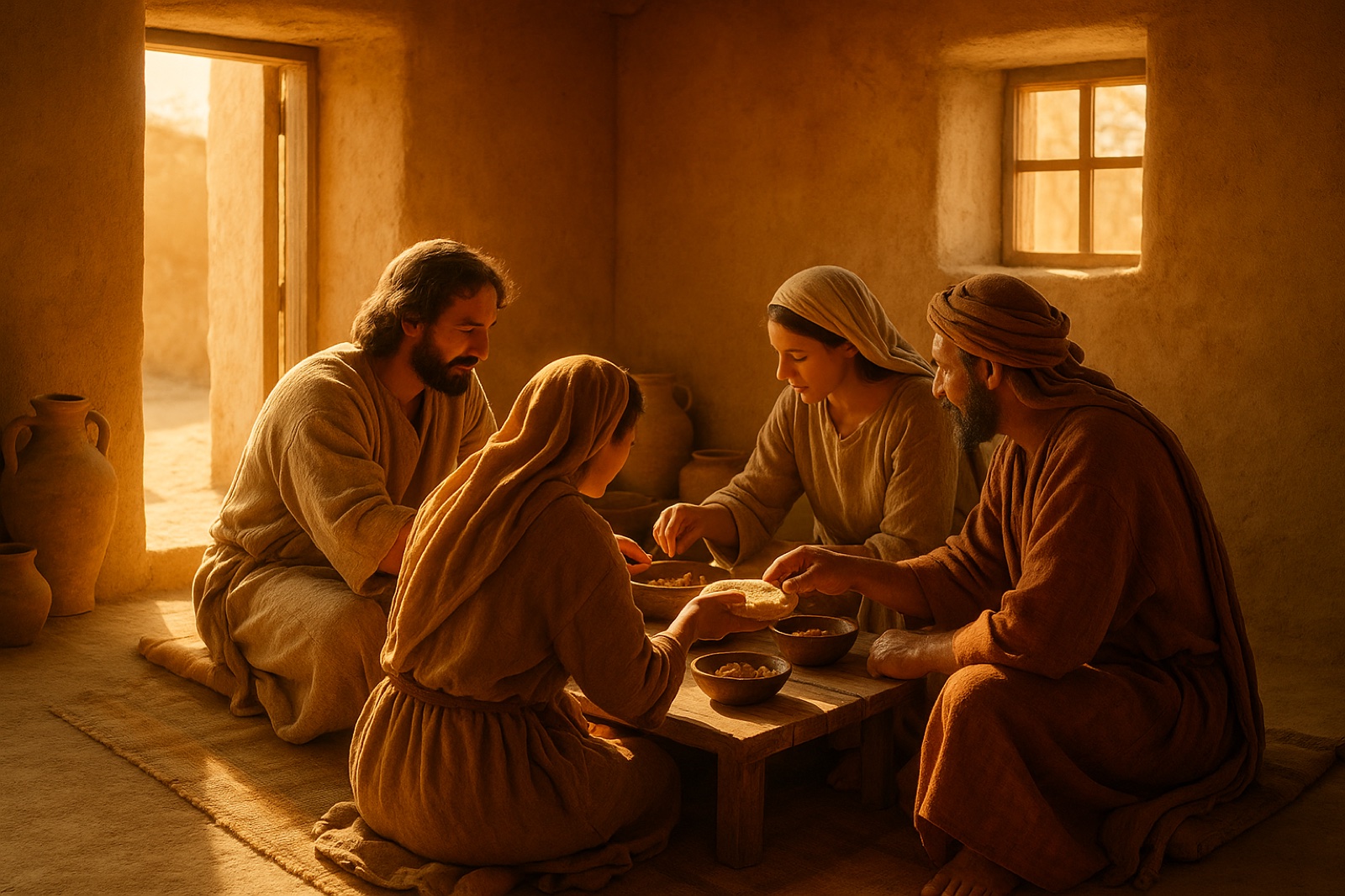
That word translated “fellowship” is koinonia. And Luke doesn’t leave it as an abstract idea — the next few verses show you exactly what it looked like on the ground. The believers sold what they had and used it to meet each other’s actual needs. They ate together, in each other’s homes, not once a quarter but daily. This wasn’t a social hour bolted onto the real service. It was the church, functioning the way the church was designed to function.
It Shows Up Again Where You’d Least Expect It
Once you know what to look for, koinonia turns up all over Paul’s letters, usually doing more work than the English translation lets on. In Philippians 1:5, Paul thanks God for the believers’ “fellowship in the gospel” — but he’s not talking about warm feelings. He’s talking about the fact that they had been financially and practically partnering with him in ministry, sending support, sharing the cost. In 2 Corinthians, the word shows up again around the collection being gathered for believers in Jerusalem who were struggling — koinonia meant real money moving from one group of Christians to meet the real needs of another. Even the benediction many churches still say each week — “the communion of the Holy Ghost” — is koinonia. Shared life with God, not just proximity to God.
Every single time, the pattern holds: koinonia costs something. Time. Money. Comfort. The willingness to be known instead of just seen.
Why the Coffee Hour Can’t Fix What You’re Feeling
Here’s the Turn: what if the reason church still feels lonely isn’t that fellowship failed — it’s that somewhere along the way, we quietly swapped the real thing for a safer, cheaper version of it? A fifteen-minute coffee hour asks almost nothing of you. You can attend it for years and never once let anyone see what your actual week looked like. It has the shape of koinonia — people standing near each other, talking — without any of the substance. No shared need. No shared cost. No one actually finding out you’re struggling and doing something about it.
That’s not a knock on your church. It’s just math. Koinonia, by definition, requires reciprocity — someone has to actually give something, and someone has to actually let them. A room can be full of people and still have zero koinonia in it, because koinonia was never about the room. It’s about what gets shared inside it.
Which means the cure for the loneliness you feel in a crowded sanctuary isn’t a bigger small group or a better greeting team. It’s one or two people who know the real version of your week — the one under “busy, but good” — and who you know in return. (It’s worth noting that even Jesus’s promise about “two or three gathered” was never really a headcount for church attendance — it points the same direction koinonia does.)
Three Ways to Practice Koinonia This Week
- Give one real answer. The next time someone at church asks how you’re doing, tell one true thing instead of the safe thing. Ten minutes. Ten seconds, really. That’s the first crack in the wall.
- Move the conversation to your table. Before next Sunday, invite one person from church to your actual home — dinner, coffee, doesn’t matter — instead of only ever talking in the hallway. Koinonia in Acts happened house to house, not lobby to lobby.
- Meet a need without waiting to be asked. Pick one person whose real need you already know about — a ride, a meal, a bill, an hour of your time — and meet it this month, unprompted. This is the hardest one because it costs something real. It’s also the one that’s most actually koinonia — the same instinct that sent a man named Onesiphorus searching all of Rome until he found Paul in prison.
Something Worth Sitting With
Before you move on, sit with these for a minute — not to answer them for anyone else, just for yourself:
- When was the last time someone at your church actually knew what your week was like — not the polished version?
- What’s one need you have right now that you’ve never let anyone at church see?
- Who is one person you could share something real with this month, even if it costs you time or comfort to do it?
A Prayer for the Lonely Pew
God, I’m tired of standing in circles saying I’m fine. I want the kind of fellowship the first believers had — the kind that costs something and means something, not the kind that fits in fifteen minutes between the service and the parking lot. Show me one person I can be really known by, and give me the courage to be that for someone else too. I don’t want to leave church as lonely as I walked in. Thank You for being near, even in the empty parking lot, even when no one else noticed I was there.
A Question Worth Sitting With
What do you think is the biggest thing keeping modern church “fellowship” from looking like Acts 2 — busyness, fear of being known, or something else entirely? Tell us in the comments below.
Share This
- I used to think fellowship just meant coffee after church. Then I found out what koinonia actually means, and it changed how I show up for people.
- Turns out the loneliest place you can be is a room full of people who only know the surface version of you. Koinonia was never supposed to be a coffee hour.
- The early church shared meals, money, and real life together. That’s koinonia. No wonder church still feels lonely when all we share is a handshake.
Common Questions About Koinonia
What does koinonia mean in the Bible?
Koinonia is a Greek word meaning something held in common or shared. It’s usually translated “fellowship,” but also “partnership,” “communion,” or “contribution,” depending on the context. In the New Testament it describes a shared life among believers, not just friendly conversation.
Where does the word koinonia appear in the Bible?
It appears throughout the New Testament, including Acts 2:42, where the earliest believers “continued stedfastly in the apostles’ doctrine and fellowship.” Paul also uses it in Philippians 1:5 to describe financial partnership in ministry, and in 2 Corinthians 13:14 as part of the benediction “the communion of the Holy Ghost.”
Is koinonia the same thing as a small group or fellowship hour?
Not exactly. A small group or fellowship hour can be a place where koinonia happens, but the word itself points to something deeper: shared resources, shared burdens, and being genuinely known, not just scheduled time together.
How is koinonia different from ordinary friendship?
Ordinary friendship can stay surface-level for years. Koinonia in the New Testament carried real, tangible cost — the early church sold possessions to meet each other’s needs and shared daily life together, not just occasional visits. It’s friendship with real skin in the game.
How can I experience real koinonia if my church feels distant?
Start smaller than the whole church. Real koinonia in Acts 2 grew in homes, not just in the temple courts. Invite one person to your table, share one real need, or meet one need you already know about in someone else — that’s usually where genuine fellowship actually begins. If you want a next step for meeting God in the ordinary, everyday moments this points toward, our free Bible Answers AI assistant is a good place to keep digging into words like this one (it opens in ChatGPT, a free account works).