 0
0
 0
0
There’s a certain kind of tired that comes from being the person nobody thinks to ask.
You know the work you can do. You’ve done it for years. But when something important comes up, the call goes to someone else — someone louder, someone with the title, someone whose name is easier to remember.
Which is why I keep coming back to a strange little moment in 2 Kings 22. If you’ve ever wondered who was Huldah in the Bible, the short answer is this: she’s the person five of the most powerful men in the country went looking for on the worst day of their careers. And almost nobody remembers her name.
The Day Judah Found a Book and Panicked
King Josiah was twenty-six years old. He had taken the throne at eight, and by the eighteenth year of his reign he decided it was time to repair the temple in Jerusalem. It had been neglected for a long time.
During the repairs, someone found a book.
Not just any book. The Book of the Law — the covenant God had made with the whole nation, lost somewhere in the clutter of generations that had quit caring about it. Josiah’s secretary read it out loud to him. And when the king heard what was in it, he tore his clothes.
That wasn’t drama for effect. That was what a person did when the ground fell out from under them. Josiah had just realized his entire country had been living outside an agreement it had forgotten it ever made.
So he gave an order: go find out if this is real. Go ask God whether it’s too late for us.
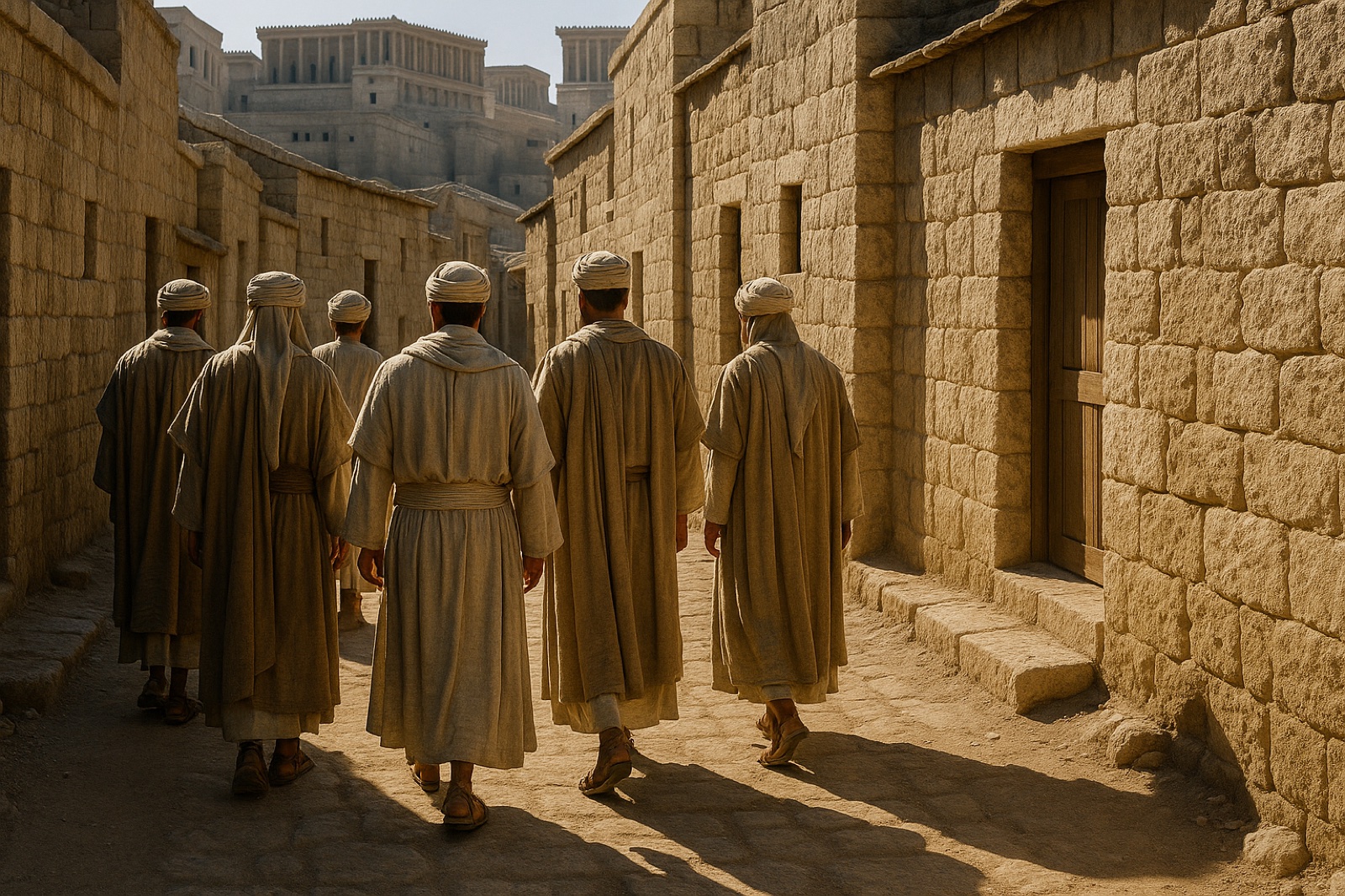
He sent five men. Hilkiah the high priest. Ahikam. Achbor. Shaphan the royal secretary. Asahiah, the king’s own servant. That is the top of the government — religious authority, political authority, and the king’s personal representative, all walking out the door together on the same errand.
And this is where the story gets strange.
So Who Was Huldah in the Bible?
“So Hilkiah the priest, and Ahikam, and Achbor, and Shaphan, and Asahiah, went unto Huldah the prophetess, the wife of Shallum the son of Tikvah, the son of Harhas, keeper of the wardrobe; (now she dwelt in Jerusalem in the college;) and they communed with her.” — 2 Kings 22:14, KJV
Read that again slowly, because the Bible does something here it almost never does. It gives you her address.
Huldah was a prophetess living in Jerusalem. Her husband, Shallum, had a job in the palace system: keeper of the wardrobe. He looked after the ceremonial robes. It was a real job and an honorable one — and it was not a throne, not a council seat, not a place at the front of anything.
Then there’s that odd phrase, “in the college.” The King James translators were doing their best with a Hebrew word, mishneh, that simply means “second” — the Second Quarter, a newer district of Jerusalem that had grown up outside the old city center. She didn’t live at the heart of things. She lived in the newer part of town. The part you’d have to walk to.
Now count up what the text tells you about her: where she lived, who she married, her father-in-law’s family line, and what her husband did for a living.
Then count what it doesn’t tell you. How she was trained. Who ordained her. What made her qualified. Whether anyone had signed off on her.
Nobody asked. They just walked to her house.
They Walked Past Jeremiah to Get There
Here’s the part that should stop you.
Jeremiah was already prophesying. His own book dates the start of his ministry to the thirteenth year of Josiah’s reign (Jeremiah 1:2) — five years before the Book of the Law ever turned up in that temple. Zephaniah was active in Josiah’s days too (Zephaniah 1:1).
So when the king needed the most important second opinion in the history of his nation, famous prophets were available. Prophets with books that would end up in the Bible. Prophets whose names we still give our kids.
The delegation walked past all of them and went to the Second Quarter.
We’re never told why, and I’ve stopped needing a reason. What gets me is that the text doesn’t treat it as unusual. There’s no explanation, no defense, no “and even though she was only —”. Five of the most powerful men in Judah knocked on Huldah’s door because Huldah was the one who heard from God, and everyone involved seemed to already know it.
What She Actually Said
She didn’t soften it.
“And she said unto them, Thus saith the LORD God of Israel, Tell the man that sent you to me,” — 2 Kings 22:15, KJV
“The man that sent you to me.” Not “his majesty.” Not “the king.” She was standing in front of the high priest and the royal secretary, and she called Josiah the man. Then she told them the judgment written in that book was real, and it was coming.
But she wasn’t finished. Because Josiah had torn his clothes — because his heart had genuinely broken over it — she told them God had heard him. He would be gathered to his grave in peace, and he would not have to watch the disaster arrive.
The delegation walked home and repeated it to the king. What happened next became one of the largest revivals in the Old Testament: Josiah gathered the entire nation, read the covenant out loud in front of all of them, and tore down generations of idol worship across the country. We walked through that discovery in more detail in What Can We Learn from Josiah’s Discovery of the Book of the Law?
A national turnaround. And it started with five men walking to a house on a side street.
God Already Knew the Address
Here’s what I never saw in this story until recently.
Huldah wasn’t at the temple that day. She wasn’t waiting in a lobby, hoping to get noticed. She was home, in the Second Quarter, married to the man who took care of the robes, doing whatever an ordinary morning looked like for her.
She didn’t get that moment because she positioned herself for it. She got it because when the most urgent question in her nation’s history finally needed an answer, the answer was already living at that address.
We spend so much of our lives trying to become the first name somebody thinks of. Trying to get in the room. Trying to be findable. And this quiet little story suggests the whole effort might be pointed at the wrong thing — because God was never scanning the list for a famous name. God was looking for an honest one, and God already knew which street it was on.
God wasn’t looking for a famous name. God was looking for an honest one.
That cuts both ways, and I don’t want to make it sweeter than it is. Being the person God trusts with something true doesn’t mean you get remembered for it. Huldah’s word helped turn a whole nation around, and most Christians have never heard of her. Jewish tradition kept her name alive in the Huldah Gates on the south side of the Temple Mount — but the sermons went to the men with the books.
She said it anyway. That was the assignment. The assignment was never the applause.
What This Means for Your Monday
If you’ve been waiting to feel qualified before you answer, you’re waiting on something Huldah never got.
Nobody sent her a letter confirming she counted. Her credentials, as far as the Bible is concerned, amount to a home address and a husband who worked in the wardrobe department. What she had was a word from God and the nerve to say it plainly to people who outranked her.
So the practical question isn’t “how do I get noticed?” It’s “what did God actually put in me — and am I answering the door when somebody knocks?” If you’re genuinely unsure what’s in there, our free What Is My Purpose? assessment is a decent ten-minute place to start thinking it through.
Actions to Take
- Send one specific thank-you. Open your messages and text someone whose work nobody claps for — the person who keeps the schedule, cleans the room, handles the thing everyone forgets. Name the exact thing they did. Two minutes.
- Read 2 Kings 22:14-20 for yourself. It’s seven verses and takes under four minutes. Notice how much room the text gives her words compared to her résumé.
- Write down the last three times someone came to you for help. Not what you wish people asked you about — what they actually did ask. That short list sits closer to your real assignment than your job title does.
Journaling Prompts
- Where in your life are you waiting to be qualified before you’ll answer? What would change today if you assumed you already were?
- Huldah was found at home, not at the temple. What is the ordinary address God would have to come to in order to find you right now — and how do you feel about being found there?
- Whose name do you measure yourself against? What has that comparison quietly cost you?
A Prayer for the Overlooked
God, I don’t always believe anyone would come looking for me. I’ve spent a lot of energy trying to be the name people think of first, and honestly, I’m tired. Help me trust that You already know exactly where I live and exactly what You put in me. And when someone knocks — even at a small door — give me the courage to answer honestly instead of shrinking. Amen.
Your Turn
Why do you think the Bible bothers to record Huldah’s address and her husband’s job, but never one word about her credentials? Share your take in the comments — we read every one.
Share This
- Five of the most powerful men in Judah needed to hear from God. They walked right past the famous prophet and knocked on a woman’s door in the newer part of town. Her name was Huldah, and almost nobody remembers her.
- The Bible records Huldah’s address and her husband’s job. It records nothing about her credentials. Nobody asked for them.
- She didn’t get the moment because she positioned herself for it. She got it because when the question finally came, the answer was already living at that address.
Questions People Ask About Huldah
Who was Huldah in the Bible?
Huldah was a prophetess living in Jerusalem during the reign of King Josiah, around the 7th century BC. She was married to Shallum, keeper of the royal wardrobe. When the lost Book of the Law was found during temple repairs, Josiah sent a delegation of five senior officials — including the high priest — to ask her whether the words in it were genuinely from God. Her answer set off one of the largest religious reforms in the Old Testament.
Where is Huldah in the Bible?
Her story appears twice: 2 Kings 22:14-20 and 2 Chronicles 34:22-28. Both accounts describe the same visit and the same message. She is not mentioned anywhere else in scripture.
Why did they go to Huldah instead of Jeremiah?
The Bible never explains it. Jeremiah’s ministry had already begun by the thirteenth year of Josiah’s reign (Jeremiah 1:2), roughly five years before the book was discovered, so he was available. The text simply reports that the delegation went to Huldah — and offers no defense or apology for it, which suggests it wasn’t considered unusual at the time.
What did Huldah prophesy?
She confirmed that the judgment written in the rediscovered Book of the Law was real and would come on Jerusalem. But she also delivered a personal word for Josiah: because he had humbled himself and grieved over what he heard, he would go to his grave in peace and would not live to see the disaster fall.
What happened after Huldah’s prophecy?
Josiah acted on it immediately. He assembled the whole nation, read the covenant aloud, and launched a sweeping campaign against idol worship across Judah. You can read more about what that reform involved in How Did Josiah’s Reforms Transform a Nation?
Were there other prophetesses in the Bible?
Yes. Miriam (Exodus 15:20), Deborah (Judges 4:4), and Anna in the New Testament (Luke 2:36) are all named prophetesses. Huldah belongs to that group, though her story is by far the least discussed of the four.