 0
 0
Think about the last week. You showed up. You gave something you could not really spare. You prayed for someone who will never know you did. By most measures, you have been faithful.
And there is one thing you already know you were asked to do, and you have not done it. The message you have not sent. The habit you keep promising to drop next week. The person you walk the long way round to avoid.
Quietly, you hope the rest adds up to enough. The 1 Samuel 15:22 meaning lands right on that hope. It is the exact hope a king once carried up a hill. Most people know the line. Almost nobody knows what was standing behind Saul while it was said.
The 1 Samuel 15:22 Meaning Starts With What Saul Had in His Hands
Here is the verse, in full:
“And Samuel said, Hath the LORD as great delight in burnt offerings and sacrifices, as in obeying the voice of the LORD? Behold, to obey is better than sacrifice, and to hearken than the fat of rams.” — 1 Samuel 15:22
Read on its own, it sounds like a gentle teaching about rituals. God does not want empty ceremony, God wants your heart. True, and worth hearing.
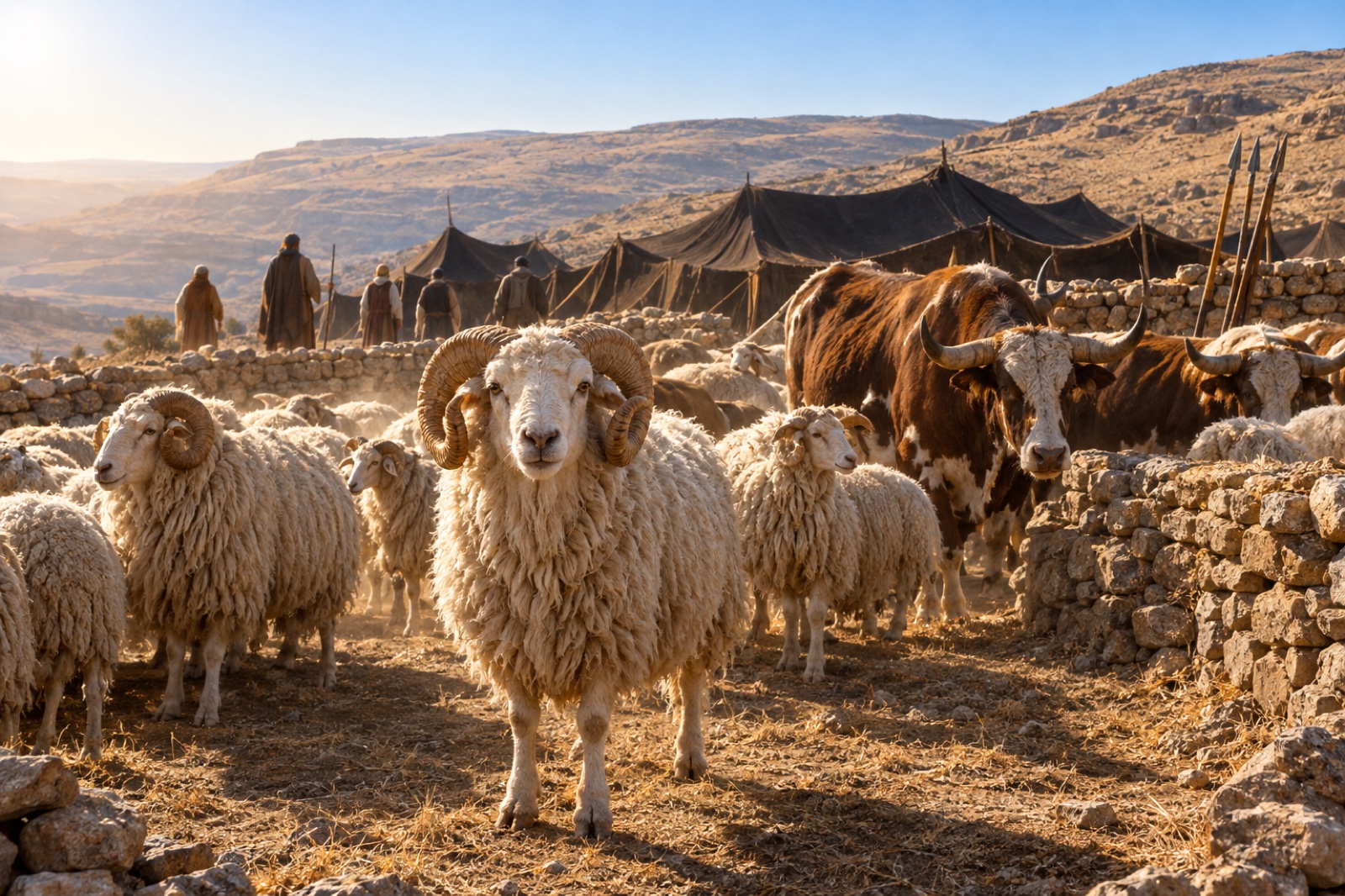
But Samuel was not giving a talk on worship styles. He was standing in a field, shouting over the noise of animals that were not supposed to be alive.
If the gap between what you do for God and what you feel from God has been bothering you, that gap is not usually closed by doing more. The Beginner’s Guide to Feeling God’s Presence Every Day is a free video guide and companion PDF built around a simple rhythm for meeting God inside an ordinary, loud, unfinished day.
The Order Saul Was Given
Saul had one assignment, and it came with a reason attached. Generations earlier, Amalek had attacked Israel on the way out of Egypt — and the record is specific about how. They picked off the stragglers:
“How he met thee by the way, and smote the hindmost of thee, even all that were feeble behind thee, when thou wast faint and weary; and he feared not God.” — Deuteronomy 25:18
So the order Saul received was not a random act of violence. It was an old account being closed. “Now go and smite Amalek, and utterly destroy all that they have, and spare them not” (1 Samuel 15:3). Nothing kept. Nothing carried home. This is hard reading, and it is meant to be — but notice what it rules out: Saul was to come back with no profit.
He came back with the pick of the herd:
“But Saul and the people spared Agag, and the best of the sheep, and of the oxen, and of the fatlings, and the lambs, and all that was good, and would not utterly destroy them: but every thing that was vile and refuse, that they destroyed utterly.” — 1 Samuel 15:9
Read that last line slowly. He destroyed the worthless things. He kept the valuable ones. Whatever else was going on, there was a sorting, and it was done by price.
Then, on the way home, he stopped at Carmel and — in the words of 1 Samuel 15:12 — “set him up a place,” a marker of his own win. Many modern translations call it a monument. Samuel would later point out the irony: this was the man who started out “little in thine own sight” (1 Samuel 15:17).
The Sound That Gave Him Away
Saul greets the old prophet first, and he leads with his report:
“Blessed be thou of the LORD: I have performed the commandment of the LORD.” — 1 Samuel 15:13
And Samuel answers with a question that is almost funny, except that a kingdom dies in it:
“What meaneth then this bleating of the sheep in mine ears, and the lowing of the oxen which I hear?” — 1 Samuel 15:14
The animals are still making noise. Saul is standing there saying “I did it” while the evidence bleats behind him.
Now watch his explanation, because this is the whole hinge of the passage. He does not say “we wanted the money.” He says the animals were kept for a religious purpose:
“They have brought them from the Amalekites: for the people spared the best of the sheep and of the oxen, to sacrifice unto the LORD thy God; and the rest we have utterly destroyed.” — 1 Samuel 15:15
Three things are packed into one sentence. The people did it, not him. The plan was to sacrifice, so it was practically holy. And God is “the LORD thy God” — Samuel’s God, said to Samuel’s face. He says it again in verse 21, and again in verse 30.
Samuel’s reply names it without decoration: “Wherefore then didst thou not obey the voice of the LORD, but didst fly upon the spoil, and didst evil in the sight of the LORD?” (1 Samuel 15:19). Not you misunderstood. You went for the loot.
Why “To Obey Is Better Than Sacrifice” Is Sharper Than It Sounds
Here is the detail that changes the verse, and it is sitting in plain sight.
The animals Saul planned to sacrifice were the exact animals he had been told to destroy.
So the offering was not a nice gesture that happened to come second to obedience. The offering was built out of the disobedience. There was nothing in Saul’s hands to give God, because every animal in that pen was proof he had not done what was asked. He was going to hand God back the thing God had refused, with smoke on it, and call it worship.
That is why Samuel’s question is shaped as a comparison rather than a ban. God is not against offerings — God asked for them, in detail, for centuries. Samuel is asking which one God actually delights in when you are holding only one of the two.
And then there is the last phrase, which is easy to skim: “and to hearken than the fat of rams.”
The fat was not a leftover. In the law of offerings it was the portion that went to God and to nobody else: “all the fat is the LORD’s” (Leviticus 3:16). People were not even permitted to eat it (Leviticus 3:17). So Samuel reaches for the single most God-reserved part of the entire sacrifice — the piece no human got to keep — and says that listening outranks even that.
Which is why the next verse escalates the way it does:
“For rebellion is as the sin of witchcraft, and stubbornness is as iniquity and idolatry. Because thou hast rejected the word of the LORD, he hath also rejected thee from being king.” — 1 Samuel 15:23
Witchcraft sounds like an enormous leap from keeping some livestock. It reads less like a leap once you notice what the two things have in common. Witchcraft, as the Bible describes it, is an attempt to get a result out of the spiritual world by using the right method — the right words, the right objects, the right offering — instead of by relating to a living God who speaks. That is precisely what Saul was doing. He had a procedure, and he believed the procedure would settle it.
This is a reading of the comparison, not a claim that the text spells out the reason. But it fits what the chapter shows: a man managing God instead of hearing God. We looked at the other half of this same chapter — the strange fact that it says God “repented” and “will not repent” within eighteen verses — in Does God Change? 1 Samuel 15 Says Yes and No in One Chapter.
And it is not an isolated idea. The same note is struck across Scripture, long before and long after Saul. “For I desired mercy, and not sacrifice; and the knowledge of God more than burnt offerings” (Hosea 6:6). “To do justice and judgment is more acceptable to the LORD than sacrifice” (Proverbs 21:3). Jeremiah puts it almost bluntly: what God commanded coming out of Egypt was “Obey my voice, and I will be your God, and ye shall be my people” (Jeremiah 7:23). And when a scribe tells Jesus that loving God and loving your neighbour “is more than all whole burnt offerings and sacrifices” (Mark 12:33), Jesus answers that he is “not far from the kingdom of God” (Mark 12:34).
The One Thing You Already Know
Go back to the thing you have not done.
Most of us do not refuse God outright. We do what Saul did, which is softer and much more common: we substitute. We bring God a great deal of activity on the subjects we are comfortable with, and we route carefully around the one subject that was actually named. And because the activity is real — the giving is real, the serving is real, the early mornings are real — it feels like obedience with a gap in it rather than a gap with decoration on it.
Saul’s sorting is the part worth sitting with. He destroyed what was “vile and refuse” and kept “all that was good.” He gave up the things that cost him nothing. The one thing you already know is almost always in the other pile — the expensive pile, the pile with your reputation in it, or your comfort, or your right to be in the right.
Here is the mercy in it, though, and it is easy to miss while the verse is still stinging. Samuel’s line is not “God is impossible to please.” It is the opposite. The thing God delights in most is the thing that costs no money at all. You do not need the best of the herd. You need to do the one thing. Anyone can afford that — the person with nothing, the person with no time, the person far from any church.
And obedience here is not payment. It is attention. “To hearken” is the language of a relationship, not a transaction — which is why Samuel ranks it above the part of the offering that belonged to God alone. God is not asking to be compensated. God is asking to be listened to. If you are not sure you would recognise God’s voice in the first place, that is an honest place to start, and it is where How Do I Know If God Is Talking to Me? Samuel Didn’t begins.
Saul’s story did not have to end where it ended. He said “I have sinned” twice (1 Samuel 15:24, 15:30) — and both times he immediately asked for something else: pardon without turning back, and then honour in front of the elders. What he never did was go and do the thing. If you want the longer arc of how that pattern played out across his whole reign, we traced it in What Can the Life and Downfalls of King Saul Teach Us Today?
You still can. That is the entire difference, and today is enough time.
Actions to Take Today
- Name the animal. Take two minutes and finish this sentence on paper or in your phone: “The thing I already know I’m supposed to do is ___.” Do not soften it into a category like “be more patient.” Name the actual act, with the actual person’s name in it if there is one.
- List what you’ve been bringing instead. Underneath it, write down two or three good things you have been doing on that same subject — praying about it, reading about it, talking to someone else about it. This is not to make you feel bad. It is so you can see the shape of the substitution clearly, the way Samuel heard the sheep.
- Do the smallest real version of it, today. Not the whole repair — the first true step of it. Send the message, even badly worded. Say the sentence out loud to the person. Pour the thing away. Open the account and look at the number. If it takes less than ten minutes, do it before you close this page.
Journal Prompts
- Saul destroyed what was worthless and kept what was valuable. In your own obedience, what have you been willing to give up easily — and what is in the other pile?
- Saul said “the LORD thy God” to Samuel, three times in one conversation. When you talk about God, does it sound like your God, or like someone else’s God you are being measured against?
- If obedience is attention rather than payment, what would change about the way you pray tomorrow morning?
A Prayer
God, I know what the thing is. I have been bringing You everything except it, and I have been hoping the rest would count. I am tired of standing here telling You I have done what You asked while the noise behind me says otherwise. Help me do the one thing today, the small true version of it, before I lose my nerve. And thank You that what You want from me is not something I have to be able to afford. Amen.
Let’s Talk About It
Saul’s cover story was that the animals were for a sacrifice — and he may even have believed it by the time he said it. Do you think people usually know they are substituting activity for obedience, or is it something we genuinely cannot see in ourselves? Tell us what you think in the comments below.
The thing God delights in most costs nothing. If you want help hearing God in an ordinary, noisy day — at the sink, on the bus, in the middle of a hard week — The Beginner’s Guide to Feeling God’s Presence Every Day is free.
Share This
“To obey is better than sacrifice” hits different once you notice the animals Saul wanted to sacrifice were the exact animals God told him to destroy. The offering was made out of the disobedience.
Saul destroyed everything worthless and kept everything valuable, then called it worship. I do that. I obey God loudly on the cheap things and go quiet on the expensive one.
Samuel picked the one part of the offering that belonged to God alone — the fat of rams — and said listening outranks even that. God isn’t asking to be paid. God is asking to be heard.
Questions People Ask About 1 Samuel 15:22
What does 1 Samuel 15:22 mean?
1 Samuel 15:22 is the prophet Samuel’s answer to King Saul after Saul kept livestock he had been commanded to destroy and said he intended to sacrifice it: “Hath the LORD as great delight in burnt offerings and sacrifices, as in obeying the voice of the LORD? Behold, to obey is better than sacrifice, and to hearken than the fat of rams.” In context it means that an offering cannot stand in for the obedience it was meant to replace. The animals Saul planned to sacrifice were the exact animals God had told him to destroy, so the offering itself was made out of the disobedience. The verse is not a rejection of sacrifice in general — it is a ranking of what God delights in when a person is holding only one of the two.
What did God tell Saul to do in 1 Samuel 15?
According to 1 Samuel 15:2-3, God sent Saul against Amalek because of what Amalek did to Israel after the exodus from Egypt — Deuteronomy 25:18 records that they attacked the stragglers, “all that were feeble behind thee.” Saul was told to “utterly destroy all that they have, and spare them not,” including the livestock. 1 Samuel 15:9 says Saul and the people instead spared King Agag and “the best of the sheep, and of the oxen, and of the fatlings, and the lambs, and all that was good,” destroying only “every thing that was vile and refuse.”
Why is “to hearken than the fat of rams” significant?
In the law of offerings, the fat was the portion reserved for God alone. Leviticus 3:16 states “all the fat is the LORD’s,” and Leviticus 3:17 forbade people from eating it. By naming the fat of rams specifically, Samuel chose the single most God-reserved part of an entire sacrifice — the piece no worshipper was permitted to keep — and said that listening to God outranks even that. It makes the comparison in 1 Samuel 15:22 as strong as it can be made without dismissing sacrifice altogether.
Why does 1 Samuel 15:23 compare rebellion to witchcraft?
1 Samuel 15:23 says “rebellion is as the sin of witchcraft, and stubbornness is as iniquity and idolatry.” The text does not spell out the reason, so any explanation is a reading rather than a stated fact. One widely held reading is that witchcraft, as Scripture describes it, seeks a result from the spiritual world through the correct method — the right words, objects or offerings — rather than through relationship with a God who speaks. That is what Saul attempted: he had a religious procedure and expected it to settle the matter, instead of doing what he had been told.
Does God still want worship and offerings?
Yes — the Bible records God asking for offerings in detail across many centuries, and 1 Samuel 15:22 is framed as a comparison rather than a prohibition. What Scripture repeatedly refuses is an offering used as a substitute for obedience. Hosea 6:6 says “I desired mercy, and not sacrifice; and the knowledge of God more than burnt offerings.” Proverbs 21:3 says “To do justice and judgment is more acceptable to the LORD than sacrifice.” In Mark 12:33 a scribe says that loving God and loving one’s neighbour “is more than all whole burnt offerings and sacrifices,” and in Mark 12:34 Jesus tells him he is “not far from the kingdom of God.”