 0
0
 0
0
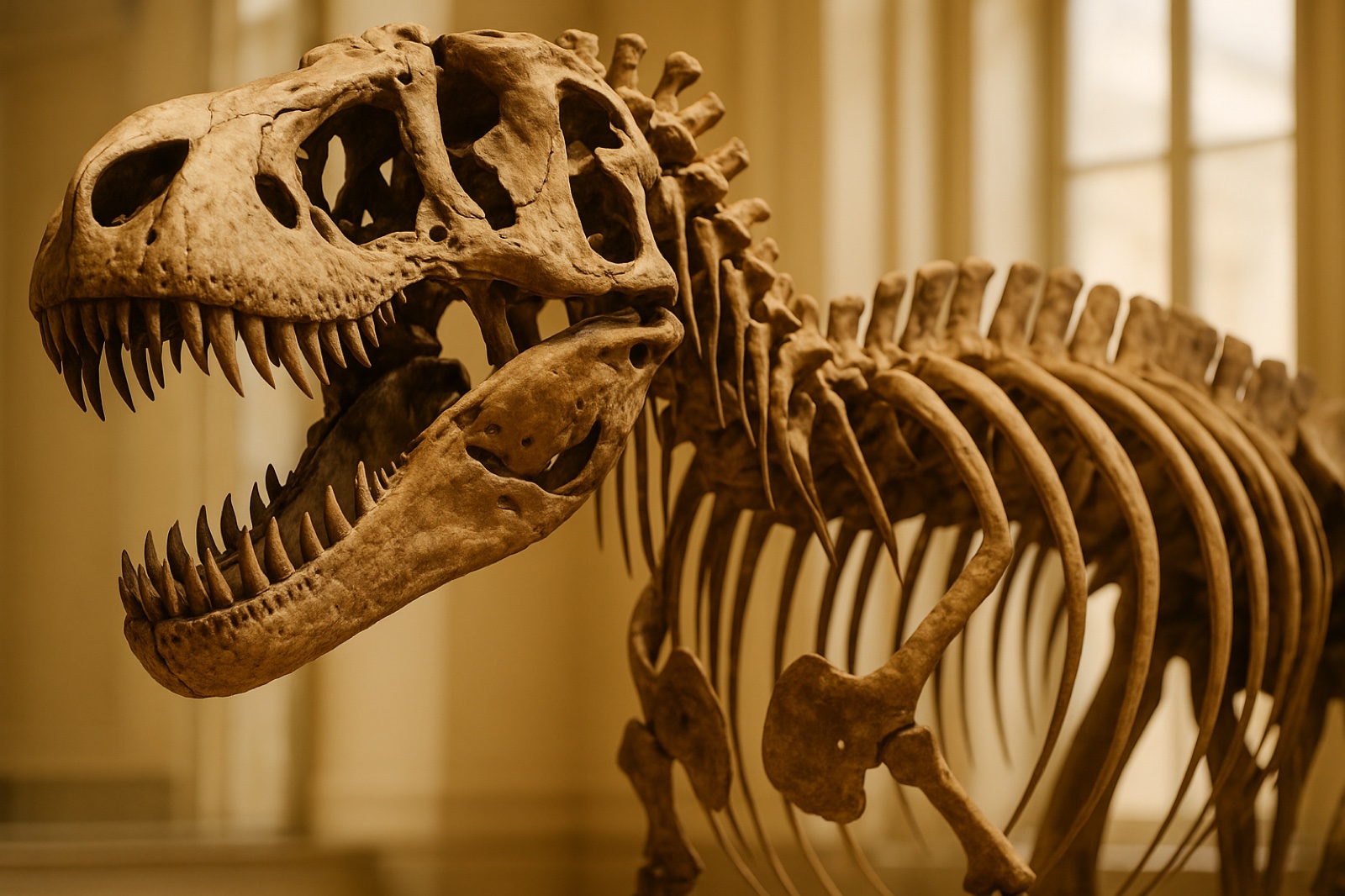
Scotty the T. rex is the biggest Tyrannosaurus rex anyone has ever dug out of the ground. Researchers estimate he weighed nearly 9,000 kilograms, heavier than any other T. rex skeleton measured the same way. He was probably in his twenties when he died, which is old for a T. rex.
And when he died, 66 million years ago, in a salty marsh in what is now Saskatchewan, Canada, he was in the middle of healing a broken rib.
We know that because the healing is still there. Inside that rib, scientists have found a whole network of blood vessels that his body grew into the break. The vessels turned to stone along with the bone. The researchers say nobody had ever seen anything like it in a fossil before.
What scientists found inside Scotty the T. rex’s broken rib
When a bone breaks, your body does not wait around. Blood rushes into the injury. New blood vessels start growing into the gap to carry in what the bone needs to rebuild. That is true for you, and it turns out it was true for a dinosaur the size of a bus.
After Scotty’s rib broke, iron-rich blood flowed into the area, and new vessels formed around the break as part of the repair. Then Scotty died before the rib finished mending. The marsh he died in was salty, which slowed down the rotting. The iron from his own blood may have helped the delicate vessels hold their shape. Over millions of years, they mineralized, turning into stone copies of the living tubes they once were.
“It’s like winning the lottery,” said Mauricio Barbi, the University of Regina physics professor who led the research. “Scotty’s rib contains a vast network of mineralized blood vessels that has never before been observed in a fossil.”
The first clue came back in 2020. Jerit Mitchell, who was an undergraduate student at the time, scanned the rib with X-rays at the Canadian Light Source and spotted signs of the vessels. The team later described them in the journal Scientific Reports.
The news this month is the next step. In April 2026 the team took the rib to Oak Ridge National Laboratory in the United States and looked at it with neutrons instead of X-rays. X-rays are good at showing heavy, dense material. Neutrons are better at picking up light elements and soft tissue. Using both lets the team build 3D pictures of the inside of the rib without cutting it open or damaging what is preserved there.
“Every fossil is a tiny snapshot of the past,” said Mitchell, now a doctoral student.
Did the broken rib kill Scotty?
Some headlines say yes. At least one described Scotty “succumbing” to injuries from a dinosaur fight.
But the lab that did the imaging does not say that. Its own announcement describes a rib that was still healing when Scotty died, and stops there. It does not name a cause of death. A healing break tells you that something hurt him and that his body was fixing it. It does not tell you what finally ended his life.
That is worth being careful about, because the more interesting story is the other one.
The biggest T. rex had been hurt before
Here is the part the new headlines mostly skip. The broken rib was not the only damage on Scotty’s skeleton.
When researchers studied his bones years ago, they found a jaw marked with holes from a parasitic infection. They found a broken bone in his tail, a hole near one eye socket, and impacted teeth. Together they are the marks of a rough life.
Early reports put Scotty at about 30 years old. A closer look at his bone growth has since brought that estimate down to somewhere between about 23 and 27. That is still a long life for a T. rex. And he did not get there by never getting hurt. He got there while carrying injury after injury, with a body that kept working to repair itself.
The rib in this study is the one where we can actually see that work in progress. It is a picture of what his body had been doing all along.
Healing starts long before it looks like healing
There is something quietly hopeful in that.
If you had looked at Scotty on the day that rib broke, you would have seen an injured animal. Nothing about the outside would have told you what was going on inside. But inside, his body had already started. Blood was already moving in. New vessels were already growing across the gap. Repair was under way long before anyone could have seen it.
That is how bodies work. Most of us have lived it. A cut that looks awful on day one is already closing underneath. A broken arm in a cast looks exactly the same for weeks, while the bone is quietly knitting itself back together.
And many people find that it is how the other kinds of healing work too. The grief that feels exactly the same this month as last. The hurt from someone you trusted. The season where you just feel broken and cannot see any progress at all. It is easy to decide that nothing is happening, because nothing shows.
There is a very old kind of hope that says otherwise: that the God who made bodies able to rebuild themselves does not start a work of healing in a person and then walk away from it halfway. Scotty’s rib is a strange place to be reminded of that. But there it is, frozen in stone for 66 million years. The mending was real even though it was not finished.
If you would like to go further, we have looked before at how a zebrafish can regrow a cut spinal cord while we build scar tissue instead, and at how the 9/11 Survivor Tree still buds first every spring with its scar line showing. And from the same last days of the dinosaurs, a feather found in fossilized dinosaur droppings may help explain which birds made it through.
What Scotty can still teach us
Scotty was discovered in 1991 near the small town of Eastend, Saskatchewan. It took years to dig him out of the rock. Today he stands in the Royal Saskatchewan Museum. Visitors look up at the biggest T. rex ever found and see a giant.
The scientists looking inside his bones see something else too. They see an animal that got hurt and kept going. A body that, even at the very end, was still doing the work of putting itself back together.
Most of us will never be anyone’s idea of a giant. But we all know what it is like to be in the middle of healing from something, with nothing much to show for it yet. If that is where you are today, it might help to remember that the work can be happening well before you can see it.
Discussion Question
Scotty’s bones carry the marks of a long, hard life. Do you think the marks we carry from what we have survived are something to hide, or something worth being proud of? Tell us what you think in the comments.
Share This
Post 1: The biggest T. rex ever found was still healing a broken rib when he died, 66 million years ago. The blood vessels his body grew into the break turned to stone. Healing starts way before it looks like healing. https://bgodinspired.com/
Post 2: The biggest T. rex ever found had an infected jaw, a broken tail bone and a broken rib his body was still repairing when he died. He did not make it into his twenties by never getting hurt. Needed that reminder today. https://bgodinspired.com/
Post 3: Scientists just used neutrons to look inside a 66-million-year-old broken dinosaur rib and found a whole network of fossilized blood vessels. Your body starts repairing a break almost right away. Apparently so did his. https://bgodinspired.com/
Questions People Ask About Scotty the T. Rex
Who is Scotty the T. rex?
Scotty is the largest Tyrannosaurus rex skeleton ever found. The fossil was discovered in 1991 near Eastend, Saskatchewan, in Canada, and is displayed at the Royal Saskatchewan Museum in Regina. Researchers estimate Scotty weighed nearly 9,000 kilograms. Scotty’s age at death was first reported as about 30, but a later study of bone growth revised it to roughly 23 to 27 years.
What did scientists find in Scotty the T. rex’s rib?
Scientists found a network of fossilized blood vessels inside one of Scotty’s broken ribs. After the rib broke, the dinosaur’s body grew new blood vessels into the injury as part of healing, but Scotty died before the rib finished mending. The vessels mineralized over millions of years. University of Regina researchers say this kind of vessel network had never been seen in a fossil before.
How were the blood vessels in the T. rex rib preserved for 66 million years?
The blood vessels in Scotty’s rib survived because Scotty died in a salty marsh, which slowed decomposition, and because iron from the dinosaur’s own blood may have helped the delicate structures keep their shape while they turned to stone. Soft-tissue structures like this are extremely rare in the fossil record.
Did a broken rib kill Scotty the T. rex?
No one has shown that a broken rib killed Scotty the T. rex. Some news headlines have said the dinosaur died from its injuries, but the Oak Ridge National Laboratory announcement about the research only says the rib was still healing when Scotty died. It does not name a cause of death. Scotty’s skeleton also shows other injuries, including a jaw damaged by a parasitic infection, a broken tail vertebra and a hole near one eye socket.
Why did scientists use neutrons to study the T. rex fossil?
Scientists used neutron imaging at Oak Ridge National Laboratory because neutrons are good at revealing light elements and soft tissue, while X-rays are better at showing dense, heavy material. Combining both methods let researchers build 3D views of the inside of Scotty’s broken rib without cutting the fossil open or damaging the preserved blood vessels.
Sources: Oak Ridge National Laboratory; Royal Saskatchewan Museum.