 0
0
 0
0
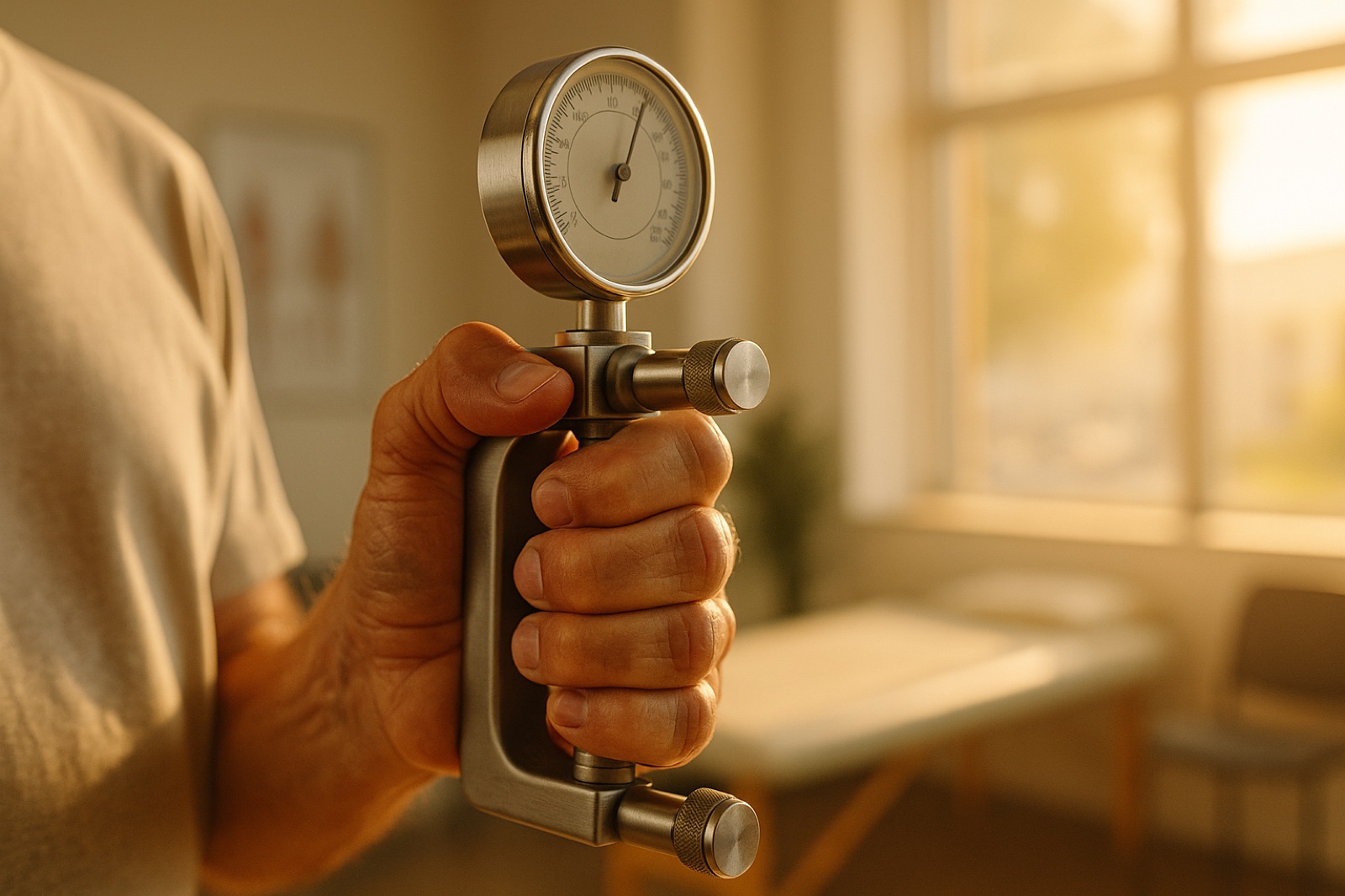
There’s a test doctors sometimes run that looks far too simple to mean anything. They hand you a small metal device, ask you to squeeze it as hard as you can, and write down the number.
That number is your grip strength. It turns out to be one of the more useful single measurements in medicine — it tracks with how well people recover from surgery, how independent they stay as they get older, and, in large population studies, how long they live.
So when a study in the journal Gut connected gut bacteria and muscle strength — closely enough that older adults carrying one particular microbe measured about 29% stronger in the hand — a lot of people looked up from their coffee.
What the gut bacteria and muscle strength study actually found
The research came out of the University of Granada in Spain and Leiden University Medical Center in the Netherlands, published in Gut, a BMJ journal, in March 2026. It has two halves, and they are not equally strong. That distinction matters more than the headline does.
The first half was done in mice. Researchers gave the animals a specific bacterium — Roseburia inulinivorans — and compared them against animals that didn’t get it. The treated mice ended up with roughly 30% more forelimb grip strength. When the team looked at the muscle tissue itself, the fibers were larger, and there was a higher share of what are called type II fibers: the fast, powerful ones that handle lifting and sprinting rather than slow endurance work.
The second half looked at people. Across a group of adults, the relative abundance of that same species — and notably not its close cousins in the Roseburia family — lined up with several different strength measures: handgrip, leg press, and bench press. Among the older adults, those with detectable levels of the microbe averaged about 29% higher handgrip strength than those without it.
Same organism. Same direction. Two very different kinds of evidence.
The part almost every headline skipped
Here’s the honest version, because it’s the version that’s actually useful.
The mouse half is an experiment. Researchers changed one thing on purpose and watched what happened, which is how you build a case for cause and effect. The human half is not an experiment. It’s a snapshot — bacteria and strength measured at the same moment, in the same people, and then compared.
A snapshot can tell you two things travel together. It cannot tell you which one is doing the driving. It’s entirely possible that this microbe helps build strength in people. It’s equally possible that being strong — moving more, eating differently, having a body that works hard — creates the conditions where this microbe thrives. The researchers said so plainly. They have not proven cause in humans, and they didn’t claim to.
Which also means there’s nothing here to go buy. No jar on a shelf delivers this. The interesting part of this study isn’t a product. It’s the picture it paints.
Why grip strength is such a strange thing to measure
Step back from the bacteria for a second, because the measurement itself is the quiet genius of this study.
Grip strength is the most literal thing a body can be asked to do: hold on. Not run, not lift, not endure — hold on. And for reasons researchers still find a little uncanny, that one number reports on the whole system. Muscle mass. Nerve signaling. Nutrition. Recovery. Inflammation. It’s a single reading that summarizes a body’s general ability to keep going.
We tend to file strength under things we earn. You go to the gym, you eat the protein, you put in the years, and the number goes up. That story is true, and it’s a good story. It just isn’t the whole one.
Because a growing pile of research keeps landing on the same uncomfortable footnote: a meaningful share of how your body performs is being handled by things you never decided on. A separate study found that gut bacteria can predict how fast a person is aging. Another identified a molecule that wakes up repair cells already sitting dormant inside muscle. Even loneliness, it turns out, shows up in the body as physical frailty, not just as a mood.
None of that is under conscious control. You didn’t apply for your gut microbiome. You inherited most of it, absorbed the rest from food and place and the people around you, and it has been working on your behalf since before you could form a memory.
The ecosystem you never applied for
There’s something disorienting about that if you sit with it long enough.
The thing you’re quietly proudest of physically — that you can still carry all the groceries in one trip, still open the jar, still keep up — has co-authors. Trillions of them. Organisms whose names you don’t know, doing work you’ll never feel, in a place you’ll never see. And a measurable share of what you’d call your strength is theirs.
People noticed some version of this long before anyone had a microscope. The oldest spiritual writing we have almost never treats strength as an achievement. It treats it as something received — a supply that gets renewed rather than a reserve you generate, given by God rather than manufactured by the person doing the lifting. Those writers had no idea a bacterium existed. They got there a different way, probably by noticing that strength arrives and runs out on a schedule nobody sets for themselves.
It’s a strange thing to find a version of that idea in a BMJ journal, sitting in a table of relative abundances.
So what do you actually do with this?
Less than you’d hope. And maybe more than you’d think.
There’s no action item here. The science isn’t far enough along to hand anybody instructions, and anyone selling you a supplement on the back of this study is running well ahead of the evidence.
But there’s a smaller thing on offer. Most of us carry a quiet, exhausting assumption that we are the sole source of our own capacity — that if we’re running low, it’s a personal failure and the answer is to try harder. This study is a small piece of evidence against that. You are being helped, constantly, by systems you didn’t build and can’t take credit for. That isn’t a diminishment. It’s closer to good news.
Next time someone hands you one of those little metal squeeze devices, the number that comes out is yours. Mostly.
A question worth sitting with
Do you think we give people too much personal credit for their physical health — or not enough? The science keeps blurring the line between what we earn and what we were simply handed. Where would you draw it? Leave a comment below — I read them.
If this was interesting, pass it on
Steal any of these:
Grip strength quietly predicts how well you age. A new study found older adults carrying one specific gut microbe had 29% stronger grip. Still an association, not proof — but a strange thought: some of your strength was never technically yours. https://bgodinspired.com/index.php/bible-resources/bible-and-science/gut-bacteria-and-muscle-strength/
I always assumed strength was something you earn. Then I read about a bacterium living in the gut that lines up with a 29% difference in handgrip strength in older adults. You didn’t choose it. You can’t feel it. And it’s apparently on your team. https://bgodinspired.com/index.php/bible-resources/bible-and-science/gut-bacteria-and-muscle-strength/
Best line I read this week: grip strength is the most literal thing a body can be asked to do — hold on. And a share of it may be outsourced to organisms you never applied for and will never meet. https://bgodinspired.com/index.php/bible-resources/bible-and-science/gut-bacteria-and-muscle-strength/
Questions people are asking
Can gut bacteria really make you stronger?
Not proven in people yet. In a 2026 study published in the journal Gut, mice given the bacterium Roseburia inulinivorans developed roughly 30% greater forelimb grip strength than mice that didn’t receive it, along with larger muscle fibers. In humans, the study found only an association: older adults with detectable levels of the same species averaged about 29% higher handgrip strength. Because the human data was collected at a single point in time, researchers cannot say whether the bacterium builds strength or whether stronger, more active bodies simply make a better home for it.
What is Roseburia inulinivorans?
It’s a species of bacteria that lives in the human large intestine and feeds on dietary fiber, producing short-chain fatty acids as a byproduct. It belongs to the Roseburia genus. In the 2026 Gut study, this particular species — and not the other Roseburia species the researchers looked at — was the one whose abundance lined up with greater handgrip, leg press, and bench press strength.
Should I take a probiotic to build muscle strength?
There is no evidence supporting that, and this study doesn’t provide any. Roseburia inulinivorans is not a standard commercial probiotic, the human findings are associations rather than proof of cause, and no clinical trial has tested whether supplementing it improves strength in people. Any product marketed on the back of this research is well ahead of the science. Questions about your own health are worth taking to a doctor rather than to a label.
Why do doctors measure grip strength at all?
Because it’s a fast, cheap reading that reflects far more than the hand. Grip strength correlates with overall muscle mass, nerve function, nutrition, and recovery capacity, and in large population studies it tracks with how well people come through illness and surgery and how independent they stay as they age. It isn’t a diagnosis on its own — it’s a quick summary of how well the whole system is currently holding up.
Where was this study published, and who did it?
It was published in Gut, a peer-reviewed journal from BMJ, in March 2026. The work came from researchers at the University of Granada in Spain and Leiden University Medical Center in the Netherlands.