 0
0
 0
0
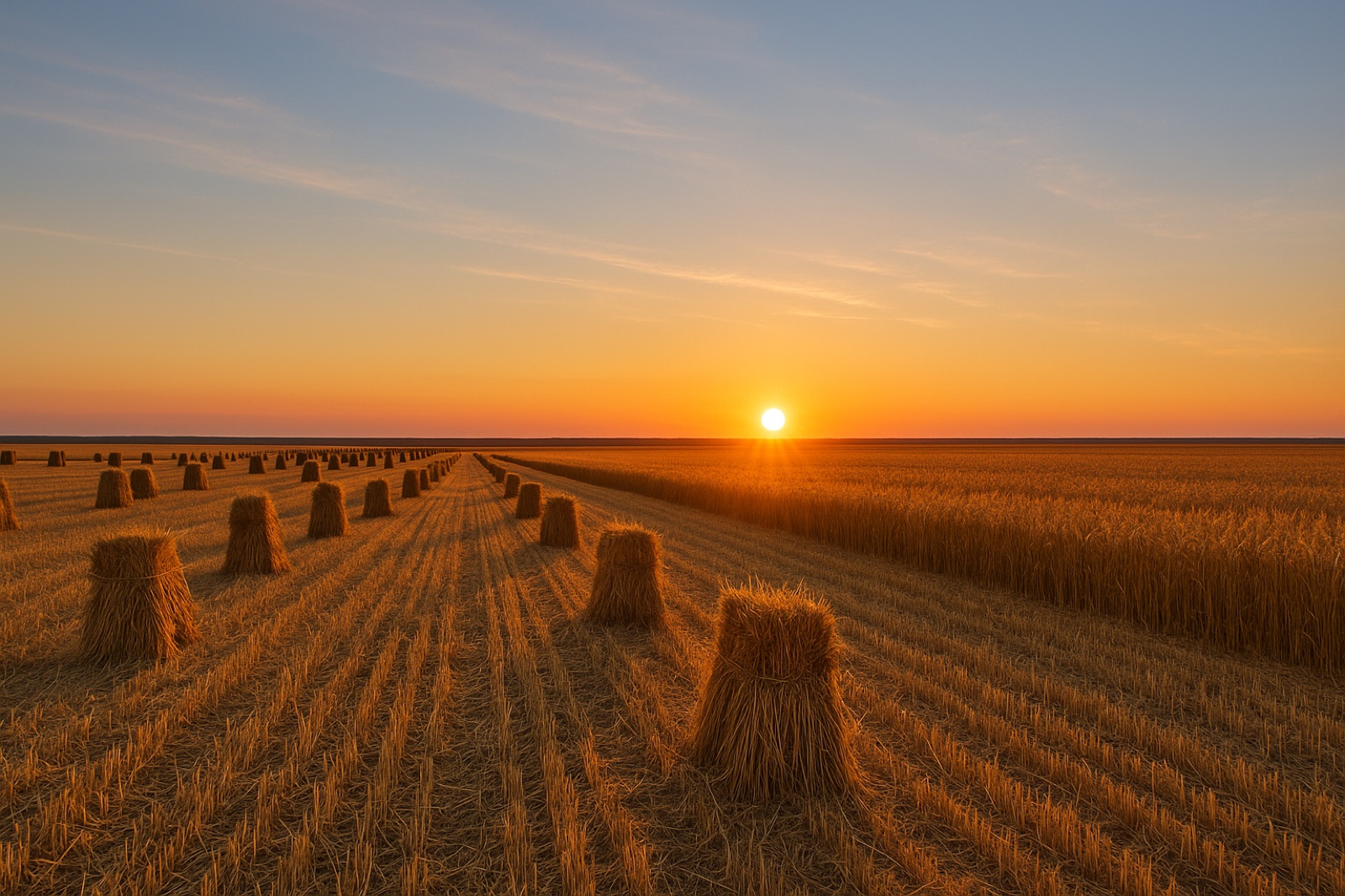
Most of us feel it before we can name it. The light at dinner looks different. The shadows are longer at the same hour. And very often, something in our own life is turning at the same time — a job ending, a child leaving home, a friend moving away, a new start we did not choose.
This year that feeling has a date. The fall equinox — the autumn equinox, or the September equinox, depending on where you live — arrives on 22 or 23 September 2026. If you came here asking about the fall equinox biblical meaning, here is the short answer: the Bible never uses the word. But it does contain a promise about this exact moment. It was made right after the Flood, long before Abraham, to everyone who would ever live. And the reason the text gives for that promise is not the one you would expect.
What Actually Happens at the Fall Equinox
At the equinox, the sun crosses the imaginary line above Earth’s equator. For one instant, neither half of the world is tilted toward it.
That instant is the same for everyone, but the date on your calendar depends on your clock. In 2026 it happens just after midnight UTC on 23 September. That is the evening of 22 September across the Americas (around 8 p.m. in New York). It is the early hours of 23 September in Lagos and Nairobi, and around breakfast time in Manila.
The word equinox comes from Latin for “equal night.” But here is the first surprise: day and night are only nearly equal. The air bends sunlight over the horizon, so we see the sun a little before it is really up. And sunrise and sunset are counted from the top edge of the sun, not the middle. Put together, the day is about 14 minutes longer than the night at the equator on the equinox, and a little more than that the further you live from it.
In the middle latitudes, the day that comes closest to a true even split falls a few days after the September equinox in the north, and a few days before it in the south. And if you live almost on the equator — Nairobi, Kampala, Singapore — there is no such day at all. Every day of your year, the light wins by a few minutes.
One more thing most people never think about: this is not autumn everywhere. The same instant that starts autumn in the north starts spring in the south. Half the world is heading into harvest. The other half is heading into its growing season.
So whatever you are carrying into this season — an ending, a beginning, or both at once — you are not the only thing that is turning. And that turning was spoken about a very long time ago.
What Does the Bible Say About the Equinox?
The word equinox is not in the Bible. But there is a Hebrew word that comes close. It is tequphah, and it means “a coming round” or “a circuit.” It shows up only four times in the Old Testament.
One of them is about a festival:
And thou shalt observe the feast of weeks, of the firstfruits of wheat harvest, and the feast of ingathering at the year’s end. (Exodus 34:22)
“The year’s end” there is tequphah — the turning of the year. Another time, the same word is used for the sun itself: “his circuit unto the ends of it: and there is nothing hid from the heat thereof” (Psalm 19:6).
Centuries later, Jewish writers used the same word, tekufah, for each of the four turning points of the sun’s year. They called the September equinox Tekufat Tishrei.
That feast of ingathering is also called the Feast of Tabernacles, or Sukkot. It begins on the fifteenth day of the seventh month (Leviticus 23:34). Hebrew months start with the new moon, so the fifteenth always lands near a full moon. In 2026 the feast begins at sunset on 25 September — three days after the equinox. And the full moon closest to the equinox, the one many people call the Harvest Moon, rises the next day, 26 September.
So the Bible does notice this turn in the year. But the deepest thing it says about it is much older than any festival. It is in Genesis 8.
The Promise in Genesis 8:22
Picture the scene. The water is finally gone. Noah steps out onto ground nobody has planted since the Flood. The first thing he does is build an altar. And then the text lets us hear something Noah does not:
And the LORD smelled a sweet savour; and the LORD said in his heart, I will not again curse the ground any more for man’s sake; for the imagination of man’s heart is evil from his youth; neither will I again smite any more every thing living, as I have done. While the earth remaineth, seedtime and harvest, and cold and heat, and summer and winter, and day and night shall not cease. (Genesis 8:21-22)
Look at the list. Four pairs: seedtime and harvest, cold and heat, summer and winter, day and night. The equinox is the day the last pair almost balances. It is a checkpoint you can actually see — the promise showing up on schedule.
Now look at who the promise is for. There is no chosen nation here yet. There is no Abraham — he is still chapters away. This is for every person who would ever plant a seed or bring in a crop, anywhere on the earth. When God says it out loud in the next chapter, the covenant is made with Noah’s descendants and with every living creature. We looked at that surprising detail in Do Pets Go to Heaven? What the Bible Actually Says.
Two small words are easy to read past. The first is in his heart. Before the promise was ever announced, God decided it inwardly. Nobody asked for it. Nobody bargained for it.
The second is while the earth remaineth. The promise does not say the earth will last forever. It says that as long as the earth is here, these rhythms will not stop.
The Reason Nobody Expects
Here is the part that stopped me. Go back two chapters, to the reason the Flood happened at all:
And GOD saw that the wickedness of man was great in the earth, and that every imagination of the thoughts of his heart was only evil continually. (Genesis 6:5)
Now read the reason given for the promise again: “for the imagination of man’s heart is evil from his youth.”
It is the same diagnosis. The reason for the Flood and the reason for the promise are almost word for word the same reason. The water did not fix the human heart. Within a page, Noah himself plants a vineyard and gets drunk (Genesis 9:20-21). People had not changed. What changed was how God chose to respond to them.
Some modern translations read that little connecting word as “even though” — even though the human heart is bent toward evil. Either way, the point stands. The seasons did not arrive because people finally deserved them. They arrived as a promise made to people who did not.
The seasons were never a reward. They were a promise.
That is what makes it a covenant and not a deal. A deal lasts as long as both sides keep it. This one is kept from God’s side. (If you want to go deeper into that idea, our word study on the Hebrew word for covenant shows how the Bible pictures God walking both halves of the path.)
Seedtime and Harvest at the Same Moment
Go back to that fact about the equinox. At that one instant, it is autumn in half the world and spring in the other half. Harvest in one place. Seedtime in another. The first pair in the promise is not taking turns. Both halves are happening at once, on the same planet, under the same sun.
Your life is probably like that right now too. Something is being gathered in or coming to an end. Something else is just being planted, and you are not sure it will grow.
Genesis 8:22 does not promise which one you get this year. It promises that neither one stops. The harvest you are grieving is not the last harvest. The seed you are afraid to plant is not going into a world that is about to quit.
And notice this: the equinox is not perfectly equal. It never has been. It is a few minutes off, every single time — and it still arrives exactly when it was promised. Your season does not have to be perfectly balanced to be held inside that promise.
Three Things You Can Do This Week
- Watch one sunset for two minutes. Any evening this week, notice where the sun goes down against a rooftop, a tree or a pole. Around the equinox it sets almost due west for almost everyone on Earth. Take a photo. In three months it will set somewhere else — and then it will come back. That is the promise, moving.
- Count what has already been kept. Double your age. That is roughly how many equinoxes you have already lived through, every one on time. If you want the exact number of days and nights, our free How Many Days Have I Been Alive? calculator will count them for you. Write the number where you will see it.
- Write two lines, then share one. On one piece of paper, write “Harvest:” and one thing in your life that is ending or being gathered in. Under it, write “Seedtime:” and one thing that is just starting. Keep them on the same page, because the promise holds both. Then send a short message to one person whose season is changing too: “Thinking of you as the season turns.”
Questions to Sit With
- Which feels more true of your life right now — harvest or seedtime? What makes you say that?
- Where have you been treating something good in your life as a reward you have to keep earning, instead of a gift that was promised?
A Prayer for a Season That Is Turning
God, the light is changing, and so is my life, and I don’t feel ready for either one. You made this promise before anyone deserved it, knowing exactly what we are like — and you kept it anyway, every day and every night since. Help me trust that the harvest I am losing is not the last one, and that the seed I am holding is not wasted. I don’t need the season to be perfectly balanced. I just need to know I am still inside your promise.
One Question for You
Genesis gives almost the same reason for the Flood and for the promise that came after it. Does that make the promise feel more secure to you, or less? Tell us what you think in the comments — we read them.
Share This
- The fall equinox is only nearly equal. The day wins by a few minutes. And it still shows up exactly on time, the way Genesis 8:22 said it would.
- Genesis gives almost the same reason for the Flood and for the promise that came after it: the human heart had not changed. The seasons were never a reward. They were a promise made to people who did not deserve one.
- Right now it is harvest in half the world and planting season in the other half. Seedtime and harvest are not taking turns this week. They are happening at the same moment, on the same planet.
Questions People Ask About the Fall Equinox and the Bible
What is the biblical meaning of the fall equinox?
The Bible does not mention the equinox by name, but Genesis 8:22 speaks directly to the turning of the seasons: “While the earth remaineth, seedtime and harvest, and cold and heat, and summer and winter, and day and night shall not cease.” God makes this promise immediately after the Flood, before Abraham and before the nation of Israel, so it applies to all of humanity. The verse just before it gives the reason as “the imagination of man’s heart is evil from his youth,” which is nearly the same assessment Genesis 6:5 gives as the reason for the Flood. Read that way, the fall equinox is a visible reminder that the seasons continue as an unearned promise rather than a reward.
Does the Bible mention the equinox?
The word equinox does not appear in the Bible. The closest term is the Hebrew word tequphah, meaning “a coming round” or “circuit,” which appears four times in the Old Testament. It is used in Exodus 34:22 for “the feast of ingathering at the year’s end” and in Psalm 19:6 for the sun’s “circuit.” Later Jewish writers used the same word, tekufah, for the four turning points of the solar year, and called the September equinox Tekufat Tishrei.
Are day and night exactly equal on the equinox?
No. On the equinox, daylight lasts slightly longer than night almost everywhere on Earth, because the atmosphere bends sunlight over the horizon and because sunrise and sunset are measured from the top edge of the sun rather than its centre. At the equator, the day is about 14 minutes longer than the night on the equinox. In the middle latitudes, the day when daylight and darkness come closest to equal, called the equilux, falls a few days after the September equinox in the Northern Hemisphere and a few days before it in the Southern Hemisphere. Places within about two degrees of the equator have no equilux at all, because every day of the year is longer than the night.
When is the fall equinox in 2026?
The September equinox of 2026 takes place just after midnight UTC on 23 September 2026. In the Americas that is the evening of 22 September, around 8 p.m. in New York, while across Europe, Africa and Asia the equinox falls on 23 September local time. It marks the start of astronomical autumn in the Northern Hemisphere and astronomical spring in the Southern Hemisphere.
Is it okay for Christians to mark the equinox?
The Bible neither commands nor forbids marking the equinox. Scripture does treat the turning of the year as worth noticing: ancient Israel’s feast of ingathering, also called the Feast of Tabernacles or Sukkot, is set “at the year’s end” in Exodus 34:22, and it falls close to the September equinox. In 2026, Sukkot begins at sunset on 25 September. A simple way for a Christian to mark the equinox is to give thanks for the harvest and for the promise of Genesis 8:22 that “day and night shall not cease.”