 0
0
 0
0
In 1963, Japan counted every person in the country who was 100 years old or older. There were 153 of them.
This week the count came back again. There are now 107,677.
It is the first time the number of Japan centenarians has passed 100,000. It jumped by 7,914 in a single year. And nearly 88% of them are women.
That is a real triumph. Better medicine, better food, safer lives. But a number that big quietly raises a question almost every family on earth runs into sooner or later. Not “how do we live to 100?” but “who carries us when we get there?”
Japan Centenarians: From 153 to 107,677
Japan’s health ministry released the new figures this week, ahead of Respect for the Aged Day, the country’s national holiday for honoring older people. The count covers everyone aged 100 or over as of September 1, as the Associated Press reported.
The climb has been steep. Japan passed 1,000 centenarians in 1981. It passed 10,000 in 1998. Now it has passed 100,000.
The oldest woman in Japan is Fuyo Kishimoto, 114, who lives in Kyoto. The oldest man is Hikaru Kato, 112, from Kumamoto in the south of the country.
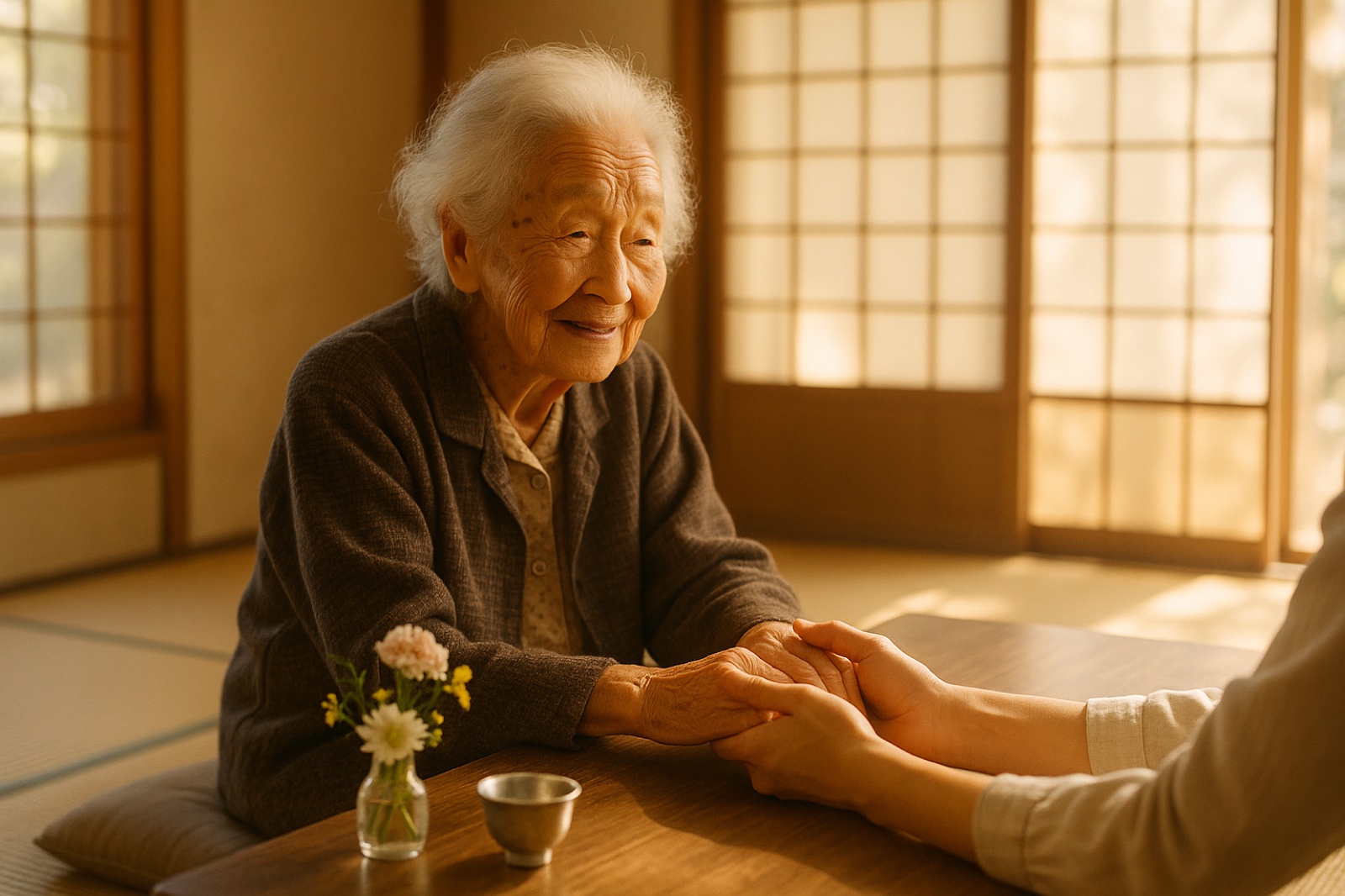
Health Minister Kenichiro Ueno credited “progress in medical technology, healthy lifestyle and diet.” People who reach 100 are honored with a letter from Prime Minister Sanae Takaichi and a silver sake cup.
Think about what 100 years holds. Someone turning 100 now was born in the mid-1920s. They were children before the Second World War. They watched their country rebuilt from rubble. They saw the first televisions arrive, then computers, then the phone in your pocket.
Why Are Almost 9 in 10 of Japan’s Centenarians Women?
Nearly 88% of Japan’s centenarians are women. That fits a pattern seen all over the world: on average, women tend to live longer than men.
But there is a human side to that number that is easy to miss. A woman who reaches 100 has, in many cases, outlived her husband. Many have also outlived brothers, sisters and friends. Some have outlived their own children.
The oldest people in any country are often the ones who have said goodbye the most times.
Living long and being surrounded are not the same thing.
The Other Side of the Arithmetic
Here is the part a celebration can hide. Japan is growing older at the top and smaller at the bottom.
In 2025, Japan’s fertility rate was 1.14 children per woman. A population needs about 2.1 just to stay the same size. In the 2020 census, almost 30% of Japan’s 126 million people were 65 or older. By 2070, the population is projected to shrink to about 87 million, with nearly 40% aged 65 or over.
Fewer young people. More very old people. Somebody has to do the lifting.
Japan’s own health ministry has done that math for care. In 2024 it estimated the country would need about 2.72 million care workers by 2040, up from about 2.15 million in 2022. That is roughly 570,000 more people stepping into one of the hardest and least-noticed jobs there is.
And some people are already slipping through the gaps. Japan’s National Police Agency found that 76,941 people were found dead alone in their homes in 2025. Of those, 58,919 were 65 or older. More than 22,000 were not found for at least eight days.
None of this makes living to 100 a bad thing. It just means the question has changed. For most of history, people wondered whether they would get old at all. Now, for millions of people, the question is who will be there when they do.
The Fear Underneath: “I Don’t Want to Be a Burden”
Ask an older person what worries them about the years ahead, and you may not hear “dying.” Very often you hear something else: “I don’t want to be a burden.”
You can see that fear everywhere, in Japan and far beyond it. It is the grandmother who says she is fine when she isn’t. The father who won’t ask for a ride to the clinic. The neighbor who stops answering the door because she doesn’t want anyone to see how hard the stairs have become.
On the other side is the person doing the carrying. The daughter or son. The husband or wife. The care worker on a long shift. The one who does the lifting, the washing and the remembering of pills. If that is you, you probably know a kind of tired that sleep does not fix. If you are wondering whether you have hit your limit, our free Am I Burned Out From Caregiving? check can help you see it clearly.
Both sides often carry the same secret worry: that needing help means something has gone wrong.
It is worth knowing that old age is not only a story of decline, either. When scientists tracked nearly 4,000 people into their 90s, many of them were not getting worse at all. And in plenty of families, the oldest generation is still doing the carrying, like the grandparents raising grandchildren all over the world.
What If Being Carried Is Not a Failure?
Here is something worth noticing. Every single one of those 107,677 people started life being carried.
Someone held them before they could hold up their own head. Someone fed them, washed them and walked the floor with them at night. Nobody called those babies a burden. Being carried was simply how their life began.
So when a life comes back around to needing hands again, maybe it is not a sign that something broke. Maybe it is the beginning showing up at the end.
There is a very old promise, written more than 2,500 years ago to people who felt their strength running out, that says almost exactly this. It says the God who carried them from the day they were born would keep carrying them all the way to white hair. Not because they had earned it. Not because they were still useful. Simply because that is what God does with what God has made. It is not a promise that you will live to 100. It is a promise that you will never outlive being held.
Small Things Anyone Can Do This Week
- Call the oldest person you know. Not to fix anything. Just ask how their week was, and listen to the whole answer.
- Set up a simple check-in. A daily message, a knock on the door, or a call at the same time each day. Being noticed matters.
- Ask for their stories. Someone who has lived 90 or 100 years is a walking library. Ask what they remember about being young, and write it down.
- If you are the one getting older, let someone help with one small thing. Accepting help is also a gift to the person who gives it.
- If you are the one doing the caring, let someone carry you for an hour. Ask a friend to sit in while you rest. People who carry others need carrying too.
Japan will soon mark its day for honoring older people, and 107,677 people have crossed a line that only 153 had crossed when the counting began. That is worth celebrating.
But the real measure of a long life was never just the number of candles on the cake. It is whether, when the hands get slow and the stairs get steep, there is still someone there to reach for. For a lot of people reading this, that someone is you.
Discussion Question
Japan now has more than 100,000 people aged 100 or older. Would you actually want to live to 100, or does it depend on who would be there with you? Tell us what you think in the comments below.
Share This
- In 1963 Japan had 153 people aged 100 or older. Now it has 107,677. The bigger question isn’t how we get there. It’s who carries us when we do. https://bgodinspired.com/?p=115781
- Every one of Japan’s 107,677 centenarians started life being carried. Needing help at the end isn’t failure. It’s the beginning coming back around. Worth reading: https://bgodinspired.com/?p=115781
- This made me want to call the oldest person I know, just to listen. Japan just passed 100,000 centenarians, and the real question is who is there for them: https://bgodinspired.com/?p=115781
Questions People Ask About Japan’s Centenarians
How many centenarians does Japan have in 2026?
Japan has 107,677 people aged 100 or older as of September 1, 2026, according to figures released by Japan’s health ministry in September 2026. It is the first time the number has passed 100,000, and it rose by 7,914 from the previous year.
How many centenarians did Japan have when it started counting?
When Japan began its centenarian survey in 1963, the country had 153 people aged 100 or older. The number passed 1,000 in 1981, passed 10,000 in 1998, and passed 100,000 for the first time in 2026.
Why are most of Japan’s centenarians women?
Nearly 88% of Japan’s 107,677 centenarians are women. This matches a worldwide pattern in which women tend to live longer than men on average. Japan’s health minister, Kenichiro Ueno, credited the rise in centenarians to progress in medical technology, healthy lifestyles and diet.
Who are the oldest man and woman in Japan?
As of September 2026, the oldest woman in Japan is Fuyo Kishimoto, aged 114, who lives in Kyoto. The oldest man in Japan is Hikaru Kato, aged 112, from Kumamoto in southern Japan.
What does Japan give people who turn 100?
People in Japan who reach the age of 100 are honored with a letter from the prime minister and a silver sake cup. The centenarian figures are released each September ahead of Respect for the Aged Day, a national holiday that honors older people.