 0
0
 0
0
U.S. Markets Slide Amid AI Stock Sell-Offs and Economic Uncertainty
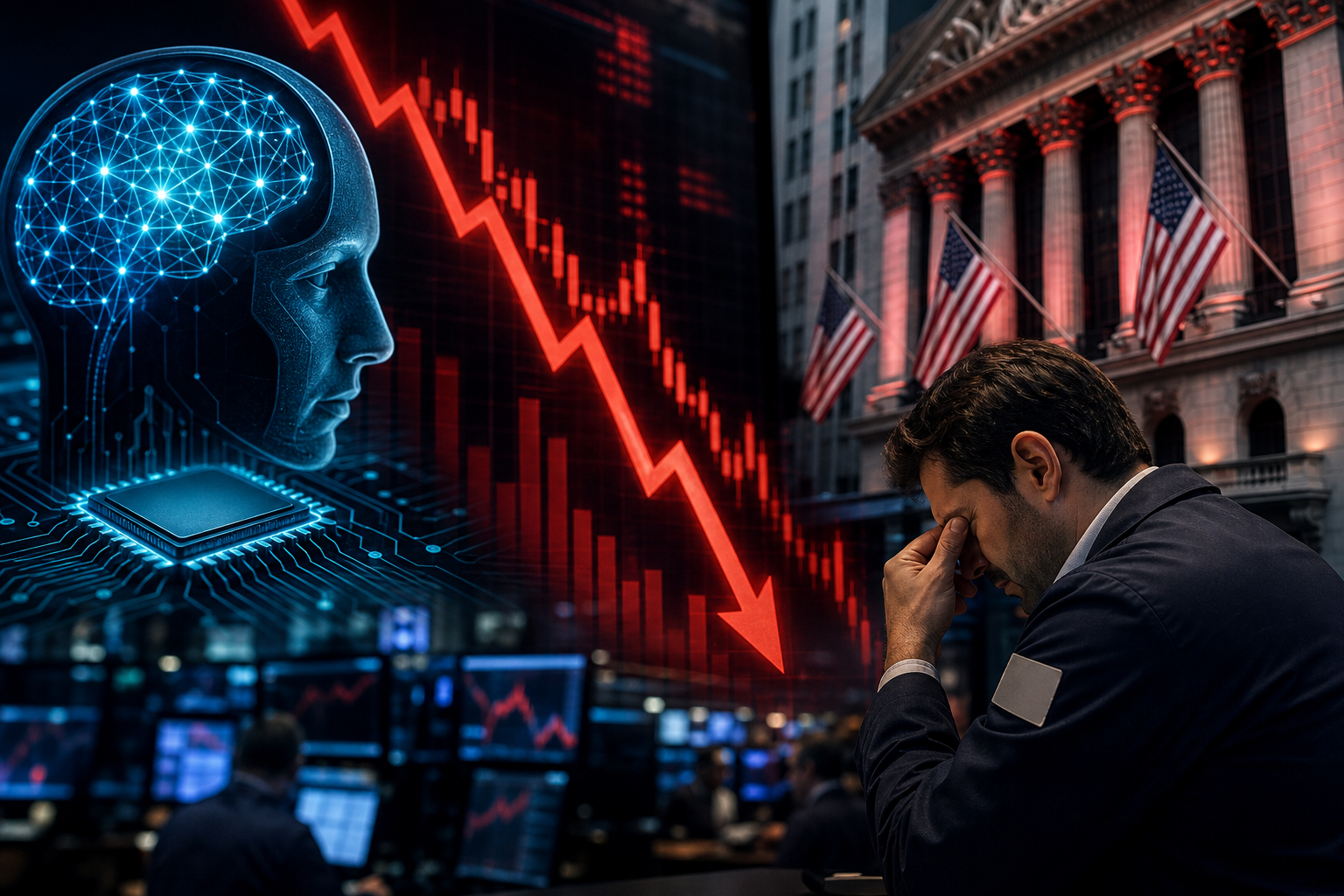
NEW YORK (AP) — A significant sell-off in artificial intelligence (AI) stocks has led to a sharp decline in the U.S. markets on Wednesday, raising questions about the sustainability of the recent technological boom. The S&P 500 experienced a 1.6% drop, marking its first consecutive decline in three weeks and returning to levels last seen in early May. The Dow Jones Industrial Average fell 953 points, or 1.9%, while the Nasdaq composite plunged 2%.
Wall Street’s turbulence comes in the wake of a dramatic shift in investor sentiment around AI stocks that have rapidly transitioned from record highs to disappointing lows. Concerns are growing that these stocks, buoyed by what some are calling "AI mania," may have risen excessively too quickly. The critical question facing investors is whether this downturn signals a necessary correction or the beginning of a prolonged drop.
Among the casualties was Super Micro Computer, which suffered a staggering 28% plunge after announcing plans to raise $7 billion by selling shares. Such actions typically indicate a strategy to maximize profits during peak stock prices, putting existing shareholders’ stakes at risk.
In a day marked by volatility, Micron Technology saw its shares swing dramatically but closed down 4.7%. Despite this, it remains up more than 212% year-to-date, illustrating the erratic nature of the current market.
Nvidia, a chipmaker riding the AI wave, was the largest detractor for the S&P 500, with a 3.7% decline, followed closely by Broadcom, which fell 5.1%. Investor fatigue may be setting in, as many are pulling funds to prepare for upcoming high-profile IPOs, including that of SpaceX.
A further layer of complexity comes from rising oil prices, which contributed to market declines. United Airlines and cruise operator Carnival sank 6.2% and 6.3% respectively, driven by escalating fuel costs due to geopolitical tensions in the Middle East.
As the price of Brent crude oil climbed by 1.8% to $93.10, inflationary pressures are also looming over consumers. A recent report highlighted consumer prices increasing at their fastest rate in three years, amplifying concerns about economic stability.
Despite these challenges, the Treasury bond market showed relative stability. While yields edged up, they remained aligned with economists’ expectations, indicating that current inflation levels may not provoke immediate Federal Reserve action. Traders are beginning to bet on at least one interest rate hike this year, reflecting the ongoing balancing act between inflation control and economic growth.
In this environment of uncertainty, the stark market declines serve as a reminder of the ever-changing landscape of investments and prosperity. In the face of such volatility, one biblical principle of resilience stands out: “Trust in the Lord with all your heart and lean not on your own understanding; in all your ways submit to Him, and He will make your paths straight.” (Proverbs 3:5-6, NIV)
As the stock market reacts to both local and global instabilities, it invites each of us to consider where we place our trust and what truly anchors us amidst life’s uncertainties. While financial markets may rise and fall, the wisdom found in faith offers stability and a foundation for navigating turbulent times.
Takeaway: Reflect on how trust in broader principles can guide our decisions. In challenging times, consider anchoring your hope not solely in financial markets but in that which is eternal and steadfast.
If you want to want to know more about this topic, check out BGodInspired.com or check out specific products/content we’ve created to answer the question at BGodInspired Solutions
If positive Biblical wisdom matters to you, I’d love your support of the mission
Q&A about
Why are AI stocks experiencing another sell-off right now?
The volatility in AI stocks can be seen as part of the ever-changing dynamics of the market, reflecting human unpredictability. In Jeremiah 17:7-8, we are reminded that those who trust in the Lord are like trees planted by water, remaining steadfast amidst uncertainty. It’s a reminder for us to focus on our faith rather than being swayed by market fluctuations.
Should I be worried about my investments during this sell-off?
Worry is a natural response, but Philippians 4:6-7 encourages us not to be anxious about anything. Instead, we should present our concerns to God in prayer, seeking His peace that surpasses understanding. Trusting in His provision can bring comfort even in financial uncertainty.
How does Scripture guide us in times of financial instability?
In times of financial instability, Jesus’ teaching in Matthew 6:19-21 reminds us not to store treasures on earth but to invest in eternal things. This perspective encourages us to reflect on our priorities and seek God’s kingdom first, which can help us reframe how we view our earthly possessions and investments.
What can I learn about patience and faith during market downturns?
Reflecting on James 1:2-4, we find that trials produce perseverance, which is vital in both faith and finances. Embracing patience during market downturns helps cultivate a character that is rooted in faith, trusting that God has a purpose even amidst challenges. This aligns our hearts more closely with His eternal perspective.