 0
0
 0
0
Discovery Redefines Terzan 5: A New Insight into Galactic Evolution
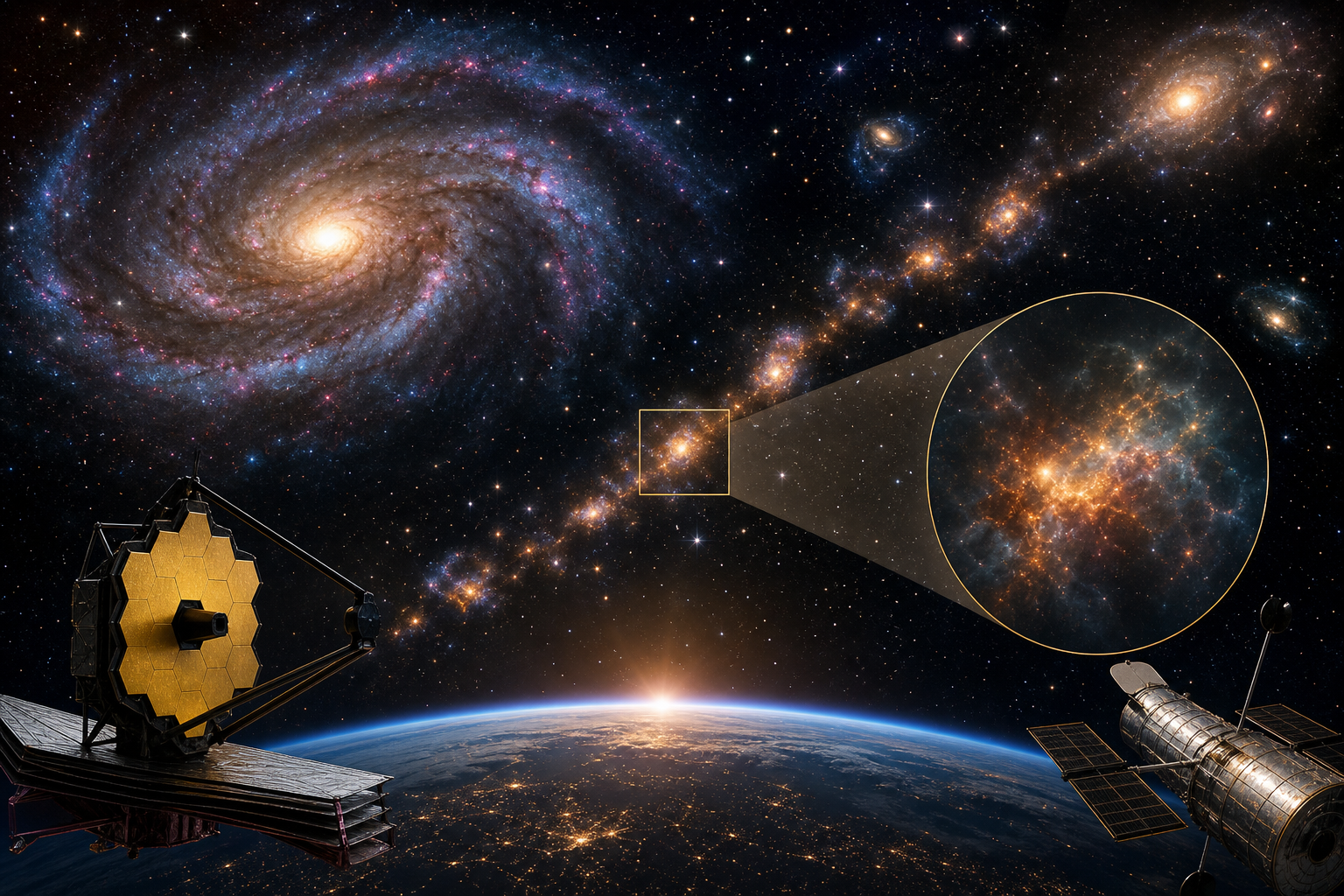
Researchers utilizing NASA’s James Webb and Hubble Space Telescopes have made a breakthrough in understanding the cosmic entity known as Terzan 5, reshaping its classification from a globular star cluster to a unique system with multiple stellar populations. This finding not only alters our understanding of Terzan 5 itself but also enhances our insights into the formation and evolution of galaxies, including our own Milky Way.
A Stellar Anomaly Unveiled
Traditionally, globular star clusters were believed to harbor a single, ancient population of stars. However, observations from Webb and Hubble reveal that Terzan 5 possesses at least four distinct generations of stars. “Webb’s new near-infrared observations, cross-referenced with Hubble’s archival data, have provided us with a clearer picture of Terzan 5’s history,” said Giorgia Zullo, a PhD student at the University of Bologna and lead researcher of the study.
Presented at the 248th meeting of the American Astronomical Society, these findings challenge long-held assumptions and encourage a reevaluation of how such stellar systems fit into the grand narrative of our universe.
The Unseen Influences of Creation
The cosmic mechanics at play within Terzan 5 resonate with biblical principles surrounding creation and diversity. Just as God created a world filled with distinct beings and realms, Terzan 5 showcases the beauty of variety within a seemingly homogenous environment. The intermingling and nurturing of different star populations offer an illustration of how diverse elements can coexist and contribute to a greater whole.
In Genesis 1:31, it states, "God saw all that he had made, and it was very good." This verse emphasizes the value of diversity within creation, much like the varied generations of stars that enrich Terzan 5.
Scientific Collaboration Reflects Community Values
The collaboration between teams using both the Webb and Hubble telescopes exemplifies how scientific inquiry thrives on collective effort, much like the unity emphasized in scripture. In this pursuit of knowledge, researchers have engaged in a journey reflecting our call to learn from one another and work collaboratively toward greater understanding.
As the team unearthed two additional stellar populations formed 3.8 and 2.5 billion years ago, they reinforced the idea that new life and understanding arise out of the remnants of what came before. This mirrors the biblical lesson that from death and decay can spring forth renewal and growth.
Towards Broader Understanding
Looking ahead, the researchers plan to explore additional globular clusters within the Milky Way’s bulge, potentially leading to further revelations about the nature of these stellar structures. Each discovery serves as a milestone both in scientific advancement and in deepening appreciation for the intricate design of the cosmos.
In conclusion, as we reflect on the remarkable complexities of Terzan 5 and its implications for our understanding of galactic formation, we are left with an encouraging reminder. Each star and each generation within this stellar system is a testament to the beauty and intricacy of God’s creation.
Embrace the lesson of Terzan 5: diversity, community, and the unfolding narrative of creation serve to enrich our lives. Like the stars, we too can shine brighter together, illuminating the path for one another in our shared journey of discovery and growth.
If you want to want to know more about this topic, check out BGodInspired.com or check out specific products/content we’ve created to answer the question at BGodInspired Solutions
If positive Biblical wisdom matters to you, I’d love your support of the mission
Q&A about
How do the discoveries from NASA Webb and Hubble align with my faith in God as the Creator?
The insights gained from NASA Webb and Hubble about the formation of our galaxy showcase God’s incredible creativity and power in designing the universe. Just as Jesus mentioned in John 1:3, all things were made through Him, underscoring that every discovery in science points back to our Creator’s handiwork.
Can understanding the Milky Way’s formation deepen my spiritual journey?
Absolutely! As we learn about the intricate details of our universe, it can inspire us to appreciate the majesty of God’s creation. Just like the psalmist declares in Psalm 19:1, the heavens declare the glory of God, reminding us that studying the cosmos can enhance our worship and understanding of His greatness.
Does the study of the universe contradict my Christian beliefs?
Not at all! Many Christians find that scientific discoveries complement their faith rather than conflict with it. Jesus teaches in Matthew 5:16 that we should let our light shine, and understanding the universe can help us engage more effectively with the world and share the beauty of God’s creation.
How can I respond to others who doubt the role of science in faith due to discoveries like those from NASA?
Engaging in open conversations about science and faith can be enlightening. As mentioned in 1 Peter 3:15, we should always be prepared to give a reason for the hope we have, integrating scientific understanding with our faith to show how both reveal God’s truths.