 0
0
 0
0
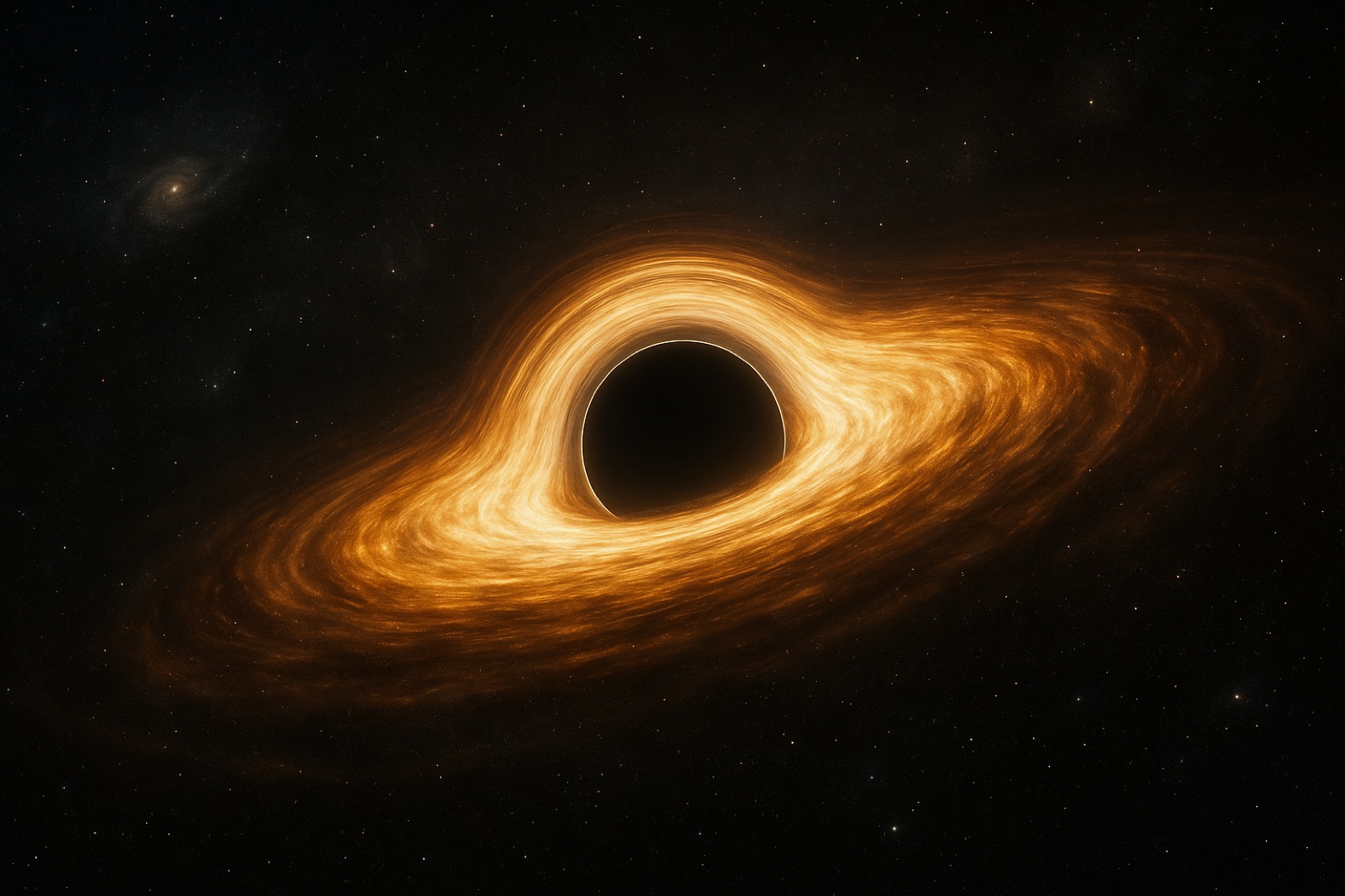
Some of the black holes floating in space right now might be older than the Big Bang itself.
That sentence sounds like a typo. The Big Bang is supposed to be the start of everything — the moment time, space, and matter all began. Nothing is supposed to be older than that. But a growing number of physicists are now taking seriously the idea that certain black holes could have survived from before the Big Bang, carried into our universe from whatever came before it.
It’s one of the stranger ideas circulating in cosmology right now — and it might help explain a mystery that has stumped scientists for decades.
The Idea That’s Breaking Cosmologists’ Brains
Here’s the standard story most of us grew up with: about 13.8 billion years ago, everything — all the matter, energy, space, and time that exists — burst into being from a single point. That’s the Big Bang. Before it, by definition, there was nothing to measure, because time itself hadn’t started yet.
New research is complicating that clean picture. A team connected to the University of Portsmouth has been exploring a model where the universe didn’t simply switch on from nothing — it may have “bounced.” In this version, an earlier phase of the universe collapsed inward, then rebounded into the expansion we’re living in now, the way a ball compresses before it springs back up. If that’s what happened, some things from that earlier phase — including certain black holes — could have survived the bounce and carried straight through into the universe we see today.
That would make those black holes, in a very real sense, older than the Big Bang that supposedly started everything.
Why a Handful of Ancient Black Holes Could Solve a 90-Year Mystery
This isn’t just a fun thought experiment. If it holds up, it could help answer one of physics’ most stubborn open questions: what is dark matter?
Scientists have known since the 1930s that something out there has gravity but gives off no light. It doesn’t show up in a telescope. We only know it’s there because galaxies spin faster than they should, and light bends around empty-looking space in ways it shouldn’t — unless something invisible and massive is holding it all together. That something has a name, “dark matter,” but after nearly a century of searching, nobody has directly detected what it actually is.
Primordial black holes — ones formed in the universe’s earliest, most extreme moments rather than from a collapsed star — have been a dark matter candidate for years. If some of them are old enough to predate the Big Bang itself, carried over from a previous cosmic phase, that would give scientists an entirely new place to look. It wouldn’t just rewrite how old some black holes are. It could rewrite the timeline of the universe itself.
Black holes have a habit of upending what scientists thought they knew. One recently discovered black hole star was shining far brighter than physics said it should. Another stayed completely hidden for 30,000 years until it finally gave itself away by shredding a passing star. If you’ve ever wondered just how old the universe is currently thought to be, our How Old Is the Universe? Explorer walks through the standard timeline — the very one this new research is now asking questions about.
The Question Science Keeps Running Into
Here’s what’s interesting about all this, beyond the physics. Every model that tries to explain what came “before the beginning” runs into the same wall: something has to already exist for anything else to happen. A bounce needs something to bounce. A previous universe needs something to have been there first. You can push the starting line back as far as you want, but you can’t erase it — something, somewhere, has to be first.
That’s not a new problem. It’s one of the oldest questions people have ever asked, long before anyone had a telescope. And it’s worth noticing that ancient scripture opened with an answer to it — not a debate, not a theory, just a simple claim that someone was already there before “the beginning” started, unmade and uncaused, when everything else got its start. Science didn’t invent this question. It just found a new, more precise way to ask it.
None of this means the bounce model is proven, or that scientists have found God in a black hole. Most of this is still genuinely unsettled — competing models, more questions than answers, years of work ahead before anyone can say for sure what these ancient black holes actually are or where they came from. That’s how good science works.
But it is worth sitting with, for a minute, the fact that the universe’s own physics keeps circling back to the same edge: something has to have always been there. Maybe that’s the real headline buried under all the equations — not that black holes might be older than the Big Bang, but that “the beginning” was never as absolute as it sounded.
Tell Us What You Think
If it turns out some black holes really did survive from before the Big Bang, does that change how you think about the universe’s beginning — or does it just push the same question back one more step? Drop your take in the comments.
Pass This On
- “Scientists think some black holes might be OLDER than the Big Bang. My brain hurts and I love it. https://bgodinspired.com/index.php/bgodinspired-news/bgodinspired-science-news/black-holes-older-than-the-big-bang/”
- “Okay but if something existed before ‘the beginning’… what does that actually mean? Wild read: https://bgodinspired.com/index.php/bgodinspired-news/bgodinspired-science-news/black-holes-older-than-the-big-bang/”
- “New research says a few black holes could have survived from before our universe even started. Wherever this goes, it’s fascinating. https://bgodinspired.com/index.php/bgodinspired-news/bgodinspired-science-news/black-holes-older-than-the-big-bang/”
Quick Questions About This
Can black holes really be older than the Big Bang?
Some physicists think it’s possible. New research explores a “bounce” model where the universe collapsed and rebounded rather than starting from nothing, meaning certain black holes could have survived from a phase before the Big Bang we know. It’s still an unproven idea, but it’s being taken seriously in current cosmology research.
What is a primordial black hole?
A primordial black hole is one that formed in the earliest, most extreme moments of the universe’s history, rather than from a collapsing star like most black holes we observe. Because they formed so early, some scientists think a handful could be old enough to have existed before the Big Bang itself, if the “bounce” model holds up.
How could old black holes explain dark matter?
Dark matter is invisible material that makes up most of the universe’s mass, discovered because of its gravity rather than any light it gives off. Primordial black holes have long been a candidate explanation for dark matter. If some of them predate the Big Bang, that gives scientists a new avenue to test whether they could account for the missing mass.
Does this new research prove there was something before the Big Bang?
No. The idea that the universe “bounced” from an earlier phase is still a working hypothesis, not a settled fact. It’s one of several models scientists are exploring to explain gaps in the standard Big Bang picture, and much more evidence is needed before any of them can be confirmed.
Why do people find the question “what came before the beginning” so compelling?
Because it’s one of the oldest questions humans have asked, long before modern physics existed. Whether you come at it through science or through faith, it points to the same idea: something has to have always existed for anything else to start. That question doesn’t go away no matter how far back you push the starting line.