 0
0
 0
0
Walk any flea market long enough and you’ll see it: a table of stuff nobody wants. Chipped picture frames. A drawer pull with no drawer. Old photographs of people no one living remembers. Most of us walk past that table without slowing down. Betye Saar spent seventy years stopping at exactly that table — and seeing something the rest of us missed.
Saar, the pioneering American assemblage artist whose work reshaped how the art world talked about race, memory, and identity, died in her sleep on July 27, 2026, in Los Angeles. She was 99 — four days shy of her 100th birthday.
The Artist Who Worked in Other People’s Leftovers
Betye Saar was born and raised in Pasadena, California, and didn’t start out chasing a career in fine art. She trained first in design, and it wasn’t until her mid-30s that she shifted fully into making art — a detail worth sitting with on its own, since so much of the mythology around great artists insists they knew from childhood. Saar didn’t. She found her calling in the middle of an already full life, and then spent the next six and a half decades making up for lost time.
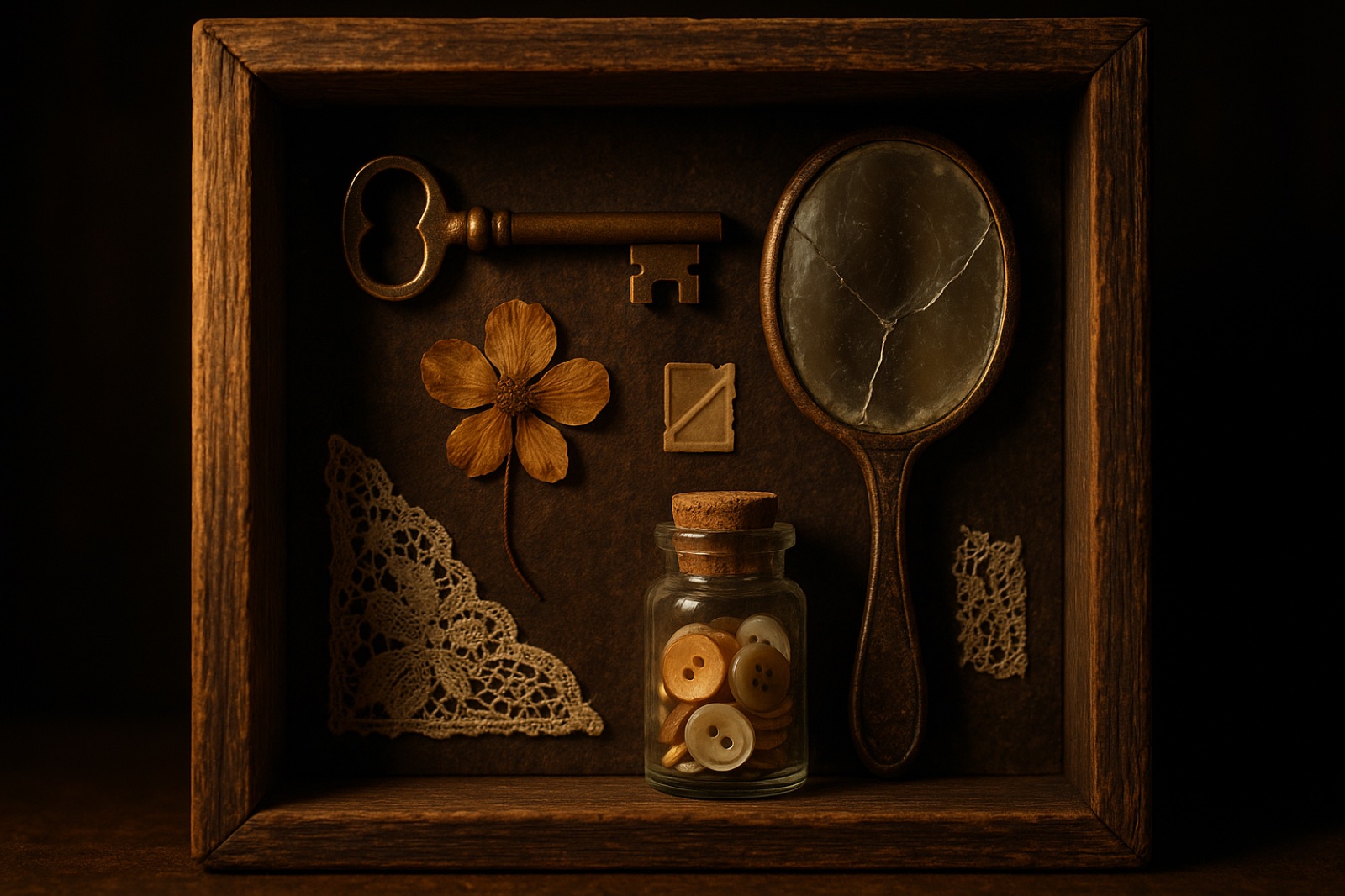
By the late 1960s, Saar had planted herself among the Black artists working in and around Altadena, California, at the height of the Black Arts Movement. It was there that her signature form took shape: assemblage — small sculptural worlds built inside boxes, frames, and found containers, filled with objects she’d rescued from garage sales, junk piles, and flea markets. Where a painter starts with a blank canvas, Saar started with someone else’s discarded stuff and asked what it could still mean.
The Piece That Made the Art World Pay Attention
Her 1969 piece Black Girl’s Window used an actual salvaged window frame to hold a collage of symbols — moons, stars, a palm print, a skeleton — layering autobiography, mysticism, and racial identity into a single small object. It’s the kind of piece that rewards standing in front of for a long time, because every panel is doing something different.
But the work Saar is most remembered for came three years later. The Liberation of Aunt Jemima (1972) took the mammy figure — a stereotype designed to make Black women small and servile — and rebuilt her holding a broom in one hand and a rifle in the other, standing in front of a wall of the same racist imagery, no longer contained by it. Saar didn’t destroy the stereotype. She kept the object and changed what it was allowed to mean. Art historians still point to that piece as one of the defining works of the Black Arts Movement — a reminder that reclaiming something ugly can be a more powerful act than simply discarding it.
Still Making Things Into Her 90s
What’s easy to miss in a career built on statement pieces is the sheer discipline underneath it. Saar didn’t slow down after she made her name. She kept working into her 90s, kept combing flea markets for material, kept building. Her pieces eventually landed in more than 90 museum and institutional collections around the world, and as of this year, two separate exhibitions of her work were still touring — including a retrospective at the Huntington Library scheduled to run through November 2027, months after her death.
She’s survived by three daughters, several grandchildren, and — in a detail that feels exactly right for an artist who never stopped noticing overlooked things — a red-footed tortoise named Rojo. There’s something to be said for a person who keeps pouring out everything she has instead of coasting once the hard part of a career is behind her — and for treating age itself as more material to work with than a reason to stop, which is exactly the kind of spiritual reframing of getting older that doesn’t come naturally to most of us.
What She Was Actually Doing All Along
Strip away the art history for a second, and what Betye Saar did for seventy years was pretty simple to describe: she looked at things everyone else had decided were finished — used up, ugly, worth nothing more than a landfill — and treated that judgment as wrong. Not naive. Wrong. She’d pick the thing up, turn it over, and go looking for what it could still become.
That instinct is older than assemblage art, older than the Black Arts Movement, older than the flea market itself. Long before anyone hung a frame on a gallery wall and called it a statement, people believed — as close to an article of faith as it gets — that nothing broken is automatically beyond use, and that God, or something larger than us, has always specialized in exactly this kind of work: taking what’s been written off and making it whole again. The discard pile isn’t the end of a thing’s story, just a pause in it, waiting for someone willing to look twice. Saar built an entire body of work on the belief that restoration takes more imagination than disposal ever will. It’s an old idea, older than she was. She just kept proving it, one salvaged box at a time.
Everything You Almost Threw Away
Most of us aren’t going to build a museum career out of it, but the question Saar’s life keeps posing is a fair one to sit with: what have you already filed under “done” — a relationship, a chapter of yourself, a version of your life you assumed had nothing left to give — that might just be waiting for someone to pick it back up and look again?
Betye Saar didn’t get famous for finding beautiful things. She got famous for refusing to agree that anything was finished. She kept at it until four days before her 100th birthday. That alone might be worth remembering longer than any single piece she made.
Discussion Question
Betye Saar built a seventy-year career out of refusing to call anything “finished” — including objects the rest of the world had already thrown away. Do you think that instinct (to look twice at something discarded before giving up on it) is something people are naturally good at, or something we have to actively relearn? Tell us what you think in the comments.
Share This
- “Betye Saar spent 70 years turning other people’s junk into museum pieces. She died this week at 99 — four days before her 100th birthday. Her whole career was basically an argument that nothing’s really finished until you decide it is.”
- “An artist who didn’t even start her career until her mid-30s ended up with work in 90+ museums worldwide — by picking up the stuff everyone else threw away and asking what it could still become. RIP Betye Saar.”
- “Betye Saar built her most famous piece out of a racist stereotype she refused to just discard — she rebuilt it into a symbol of liberation instead. She kept working like that until she was 99. What a way to spend a life.”
Questions People Are Asking
Who was Betye Saar?
Betye Saar was an American assemblage artist, born and raised in Pasadena, California, known for building small sculptural worlds inside boxes and frames using found and salvaged objects. She was a central figure in the Black Arts Movement of the late 1960s and ’70s and is best known for her 1972 piece “The Liberation of Aunt Jemima.”
When did Betye Saar die, and how old was she?
Betye Saar died in her sleep on July 27, 2026, in Los Angeles at age 99 — just four days before what would have been her 100th birthday.
What is Betye Saar’s most famous artwork?
Her best-known piece is “The Liberation of Aunt Jemima” (1972), an assemblage that took the racist “mammy” stereotype and reimagined the figure holding a broom and a rifle, transforming a symbol of servitude into one of Black liberation and resistance.
What is assemblage art?
Assemblage art is a technique that builds three-dimensional artworks out of found objects, everyday materials, and discarded items — rather than painting, drawing, or working with traditional sculpting materials. Betye Saar became one of its most influential practitioners, sourcing much of her material from flea markets, garage sales, and junk piles.
Did Betye Saar start her art career young?
No. Saar originally trained in design and didn’t fully commit to making art until her mid-30s, going on to build a seven-decade career and continuing to produce new work into her 90s.