 0
0
 0
0
Singapore’s Independent Wealth Management Sector: Navigating Growth and Accountability
In recent years, Singapore’s independent wealth management sector has seen remarkable expansion, with a surge in the number of External Asset Managers (EAMs) and Multi-Family Offices (MFOs). However, as industry leaders convened at a Hubbis event to discuss the future, a bold truth emerged: mere growth in numbers does not equate to sustainable success in a complex and high-cost industry.
Shifting Focus: Market Entry to Market Durability
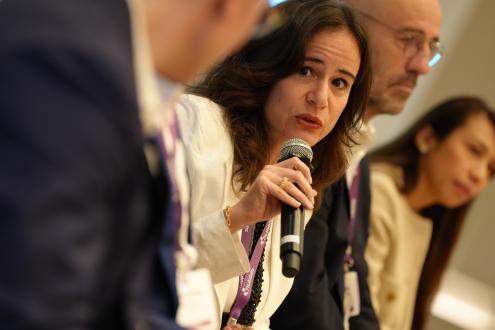
As the independent wealth management ecosystem evolves, firms face critical questions about maintaining quality while scaling their operations. Chiara Bartoletti, Managing Partner at Eightstone, shed light on these challenges, emphasizing that navigating the shifting landscape is about more than mere expansion. It requires a strategic approach to relationship-building, integration of advisory services, and wise use of technology.
Key Insights from Industry Experts:
-
Integrated Advice Is Attainable but Demands Strong Networks: Successful independent firms can offer integrated services that are holistic, encompassing everything from succession planning to family governance. Yet this is contingent upon building a robust network of trusted external experts.
-
Consolidation: The Path to Growth with Cultural Caution: Mergers and acquisitions present an enticing route to scale, but aligning organizational cultures and philosophies often proves challenging.
-
Technology as an Asset, Not a Replacement: Technology should serve as a tool for reallocating resources and enhancing client relationships, rather than a substitute for personal connections.
-
Client Sophistication is Varied: While clients have more access to information, this doesn’t guarantee deeper understanding, presenting both challenges and opportunities for advisors.
-
Alignment Over Superiority: The independent model’s success hinges not on outperforming traditional banks but on maintaining accountability aligned with client interests.
The Integration of Advisory Services: A Practical Approach
Bartoletti posed an insightful perspective: integrated advisory services are achievable if firms cultivate access to necessary expertise. She articulated that the independence of these firms allows them the flexibility to source the best advice tailored to client needs.
This notion resonates with a biblical principle found in Proverbs 15:22: "Plans fail for lack of counsel, but with many advisers, they succeed." Just as independent firms must strategically connect with various experts, individuals in any field can benefit from the wisdom of a diverse community of advisers.
The Complexities of Consolidation
Bartoletti shared her experience navigating the often tumultuous waters of mergers in the wealth management sector. The reality is that while consolidation can yield growth, the emotional and cultural alignment of merging entities is pivotal. She acknowledged that this human element is often overlooked, stating, “This is a people business first, and personalities matter as much as numbers.”
This concept connects closely to the biblical emphasis on community and relationships. In a world where individualism can wreak havoc on unity, building a business—or a life—on shared values and mutual respect is both a challenge and a necessity.
Leveraging Technology for Human Connection
Technology undoubtedly has a role in shaping operational efficiency, but Bartoletti highlighted its importance in human interactions, expressing that it should facilitate rather than replace these vital relationships. “It helps us to manage costs but also to dedicate resources differently,” she noted.
In a similar vein, Colossians 3:23 teaches us, “Whatever you do, work heartily, as for the Lord and not for men.” In our ventures, whether professional or personal, the integration of technology should enhance our work ethic and relationships, reflecting diligence and purpose.
Concluding Reflections: Alignment as Accountability
Towards the end of the discussion, Bartoletti articulated a powerful message: the essence of the independent model lies not only in its operational superiority but in its inherent self-interest to serve clients well. This dynamic creates a form of accountability that is often absent in larger institutions.
In the face of this reality, the concept of accountability resonates deeply with Christian teachings. As noted in Luke 16:10, “Whoever can be trusted with very little can also be trusted with much.” This principle inspires professionals to focus not just on outcomes but on the quality of their relationships and the integrity of their services.
An Encouraging Invitation
As the independent wealth management sector in Singapore continues to mature, the importance of alignment—both in values and practices—stands as a guiding light. In navigating these complex challenges, may all professionals reflect on how they can integrate wisdom, technology, and relationships into their business dealings.
Just as independent firms must focus on accountability and quality in service, we are invited to cultivate genuine relationships and a consistent ethical framework in our lives.
Let us remember: true success is not just about flourishing; it’s about thriving in alignment with principles that elevate not only our work but also our communities.
If you want to want to know more about this topic, check out BGodInspired.com or check out specific products/content we’ve created to answer the question at BGodInspired Solutions
If positive Biblical wisdom matters to you, I’d love your support of the mission
Q&A about
How can I align my investment strategies with my Christian values?
Investing from a Christian perspective involves seeking opportunities that reflect one’s faith and values. James 4:7 encourages us to submit ourselves to God; this can guide your financial decisions to ensure they honor your beliefs and serve the greater good.
Is independent wealth management in Singapore a good idea for Christians?
Independent wealth management allows for personalized and faith-aligned financial planning. In Proverbs 21:5, we see that diligent planning leads to abundance, so working with a consultant who understands your values can help you steward your resources wisely.
How should I approach financial risk while maintaining my faith?
Navigating financial risk is akin to the faith journey. Just as Jesus taught us in Matthew 25:14-30 about being faithful with our talents, we are called to assess our risks thoughtfully while trusting God with the results—balancing faith and prudent decision-making is key.
What does the Bible say about using wealth for growth?
The parable of the mustard seed in Mark 4:30-32 illustrates that small beginnings can have significant outcomes, which can relate to wealth growth. Investing wisely can be seen as multiplying the resources God has entrusted to you, enabling you to bless others and further His kingdom.