 0
0
 0
0
You’re not indecisive—you’re unanchored. There’s a difference. Indecision is forgetting your keys; being unanchored is not having a home to return to. Lately, it feels like everything asks for a vote from you: what to prioritize at work, who to disappoint this week, whether to keep grinding or finally say “enough.” You read reviews, ask friends, open new tabs, and then crawl into bed with the same knot in your chest. It’s exhausting to carry a thousand maybes.
Here’s a thought you might not have tried: your problem probably isn’t a lack of information. It’s a lack of a declared center.
When we don’t have a center, we compensate with noise—more research, more opinions, more time. We become experts at collecting data and terrible at living with it. Most of us don’t actually want infinite choice. We want a way to make the stack of choices make sense. And let’s be honest: it’s not just about options. It’s about belonging. Choosing one thing can feel like rejecting a version of yourself, or a community that expected something else from you. So we delay. We hedge. We say “maybe later” and then wonder why our life feels like a browser with 37 tabs and low battery.
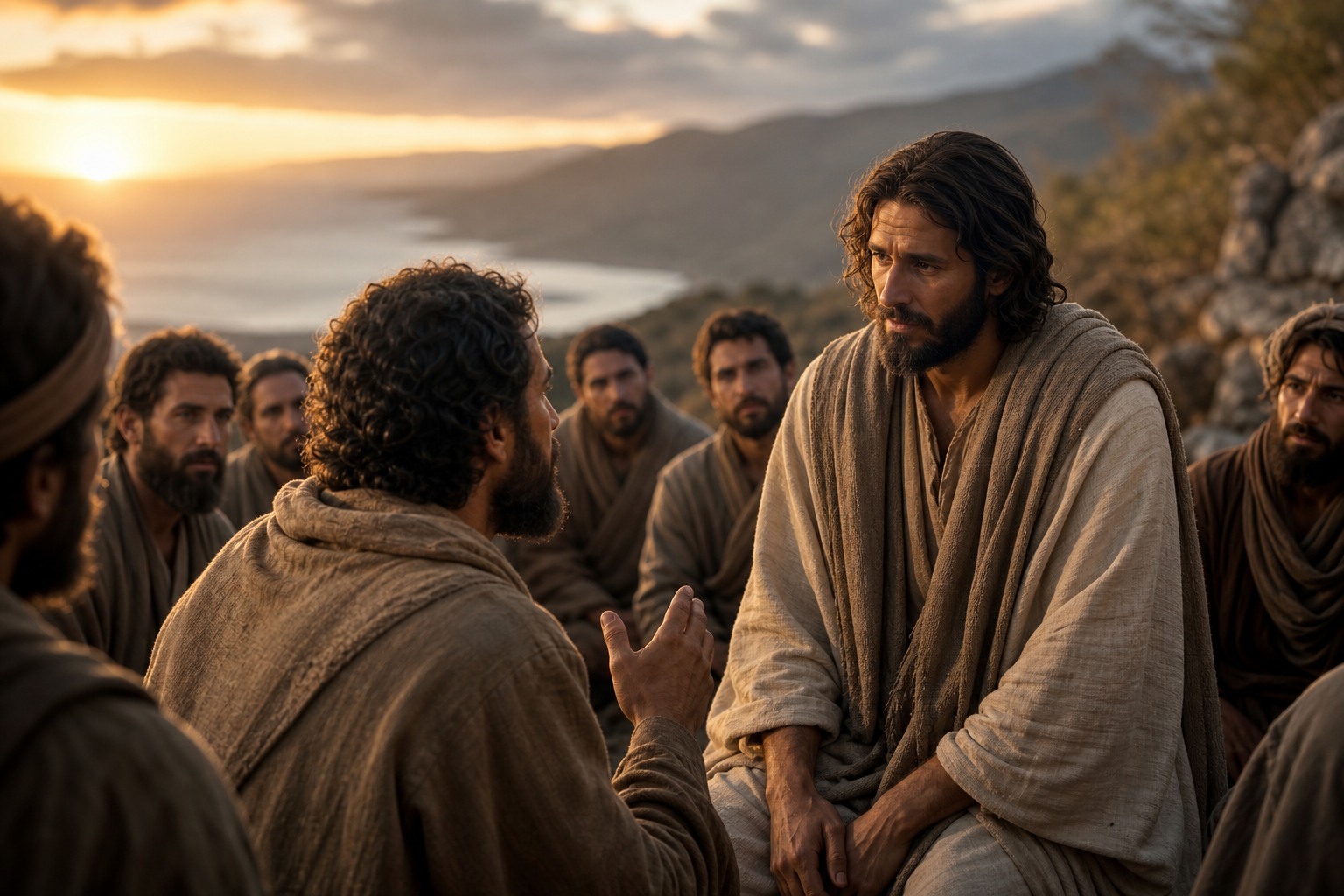
A friend once put it this way: “Clarity isn’t found; it’s declared.” He told me he first encountered the idea in Matthew 16:16, where someone simply says out loud what they hold to be ultimately true. You don’t need a religious framework to get the power of that—naming your center reorders everything. It’s not about becoming rigid or self-righteous. It’s about refusing to live your one life by committee.
Here’s the turn: clarity isn’t a treasure buried in the future. It’s a sentence you say today. You choose a center, and then you test it in the friction of real life. That sentence won’t answer everything, but it will make the next ten decisions obvious. And obvious decisions are a gift when you’re tired.
So how do you find and live from that center without turning into a zealot or a wrecking ball? Try this, gently and bravely.
— Name your one sentence. If you could only get one thing right this year, what would it be? Don’t overthink it. Write a single line that starts with “I” and uses strong verbs, not fluffy words. “I tell the truth, even when it’s expensive.” Or “I choose health over hurry.” Or “I build what actually helps people, even if it takes longer.” When I tried this a few years ago, I wrote: “I make work I’d be proud to show my ten-year-old self.” It wasn’t perfect. But it felt alive. That’s your test. Your sentence should make your shoulders drop and your breath go a little deeper.
— Pressure-test it with real life. A center that only works in theory doesn’t help you on Tuesday at 4:43 PM. Run this sentence through three decisions you’re actually facing. The job with better pay but worse ethics—how does your sentence steer you? The relationship that’s loving but chronically inconsistent—what does your center ask for? The weekend request you don’t have capacity for—what’s the honest answer? If your sentence falls apart, don’t toss the whole idea. Refine the sentence until it makes decisions easier, not harder. Clarity is not about feeling heroic; it’s about feeling coherent.
— Make it portable. Big declarations die in the wild unless you translate them into tiny defaults. Turn your sentence into three touchable habits. If your center is “I choose health over hurry,” then your defaults might be: a 10-minute morning check-in before opening your inbox, a rule that you don’t book back-to-back meetings, and a five-minute walk after lunch with your phone left behind. If your center is “I tell the truth, even when it’s expensive,” then your defaults might be: send the hard email within 24 hours, say “Let me think” instead of lying in the moment, and keep a running list of moments you were tempted to avoid the truth. These tiny acts do the heavy lifting. They turn your sentence into muscle memory.
— Tell one person and one place. Speak your sentence out loud to someone who wants your best, not your comfort. Say, “I’m trying something. This is the sentence I’m going to live from for the next 30 days. Can I text you when I wobble?” Also, put the sentence where your future self can’t miss it: your phone lock screen, a sticky note on the bathroom mirror, the first line of your to-do list. This isn’t about performative accountability. It’s about refusing to let your most honest intention be crowded out by urge or urgency.
— Practice small declarations daily. Don’t wait for a cinematic turning point. Practice your center in small ways, especially when nobody’s watching. Choose the short walk, the honest “no,” the extra edit, the quiet apology. Each time you act in line with your sentence, you’re casting a vote for the kind of person you are. Identity isn’t just discovered; it’s rehearsed. And the more you rehearse it, the less you’ll need to white-knuckle your decisions. They’ll start to show up already half-made.
A couple things to keep in mind as you do this:
You won’t get it perfect, and that’s a feature, not a bug. Your sentence can evolve. If you catch yourself becoming inflexible or using your center to justify hurting people, that’s your sign to step back, listen, and adjust. A good center simplifies your courage; it doesn’t excuse your cruelty. On the flip side, resist the urge to change your sentence the minute it costs you something. Paying a small price is part of how your center moves from words to truth inside you.
Also, if your anxiety is clinical or your circumstances are unsafe, this is not a replacement for help. A declared center works best alongside therapy, community, and real-world support. It’s the through-line, not the entire story.
I can’t promise that one sentence will solve your life. But I’ve watched it save days, relationships, and projects from unnecessary confusion. When you know what you’re standing on, you stop auditioning for every role and start living your part. And that is a quieter, braver way to be.
So, your turn: if you had to choose one sentence that would make your next ten decisions obvious, what would it be?
If positive Biblical wisdom matters to you, I’d love your support of the mission
Q&A about Matthew 16:16
In Matthew 16:16 Peter calls Jesus the Messiah and Son of the living God—what does that really mean for me right now?
It means Jesus is God’s anointed King and divine Son who has the rightful authority to save and lead you. Jesus says this insight came from the Father, not human opinion, in Matthew 16:17, and Paul connects salvation to confessing Jesus as Lord in Romans 10:9. Practically, entrust your sin, plans, and identity to Him today and obey where He leads.
How do I confess Jesus like Peter did when my faith feels shaky and I struggle with doubts?
Confession is an act of trust, not perfect certainty, and Scripture shows honest faith mixed with doubt in Mark 9:24 while reminding us the Holy Spirit enables us to say Jesus is Lord in 1 Corinthians 12:3. Practically, pray plainly that Jesus is Lord and ask for help with unbelief, and keep confessing Him in community and through habits like Scripture and communion. God honors a humble, real-hearted confession.
Does Peter’s confession in Matthew 16:16 have anything to do with the church and my role in it?
Right after Peter’s confession, Jesus says He will build His church and that the gates of Hades will not overcome it in Matthew 16:18. The New Testament calls believers living stones built together into God’s house in 1 Peter 2:5 and members of one household in Ephesians 2:19–22. Practically, plant yourself in a local church, use your gifts, and let your confession shape how you serve and encourage others.
If Jesus is the Son of the living God like Matthew 16:16 says, how should that change the way I pray and make decisions this week?
Because Jesus is the Son of the living God, you can pray boldly and expect help. Hebrews 4:16 invites you to approach the throne of grace with confidence, and James 1:5 says God gives wisdom generously; Jesus also claims all authority in Matthew 28:18, so submit decisions to Him. Practically, bring each choice to Him in prayer, seek counsel from Scripture and mature believers, and act in Jesus’ name.