 0
0
 0
0
You’ve probably heard the plastic problem summed up the same way a hundred times: we made something that doesn’t go away. Grocery bags outlive our grandkids. Bottle caps outlast empires. For decades, the whole plastic story has felt like humanity outsmarting itself — inventing a material so stubborn it now clogs oceans, drifts through Arctic ice, and turns up inside fish on dinner plates.
So here’s a strange twist. Scientists just confirmed that biodegradable plastic isn’t actually a human invention at all. Nature built one first — and it’s been quietly working, with no landfill and no cleanup crew, for hundreds of millions of years.
The Biodegradable Plastic Bacteria Have Been Making Since Before Dinosaurs
The material is called PHA — short for polyhydroxyalkanoate. Bacteria and other microorganisms called archaea produce it and store it inside their own cells, the same way your body stores fat: as a reserve of energy and carbon for later. Scientists have known about PHA for a while. What they didn’t fully realize until now is how far the story goes.
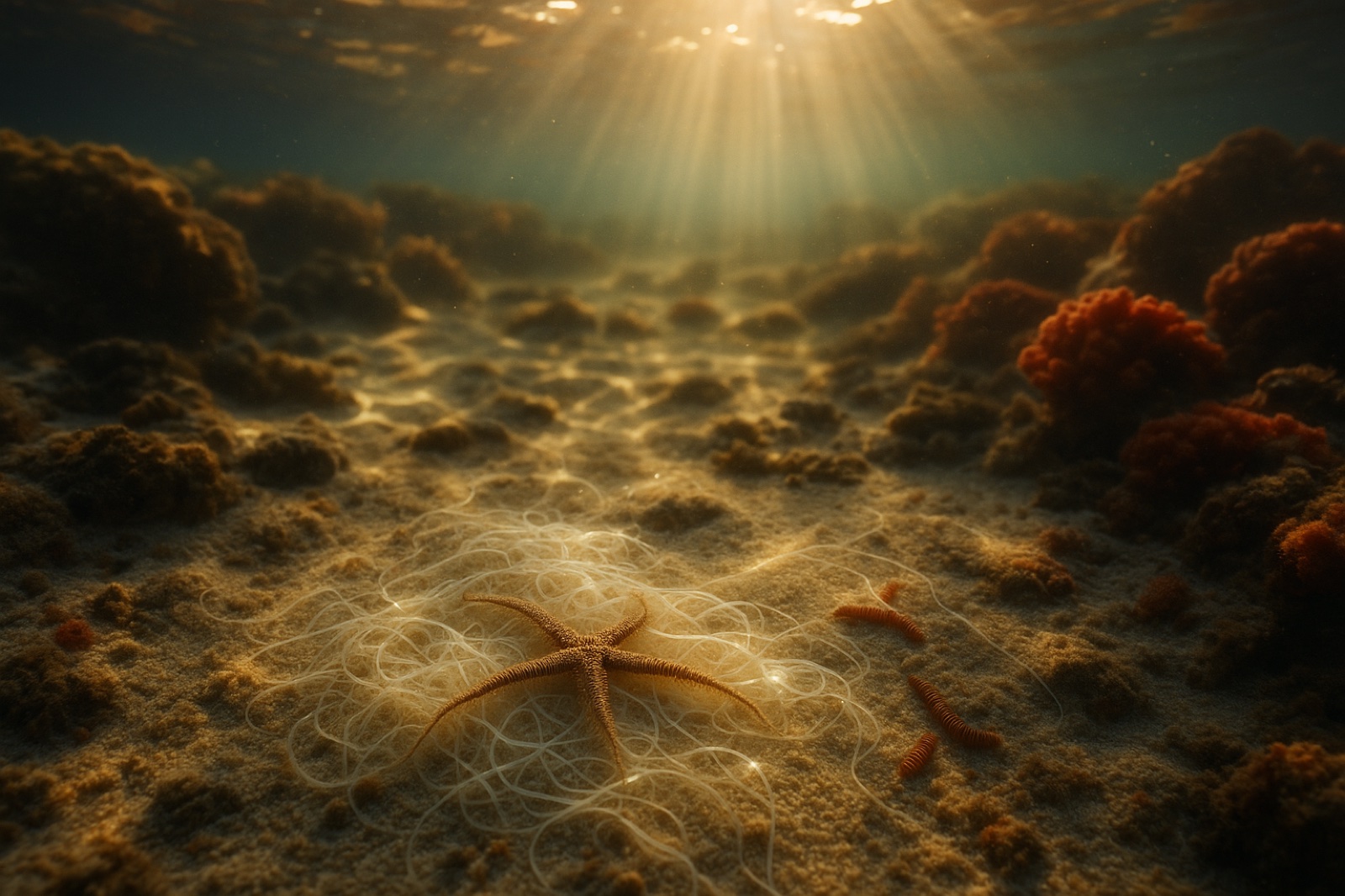
Researchers at the Max Planck Institute for Marine Microbiology in Bremen, Germany, recently published a study in the journal Nature Ecology & Evolution showing that dozens of animal species — not just microbes — carry enzymes able to break PHA down and use it as food. Marine worms, starfish, earthworms, and a wide range of other creatures across land and sea turn out to have this ability, a talent scientists once assumed belonged almost exclusively to microorganisms.
Put together, that means a full, working, zero-waste materials cycle has likely been running in the background of the natural world for hundreds of millions of years. Something makes it. Something else eats it. Nothing piles up.
Why This Changes How We Think About “Biodegradable”
Here’s the part that should actually humble the plastics industry a little: most of what gets sold today as “eco-friendly” plastic doesn’t fully disappear. It fragments. It breaks into smaller and smaller pieces — microplastics — that stick around in soil, water, and eventually in us. True biodegradability isn’t just breaking apart. It’s breaking all the way down into something the rest of the world can use again.
That’s exactly what PHA does, and it’s exactly what engineers have spent the last several years trying to recreate in a lab. One recent breakthrough was a “living plastic” engineered to fully self-destruct in just six days, leaving zero microplastic residue behind. Japanese researchers built something similar — a plastic that dissolves in seawater within hours and even boosts soil health as it goes. Both are genuinely impressive. Both are also, in a sense, playing catch-up with something that was already out there working perfectly.
The reason PHA vanishes completely instead of lingering as fragments is simple: something was already built to eat it. Waste and food, it turns out, were never separate categories in the first place — just the same molecule, depending on who’s looking at it.
There’s something almost embarrassing about how long it took us to notice. We’ve spent the last few decades treating “zero waste” like our best new idea, something clever humans dreamed up in a lab out of urgent necessity. But the original blueprint for materials that leave nothing behind was already running, quietly, everywhere, long before anyone showed up to name it or take credit for it.
Some people would call that evolution being efficient. Others look at a system this complete — something that makes, something that eats, nothing wasted, nothing accidental — and see the fingerprints of God in it: a Creator who doesn’t waste anything, including, it turns out, the parts of the story we’re only now catching up to.
Discussion Question
Here’s an honest one to sit with: when you picture “zero waste,” do you picture something we invented — or something we’re still trying to catch up to? Tell us your take in the comments.
A Few Small Ways to Lean Into It
- Next time you’re shopping, look for packaging labeled compostable or PHA-based rather than just “recyclable” — the two aren’t the same thing, and now you know why it matters.
- Skip the guilt trip about the bottle cap in the junk drawer. Just let this be a small reset: notice one thing today that was built to leave nothing behind, and let it surprise you.
- If this kind of story sticks with you, it might be worth exploring what else was quietly built into creation long before we arrived to study it.
Social Share Posts
Short: Nature invented biodegradable plastic hundreds of millions of years before we did. Bacteria have been making it — and animals have been eating it — since before dinosaurs. We’re not innovating here. We’re catching up.
Short: Wild fact for today: the “eco-friendly” plastic everyone’s racing to invent already existed in nature for 300+ million years. We just finally noticed.
Long: Scientists just confirmed that long before humans dreamed up biodegradable plastic, bacteria were already making a fully natural version of it — and dozens of animal species, from starfish to earthworms, evolved to eat it as food. Nothing wasted. Nothing left over. It’s a pretty humbling reminder that “zero waste” isn’t a new idea. We just spent decades trying to reinvent something that was already working perfectly.
Common Questions
What is nature’s original biodegradable plastic called?
It’s called PHA, short for polyhydroxyalkanoate. Bacteria and other microorganisms called archaea produce PHAs and store them inside their own cells as an energy reserve, similar to how the human body stores fat. Unlike the synthetic plastic in grocery bags and water bottles, PHA is built entirely from natural biological material, so it can fully break back down again.
How long has nature been making biodegradable plastic?
Researchers estimate that PHA-based materials, and the animals that evolved to digest them, have existed for hundreds of millions of years — long before humans existed, let alone invented plastic of our own.
Which animals can break down bioplastic?
A 2026 study from the Max Planck Institute for Marine Microbiology found dozens of animal species carry enzymes able to break down PHA, including marine worms, starfish, and earthworms — a much wider range of species than scientists previously realized was capable of digesting it.
Is lab-made biodegradable plastic the same as nature’s version?
Not exactly, but it’s inspired by the same idea. Engineers have recently created plastics like a “living plastic” that fully self-destructs within six days, and a seawater-dissolving plastic developed in Japan — both essentially borrowing from the zero-waste system nature had already perfected.
Why does this discovery matter for pollution?
It shows a fully circular materials system already exists in nature — something breaks it down completely, with nothing left over. That’s the exact standard scientists are now trying to match in synthetic plastics, instead of materials that just fragment into microplastics forever.
Maybe that’s worth carrying with you the next time you toss a bottle cap that will still be around in the year 2600. Not guilt — just a little wonder. There’s an older, better system running quietly in the background of the world, one you didn’t design and can’t take credit for. You just get to notice it.