 0
0
 0
0
If you caught COVID recently and felt strangely, specifically exhausted for weeks afterward — not just tired, but a heavy, low-grade run-down that didn’t quite match your other symptoms — a new study might explain why. And it isn’t just about COVID.
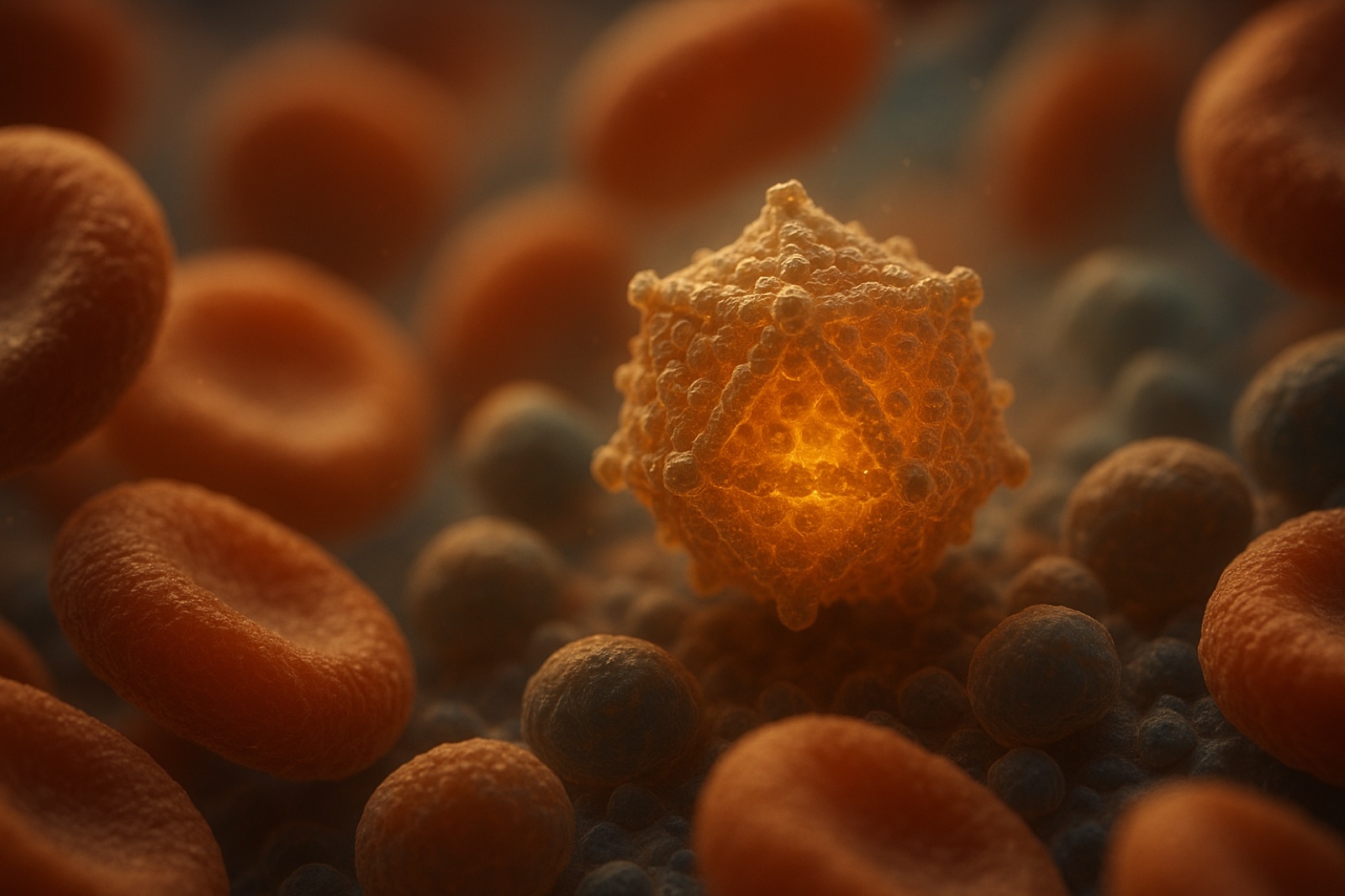
Researchers led by Boston Children’s Hospital, working with 15 other institutions across the country, followed more than 1,150 hospitalized COVID patients and collected over 200,000 samples to figure out what was actually happening inside their bodies during severe illness. What they found surprised even the scientists running the study: COVID reactivates dormant viruses. In a lot of people, it wakes something else up — viruses that had been sitting quiet, sometimes for decades, without anyone knowing they were there.
What “Dormant” Actually Means (and Why You Probably Already Have One)
Here’s the part most people don’t realize: you almost certainly already have at least one of these viruses living in you right now, and it’s not doing anything.
Epstein-Barr virus — the one behind mono — infects an estimated 90-95% of adults at some point, usually in childhood or the teenage years, often without ever causing noticeable symptoms. Herpes simplex virus 1, the cause of ordinary cold sores, is carried by roughly half the U.S. population. Cytomegalovirus is similarly common. None of these go away once you’ve had them. Your immune system doesn’t defeat them — it negotiates a truce. The virus goes quiet, tucked away in your cells, and your immune system stands guard over it indefinitely. Most people carry two or three of these dormant passengers their entire lives and never know it.
The study, published this month and covered by outlets including ScienceDaily and ABC News, tracked what happened to that truce when the body came under the specific kind of stress severe COVID creates. Within 40 days of hospital admission, researchers detected 11 different latent viruses reactivating — waking back up — in roughly half of the patients studied. The most common were Epstein-Barr, herpes simplex 1, cytomegalovirus, and a lesser-known viral family called Anelloviridae that almost everyone carries but few people have heard of.
The Real Reason COVID Reactivates Dormant Viruses
Here’s where it gets genuinely interesting, even for people who don’t usually care about virology.
The standard assumption in medicine has always been that dormant viruses reactivate when the immune system gets weaker — when it’s too suppressed or exhausted to keep standing guard. That’s the story with organ transplant patients on immunosuppressive drugs, for example, who are known to be at higher risk for these reactivations. But this study found something different. In these COVID patients, Epstein-Barr and cytomegalovirus weren’t reactivating because the immune system had gone quiet. They were reactivating because the immune system had gone loud — because of inflammation. The very response meant to fight off the new infection was, in a sense, shaking the walls hard enough to wake up something old that had been sleeping undisturbed for years.
That’s a real shift in how researchers think about this. It means a fully functional, even hyperactive immune system can still let something old resurface — not from weakness, but from the sheer force of what it’s currently fighting.
Why This Might Matter for Long COVID
The finding that’s drawing the most attention involves that lesser-known virus family, Anelloviridae. Its reactivation showed a strong association with long-term physical disability and extended COVID symptoms — the cluster of fatigue, brain fog, and lingering weakness that doctors have struggled to explain in some patients for years now.
It doesn’t prove that reactivated viruses cause long COVID. But it opens a real possibility that some of what gets labeled “long COVID” might actually be, in part, the lingering effects of these older, previously silent infections flaring back up under the strain — a second, quieter battle running underneath the one everyone can see. If that holds up in further research, it could eventually reshape how long COVID gets diagnosed and treated, rather than treating it as one single, mysterious illness.
What This Means If You’ve Had a Rough Recovery
If you’ve had COVID and noticed unusual fatigue, recurring cold sores, or a general sense of “I’m technically better but I don’t feel like myself” in the weeks after, this research doesn’t mean anything is wrong with you specifically — it means your body may have been fighting more than one thing at once, and most people never think to mention that to a doctor because they don’t know it’s a real, documented pattern. If a recovery has felt unusually long or heavy, it’s worth naming that clearly at a follow-up appointment rather than assuming it’s just lingering tiredness. Naming the actual pattern is often the first step toward addressing it.
The Part That’s Bigger Than Biology
There’s something oddly familiar about this finding, once you sit with it for a second. We tend to assume that whatever gets suppressed is gone — quiet means dealt with. But this study is a pretty literal, physical demonstration that quiet and gone are not the same thing. What goes dormant doesn’t disappear. It waits. And it doesn’t necessarily take a crisis to wake it back up — sometimes it just takes pressure, the ordinary strain of carrying something else, to bring it back to the surface. That’s true of viruses, apparently. Long before anyone understood immunology, people already seemed to sense that it was true of almost everything else we carry, too — old grief, old guilt, the things we think we’ve moved past simply because we stopped talking about them. Ancient wisdom, across nearly every tradition, has circled the same basic idea for thousands of years: what’s buried under enough pressure eventually resurfaces, and the healthier response was never to bury it deeper. It was to bring it into the light, on purpose, before the pressure does it for you. Something bigger than us seems to have understood that about human beings a very long time before medicine understood it about our cells.
Maybe that’s the real headline hiding inside a study about hospitalized COVID patients. Our bodies keep a more honest record than we give them credit for. Nothing we’ve suppressed is actually gone — it’s just waiting for the right kind of pressure to remind us it’s still there. And whatever that turns out to mean for you, medically or otherwise, it’s rarely the buried thing itself that does the most damage. It’s how long it stays buried before someone finally looks.
The Cancer Connection Nobody’s Talking About Yet
This isn’t the only recent discovery about things hiding in the body waiting to be found. Scientists recently found that cancer cells use a similar hiding strategy — disguising a molecular flag so the immune system doesn’t recognize them as a threat, until researchers found the switch that exposes them again. It’s a strange coincidence that two major health stories in the same season both come down to the same basic mechanism: something the body already knows how to fight, staying hidden just long enough to do damage.
And it’s not only biology where that pattern shows up. People carrying old guilt tend to describe the exact same experience — something that feels resolved on the surface but keeps quietly draining energy underneath, until it’s finally named out loud. A racing mind at night is often the same pattern showing up differently — something unresolved, surfacing the moment things get quiet enough to notice.
Discussion Question
Do you think most people are more likely to ignore a slow, quiet problem than a loud, obvious one — even when the quiet one is doing more damage? What’s an example you’ve seen of that play out, in health or anywhere else? Drop your take in the comments.
Share This
- Wild new study: severe COVID can wake up dormant viruses you’ve been carrying for YEARS without knowing it — Epstein-Barr, herpes, all of it. Not from a weak immune system either. From inflammation. Wild stuff. https://bgodinspired.com/index.php/bgodinspired-news/bgodinspired-health-news/covid-reactivates-dormant-viruses-in-your-body/
- TIL most adults are quietly carrying 2-3 dormant viruses their whole lives and never know until something wakes them up. Wild new study on this. https://bgodinspired.com/index.php/bgodinspired-news/bgodinspired-health-news/covid-reactivates-dormant-viruses-in-your-body/
- This study on COVID reactivating old dormant viruses low-key explains a lot about “long COVID” — and also kind of explains people. Worth a read. https://bgodinspired.com/index.php/bgodinspired-news/bgodinspired-health-news/covid-reactivates-dormant-viruses-in-your-body/
Questions People Are Asking
Can COVID reactivate dormant viruses like Epstein-Barr or herpes?
Yes. A 2026 study led by Boston Children’s Hospital across 15 institutions found that severe COVID reactivated 11 different latent viruses within 40 days of hospital admission in roughly half of the 1,154 patients studied, most commonly Epstein-Barr virus, herpes simplex 1, cytomegalovirus, and Anelloviridae.
Why does COVID wake up dormant viruses?
Researchers found the reactivation wasn’t caused by a weakened immune system, as previously assumed. Instead, Epstein-Barr and cytomegalovirus reactivated in response to the inflammation from fighting the new COVID infection — meaning even a strong, active immune response can still let older viruses resurface under enough internal pressure.
Does everyone carry dormant viruses in their body?
Most adults do. Epstein-Barr virus infects an estimated 90-95% of adults, usually with no memorable symptoms, and roughly half of U.S. adults carry herpes simplex 1 (the virus behind common cold sores). These viruses aren’t cleared by the immune system — they go dormant and stay present for life.
Is reactivated Epstein-Barr or Anelloviridae linked to long COVID?
The study found that reactivation of Anelloviridae specifically was associated with long-term physical disability and extended COVID symptoms, suggesting reactivated dormant viruses could be part of what’s driving some long COVID cases — though researchers stress this needs further study before it’s considered a cause.
What should I do if I’ve felt unusually run down since having COVID?
This research doesn’t diagnose anything on its own, but if your recovery has felt unusually long, heavy, or included recurring symptoms like cold sores or persistent fatigue, it’s worth specifically mentioning that pattern to a doctor rather than assuming it’s ordinary tiredness — naming it clearly is the first step toward addressing it.