 0
0
 0
0
Environmental Alarm: Russian Oil Tanker Threatens Catastrophe Off Oman’s Coast
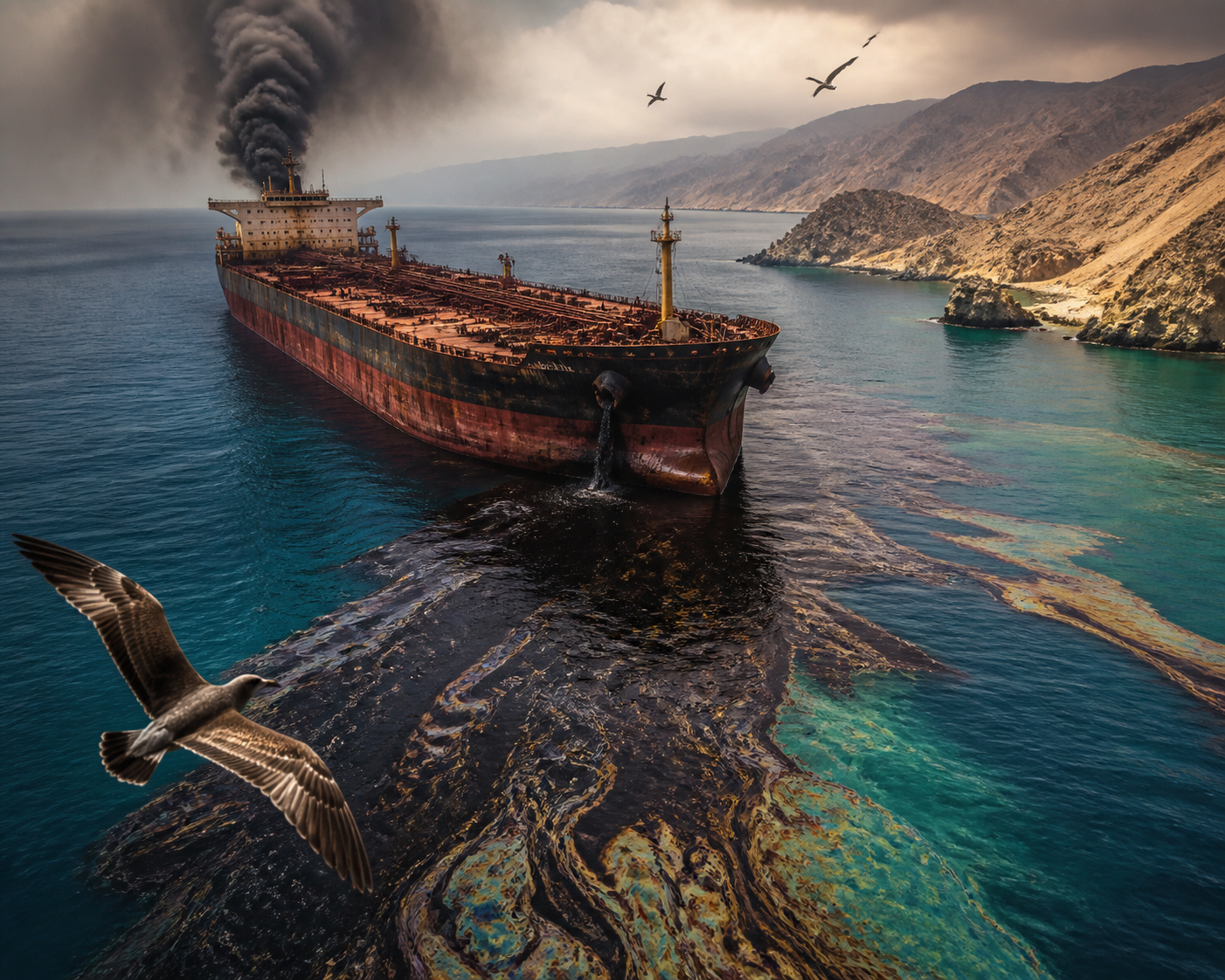
A major environmental crisis looms as the Russian tanker Caroline Bezengi, carrying millions of gallons of oil, has run aground off the coast of Oman. Experts express concerns that the incident could lead to an ecological disaster rivaling the infamous 1989 Exxon Valdez spill.
On June 8, an unexplained explosion compromised the vessel, which has been linked to Russia’s "shadow fleet"—a network of tankers used to bypass international oil sanctions. The Caroline Bezengi, after traveling from Russia and navigating through the Suez Canal, was left adrift when its crew abandoned ship. It eventually grounded on rocky terrain near an uninhabited island, sparking fears of a significant oil leak.
Satellite imagery captured initial signs of leakage on June 30, with current estimates suggesting that hundreds of thousands of gallons may have already spilled by August 7. With five of its six cargo holds filled, the tanker could be carrying as much as 40 million gallons of oil, increasing the urgency of the situation.
The absence of a visible response from the ship’s owner raises questions about accountability. As Oman takes charge of mitigating the spill—deploying aircraft, divers, and specialized teams—environmental groups emphasize the critical need for effective containment strategies. Greenpeace has highlighted that the region is home to protected marine life, including sea turtles and a rare population of humpback whales.
Adding to the complexity, adverse weather conditions threaten salvage operations. Crews from the British maritime security firm Ambrey are being dispatched, but the ongoing monsoon storms could significantly hinder their efforts. Environmental advocate John Amos warns that even prompt interventions can only recover a fraction of the spilled oil, stating that once the oil is in the water, much is already lost.
This situation evokes a reminder of human stewardship over creation, resonating with biblical principles that emphasize care for our environment. As Luke 12:48 reminds us, "To whom much is given, much will be required." This incident calls for a reflection on our responsibility not just to each other but also to the earth itself.
With the potential costs of cleanup actions in the billions, including considerations of liability and insurance for aging vessels, the complexities only deepen. The environmental stakes could have far-reaching implications not just for marine life in the Gulf of Oman but also for global ecological health.
As we navigate this crisis, let us be mindful of our role in stewardship and care for the planet we share. In times of uncertainty, we can draw strength and hope from our collective responsibility to protect the environment, reflecting the positive actions taught by Jesus in caring for creation.
Takeaway: In moments like these, we are urged to reflect on our shared responsibility toward the world around us. This incident serves as a poignant reminder that we are all connected in our stewardship of the earth. How can you contribute to protecting our environment in your daily life?
If you want to want to know more about this topic, check out BGodInspired.com or check out specific products/content we’ve created to answer the question at BGodInspired Solutions
If positive Biblical wisdom matters to you, I’d love your support of the mission
Q&A about
How can Christians respond to the oil leak from the abandoned Russian tanker off Oman?
As Christians, we are called to be stewards of God’s creation, reflecting the truth in Genesis where God commands us to care for the earth. Responding with prayer, awareness, and action can honor this responsibility and demonstrate our commitment to preserving the environment for future generations.
Is there any biblical guidance on environmental disasters like the oil leak?
The parable of the Good Samaritan teaches us to care for those in need, which includes not only people but also the creation that sustains us. When we see an environmental crisis, we can take action that reflects compassion and stewardship, acknowledging that all of creation groans for redemption as mentioned in Romans 8.
What can I do personally to help with the environmental impact of the tanker leak?
You can make a difference by supporting cleanup efforts, raising awareness, or advocating for policies that protect the environment. Ephesians 2 reminds us we are God’s handiwork, created to do good works, so using your talents and resources to bring restoration aligns with your faith.
How does this situation connect with my faith and Christian values?
This event prompts us to reflect on our role as caretakers of God’s creation, reminding us, as seen in Matthew 25, that how we treat the least of these—including our environment—reflects our love for God. Engaging with such crises can strengthen our faith and encourage us to act justly, love mercy, and walk humbly with our God.