 0
0
 0
0
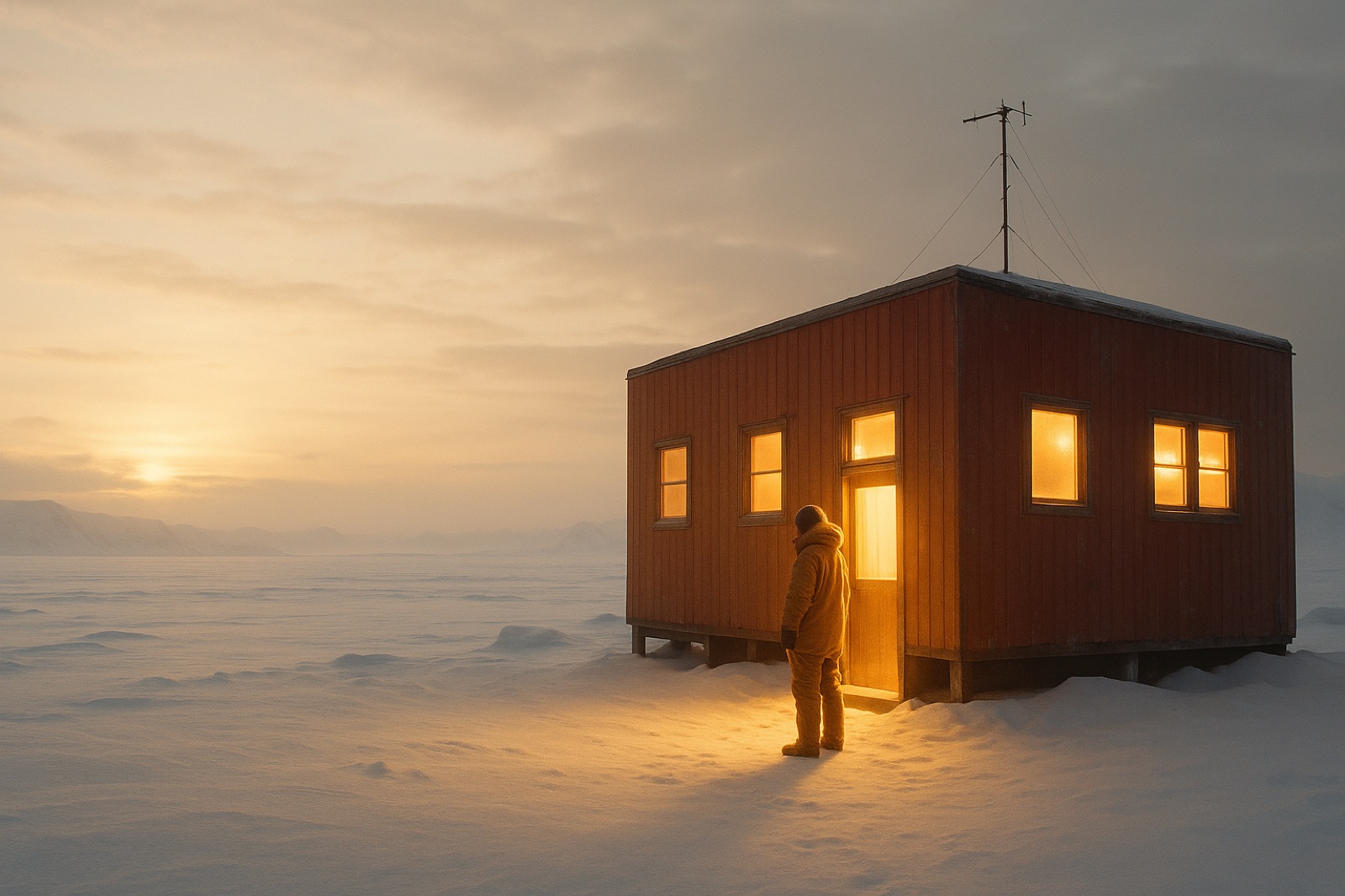
A ten-month study following a small research crew through an Antarctic winter set out to measure how isolation wears people down. Everyone expected the hardest part to be the distance — no visitors, no going home, months of the same white horizon. Instead, the data pointed somewhere stranger. The thing that wore crew members down fastest wasn’t being cut off from the world. It was never being able to get away from the same six or eight people. Researchers are increasingly framing this as a real, measurable need for solitude — separate from loneliness, and just as capable of doing damage when it goes unmet.
The Study That Expected Loneliness — And Found Something Else
Isolation research stations — Antarctic bases, submarine crews, the analog space missions that simulate a trip to Mars — have long been used to study what happens to the human mind under extreme, prolonged confinement. The assumption going in is usually simple: fewer people, more distress. Less contact, more loneliness.
What kept showing up instead was a different kind of strain. Crew members who stayed in close, constant proximity to the same small group — sharing meals, workspace, and sleeping quarters for months with zero private time — reported more irritability, more emotional exhaustion, and worse sleep than the raw “how isolated am I” numbers predicted. It wasn’t the absence of people. It was the absence of any moment without them.
One way researchers describe it: humans don’t just need a certain amount of social contact. They need to feel like they have some control over it — the ability to step away, close a door, or simply not be watched or needed for a stretch of time. Take that control away, even while surrounded by people who like you, and something starts to fray.
Why We Have a Real Need for Solitude
This is where the research starts separating two things people usually lump together: being alone, and being lonely. They’re not opposites, and they don’t cancel each other out.
You can be lonely in a crowded house. You can also be alone for an hour and come back genuinely restored — clearer, calmer, more patient with the people you love. Psychologists call this second kind “restorative solitude”: time alone that you chose, not time alone that was forced on you. It tends to lower stress hormones, help the brain settle out of constant vigilance, and make room for the kind of thinking that doesn’t happen well with an audience.
Scientists have even started mapping the neuroscience of the opposite state — the ache of forced isolation — down to specific brain circuits that make loneliness feel unbearable and reconnection feel urgent. Solitude deprivation appears to work on a related but separate system: not the pain of missing people, but the fatigue of never getting a break from being seen, needed, and “on.”
Why This Feels So Familiar
None of this stays in a research station. Most people reading this have never set foot near a polar base, but plenty know exactly what “never a moment alone” feels like — the open-plan office with no door to close, the family group chat that never sleeps, a house full of people you love who all need something from you at once, a work-from-home schedule with no real edge between “on the clock” and “off.”
It’s not that connection is bad. It’s that unlimited, unfiltered access to us — and to everyone else — has quietly become the default setting of modern life, with almost no built-in moments of true privacy left in the day. That kind of chronic overload shows up in the mental health data too, in ways that track alongside the general rise in anxiety and exhaustion researchers keep flagging as a modern-life pattern, not just an individual one.
An Old Habit, Long Before Psychology Had a Name For It
Here’s the part that’s easy to miss. Long before anyone ran a study on this, there was already a habit built into one of the most-read lives in history. Jesus spent His public years surrounded — crowds pressing in, people constantly needing something, followers who wanted His attention at every hour. And He kept doing something that, on paper, looks almost inefficient: He walked away. Alone. To quiet places, before dawn or after everyone else had gone to sleep, not to escape the people He loved, but because that was where He came back whole enough to keep loving them well.
It’s the same instinct researchers are now measuring with brain scans and stress hormones, described a couple thousand years earlier in much simpler terms: there’s something in the silence that a person can’t get anywhere else. Not avoidance. Restoration.
Small Ways to Reclaim a Few Minutes of Real Solitude
You don’t need ten months in Antarctica to test this. A few small, low-cost ways to build in real solitude without disappearing on the people who need you:
- Claim one unscheduled window a day — even ten minutes, phone in another room, no destination in mind.
- Take the long way somewhere — a walk, a drive, a few extra minutes before you walk back inside — as a built-in buffer, not wasted time.
- Protect one “off” hour — a stretch of the day where you’re not reachable, and don’t apologize for it.
- Notice the difference between hiding and resting — solitude that restores you looks different from solitude that’s really just avoidance. Be honest about which one you’re reaching for.
Maybe you’ll never spend a winter at the bottom of the world with the same seven people. But most people reading this know exactly what it feels like to be worn thin not by silence, but by the total absence of it. Turns out that ache has always pointed somewhere — toward a kind of rest that isn’t about running from anyone. It’s about coming back to them better.
One Question Worth Sitting With
When was the last time you had real solitude — not because you were lonely, but because you chose it? What did it actually do for you? Drop your answer in the comments — someone else reading this might need the reminder that it’s okay to want it too.
Share This
- Turns out isolation wasn’t the danger in this 10-month Antarctic study — never getting a moment alone was. There’s a real need for solitude, and it’s not selfish to want it.
- Been feeling worn out even though you’re never actually alone? Science just caught up to something people have known for a long time — solitude and loneliness are not the same thing, and one of them is exactly what you’re missing.
- The hardest part of 10 months in Antarctica wasn’t the isolation. It was never being alone. Wild finding, and it explains a lot about why “surrounded but exhausted” is such a common feeling.
Common Questions
Is solitude the same thing as loneliness?
No. Loneliness is the distress of wanting connection you don’t have. Solitude is time alone — and when it’s chosen rather than forced, research links it to lower stress and better emotional regulation rather than distress. A person can be lonely in a crowd and restored while completely alone.
What did the Antarctic isolation study actually find?
Research on long-duration isolation crews, including extended Antarctic missions, has repeatedly found that constant, unbroken proximity to the same small group — with no private time — predicts more irritability, exhaustion, and disrupted sleep than distance from the outside world alone does. The strain came less from being far from everyone and more from never getting a break from anyone.
Why do people need alone time even if they’re not introverts?
Needing solitude isn’t an introvert-only trait. Everyone’s nervous system needs some recovery time from being watched, needed, and socially “on.” Extroverts typically need less of it and recover from it faster, but the underlying need for occasional unmonitored time doesn’t disappear — it just looks different from person to person.
How much solitude do you actually need in a day?
There’s no single universal number, but researchers studying restorative solitude point to small, consistent windows — even 10 to 20 minutes of genuinely unscheduled, unreachable time — making a measurable difference in stress levels and mood, more than one long stretch used rarely.
Did Jesus really withdraw to be alone on purpose?
Yes — it’s described as a repeated pattern in His life, not a one-time event. Even while surrounded by crowds who constantly needed Him, He regularly withdrew to quiet, solitary places to pray, often very early in the morning or late at night, before returning to the people around Him.