 0
0
 0
0
You’ve probably felt it — that moment when something big lands in your lap and your first honest thought is, “I am not ready for this.” A promotion you didn’t feel qualified for. A hard conversation nobody else wanted to have. A calling that landed on you instead of someone older, wiser, more prepared.
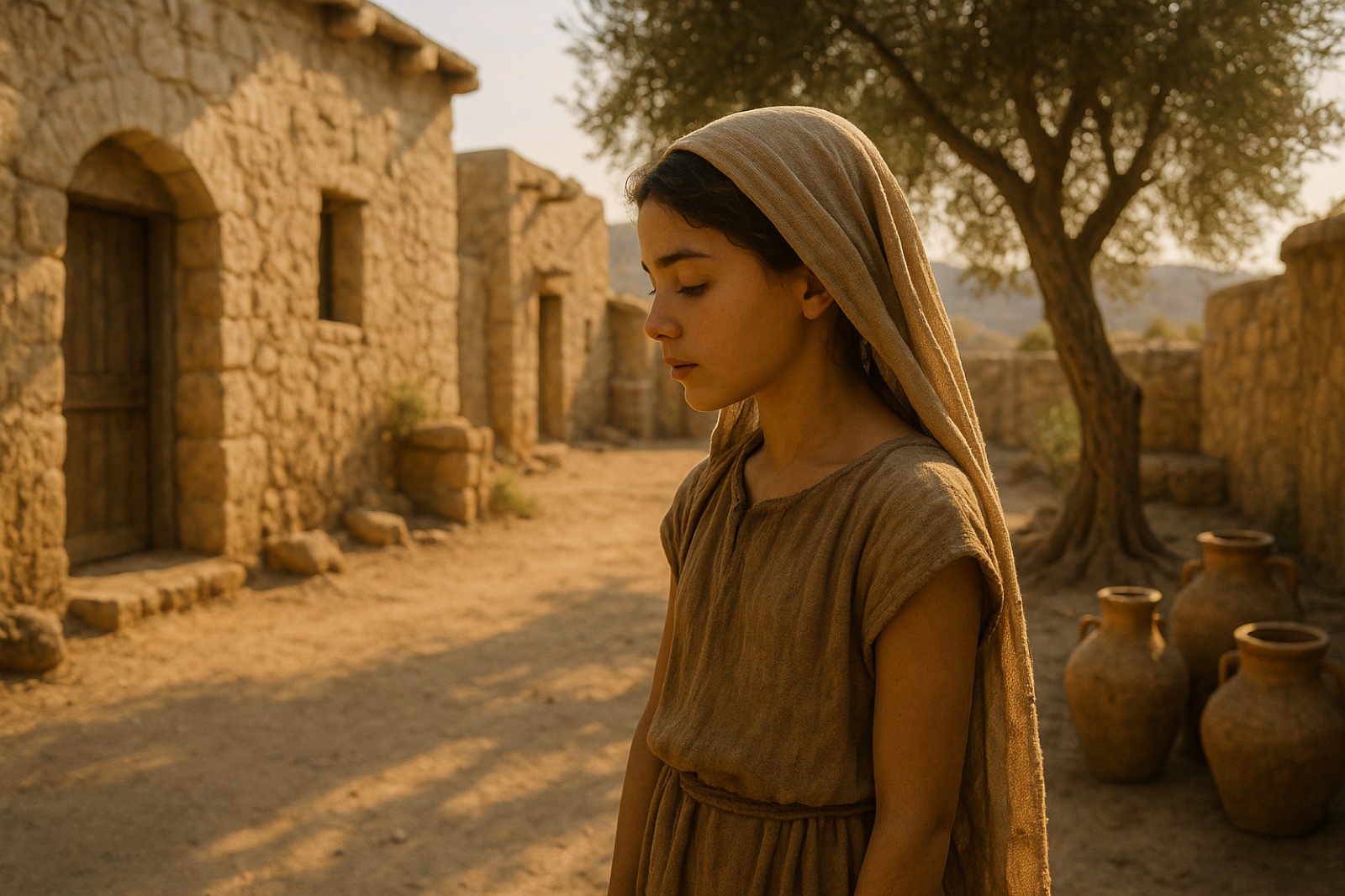
How old was Mary when she had Jesus? It’s one of the most searched questions about the Christmas story, and the honest answer is younger — probably much younger — than the grown, serene woman painted into most Nativity scenes and Sunday School flannel boards.
What the Bible Actually Says About Mary’s Age (And What It Doesn’t)
Here’s the part that surprises people: the Bible never states Mary’s exact age. Not once. Luke simply introduces her as “a virgin espoused to a man whose name was Joseph, of the house of David; and the virgin’s name was Mary” (Luke 1:27). No number. No detail about how old she was standing there.
So where does the “young teenager” answer actually come from? Not from a hidden verse — from history. In first-century Judea and Galilee, Jewish girls were customarily betrothed shortly after reaching physical maturity, commonly around 12 to 13 years old, with the marriage itself following within about a year. This wasn’t scandalous or unusual for the culture — it was simply how families, inheritance, and household life worked in that world. Later Jewish writings, like the Mishnah, describe this as standard practice, reflecting oral tradition that stretches back well before it was written down.
Luke 1:27 already tells us Mary was “espoused” — betrothed — to Joseph at the time Gabriel visits her. Line that up against the customs of her culture, and most Bible historians place her somewhere between 12 and 16 years old when she became pregnant with Jesus, with many estimates landing closer to 13 or 14. That’s roughly the age of a modern seventh or eighth grader.
The Moment That Matters More Than the Number
The age matters less as trivia and more as context for what happens next. An angel appears to a young girl in an unremarkable village and tells her she will conceive a son by the Holy Spirit — the Son of the Highest. Mary’s first response isn’t panic or refusal. It’s a reasonable question: “Then said Mary unto the angel, How shall this be, seeing I know not a man?” (Luke 1:34).
Gabriel answers her, and then Mary says the words that have echoed for two thousand years: “And Mary said, Behold the handmaid of the Lord; be it unto me according to thy word. And the angel departed from her” (Luke 1:38).
“Handmaid” isn’t a soft, poetic word. In the original language it describes a bondservant — someone completely at their master’s disposal, with no claim to their own plans. When a young girl, likely still a teenager, calls herself that in response to the most disruptive news imaginable, she isn’t describing weakness. She’s describing total, willing surrender.
Joseph’s side of this story is just as remarkable, and just as young in all likelihood — we’ve written before about what the Bible says to a father afraid he’s failing, and Joseph’s quiet obedience in this same story deserves that same spotlight.
Why God Choosing Someone So Young Isn’t a Loophole — It’s the Pattern
If this were the only time God picked someone the world would call too young or too unready, you could file it away as a one-time exception. It isn’t. David was the youngest of his brothers, still tending sheep, when Samuel anointed him king (1 Samuel 16). Years later, Paul would tell a young pastor named Timothy not to let anyone look down on him for his age (1 Timothy 4:12). Scripture keeps circling back to the same uncomfortable, freeing truth: God’s timeline for who is “ready” rarely matches ours. Mary joins a long line of women in Scripture the world would have overlooked, and God didn’t.
This is where Mary’s story stops being a Bible Fun Fact and starts being a mirror. If you’ve ever felt too young, too new, too inexperienced, too “not enough” for what’s sitting in front of you right now — that feeling isn’t disqualifying. It may be exactly the resume God tends to pick from. Mary’s value in this moment wasn’t her preparedness. It was her willingness. That’s still available to you today, whatever the thing in front of you is.
And the child she said yes to carrying is the same one Luke 2:11 announces to shepherds in a field a few months later — good news of great joy, born because a teenage girl chose surrender over certainty.
3 Things to Do With This Today
- Name it. In one sentence, write down the specific thing you feel too young, too new, or too underqualified for right now. Naming it takes the fog out of it.
- Read Luke 1:26-38 slowly, once, today. Notice that Mary doesn’t ask “am I qualified.” She asks “how does this work” (v.34), gets an answer, and yields. Try swapping your own “am I ready” question for “what’s the actual next step” — then take it before you feel ready.
- Send one text. Message someone younger or newer than you — a kid, a new hire, a newer believer — and tell them specifically why you believe they’re capable of more than they think. Two minutes. Could be their Mary-moment.
God, I feel it right now — that voice telling me I’m too young, too new, too unqualified for what’s in front of me. Help me remember that You didn’t wait for Mary to feel ready; You just asked, and she said yes anyway. I don’t fully understand how this is supposed to work either, but I don’t want the fear of not being enough to keep me from saying yes to You. Give me Mary’s kind of courage today — not certainty, just willingness. Be it unto me according to Your word.
If God asked you today for a “Mary yes” — full trust before you understood how it would work — what’s the first thing that comes to mind? Tell us in the comments.
Share This
- “TIL Mary was probably a young teenager when the angel came to her. She didn’t wait to feel ready — she just said yes. Rereading her story different today.”
- “How old was Mary when she had Jesus? Younger than every painting of her. And somehow that makes her ‘yes’ hit even harder.”
- “I keep thinking I need to feel more ready before I say yes to what God’s asking. Mary didn’t. Maybe I don’t need to either.”
Frequently Asked Questions
How old was Mary when she had Jesus?
The Bible never states her exact age, but based on first-century Jewish betrothal customs — where girls were typically engaged shortly after reaching puberty, around 12 to 14 years old — most Bible historians place Mary in her early-to-mid teens when the angel Gabriel visited her in Luke 1.
Does the Bible say how old Mary was?
No. Scripture describes her simply as “a virgin espoused to a man whose name was Joseph” (Luke 1:27) without giving a number. Her age is inferred from the marriage customs of her time and culture, not stated directly in the text.
How old was Joseph when he married Mary?
The Bible doesn’t say this either. Tradition has sometimes portrayed Joseph as older, possibly a widower, but there’s no scriptural age given for him any more than there is for Mary.
Why does Mary’s age matter for understanding her story?
It reframes her “yes” to God. She wasn’t a mature, fully-formed woman calmly accepting a role she felt prepared for — she was young, likely scared, and still said, “be it unto me according to thy word” (Luke 1:38). That makes her trust even more remarkable, not less.
What does “handmaid of the Lord” mean in Luke 1:38?
It translates a word meaning bondservant — someone fully at their master’s disposal. When Mary calls herself this, she isn’t describing weakness. She’s expressing total, willing surrender to whatever God was asking of her.