 0
0
 0
0
You unlock your phone to order dinner in four taps. Your car warns you before you drift out of your lane. Your playlist picks the next song before you finish the current one. Everything in your life has been quietly optimized to remove effort — and yet, somewhere in the last year, a growing number of people started doing the opposite on purpose. There’s a name for it now: friction-maxxing.
They’re waking up early to walk to the store instead of driving. Buying a film camera that makes them wait a week to see their photos. Cooking dinner from raw ingredients instead of ordering it. Writing letters by hand. Taking cold showers. Some are even switching to phones that can’t do anything except call and text.
Friction-maxxing isn’t a productivity hack or a minimalist aesthetic. It’s people deliberately choosing the harder, slower, more inconvenient version of something — on purpose, in a world engineered to remove every possible inconvenience.
What Is Friction-Maxxing, Exactly?
The term started showing up in lifestyle and culture writing in 2025 and 2026, used to describe a specific kind of countertrend: people reintroducing friction — effort, waiting, physical labor, inconvenience — into parts of life that technology had made frictionless.
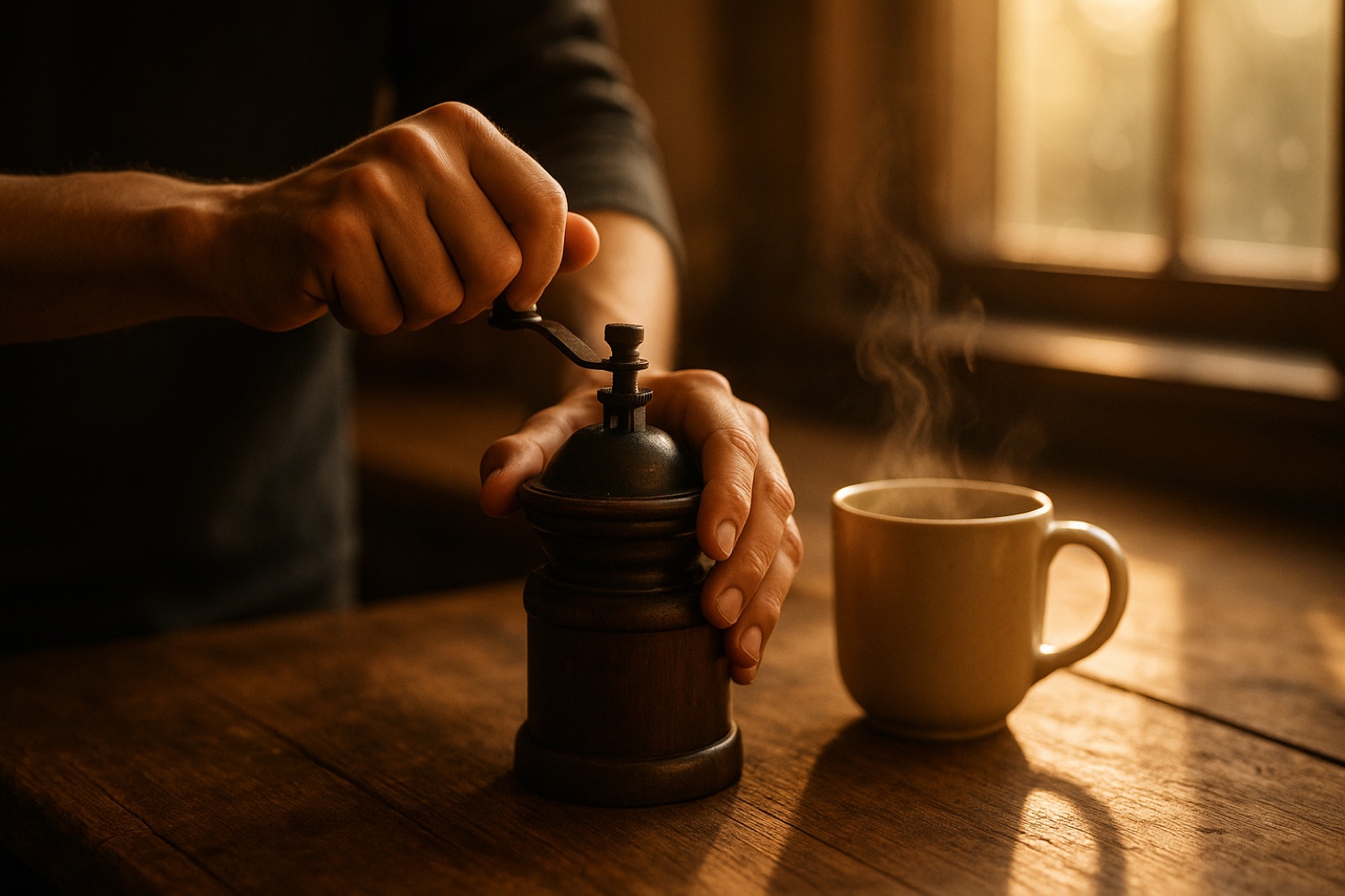
It shows up in small ways and big ones. Someone switching from a smartwatch back to a wind-up wristwatch. A group of friends who agreed to only communicate by mailed letters for a month. A runner who deletes the pace-tracking app and just runs by feel. A cook who grinds their own spices instead of buying the pre-ground jar.
None of this is about being anti-technology. Most people friction-maxxing in one area of life are still on their phones constantly in every other area. It’s more targeted than that — a conscious decision that this one thing, whatever it is, gets to stay hard.
Why People Are Suddenly Choosing the Hard Way
For the better part of two decades, the entire direction of consumer technology has been toward removing friction. Fewer clicks. Faster delivery. Less waiting. Less thinking. And it worked — most of daily life really is easier now than it was twenty years ago.
But easier didn’t turn out to mean more satisfying. A growing body of research on what psychologists call the “effort paradox” has found that people often enjoy — and value — things more, not less, when they had to work for them. A meal you cooked yourself tends to taste better to you than the identical meal delivered to your door. A piece of furniture you assembled feels more valuable than the same piece bought pre-built, a well-documented effect researchers nicknamed the IKEA effect after the flat-pack furniture company. Effort doesn’t just produce a result. It changes how the result feels.
There’s also a simpler explanation sitting underneath the trend: frictionless living has a way of feeling weightless in a bad sense, not a good one. When nothing requires anything from you, nothing quite belongs to you either. Friction-maxxing, for a lot of people, is a way of buying back a sense of ownership over their own hours — proof that a day actually happened, rather than just scrolling past.
It also tends to show up hardest in people who are the most exhausted by convenience culture already — the same population a recent UK trial of the four-day workweek found reporting steep drops in burnout once they got real, protected time back. Friction-maxxing and that four-day workweek finding are pointing at the same underlying hunger, from opposite directions: people don’t actually want less structure in their lives. They want structure that’s theirs.
The Line Between Healthy Friction and Just Making Life Harder
Not all friction is good friction, and the people doing this well tend to draw a clear line. Healthy friction-maxxing is chosen, contained, and reversible — you can grind your own coffee beans and still take the elevator. It targets one or two specific areas of life rather than trying to overhaul everything at once, and it’s motivated by wanting to feel more present, not by guilt over convenience itself.
It stops being healthy when it becomes a competition — when the goal shifts from “this feels good” to “I’m harder than you for doing this the hard way.” That’s a familiar trap. It’s the same comparison instinct that quietly hijacks so much of modern life — even the parts of it that are supposedly about slowing down.
An Old Pattern, Rediscovered
Here’s the part that’s easy to miss: none of this is actually new. Long before anyone had a word like “friction-maxxing,” people were building deliberate difficulty into their lives on purpose — going without food for a set stretch of time, setting aside a full day each week where the normal rules of productivity simply didn’t apply, taking on physical disciplines that had no practical payoff except what they did to a person’s attention and character. People who believed in something bigger than themselves built these same disciplines in on purpose — not as a burden to escape, but as a tool for staying honest about what they actually needed versus what they’d simply gotten used to. What a 2026 lifestyle trend is rediscovering by trial and error, that older wisdom built in deliberately, thousands of years ago.
That’s worth sitting with for a second. The instinct showing up in cold plunges and film cameras and handwritten letters isn’t a new idea. It’s an old one, finally getting rediscovered by a culture that spent twenty years engineering it away.
How to Try It Without Overdoing It
If any of this is landing for you, you don’t need to reorganize your whole life to test it. A few low-stakes ways people are starting:
- Pick one meal a week to cook from scratch — no delivery app, no shortcuts, just ingredients and time.
- Walk somewhere you’d normally drive, even if it takes twice as long.
- Set one day, or even one evening, where your phone stays in another room for a set block of hours.
- Write one letter by hand to someone you’d normally just text.
- Try a week without a convenience you don’t actually need — the food delivery app, the streaming autoplay, the grocery pickup — and notice, honestly, what you feel.
The point isn’t suffering for its own sake. It’s finding out what a little resistance gives back to you that ease quietly took away.
Maybe that’s the real appeal of friction-maxxing — not the cold water or the film camera or the long walk themselves, but what shows up in the space those things create. A slower morning. A meal you actually tasted. An evening that felt like it belonged to you instead of slipping past. Whatever you call it, a lot of people are discovering the same thing at the same time: sometimes the hard way was the good way all along.
Discussion Question
Is there one area of your life where you’d actually want more friction, not less — and what’s stopping you from adding it back in? Drop your answer in the comments — even if it’s just “my mornings” or “cooking.”
Share This
- I just found out there’s a name for why I switched back to a film camera and it’s not just nostalgia: “friction-maxxing.” Turns out the hard way might be the good way. 🎞️
- The internet spent 20 years removing every bit of friction from daily life. Now people are adding it back on purpose — and honestly? I get it.
- Cold showers, handwritten letters, cooking from scratch — it’s not a trend, it’s people trying to feel like their days actually belong to them again.
Questions People Ask
What does “friction-maxxing” mean?
Friction-maxxing is a 2026 lifestyle trend where people deliberately choose harder, slower, more effortful versions of everyday tasks — walking instead of driving, cooking from scratch, using a film camera — instead of the frictionless, convenient version technology usually offers.
Is friction-maxxing the same thing as being anti-technology or a minimalist?
No. Most people practicing friction-maxxing still use technology heavily in other areas of their life. It’s a targeted choice to keep specific tasks effortful, not a wholesale rejection of convenience or possessions.
Why do people enjoy things more when they had to work for them?
Researchers call this the “effort paradox.” Studies have found people place higher value on outcomes they had to work for — a well-documented example being the “IKEA effect,” where people rate self-assembled furniture as more valuable than identical pre-assembled furniture.
Is choosing difficulty on purpose a healthy habit?
It can be, when it’s chosen, limited to one or two areas of life, and motivated by wanting more presence rather than guilt or competition with others. It becomes unhealthy if it turns into a way of proving superiority over people who haven’t made the same choices.
How can I try friction-maxxing without a big lifestyle overhaul?
Start small: cook one meal from scratch a week, walk somewhere you’d normally drive, set your phone in another room for a few hours, or write one handwritten letter instead of a text. Pick one area, not all of them at once.