 0
0
 0
0
The Cosmic Clock: Understanding Our Celestial Neighbors
In a world captivated by the rapid pace of modern life, the universe operates on a much larger scale—one that unfolds over centuries. As Dr. Fabio Silva, an archaeoastronomer from Bournemouth University and the Skyscape Academy, points out, the positions of the Sun, Moon, planets, and stars change at a glacial pace that often goes unnoticed during our brief lifetimes. This slow cosmic dance reveals profound insights that can prompt us to reflect on our own journey.
Isn’t it fascinating that while our everyday moments flash by, the universe quietly maintains its rhythm? Dr. Silva’s observation invites us to consider not just the mysteries of the skies, but also our lives, echoing the biblical notion that “to everything there is a season and a time for every matter under heaven” (Ecclesiastes 3:1, ESV).
The Universe’s Teachings
The knowledge gleaned from studying celestial phenomena is not merely scientific; it offers a unique lens through which we can examine our existence. The slow-moving celestial bodies remind us of the constancy of God’s creation and the importance of patience and reflection in our own lives. Just as the sun rises and sets, shining its light on all, we learn to embrace each day as an opportunity for growth and renewal—much like the biblical principle of loving our neighbors and ourselves.
Embracing Change and Continuity
The gradual shifts in the night sky can also serve as a metaphor for the changes we experience. While we may feel the turmoil of rapid change in our personal or societal lives, the universe teaches us that some transformations take time. Jesus emphasized the importance of patience, especially in cultivating relationships and spiritual growth. As he stated in Galatians 5:22, “But the fruit of the Spirit is love, joy, peace, forbearance, kindness, goodness, faithfulness” (NIV). These are virtues that flourish slowly but yield profound results.
An Invitation for Reflection
As we gaze up at the stars, we are reminded of our small yet significant place in God’s grand design. The heavens, steadfast and unyielding, can inspire us to cultivate a spirit of patience and intentionality in our own lives, grounded in faith and love.
So, the next time you find yourself caught in the rush, take a moment to pause and look up. Consider the vastness of the universe and reflect on the consistent yet subtle changes at play. Allow it to stir a sense of wonder and encourage you to embrace the slow but steady unfolding of your journey.
In doing so, we can find connection not just with the cosmos but with one another, reinforcing the lesson that the greatest changes often begin in the quiet spaces of our hearts—a fundamental truth we can all aspire to live by.
If you want to want to know more about this topic, check out BGodInspired.com or check out specific products/content we’ve created to answer the question at BGodInspired Solutions
If positive Biblical wisdom matters to you, I’d love your support of the mission
Q&A about
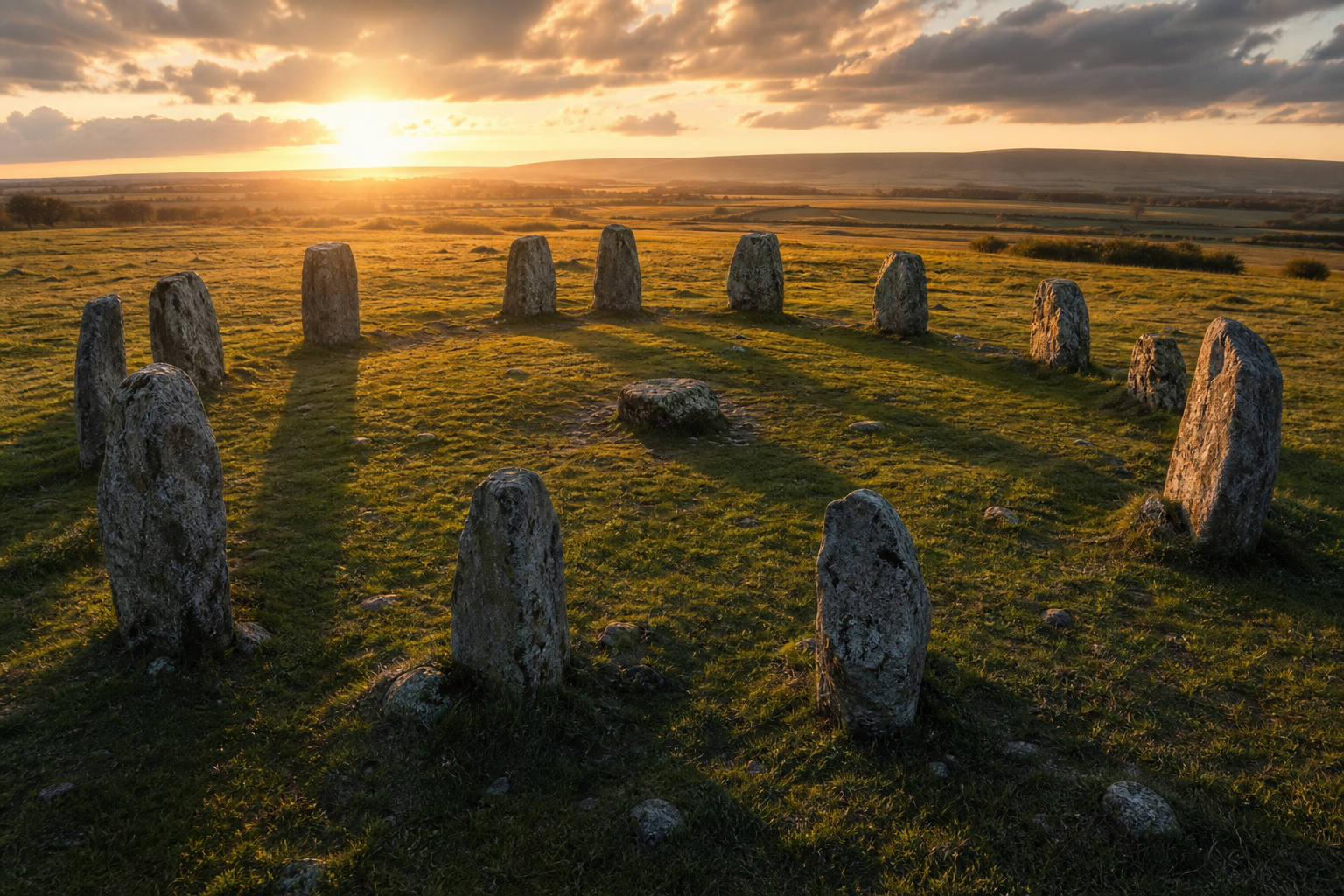
Could this simpler version of Stonehenge have spiritual significance for Christians?
The simpler version of Stonehenge could serve as a reminder of God’s creation and the importance of gathering together in community. Just as Jesus emphasized the value of fellowship—where two or more are gathered in His name (Matthew 18:20)—this site could inspire us to reflect on our connections with one another and with God.
How should Christians view ancient structures like Stonehenge?
Ancient structures like Stonehenge can prompt discussions about humanity’s search for meaning. Just as Paul highlighted in Acts 17:26-27 that God made all nations and set their appointed times, such sites may reveal humanity’s longing for connection with the divine, pointing us to the ultimate truth in Christ.
What lessons can be applied from a historical site like this?
A historical site like this teaches us about perseverance in faith and the importance of seeking deeper truths amid life’s mysteries. Jesus spoke of seeking and finding (Matthew 7:7), encouraging us to not just admire history but to seek its lessons that lead us closer to God’s purpose and understanding.
Should we as Christians be concerned about ancient monuments?
While ancient monuments might spark curiosity or concern, our true focus should be on our relationship with God. Jesus emphasized that our foundation should be built on Him, the Rock (Matthew 7:24-25), rather than on physical structures. Such monuments can remind us to prioritize our faith and seek eternal truths rather than temporary wonders.