 0
 0
Somebody asked you for something recently. Not a huge thing. A bit of money, a lift somewhere, an hour of your time, a hand with something heavy.
And you had a reason.
The reason was true, as well. You were tired. You had your own problems that week. They should have planned better. You helped before and nobody noticed. Every one of those is a real reason, and you have almost certainly never once connected any of them to the word pride.
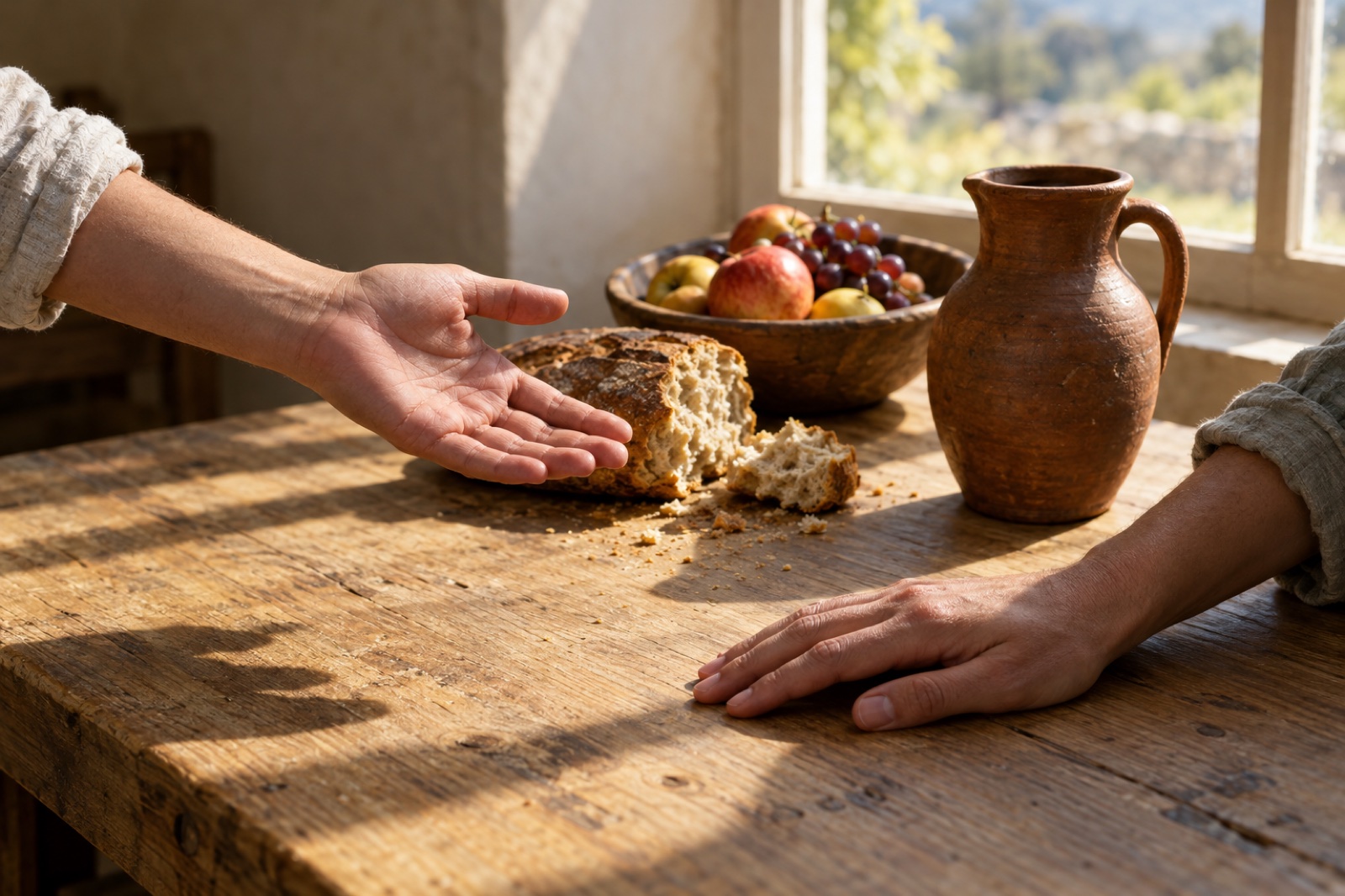
That is the part worth slowing down for. Because when the Bible talks about pride, it hardly ever points at a feeling. It points at a hand.
What does the Bible say about pride? It begins with a word about height
In the Hebrew Bible, the main word for pride is ga’on (Strong’s H1347), written גָּאוֹן. It grows out of the root ga’ah (H1342), a verb meaning to rise up, to grow tall, to be lifted high. It is the sort of word you would use for floodwater climbing a riverbank.
So at the root, pride is not a bad feeling. It is a height.
And here is the detail that quietly changes the whole subject. That exact same noun, ga’on, is used in the Bible for God’s own greatness. After the sea opened, Moses sang this:
“And in the greatness of thine excellency thou hast overthrown them that rose up against thee: thou sentest forth thy wrath, which consumed them as stubble.”
– Exodus 15:7 (KJV)
“Excellency” there is ga’on. The very same word that gets translated “pride” and “arrogancy” elsewhere. Translators reach for “majesty” when the height belongs to God, and for “pride” when a person is standing on it. The Hebrew does not change. Only the owner does.
That tells you what Scripture is really objecting to. Not height. Height that arrived as a gift and then got reported as something you built.
If that lands a little close, you are in good company – and there is a gentler way to live than holding up your own name.
The verse that names pride by what a city would not do
The sharpest definition of pride in the Old Testament is not in Proverbs. It is in Ezekiel, and it comes in a list.
Ezekiel is speaking to Jerusalem, and to shake the city awake he compares it to Sodom – a place his hearers would have considered beyond argument. Then he tells them what Sodom’s guilt actually consisted of:
“Behold, this was the iniquity of thy sister Sodom, pride, fulness of bread, and abundance of idleness was in her and in her daughters, neither did she strengthen the hand of the poor and needy.”
– Ezekiel 16:49 (KJV)
Read the four items slowly. Pride. Plenty of food. Plenty of spare time. And a hand that was not strengthened.
Three of those are not crimes at all. Food is a blessing. Rest is a gift. This is not a list of four separate offences – it is one condition described from four sides. A place got comfortable. The comfort rose up. And the rising made it stop noticing who was standing at the door.
The next verse adds the word plainly: “And they were haughty, and committed abomination before me” (Ezekiel 16:50). But verse 49 is the one that hands you a test you can actually run. Not “do I feel superior?” but “whose hand did I not strengthen?”
Two kings, and the same short sentence
In the Bible’s histories, pride turns up at a very particular moment: just after things go well.
Uzziah became king of Judah at sixteen and reigned fifty-two years (2 Chronicles 26:3). By the account’s own telling he was a huge success – armies, towers, wells, fame that travelled. Then one sentence turns:
“But when he was strong, his heart was lifted up to his destruction: for he transgressed against the LORD his God, and went into the temple of the LORD to burn incense upon the altar of incense.”
– 2 Chronicles 26:16 (KJV)
“When he was strong.” Not when he was desperate. Not when he was failing. Strength was the trigger.
And notice what the pride actually made him do. It did not make him stop believing in God. It made him walk into a room and pick up a job that belonged to somebody else – burning incense was the priests’ work. Pride did not change what he believed. It changed who he thought the rules were for. He was a leper from that day until he died (2 Chronicles 26:21).
Nebuchadnezzar of Babylon gets the same beat, except he says his out loud:
“The king spake, and said, Is not this great Babylon, that I have built for the house of the kingdom by the might of my power, and for the honour of my majesty?”
– Daniel 4:30 (KJV)
Count the ownership in one sentence. I have built. My power. My majesty. Three claims on a city he inherited and a strength he did not make. The voice from heaven arrives while the words are still in his mouth (Daniel 4:31). The king who follows him in Daniel 5 makes a version of the same mistake, and that is the night of the writing on the wall.
Pride goeth before destruction – and the proverb nobody finishes
“Pride goeth before destruction, and an haughty spirit before a fall.”
– Proverbs 16:18 (KJV)
This is the verse everybody half-remembers, usually shortened to “pride comes before a fall.” The word carrying the weight is “before.” It is a warning given while there is still road left to turn on.
Two chapters later the same book says it again, backwards – and the second half is the part almost nobody quotes:
“Before destruction the heart of man is haughty, and before honour is humility.”
– Proverbs 18:12 (KJV)
So two things come “before” something. Haughtiness comes before the fall. Humility comes before honour. Scripture is not only warning the proud; it is telling you which door you are currently standing in front of.
And one more, which explains why any of this is difficult:
“The pride of thine heart hath deceived thee, thou that dwellest in the clefts of the rock, whose habitation is high; that saith in his heart, Who shall bring me down to the ground?”
– Obadiah 1:3 (KJV)
Obadiah is speaking to Edom, a people living high up in rock and feeling safe because of the altitude. Height again. And height is precisely what you cannot see clearly from, because everything below looks small.
The test is not a feeling. It is a hand.
Put the cases side by side and something shows up that no single verse says on its own.
- Sodom – did not strengthen the hand of the poor and needy.
- Uzziah – walked in and took work that was not his.
- Nebuchadnezzar – said “my power” about a thing he was handed.
- Edom – sat up high and asked who could possibly bring it down.
Not one of them is diagnosed by an emotion. Every single one is diagnosed by an action, a sentence said out loud, or a thing left undone. The Bible treats pride the way a doctor treats a limp – not by asking how you feel about walking, but by watching you walk.
Which is a relief, honestly. Obadiah just told us that pride deceives the person who has it. If the only test were looking inward, pride would pass every time. That is the Pharisee in Luke 18, walking into the temple convinced he was being grateful – we looked at that inner, comparing side of it in what pride actually is.
But Ezekiel 16:49 hands you something pride cannot fake. Somebody needed something. What did your hands do?
Which brings us back to the reason you had at the start. The reason was probably true. Pride almost always arrives with a true reason attached – that is exactly what makes it so comfortable to live with. The question was never whether the reason was true. It is whether a hand went out.
The king who turned it around
If the story stopped with Uzziah it would only be a warning. But Chronicles records a king who caught it in time.
Hezekiah got proud too – “his heart was lifted up,” the same phrase (2 Chronicles 32:25). Then this:
“Notwithstanding Hezekiah humbled himself for the pride of his heart, both he and the inhabitants of Jerusalem, so that the wrath of the LORD came not upon them in the days of Hezekiah.”
– 2 Chronicles 32:26 (KJV)
Read that carefully: he “humbled himself for the pride of his heart.” He did not wait until he stopped feeling proud. He acted against it while it was still sitting there. The Hebrew behind “humbled himself” is kana (H3665), the word used for armies laying down their fight – we traced it in the Hebrew word for humility.
That is the whole shape of it. Pride is a height you are standing on that you did not build. Humility is not making yourself small – it is handing the height back to the One it came from. And then the odd thing happens, the thing Proverbs promised: before honour is humility.
God is not trying to get you low. God is trying to make the height a gift again – because a gift can be shared, and a trophy can only be guarded.
Actions to take today
- Answer the one you left. Think of the last person who asked you for something and got a reason instead. Send them one message today. Not an apology – either the help itself, or a real day and time when you can.
- Turn one trophy back into a gift. Take the thing you are most respected for. Write down three people, chances or circumstances that handed it to you and that you did nothing to deserve. Say one of those names out loud in thanks to God.
- Give away the thing you are best at. This week, offer one person an hour of whatever you are genuinely good at – teaching, fixing, listening, cooking, explaining a form. Nothing asked back, and nobody else told about it.
Journaling prompts
- What strength of yours arrived most recently? Who was standing nearby when it did, and have you ever said so?
- Uzziah’s trouble began “when he was strong.” Where are you strongest right now – and which rule have you quietly started treating as being for other people?
- Whose hand have you stopped noticing, because noticing it would cost you something you have got used to having?
A prayer for when pride has a good excuse
God, I did not think any of this was about pride. I had reasons, and they were good ones, and I used every one of them to keep my hands closed. Show me the one hand I have stopped noticing, and make me the kind of person who puts something in it before I feel like it. Everything I am standing on, I was given. Help me hold it like a gift again. Amen.
Over to you
Do you think pride is easier to spot in what someone says, or in what they quietly never get round to doing? Tell us which one you notice more in the comments below.
Share this
“Ezekiel 16:49 names the sin of Sodom and the first word is pride – then ‘fulness of bread, and abundance of idleness,’ and a hand that was not strengthened. The Bible doesn’t diagnose pride by how you feel. It diagnoses it by what your hands did.”
“The Hebrew word for pride, ga’on, is the same word used for God’s own ‘excellency’ in Exodus 15:7. Height was never the sin. Claiming you built it is.”
“Uzziah reigned fifty-two years, and then one sentence turns: ‘But when he was strong, his heart was lifted up to his destruction.’ Not when he was failing. When he was strong.”
Questions People Ask About Pride in the Bible
What does the Bible say about pride?
The Bible treats pride as a height a person claims rather than receives, and it almost always identifies pride by actions rather than by feelings. Proverbs 16:18 (KJV) warns, “Pride goeth before destruction, and an haughty spirit before a fall.” Ezekiel 16:49 (KJV) names pride alongside “fulness of bread, and abundance of idleness” in a place that “did not strengthen the hand of the poor and needy.” In 2 Chronicles 26:16 (KJV), King Uzziah’s heart “was lifted up to his destruction” at the exact moment he became strong.
What verse says pride comes before a fall?
The phrase “pride comes before a fall” is a shortened form of Proverbs 16:18, which in the King James Version reads: “Pride goeth before destruction, and an haughty spirit before a fall.” Proverbs 18:12 (KJV) states the same idea from both sides: “Before destruction the heart of man is haughty, and before honour is humility.” Both verses are framed as warnings given in advance, while there is still time to change direction.
What is the Hebrew word for pride in the Bible?
The main Hebrew word for pride is ga’on (Strong’s H1347), from the root ga’ah (H1342), meaning to rise up or be lifted high. The same noun is translated “excellency” in Exodus 15:7 (KJV), where it describes God’s own greatness: “And in the greatness of thine excellency thou hast overthrown them that rose up against thee.” The word itself simply means height. English translators render it “majesty” when the height belongs to God and “pride” or “arrogancy” when a person claims it.
Is all pride a sin in the Bible?
The Bible condemns pride that claims credit for what was received and that looks past other people, not every form of satisfaction. 1 Peter 5:5 (KJV) says, “God resisteth the proud, and giveth grace to the humble.” The pattern across Scripture is that pride becomes sin when it changes behaviour – taking what belongs to someone else, as Uzziah did in 2 Chronicles 26:16, or withholding help, as described in Ezekiel 16:49.
Can a proud person change, according to the Bible?
Yes. 2 Chronicles 32:26 (KJV) records that “Hezekiah humbled himself for the pride of his heart, both he and the inhabitants of Jerusalem, so that the wrath of the LORD came not upon them in the days of Hezekiah.” Hezekiah acted against his pride while he still felt it rather than waiting for the feeling to pass. The Hebrew word translated “humbled himself” is kana (H3665), the same word used for armies laying down their fight.