 0
0
 0
0
Water bills rising faster than almost everything else is not just a feeling. A new analysis of the 500 largest drinking-water systems in the United States found that the typical household water bill went up about 62% in ten years, from 2015 to 2025.
That is faster than general inflation. It is faster than household incomes. And water is the one bill nobody can skip.
You can put off new shoes. You can buy cheaper bread. You cannot decide to stop needing water.
So let’s look at what the numbers actually say, what they leave out, and what you can do if your bill has started to scare you.
Why Are Water Bills Rising So Fast?
The analysis comes from Food & Water Watch, a group that campaigns on water issues. It looked at the 500 biggest community water systems in the US. Together they serve about 155 million people, roughly 45% of the country.
Here is what it found, as reported by WaterWorld and others:
- Bills rose about 62% from 2015 to 2025.
- They rose about 1.6 times faster than overall inflation.
- They rose about 19% faster than the typical household’s income.
- The average yearly drinking-water bill in 2025 was about $531.
- The cheapest system studied was about $133 a year. The most expensive was about $1,416. Same need, very different price, depending only on where you live.
Why? The report points to old pipes that need replacing, stricter water-quality rules, weather and climate pressures, and less help from the federal government. The US Environmental Protection Agency estimates about $625 billion of drinking-water upgrades will be needed over the next twenty years. Somebody pays for that. Mostly, it shows up on the bill.
If you have ever opened a bill and thought, “That can’t be right” — it probably was right. It just went up faster than you did.
A quick way to see where this fits in your own month: our free budget calculator sorts your money into needs and wants in about two minutes. Water always lands in “needs.”
The Number That Matters Most: 93%
The 62% gets the headlines. But the number that stopped me was a different one.
In 93% of the systems studied, the yearly water bill was higher than what the report counts as affordable for a low-income household.
Read that slowly. It does not say “in a few expensive cities.” It says nearly everywhere.
That means the person hit hardest is not the person with the biggest house or the longest showers. It is the person who already had the least room in their month. A rising bill is an annoyance to one family and a real choice to another: water, or something else.
What the Headline Leaves Out
Two honest caveats, because you deserve the full picture.
First, who did the study. Food & Water Watch campaigns against private companies owning water systems. Their data on rates is public, and other outlets have checked the figures, but their framing has a point of view. Another report has put the ten-year rise closer to 80%, using different years and a different method. So the exact number depends on who measured and how.
Second, a price list is not the same as a bill. The study modelled one household using about 60,000 US gallons a year (roughly 227,000 litres, or around 620 litres a day) and counted drinking water only. Sewage and stormwater charges, which many homes also pay, were left out. The National Association of Water Companies, which speaks for private water firms, pointed out that what customers actually pay also depends on how much they use and on help programs.
Here is the part I did not expect.
Those two groups disagree loudly about who should own water systems. That fight is not ours to settle here. But on one thing, they ended up in the same place. In its response to the report, the industry group called for a permanent program to help low-income households pay their water bills — because the temporary federal water-assistance program has run out.
The critics and the companies argue about almost everything. They both looked at the same numbers and saw the same person: the one who can’t pay.
If Your Water Bill Is Getting Hard to Pay
This study is about the United States. If you live somewhere else, you may not need a study to know the feeling. Either way, these steps cost nothing:
- Call before you fall behind. Many water providers have payment plans or hardship help, but they rarely advertise it. Ask plainly: “Do you have any help for people who are struggling to pay?”
- Read the lines on the bill. Check whether the big number is the water itself, or fixed fees, sewage, or something else. You can only question what you can see.
- Hunt for silent leaks. A toilet that keeps running or a dripping tap can waste water all day and night. Put a few drops of food colouring in the toilet tank. If colour shows up in the bowl without flushing, it is leaking.
- Look for local help. Charities, faith communities and local councils sometimes help with utility bills, even when there is no national program.
- Give it a line in your budget. If you use a simple plan like the 50/30/20 rule, water belongs in the “needs” half. When needs grow faster than income, the plan has to bend, and that is not a personal failure.
If water is one more weight on top of a hard season of work, you are not alone. We wrote recently about why so few companies seem to be hiring, and the number the headlines skipped.
The Oldest Price Tag on Water
There is something strange about putting a price on water at all. It falls from the sky. It runs down hills. And yet getting it clean and into a kitchen tap costs real money, and someone has to pay.
People have known this tension for a very long time. There is an old Hebrew poem, written roughly two and a half thousand years ago, that opens by calling out to everyone who is thirsty. And then, of all the people it could name, it names the one with no money. It tells that person to come anyway, and to take what they need without paying.
That is not a business plan. Nobody’s water company can run that way. But it says something about God that the first person in that invitation is the one at the very bottom of the bill.
The world sends that person a reminder notice. The oldest invitation sends them a welcome.
Where This Leaves Us
Water bills will probably keep rising. The pipes are old, and fixing them costs money that has to come from somewhere.
But a rising number is not the whole story. Help programs exist in more places than people think. Leaks can be fixed. And the people who argue about water the most still agree that nobody should go without it.
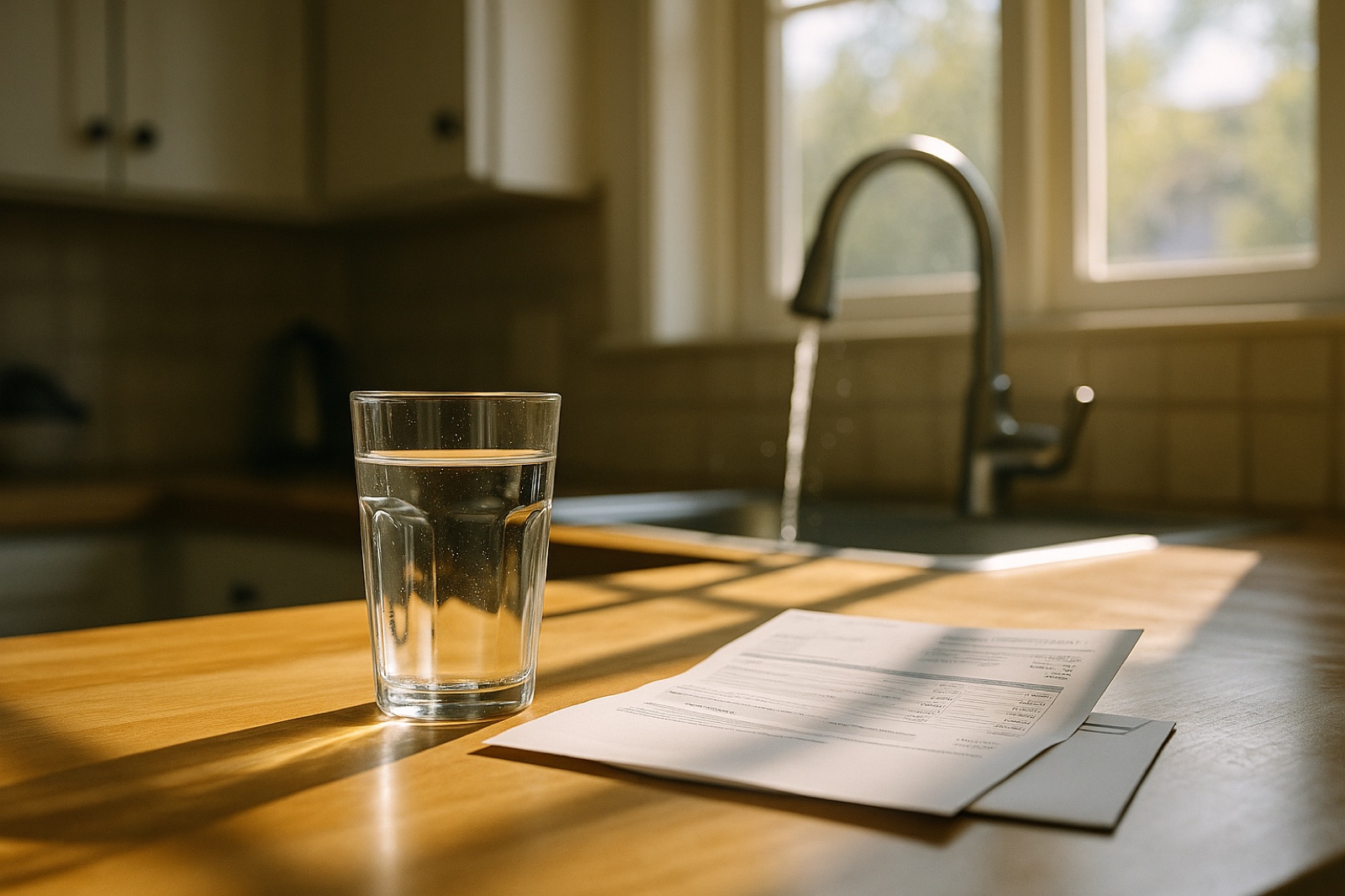
Pour yourself a glass today and notice it. Then, if you can, ask someone you know whether their bill has been hard lately. Sometimes the cheapest help is just being asked.
A good place to start: The Beginner’s Guide to Feeling God’s Presence Every Day — a short video guide and companion PDF for noticing that you are not alone in the ordinary, stressful moments, like opening a bill. Get the free guide. Free.
Discussion Question
Should water be priced like any other product, or should a basic amount for every household be treated differently? Tell us what you think in the comments.
Share This
“US water bills rose about 62% in ten years. In 93% of the big systems studied, the bill is now more than a low-income home can afford. Water is the one bill you can’t skip. https://bgodinspired.com/?p=118373”
“The surprising part: the water companies and their loudest critics both say low-income families need permanent help paying for water. Worth a read before your next bill: https://bgodinspired.com/?p=118373”
“Running toilet? Put food colouring in the tank. If it shows in the bowl, you’re paying for water you never used. More free tips on rising water bills here: https://bgodinspired.com/?p=118373”
Questions People Ask About Rising Water Bills
How much have US water bills gone up in the last ten years?
A Food & Water Watch analysis of the 500 largest US community drinking-water systems found that typical residential water bills rose about 62% from 2015 to 2025. That is about 1.6 times faster than overall inflation and about 19% faster than median household income. Another report using a different method and time period has put the rise closer to 80%.
Why are water bills rising faster than inflation?
Water bills are rising mainly because old pipes and treatment plants need replacing, water-quality rules have become stricter, climate and weather put pressure on supplies, and federal help for water systems has shrunk. The US Environmental Protection Agency estimates about $625 billion of drinking-water upgrades are needed over the next twenty years, and much of that cost is passed on to customers.
What is the average water bill in the US in 2025?
According to the Food & Water Watch analysis, the average yearly drinking-water bill across the 500 largest US systems was about $531 in 2025, based on a household using about 60,000 gallons a year. Bills ranged from about $133 a year in Hempstead, New York, to about $1,416 a year for San Jose Water Company in California. Sewage and stormwater charges were not included.
What can I do if I can’t afford my water bill?
If a water bill is hard to pay, call the water provider before falling behind and ask directly about payment plans or hardship assistance, since many providers offer help without advertising it. Check the bill line by line to see which charges are largest, fix leaks such as a running toilet, and ask local charities, faith communities or councils about one-time utility help.
Are water bills unaffordable for low-income families?
In the Food & Water Watch analysis, typical water bills were higher than the group’s affordability threshold for low-income households in 93% of the 500 largest US water systems. The industry group for private water companies has also called for a permanent federal program to help low-income households pay water bills, after a temporary federal water-assistance program expired.