 0
0
 0
0
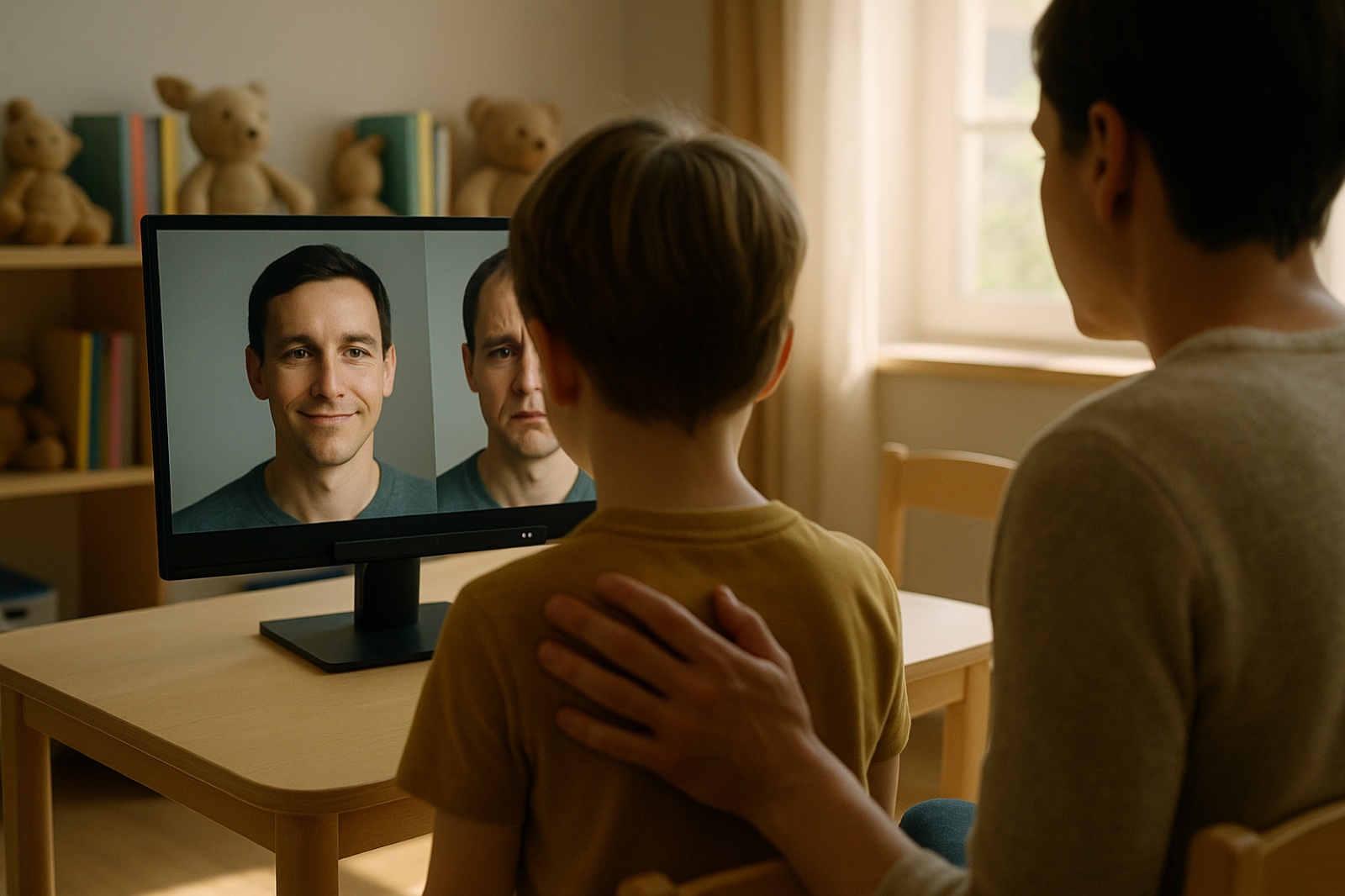
Picture a child sitting in front of a screen. Two faces pop up side by side. One is calm. One is sad.
A small camera under the screen tracks exactly where the child’s eyes go, and for how long.
That simple setup is how a team of scientists has been studying depression in children. What they found is quietly heartbreaking. Some kids, as their sadness grew, found it harder and harder to look away from the sad face.
If you are a parent who has watched your child go quiet, or an adult who remembers being that child, this one is worth a few minutes.
What the Eye-Tracking Study Found
The research comes from the Mood Disorders Institute at Binghamton University in New York. It was led by PhD student Kelly Gair and the institute’s director, psychologist Brandon Gibb, and published in the Journal of Psychopathology and Clinical Science in 2026.
Here is how it worked:
- The team followed 242 children and their mothers for two years.
- Every six months, each child looked at pairs of faces on a screen. One face was always neutral. The other was happy, sad, or angry.
- An eye-tracker measured which face held the child’s attention.
- Some of the mothers had a history of major depression. Some did not. That split the kids into a “higher-risk” group and a “lower-risk” group.
For the higher-risk kids, the pattern was clear. As their depression symptoms went up, so did the time they spent looking at sad faces.
Gibb put it in one plain sentence: “the more these children experience depression themselves, the more they lose their ability to pull their attention away from the sad things around them.”
Notice the word he used. Not “choose.” Lose. This is not a child being gloomy on purpose. It is a child whose attention is being pulled, and who has less and less strength to pull it back.
The Part Most Headlines Skipped: Two Different Paths
Most reports stopped at “sad faces.” But the study found something else, and it may matter even more.
The lower-risk kids, the ones whose mothers had no history of depression, did not start staring at sad faces when they felt low. Something different happened. They started looking less at happy faces.
Gibb described it as depression “eroding a protective factor, which is how much they pay attention to happy faces.”
Think about what that means. For one child, depression looks like getting stuck on the sad thing. For another child, it looks like slowly not noticing the good thing anymore. Both children are sinking. They are just sinking in different ways.
That is useful for any parent or teacher. A child who seems “fine” because they are not dwelling on sad things may still be losing their grip on the bright ones. A smile across the room that used to catch their eye now just slides past.
If that “can’t feel the good things” pattern sounds familiar, it has a name in adults too. Our guide to what anhedonia is, and why nothing feels good anymore explains it simply.
Does Attention Cause Depression, or Does Depression Cause It?
This is the question everyone asks. The honest answer from this study is: it seems to run both ways.
The researchers did something new. Instead of asking only “does a sad gaze lead to depression?” they checked both directions at every six-month visit. Lead author Kelly Gair called these “transactional relations,” and said the two things were “mutually predicting one another across the time points.”
In plain words: sadness pulls the eyes toward sad things, and looking at sad things can feed the sadness. A loop.
Gair added a careful note: “We know that when you’re depressed, it changes what you pay attention to. Our results suggest that these changes may be more long-lasting and may differ depending on family history.”
“May” is the right word. This is one study of 242 families in one place. It shows a pattern linked together over time. It does not prove that staring at sad faces causes depression, and it is not a test you can run at home. The team plans to keep following these children into their teenage years to learn more.
Adults know this loop well, even if we have never named it. It is a lot like rumination, when your mind keeps chewing the same painful thought. The thought pulls you in. Being pulled in makes the thought louder.
What This Does Not Mean
Please hear this part, especially if you are a mother who has struggled with depression yourself.
- It does not mean you did this to your child. “Higher risk” is not a verdict. Many children of depressed parents never become depressed.
- It does not mean your child is weak. Attention is not fully under anyone’s control, least of all a child’s.
- It does not mean “just think positive.” Telling a struggling child to look on the bright side is like telling someone stuck in mud to walk faster.
What it does mean is hopeful. Gibb’s team studies children because things are still forming. As he said, “You can catch things as they’re developing, rather than only studying them once they’re already there and pretty stable.”
Simple Things a Parent Can Do Today
None of these cost money. None of them replace real help. But they all work with what the study found, not against it.
- Notice where their eyes go. Not to fix it, just to see it. Do they keep coming back to the sad news, the hurt, the bad part of the day?
- Name the sad thing out loud. Pretending it is not there makes a child feel more alone. “That was a hard day” is better than “Cheer up.”
- Then gently point to one other thing. Not instead of the sadness. Next to it. “That was hard. And your friend did save you a seat.”
- Bring the happy faces back. If the protective factor is noticing joy, make joy easy to notice. Look at your child and smile when they walk in. Laugh at something together. Small and often beats big and rare.
- Ask for help early. A doctor, a school counselor, a nurse, a trusted teacher. Many places also have free children’s helplines. Early is always better than late.
If a child ever talks about hurting themselves or not wanting to be alive, do not wait. Contact your local emergency number or a crisis line right away.
Curious about the patterns you bring to all this as a parent? Our free What Is My Parenting Style? quiz takes a few minutes and might show you something useful.
An Old Song About a Stuck Gaze
There is something striking about how old this problem is.
One of the most ancient songs people still sing was written by someone who was clearly stuck. Tears day and night. Memories of better times that hurt to look at. And in the middle of it, the writer does a strange thing. He talks to himself. He asks his own soul why it is so cast down, and then he tells it to keep hoping in God.
He does not pretend the sadness is gone. He asks the same question again later in the song. And again after that. Three times, the same words, because once was not enough.
That is not “think positive.” It is something more honest. It is a person who cannot stop seeing the sad thing, choosing to also say out loud that it is not the only thing there. God is near, even when your eyes cannot find it yet.
Where This Leaves Us
The children in this study are not statistics. They are kids sitting in front of a screen, their eyes quietly telling a story they could not put into words.
If you love a child like that, you do not need to fix their gaze in one afternoon. You only need to sit next to them, look at the sad thing with them, and then, gently, help them find the next face. Again tomorrow. And again after that.
Sometimes the most powerful thing a parent can do is be the happy face their child’s eyes land on.
If this has stirred up your own worry, and you find your mind will not slow down at night, the free guide below was made for exactly that.
Questions Parents Ask About Depression in Children
Can depression in children change what they pay attention to?
Yes. A two-year eye-tracking study of 242 children at Binghamton University found that as children’s depression symptoms rose, their attention to emotional faces changed. Children whose mothers had a history of major depression looked longer at sad faces. Children without that family history looked less at happy faces.
Does looking at sad things cause depression in kids?
It is not proven. The 2026 Binghamton study found that attention to emotional faces and depression symptoms predicted each other over time, which suggests a two-way loop rather than one simple cause. The researchers describe the findings with caution and plan more research as the children reach adolescence.
What are early signs of depression in a child?
Common signs include lasting sadness or irritability, losing interest in things they used to enjoy, changes in sleep or appetite, pulling away from friends, and tiredness that does not go away. A child who seems to stop noticing good things, not just dwelling on bad ones, may also be struggling. A doctor or school counselor can help assess this.
Is a child of a depressed parent sure to become depressed?
No. Having a parent with depression raises a child’s risk, but many children of depressed parents never develop depression. Risk is not destiny, and early support, warm relationships, and professional help when needed all make a real difference.
How can I help a child who seems stuck on sad things?
Acknowledge the sad thing honestly instead of dismissing it, then gently point to one other true and good thing next to it. Make joy easy to notice through small, frequent moments of warmth. Reach out early to a doctor, school counselor, or children’s helpline, and seek urgent help if a child talks about self-harm.
Discussion Question
When a child is sad, what do you think helps more: helping them look at the sad thing, or helping them look away from it? Tell us what you think in the comments below.
Share This
“Depression doesn’t always look like staring at sad things. In one study, some kids just slowly stopped noticing the happy faces. That one stuck with me. https://bgodinspired.com/?p=117484”
“Scientists tracked 242 kids’ eyes for two years. As depression grew, some couldn’t pull their attention away from sad faces. Not ‘won’t.’ Can’t. Every parent should read this: https://bgodinspired.com/?p=117484”
“Telling a sad kid to ‘look on the bright side’ is like telling someone stuck in mud to walk faster. This explains why, and what actually helps: https://bgodinspired.com/?p=117484”