 0
0
 0
0
You have seen it on mugs, posters and tattoos. Carpe diem. Seize the day. Grab life hard and do not let go.
That is the carpe diem meaning most of us were given. It is close, but it is not quite what the poet wrote. The Latin verb he chose is a word for picking fruit. And the poem it comes from was not written to push a lazy person to do more. It was written to calm someone who could not stop worrying about the future.
Once you see that, the two little words feel very different.
Carpe Diem Meaning: What the Latin Really Says
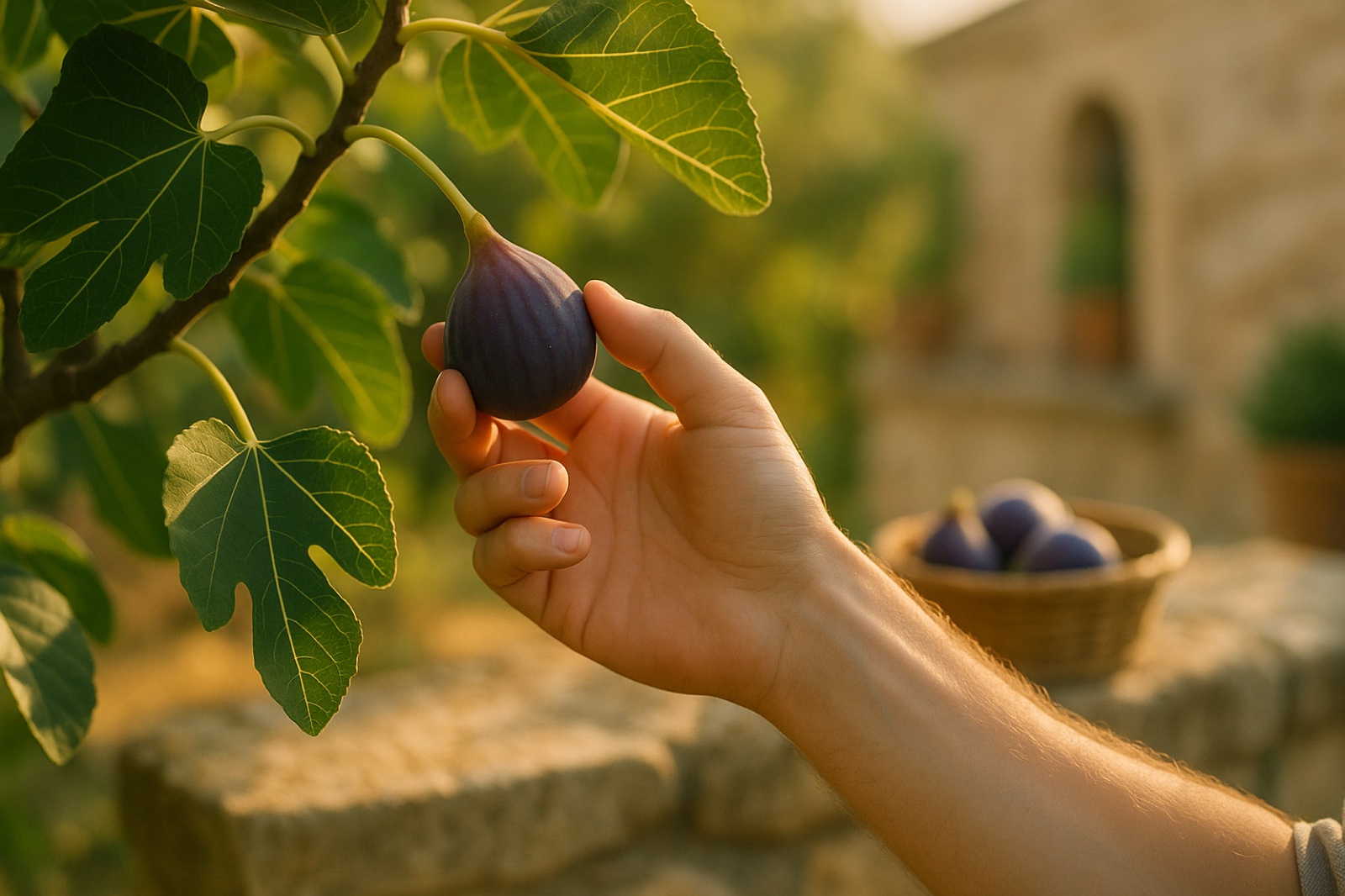
Carpe diem is Latin. Diem means “day.” Carpe comes from the verb carpo, and its first meaning is to pick or pluck, the way you take a ripe fig from a branch or a flower from a stem.
So a closer translation is “pluck the day.”
The Latin scholar Maria S. Marsilio calls the phrase “a horticultural metaphor,” which is a fancy way of saying it is a gardening picture. She says it is “more accurately translated as ‘plucking the day,'” and that it brings to mind “the plucking and gathering of ripening fruits or flowers.” The language writer Chi Luu laid this out in a well-known piece for JSTOR Daily.
Think about the difference in your hand.
- To seize is to grab. It is fast and tight. You seize something that might get away.
- To pluck is gentle. You wait until the fruit is ripe. You take one, not the whole tree. Then you eat it.
One word is about force. The other is about timing and enjoyment. Horace picked the second one.
Where Carpe Diem Comes From: An Eight-Line Poem
The phrase comes from the Roman poet Horace. It sits in the last line of a very short poem, number 11 in his first book of Odes, published in 23 BC. The whole poem is only eight lines long.
It is written to a woman named Leuconoe. We know almost nothing about her. She may have been a real friend, or she may be a name Horace made up. But the poem tells us one thing about her. She is worried about how long she has left.
Here is how the poem moves, in plain words:
- Do not ask what end the gods have set for me or for you. We are not allowed to know.
- Do not try the “Babylonian numbers.” That was the star-reading of the day, the horoscopes people used to guess the future.
- It is better to take whatever comes.
- Maybe we get many more winters. Maybe this one, beating the sea against the rocks right now, is the last.
- So be wise. Strain the wine. Cut your long hopes back to fit a short space.
- Even while we are talking, time is slipping away.
Then comes the famous ending. In Latin it is carpe diem, quam minimum credula postero. Pluck the day, and trust the next one as little as you can.
The Part of Carpe Diem Everyone Leaves Out
Notice who Horace is talking to. Not a person who is wasting their life. A person who is checking the stars to find out when it will end.
Leuconoe’s problem is not that she does too little. It is that her mind lives in a day that is not here yet. Carpe diem, in its first home, is advice for a worrier.
Now look at the verbs Horace gives her. Strain the wine. In Roman homes, wine had bits in it and had to be poured through a cloth before you could drink it. It is a small kitchen job for tonight’s table. Cut back long hope. The Latin word there is a pruning word, the kind a gardener uses for trimming a vine. Then pluck the day.
Strain. Prune. Pluck. Every one of them is slow, close work you do with your hands. None of them is a battle cry. Horace is not telling Leuconoe to conquer anything. He is telling her to come back to the table she is sitting at.
And the second half of the line is the part the posters leave off: trust tomorrow as little as you can. That is not a cheerful slogan. It is an honest one. Horace’s reason for enjoying today is that tomorrow is not promised and cannot be known.
How “Pluck” Became “Seize the Day”
For a long time, English writers just used the Latin. One early example is the poet Lord Byron, who wrote in a letter around 1817, “I never anticipate — carpe diem — the past at least is one’s own.”
Older English poets had already caught the garden picture. In 1648 Robert Herrick wrote his famous line, “Gather ye rosebuds while ye may.” Gather. That is Horace’s verb, turned into English flowers.
Then, in 1989, came the film Dead Poets Society. Robin Williams, playing the teacher John Keating, leans in toward his students and says, “Carpe diem. Seize the day, boys. Make your lives extraordinary.” The American Film Institute later put it on its list of the 100 greatest movie quotes.
After that, “seize” won. It is fair to say the word is not flat-out wrong. Latin dictionaries do list grabbing among the wider senses of carpo. But picking and plucking come first, and the rest of the poem is full of garden and kitchen words. “Seize” keeps the hurry and loses the ripeness.
Words drift like this all the time. It is a bit like serendipity, where we kept half the meaning and forgot the other half.
Why the Difference Matters in Real Life
“Seize the day” can turn into one more thing to fail at. If the day is something you must grab and squeeze, then a quiet, ordinary day feels wasted. You did not travel. You did not start the business. You did not make your life extraordinary by dinner time.
“Pluck the day” asks for far less, and gives more. You do not need money or free time for it. You only need to notice what is ripe today and take it.
- The meal in front of you, eaten slowly.
- The person in the room, listened to properly.
- Ten minutes of sun on your face.
- One job, finished, instead of ten jobs worried about.
Fruit does not wait. A fig that is perfect today is soft tomorrow and gone the day after. That is the quiet warning inside the picture. Not “hurry up and do more,” but “this one is ready now, do not walk past it.” It is part of why the years seem to go by faster as we get older. We stop noticing the single days.
If you want to feel that in a number, our free tool How Many Days Have I Been Alive? will count yours. Each one was a day you could only pick once.
Two Old Voices, One Piece of Advice, Two Reasons
Here is something worth sitting with.
About half a century after Horace wrote to Leuconoe, in another corner of the same Roman world, a teacher stood on a hillside in front of a crowd of ordinary, worried people. They were anxious about food and clothes and what came next. He told them almost the same thing Horace did. Do not carry tomorrow today. Each day has enough trouble of its own.
The advice is nearly a match. The reason is the opposite.
Horace says: leave tomorrow alone, because no one can know it. The teacher on the hill says: leave tomorrow alone, because you are already known. Look at the wild birds, he said. Look at the flowers in the field. They are fed and dressed without worrying, and the God who looks after them knows what you need too.
Those are two very different places to stand. If tomorrow is simply a blank, then you hold today a little tightly, because it may be all there is. That is the ache under Horace’s lovely poem. But if tomorrow is already held by someone who cares about you, your hand can relax. You can pick today’s fruit without gripping it.
Horace would have told you not to trust tomorrow. The other voice says you do not have to carry it. You can decide for yourself which one lets you sleep.
How to Pluck the Day Today
None of this needs a big plan. Try one of these before the day ends.
- Ask what is ripe. Not “what should I achieve today?” but “what good thing is here today that will not be here next week?”
- Prune one long hope. Take one far-off worry and cut it down to the next small step. Horace’s words, not ours.
- Do one small thing with your hands. Cook, wash up, water a plant, fold the clothes. Slow hand work pulls the mind back from next month to this minute.
- Put tomorrow down on purpose. Write tomorrow’s worries on paper, close the page, and leave them there for the night.
Leuconoe wanted to know how many winters she had left. Horace never told her. He could not. He pointed at the wine, the vine and the fruit, and said, in effect: this is the day you have. It is ripe. Pick it.
Discussion Question
Which do you think is better advice for most people today: “seize the day” or “pluck the day”? Tell us which one you would rather live by, and why, in the comments below.
Share This
- “I just learned carpe diem doesn’t really mean ‘seize the day.’ The Latin verb means to pluck, like ripe fruit. That is a much kinder way to live. https://bgodinspired.com/index.php/personal-growth-and-life-skills/carpe-diem-meaning/”
- “Carpe diem was written to a woman who kept checking her horoscope to find out how long she had left. It was never a slogan for doing more. It was advice for a worrier.”
- “Strain the wine. Prune your long hopes. Pluck the day. Horace’s most famous poem is eight lines long and every verb in it is slow work you do with your hands.”
Carpe Diem: Questions and Answers
What does carpe diem literally mean?
Carpe diem literally means “pluck the day.” Diem is the Latin word for “day,” and carpe comes from the verb carpo, whose first meaning is to pick or pluck, as with ripe fruit or flowers. The common English translation “seize the day” keeps the sense of urgency but loses the gentler gardening picture of harvesting something when it is ripe.
Who first said carpe diem?
The Roman poet Horace wrote carpe diem in Odes 1.11, a poem of eight lines published in 23 BC. The poem is addressed to a woman named Leuconoe, and the full final line is “carpe diem, quam minimum credula postero,” which means “pluck the day, trusting as little as possible in the next one.”
Is “seize the day” a wrong translation of carpe diem?
“Seize the day” is not completely wrong, but it is not the closest translation of carpe diem. The Latin verb carpo chiefly means to pick or pluck, and Latin scholar Maria S. Marsilio describes carpe diem as a horticultural metaphor more accurately translated as “plucking the day.” The rest of Horace’s poem also uses garden and kitchen language, such as straining wine and pruning back long hopes.
What is the full carpe diem poem about?
Horace’s carpe diem poem, Odes 1.11, tells a woman named Leuconoe to stop trying to find out how long she and the poet will live. Horace tells Leuconoe not to consult Babylonian astrology, to accept whatever comes, to strain the wine, and to cut long hopes back to a short space, because time is passing even as they speak. The poem ends by telling Leuconoe to pluck the day and put very little trust in tomorrow.
Why is carpe diem linked to Dead Poets Society?
Carpe diem became widely known in modern English through the 1989 film Dead Poets Society. In the film, Robin Williams plays the teacher John Keating, who tells his students, “Carpe diem. Seize the day, boys. Make your lives extraordinary.” The American Film Institute included the line in its list of the 100 greatest movie quotes, and “seize the day” has been the standard English version of carpe diem ever since.