 0
0
 0
0
What is survivorship bias? It is the mistake of learning only from the people or things that made it, and forgetting the ones that did not. The winners are easy to see. The losers are gone, so nobody counts them. And the picture you are left with is wrong.
The most famous example comes from the Second World War. It is a good story. It is also not quite the story most people tell. The real one is better.
What Is Survivorship Bias? The Bomber Story
Here is the version you have probably heard.
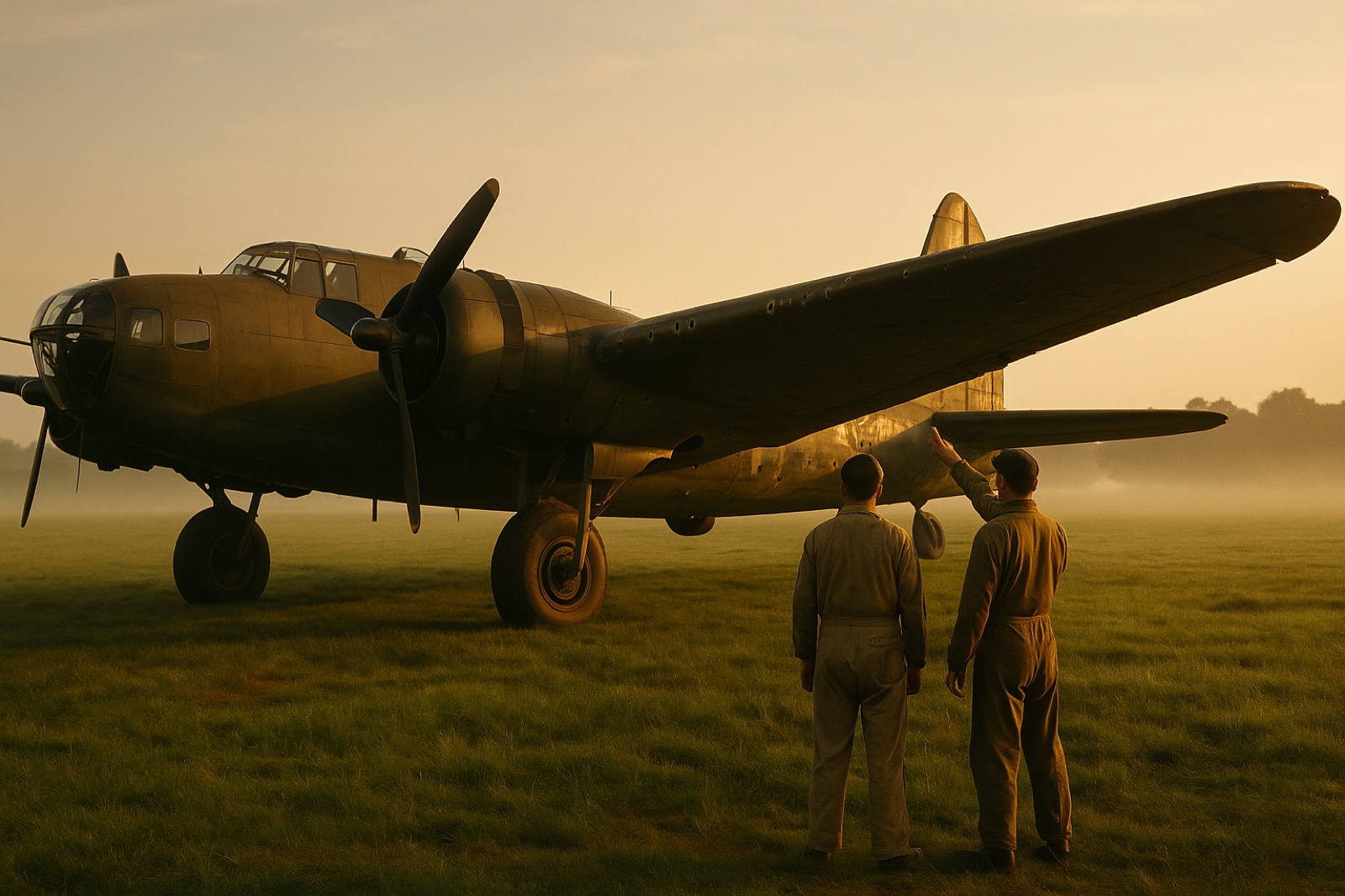
During the war, bombers came home full of holes. The military looked at where the holes were. Wings. Tail. The long body of the plane. The plan seemed clear: put more armor where the planes get hit the most.
A mathematician named Abraham Wald saw the problem. These were only the planes that came back. A plane could take hits in the wings and still fly home. The planes hit in the engine were not in the pile. They were at the bottom of the sea.
So the holes were not showing where planes were weak. They were showing where a plane could be hit and live. The armor belonged where the holes were not.
That is survivorship bias in one picture. You study the survivors, and you learn the wrong lesson, because the ones with the real answer never came home to tell you.
What Abraham Wald Really Wrote
Now the part most tellings skip.
Wald was real. He was born in 1902 in a city that is now Cluj-Napoca, Romania. He left Austria in 1938, after the Nazi takeover, and ended up at Columbia University in New York. There he joined a wartime team called the Statistical Research Group.
In 1943 that group put out eight memos by Wald under a plain title: A Method of Estimating Plane Vulnerability Based on Damage of Survivors. They were later reissued, and in 1984 two statisticians wrote up his method for a statistics journal. They noted it was used in that war and again in Korea and Vietnam.
So the core is solid. But three things in the popular story are shakier than they sound.
The dramatic meeting. You will often read that Wald stood up in a room and corrected a group of officers. There is no record of that scene. What we have is one line from W. Allen Wallis, who ran the group, written in 1980: “The military was inclined to provide protection for those parts that on returning planes showed the most hits.” That is all. The rest of the scene was added later by people retelling it.
The red-dot plane. You have seen the picture: an outline of a plane, covered in red dots on the wings and tail. It looks like wartime data. It is not. It is a modern drawing, and its own caption calls the pattern hypothetical. Wald’s report had no pictures at all. The plane in the drawing is not even one of the famous heavy bombers. It is a smaller patrol plane, the Lockheed Ventura.
The simple answer. Wald did not just say “armor the blank spots.” He did something harder. He built a way to work out, from the survivors alone, how likely a hit on each part was to bring a plane down. According to the notes with that drawing, his numbers had a plane living through a single engine hit about 60% of the time, and a hit to the body of the plane closer to 95% of the time. He gave the missing planes a number.
Think about that for a second. The best-known story about survivorship bias has itself been through survivorship bias. The neat, dramatic version lived. The careful, slower one mostly did not.
One more fact, stated once and rarely repeated. In December 1950, Wald and his wife died in a plane crash in the hills of southern India, where he had gone to give lectures. He was 48.
Where Survivorship Bias Shows Up in Your Life
You do not need a war to see it. It is on your phone right now.
Success stories. “I quit my job, worked hard, and it paid off.” You hear from the people it paid off for. The ones who did the same thing and lost their savings are not giving talks. The advice might be good. But you cannot tell from the winners alone.
Money. Funds that do badly get closed. So any list of funds that exist today is a list of survivors. One 1996 study of investment funds put the size of that effect at about 0.9% a year. The average looked better than it was, because the failures had been erased.
“They don’t make them like they used to.” Old buildings look strong because the weak ones fell down long ago. Old songs sound better because nobody plays the bad ones any more.
Other people’s lives. This is the one that hurts. You see the wedding, the new baby, the good news. You do not see the people who stayed quiet this year. Then you lay your whole life, holes and all, next to a pile of other people’s safe landings. If that leaves you feeling like a fake, this short check may help: Do I Have Imposter Syndrome?
How to Spot It: Three Things to Ask
- Who is missing? Before you trust a pattern, ask who is not in the room. Who tried this and is not here to talk about it?
- Why am I seeing this one? Stories reach you because they ended well, or ended loudly. That is a filter, not a fair sample.
- What would the missing ones say? You often cannot ask them. But just picturing their answer will slow you down in a good way.
None of this costs anything. It is only a habit of looking at the empty space.
The Oldest Version Is Not About Planes
Here is the thing I did not expect to find. The oldest telling of this idea is about two thousand years older than the bombers. And it is about prayer.
The Roman writer Cicero tells it in his book On the Nature of the Gods. A man named Diagoras, who did not believe in the gods, is shown a temple wall. It is covered in paintings left by sailors who prayed in a storm and lived. See, his friend says, the gods do listen. Diagoras asks where the paintings are of the ones who prayed and drowned.
It is a fair point. And people of faith have not always answered it well. A lot of what gets shared is still that temple wall: the healing, the rescue, the prayer that worked. The planes that came back.
But there is one old letter, written to a small, worn-out group of believers, that does something different. It gives a long list of winners. People who shut the mouths of lions and walked out of the fire. Then, in the middle of a sentence, it turns to the “others.” The ones who were jailed, went hungry, and were killed. The ones who never got what they were hoping for. It does not hide them, and it does not blame them. It says they were faithful too, and that the world was not worthy of them.
Someone painted the drowned.
If you have ever prayed hard for something and it did not come, you may have been told, or told yourself, that you did it wrong. That is the temple wall talking. By that old letter’s count, a prayer that did not end the way you hoped is not proof that you failed, or that God looked away. It may be the most honest kind of company there is when someone else gets the thing you asked for.
Look at the Empty Space
Wald’s gift was simple. He looked at a plane full of holes and thought about the planes that were not there.
You can do the same this week. When a success story makes you feel small, ask who is missing from it. When a number looks too good, ask what got left out. And when you look at your own life, the hard year, the thing that did not work, do not count it as the part that does not belong in the story.
The ones who did not make it home still count. So do the parts of you that did not.
What Do You Think?
Where do you see survivorship bias the most: in money advice, in social media, or in the stories we tell about faith? Tell us in the comments. We read every one.
Share This
Copy one of these if it says what you were thinking:
The famous red-dot bomber picture is not wartime data. It is a modern drawing. The real survivorship bias story is better than the legend: https://bgodinspired.com/?p=117387
Every success story I read this week came from someone it worked for. I keep thinking about who is missing from the pile. https://bgodinspired.com/?p=117387
The oldest survivorship bias story is 2,000 years old and it is about prayer, not planes. “Where are the paintings of the ones who drowned?” This one stayed with me: https://bgodinspired.com/?p=117387
Survivorship Bias FAQ
What is survivorship bias in simple terms?
Survivorship bias is the mistake of drawing a conclusion from only the people or things that made it through some test, while ignoring the ones that did not. Because failures usually disappear from view, the survivors look more typical than they really are, and the lesson drawn from them is often wrong.
What is the World War II plane example of survivorship bias?
In World War II, bombers returned from missions with bullet holes mostly in the wings, tail and fuselage. Adding armor to those spots seemed logical. Statistician Abraham Wald, working at Columbia University’s Statistical Research Group, showed that the data came only from planes that survived. Planes hit in more vulnerable places, such as the engines, were less likely to return, so the undamaged areas on returning planes were the ones that most needed protection.
Is the Abraham Wald bomber story true?
The core of the Abraham Wald bomber story is true, but parts of the popular version are not documented. Wald wrote eight memos in 1943 on estimating aircraft vulnerability from damage to surviving planes. However, there is no record of a dramatic meeting where Wald corrected military officers, and the well-known plane diagram with red dots is a modern illustration of a hypothetical damage pattern, not wartime data.
What are everyday examples of survivorship bias?
Everyday examples of survivorship bias include success advice from entrepreneurs who made it while those who failed go unheard, investment fund averages that leave out funds that closed, the belief that old buildings or old music were better because only the best examples lasted, and social media feeds that show other people’s good news but not their hard years.
How do you avoid survivorship bias?
To avoid survivorship bias, ask three things before trusting a pattern: who is missing from the sample, why this particular story reached you, and what the missing people would say if they could be asked. Looking for the failures that dropped out of view gives a more honest picture than studying the winners alone.