 0
 0
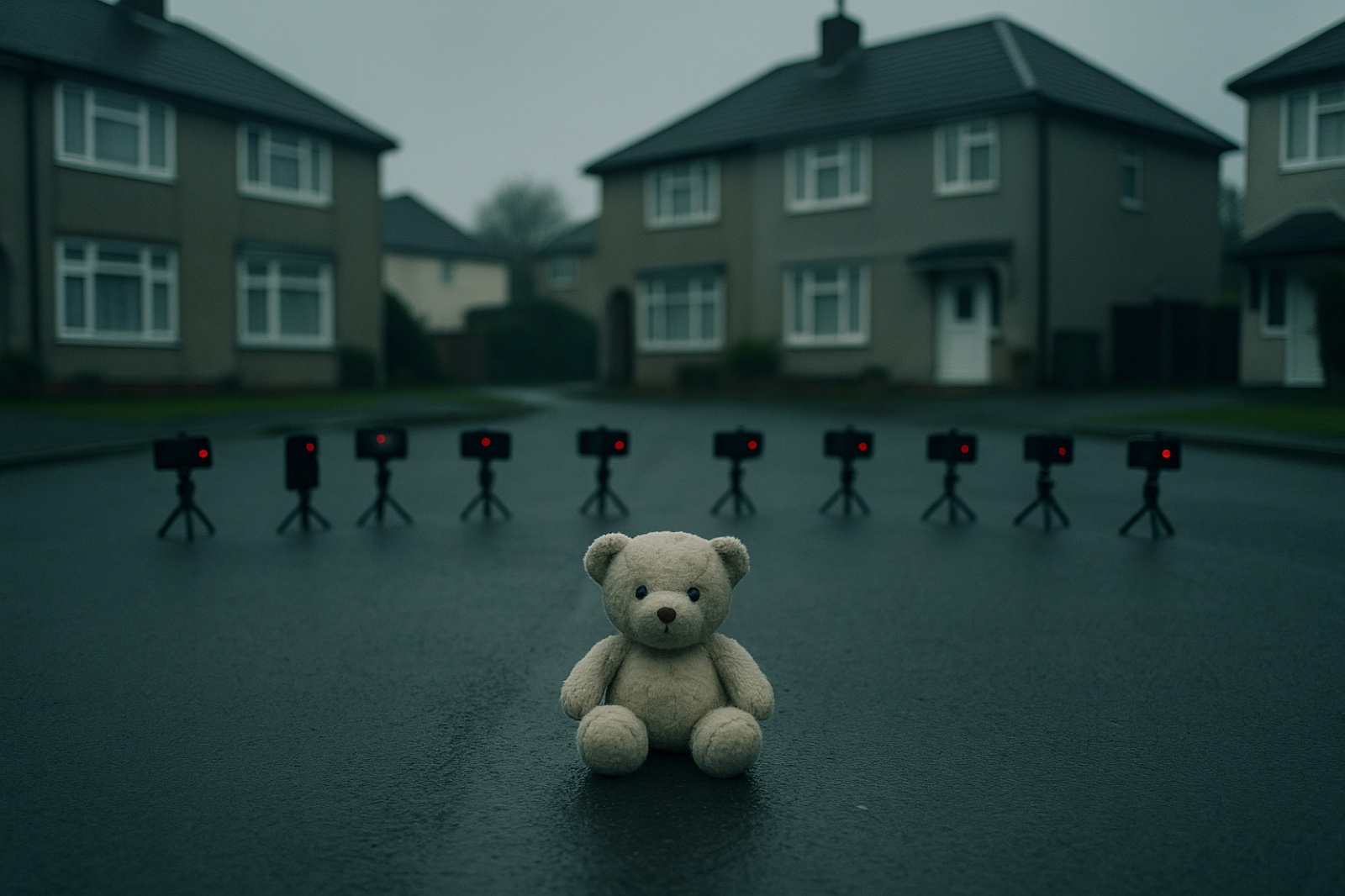
A woman wakes up in a chair. Her wrists are bandaged. She does not know her own name. A strange symbol flickers on the television, and when she runs into the street begging for help, the neighbours come to their windows, lift their phones, and film her.
Nobody helps. Nobody speaks. They just record.
That is the first ten minutes of “White Bear,” the second episode of Black Mirror‘s second series, written by Charlie Brooker and directed by Carl Tibbetts, first shown on Channel 4 in the UK in 2013. If you have seen it, you know the twist is coming. If you searched for White Bear Black Mirror explained, you probably already know what the twist is. What is worth slowing down for is what the twist does to everything you watched before it, and to you.
What happens in White Bear, in plain terms
For most of its running time, “White Bear” plays as a survival thriller. The woman, Victoria (Lenora Crichlow), meets Jem (Tuppence Middleton), who explains that a signal broadcast through screens has turned most people into silent watchers. The few who were not affected have split into survivors and “hunters” who hurt people for fun, while the watchers stand by and film.
Jem’s plan is to reach the transmitter, a place called White Bear, and shut it down. On the way they meet Baxter (Michael Smiley), who seems kind and then isn’t. Victoria keeps getting flashes of a man and a little girl she cannot place.
At the transmitter, the walls slide back. There is an audience in rows of seats, applauding. Jem is an actor. Baxter is alive and holding a microphone. And Victoria is Victoria Skillane, who helped her fiancé, Iain Rannoch, abduct a young girl named Jemima Sykes, and filmed on her phone while he killed her. Rannoch took his own life in prison. Victoria did not get that way out.
Her sentence is White Bear Justice Park, named after the girl’s toy. Every day she is made to forget, set loose to be hunted in front of paying visitors, shown the truth, and then wiped clean again for tomorrow’s show. The end credits play out that next morning from the staff’s side of the glass: the cheerful briefing for the day’s guests, the actors getting into position, the whole thing starting over.
The punishment is a copy of the crime
Here is the thing that is easy to miss on a first watch, because the twist hits so hard you do not go back and look at its shape.
What exactly is Victoria punished for? She helped take the girl, and that is monstrous. But the detail the episode keeps pressing on, the one the crowd is told and the one that gives her punishment its shape, is that she stood there and filmed while a child was hurt.
Now look at what the park asks of its guests. Stand there. Do not step in. Hold up your phone. Film while someone who is terrified and does not understand what is happening gets hurt.
The park does not just punish Victoria’s crime. It hands her crime out, every day, to a paying crowd, and calls it justice. The “watchers” in the story she is told are not a sci-fi invention. They are an exact description of the audience. The very act the park holds against Victoria is the act every visitor performs on her.
That is why the fake world inside the park is so specific. Brooker could have built any nightmare for her. He built a world where the horror is people with phones who will not help. The park is showing her what she was, and nobody in the park notices that it is also showing them what they are.
And then it turns the camera on you
There is a second audience the episode is built for, and it is sitting on your sofa.
For thirty-odd minutes you watch a frightened woman get chased, and it is gripping. That is what thrillers are for. Then you learn who she is, and something ugly happens in the viewer: a little relief. Oh, she deserved it. The tension drains. You can enjoy the next part.
Watch what happens in yourself during the crowd scene, when she is driven through a mob throwing things at the glass. The episode is daring you to feel satisfied, and then it plays the credits and shows you how the satisfaction is manufactured. Director Carl Tibbetts has said the episode is “about not torturing people,” and that whether Victoria is guilty has nothing to do with whether anyone should enjoy her suffering. The episode does not make that argument out loud. It lets you catch yourself.
It is worth noticing that Brooker, by his own account, first imagined the story as a straight apocalypse. The idea of the watchers came from seeing people film something instead of stepping in. He rewrote it into a staged punishment later. So the crowd was there first. The crime came second. That order tells you where the episode’s real attention is.
Why the memory wipe is the cruelest detail
Most people remember White Bear for the reveal. The detail that should haunt you more is the wipe.
Think about what it means. Every morning, the person being hunted does not know what she did. She is, for most of each day, innocent in the only way that matters to her: she cannot remember. So the park is not really punishing a guilty woman. It is taking someone who does not know she is guilty, hurting her, telling her the truth for a few minutes, and then erasing the truth so she can be hurt fresh again tomorrow.
That makes one thing impossible. She can never carry what she did. She can never sit with it for a year, or ten, and become someone who knows it and is sorry and is changed. Remorse takes memory. Repair takes memory. Becoming a different person takes a yesterday you can look back on. The park has removed her yesterday on purpose, because a woman who had grown into her guilt would not make good entertainment. A frightened stranger does.
So the question the episode leaves you with is not “did she deserve it?” It is sharper than that. What is a punishment for, if it has been built so that it can never lead anywhere?
The oldest story about a crowd and a guilty woman
There is a very old story that has almost exactly this cast. A crowd drags a woman into a public square. She is guilty; nobody in the story pretends otherwise. The crowd is holding stones, and they want an audience for what they are about to do. They bring her to Jesus to see if He will join in.
He does not argue that she is innocent. He bends down and writes in the dirt, which is the strangest possible thing to do in front of a mob that wants a show. Then He says one line: let whoever among you has no sin throw the first stone (John 8:7). And He goes back to writing. One by one, oldest first, the crowd drops its stones and leaves.
What He does is exactly what White Bear’s park refuses to do. He turns the attention off the guilty woman and onto the people watching her. The crowd came to watch someone else’s sin. They left having been made to look at their own.
And then the last line of the story is the one the park could never say. When the square is empty, Jesus tells her to go, and to sin no more. That is a sentence with a tomorrow in it. It assumes she will remember this day. It assumes she can walk away from it and become someone different. The mercy in that story is not pretending the wrong did not happen. It is refusing to turn the wrong into a spectacle, and leaving room for a person to change.
White Bear Justice Park takes away both. It makes the guilt a show, and it takes away the tomorrow.
What White Bear leaves you holding
The episode never asks you to feel sorry for Victoria Skillane, and it would be dishonest to pretend it does. What she did was monstrous, and “White Bear” states it plainly. It is not a plea for her.
It is a warning about the rest of us. About how easily a crowd with phones becomes the thing it is punishing, and how good it can feel. The final image is not Victoria screaming. It is the staff getting ready for another day, and the next group of guests lining up. The show goes on because people keep buying tickets. If you want to see how much of your own week passes through that same small screen, the site’s screen time calculator is an uncomfortable companion piece.
If you like reading a series for what it is really circling, the same approach runs through our piece on what Peaky Blinders means. And if the episode left you wondering whether some wrongs are simply worse than others, this piece on whether all sins are equal takes that question seriously.
Discussion question
When the twist landed the first time you watched White Bear, did you feel relief that Victoria was guilty, or did the credits sequence take that feeling away from you? Tell me in the comments. I would really like to know which way it went for you.
Questions people ask about White Bear
What is the Black Mirror episode White Bear about?
“White Bear” is the second episode of Black Mirror’s second series, written by Charlie Brooker. It follows a woman who wakes with no memory and is hunted while silent onlookers film her. It is revealed that she is Victoria Skillane, who filmed the killing of a young girl, and that her daily ordeal is a punishment staged as entertainment for paying visitors at White Bear Justice Park.
What does the ending of White Bear mean?
The ending of Black Mirror’s “White Bear” shows that Victoria’s memory is wiped every night so her punishment can be performed again the next day. The credits show the park preparing for its next audience. The point of the ending is that the crowd enjoying her suffering is doing exactly what she did: watching and filming while someone is hurt.
Why is it called White Bear?
In the Black Mirror episode “White Bear,” the justice park is named after a white teddy bear that belonged to Jemima Sykes, the girl Victoria Skillane and Iain Rannoch abducted. The toy becomes the symbol of the park and of the case.
Is White Bear saying Victoria deserved her punishment?
Not exactly. “White Bear” makes clear that Victoria Skillane is guilty, but its director, Carl Tibbetts, has said the episode is about not torturing people, and that her guilt does not decide whether anyone should enjoy her suffering. The episode’s sharpest criticism is aimed at the audience that turns punishment into a show.
Social share posts
Rewatched Black Mirror’s White Bear. Victoria’s crime was standing there filming while a child was hurt. The park’s guests stand there filming while she is hurt. The punishment is literally a copy of the crime.
The cruelest detail in White Bear isn’t the twist. It’s the memory wipe. She can never remember, so she can never be sorry, so she can never change. The punishment is built so it can’t lead anywhere.
White Bear works because it lets you feel relieved she’s guilty, and then shows you the people selling that feeling as a ticket.