 0
0
 0
0
You typed a message to a friend last night. Then you deleted it. Then you typed it again, shorter. In the end you sent a heart emoji and put the phone down, and the thing you really wanted to say is still sitting in your chest.
Most of us know that feeling. Some things are too big for a text box.
So here is a small Bible fact that turns out not to be small at all. The shortest book in the Bible is 3 John. It is a private note from one old man to one friend. And the most interesting thing about it is how it ends: the writer tells his friend he has a lot more to say, but he is going to stop writing and come see him instead.
What Is the Shortest Book in the Bible?
The short answer is 3 John. But the answer depends on how you count, and that is where most quick answers online go wrong.
There are two ways to measure a book of the Bible:
- By verses. 2 John has 13 verses. 3 John has 14 in the King James Version (some modern Bibles split the last verse and number it 15). So if you count verses, 2 John looks shorter.
- By words. Verse numbers were added many centuries after these letters were written, and a verse can be long or short. Counting the actual words in the original Greek, 3 John comes out at about 219 words and 2 John at about 245. So 3 John is the shortest.
Scholars go by the words, because the words are what the writer actually put down. The verse numbers are a later reading aid.
Here is a fun extra. In English the race is almost a tie. In the King James Version the two letters are only a handful of words apart, because translation stretches some Greek phrases and shrinks others. The real gap only shows up in the Greek.
If you are wondering about the rest of the list, the next shortest is Philemon, Paul’s one-page letter asking a friend to take back a runaway slave. (We looked at what Philemon teaches about forgiveness here.) The shortest book in the Old Testament is Obadiah, with 21 verses.
A Letter to One Man Named Gaius
3 John is not a sermon. It is not written to a church. It is written to one person.
“The elder unto the wellbeloved Gaius, whom I love in the truth.” (3 John 1:1, KJV)
The writer calls himself only “the elder.” Church tradition has long said this is John, the same John linked to the Gospel of John, and the letter sounds a lot like that Gospel. But the letter itself never gives his name, so it is fair to hold that loosely.
The letter covers three people in fourteen verses:
- Gaius, who has been opening his home to traveling teachers who arrived with nothing. John thanks him for it.
- Diotrephes, a church leader “who loveth to have the preeminence” (3 John 1:9), who was turning those same travelers away and throwing out people who helped them.
- Demetrius, who “hath good report of all men” (3 John 1:12), and is probably the one carrying the letter.
That is the whole story. One kind host, one man who wanted to be in charge, and one trusted messenger. It is ordinary church life, and it could have happened last week.
The Verse Everyone Quotes Is a Normal Greeting
There is one verse in 3 John that many people know without knowing where it comes from:
“Beloved, I wish above all things that thou mayest prosper and be in health, even as thy soul prospereth.” (3 John 1:2, KJV)
Some teachers have built a whole message on this line, saying it proves God always wants you rich and healthy. But read in context, it is something much simpler and much warmer.
Ordinary letters from that time, found on papyrus in the sands of Egypt, very often open with nearly the same line: a wish that the reader is well. It was how you started a letter, a bit like “Hope you are doing well” at the top of an email today. John is not making a promise about money. He is being a friend. And he adds a gentle twist the normal greeting did not have: he hopes Gaius’s body is doing as well as his soul already is.
That is worth knowing. It keeps a kind greeting from being turned into a formula.
How the Shortest Book in the Bible Ends
Now the part that makes this tiny letter worth your time. Here is how it closes:
“I had many things to write, but I will not with ink and pen write unto thee: But I trust I shall shortly see thee, and we shall speak face to face. Peace be to thee. Our friends salute thee. Greet the friends by name.” (3 John 1:13-14, KJV)
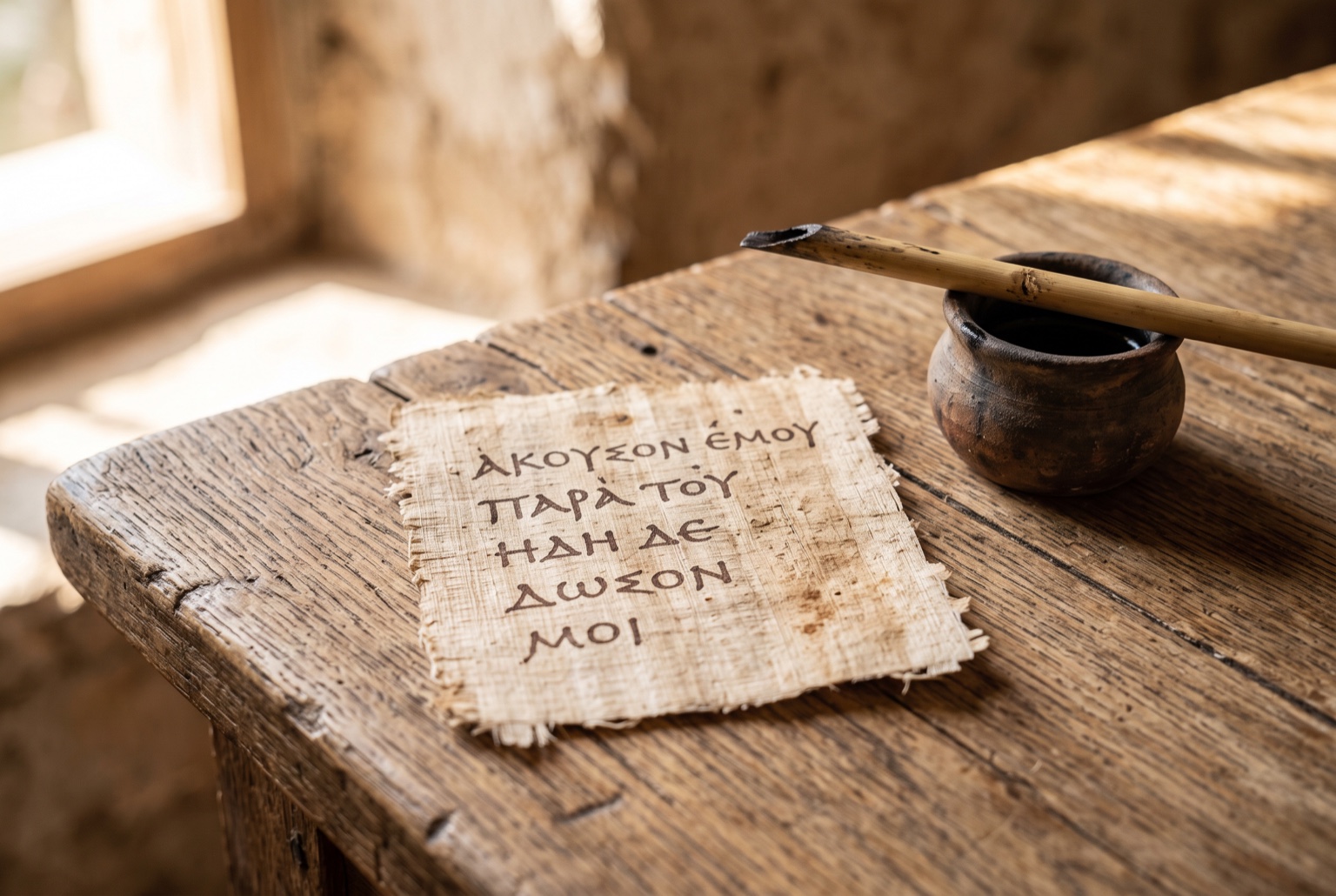
Read that again. The shortest book in the Bible is short on purpose. John had plenty more to say. He chose not to write it. Some things, he decided, should not go through ink. They should wait until he could sit across from his friend.
And here is the detail almost everyone reads past. John’s twin letter, 2 John, ends in almost the same words:
“Having many things to write unto you, I would not write with paper and ink: but I trust to come unto you, and speak face to face, that our joy may be full.” (2 John 1:12, KJV)
So the two shortest books in the Bible both end the same way. Both put the pen down. Both say, in effect, “The rest has to be in person.” That is not an accident of length. It seems to be how this writer thought about the people he loved.
Then look at the very last words of 3 John: “Greet the friends by name.” Not “say hi to everyone.” By name. One at a time. The last line of the shortest book in the Bible is a reminder that people are not a crowd. Each one has a name, and each one is worth being greeted as themselves.
Why It Matters: God Did Not Just Send a Letter
Here is where this little fact opens up into something big.
The same circle of writing that gave us these short letters also gave us one of the best-known lines in the whole Bible:
“And the Word was made flesh, and dwelt among us, (and we beheld his glory, the glory as of the only begotten of the Father,) full of grace and truth.” (John 1:14, KJV)
Think about it. For centuries God had spoken through prophets and writings. Words on scrolls. Ink and pen. And then, in Jesus, God did exactly what John tells Gaius he wants to do. God stopped sending messages and came in person. Face to face. Close enough to eat with, walk with, and touch.
So when John puts down his pen at the end of 3 John, he is doing a small, human version of the biggest thing he ever wrote about. Presence beats paper. It did for God, and it does for us.
That matters if you are lonely right now. It means your longing for real, in-person closeness is not weakness or neediness. It is part of how you were made. And it means God is not a distant author who wrote you a long letter and left. God came near, and still comes near.
If loneliness has been sitting heavy lately, our free How Lonely Am I? check-in can help you put words to it. And if you like tiny verses with big weight, the shortest verse in the Bible is another one that says a lot in very little.
Actions to Take Today
- Use one name. Next time you greet someone today, a neighbor, a shop worker, a coworker, use their name. If you do not know it, ask. That is “greet the friends by name” in real life.
- Swap one long text for a short visit or call. Think of the message you keep rewriting. Instead of sending it, send this: “I have a lot to say. Can I see you this week?” Then pick a day.
- Read 3 John out loud. It takes about two minutes. Notice how warm it is, and how much of it is about opening your door to people.
Journaling Prompts
- Who is the person you have been “writing to” when you really need to sit with them? What has kept you from going?
- When you picture God coming near to you face to face, instead of from a distance, what do you feel first?
A Prayer
God, I have a lot I have been trying to say through screens and it is not enough. Thank you that you did not stay far away, but came close in Jesus. Help me be present with the people you have put near me, and help me greet them by name. And when I feel alone, remind me that you are here with me, face to face, right now. Amen.
Discussion Question
Why do you think John chose to stop writing and wait to speak in person, instead of just finishing the letter? Share what you think in the comments below.
Share This
“The shortest book in the Bible ends with the writer putting down his pen. ‘I will not with ink and pen write unto thee… we shall speak face to face.’ Some things are too big for a text.” https://bgodinspired.com/index.php/bible-resources/bible-fun-facts/shortest-book-in-the-bible/
“I always thought 2 John was the shortest book in the Bible. It has fewer verses, but 3 John has fewer words. And both letters end the same way: see you face to face.” https://bgodinspired.com/index.php/bible-resources/bible-fun-facts/shortest-book-in-the-bible/
“The last line of the shortest book in the Bible: ‘Greet the friends by name.’ Not everyone. By name.” https://bgodinspired.com/index.php/bible-resources/bible-fun-facts/shortest-book-in-the-bible/
Questions People Ask About the Shortest Book in the Bible
What is the shortest book in the Bible?
The shortest book in the Bible is 3 John. Counted by words in the original Greek, 3 John has about 219 words, which makes it shorter than 2 John at about 245 words. It is a one-chapter private letter from a writer who calls himself “the elder” to a friend named Gaius.
Is 2 John or 3 John the shortest book in the Bible?
3 John is the shortest book in the Bible by word count, while 2 John has fewer verses. 2 John has 13 verses and 3 John has 14 in the King James Version, but verse numbers were added centuries later. Scholars measure length by the words of the original Greek text, and by that measure 3 John is shorter.
What is the shortest book in the Old Testament?
The shortest book in the Old Testament is Obadiah. It is a single chapter of 21 verses, a prophecy about the nation of Edom.
How does the book of 3 John end?
The book of 3 John ends with the writer saying he has many more things to say but will not write them “with ink and pen.” Instead he hopes to see his friend Gaius soon and “speak face to face.” The final words in the King James Version are “Peace be to thee. Our friends salute thee. Greet the friends by name.”
Does 3 John 2 mean God promises health and wealth?
3 John 1:2, “I wish above all things that thou mayest prosper and be in health,” is best read as a warm letter greeting, not a promise of wealth. Many ordinary letters from the same period open with a very similar wish for the reader’s good health. The writer is expressing care for his friend Gaius, and he adds that he hopes Gaius’s health matches the health of his soul.