 0
0
 0
0
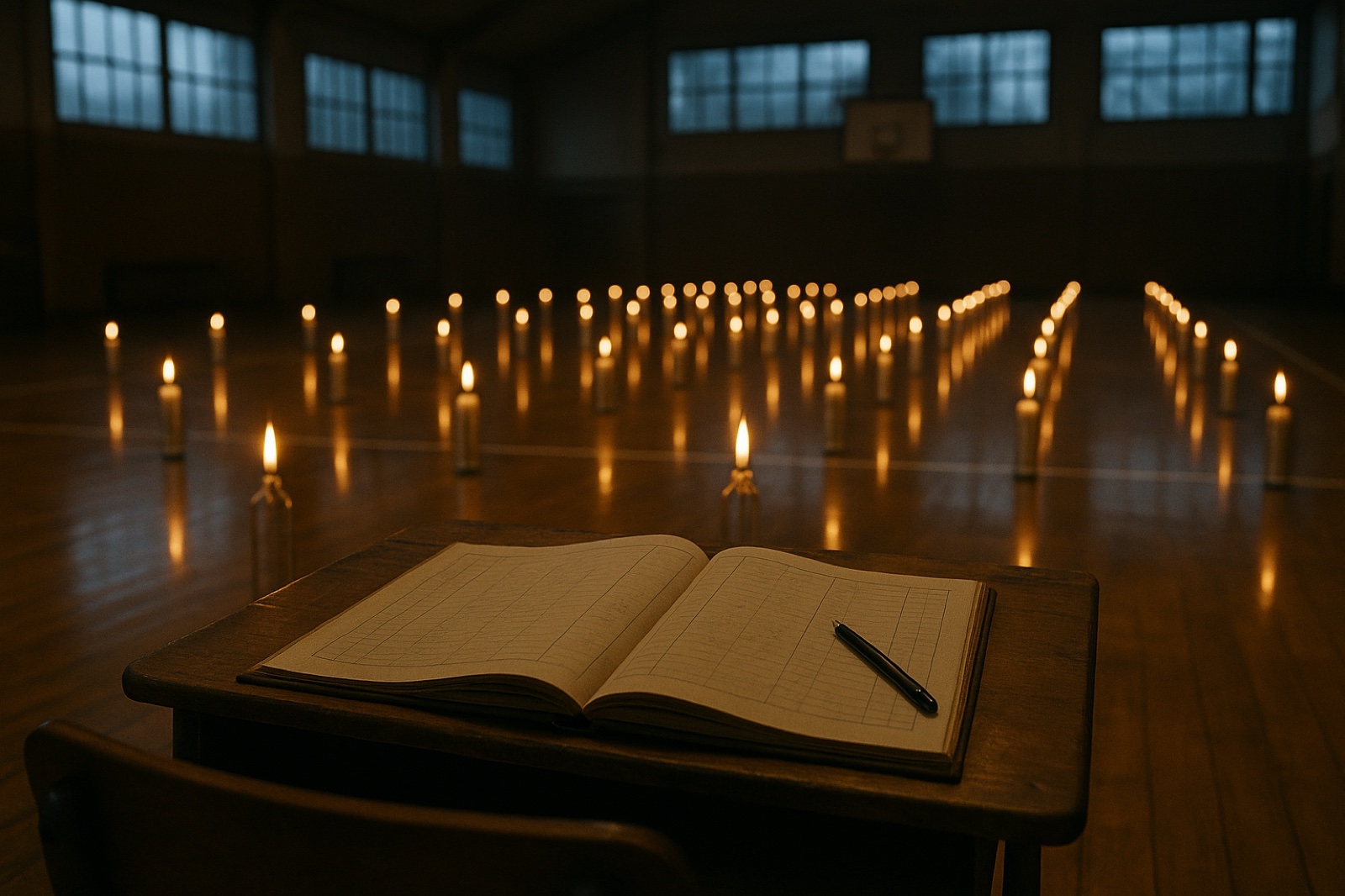
A boy sits at a desk in a gymnasium with a ledger open in front of him. He is fifteen, small for his age, and his job is to write down the dead. Man or woman. Rough age. What they were wearing. What brand of shoes. Each body gets a number. When the smell gets too bad, he has an idea: put a candle in an empty bottle beside each coffin. So the room fills with small flames.
That is how Human Acts opens, and if you have read it, you have probably not stopped thinking about that boy. His name is Dong-ho. The novel was written by South Korean author Han Kang, published in Korea in 2014 and translated into English by Deborah Smith. It is about the Gwangju Uprising of May 1980. But the question most readers carry out of it is not really about history. It is this: why are the people in this book, the ones who were beaten and humiliated, the ones who feel ashamed? That is the real key to the meaning of Human Acts, and it is worth following all the way down.
What Happened in Gwangju, and What the Novel Invents
The history first, because the book depends on it. In May 1980, South Korea was under the grip of a military group led by General Chun Doo-hwan, who had taken power in a coup months earlier. On 17 May, martial law was extended across the whole country. The next day, students in the southern city of Gwangju protested, and paratroopers were sent in. The soldiers beat and shot civilians in the streets. The city rose up, drove the troops out, and for several days ran itself. Citizens gathered at the South Jeolla Provincial Office in the centre of town. In the early hours of 27 May, the army came back and retook it. The dead number in the hundreds, and the exact count is still disputed.
The novel’s people are Han Kang’s creations, built around that frame. Dong-ho is drawn from a real boy. The book’s epilogue, narrated by a writer whose life closely mirrors Han Kang’s own, tells us her family once lived in Gwangju and sold their old house to the boy’s family before moving to Seoul. In Gwangju he is remembered as Moon Jae-hak, a student who stayed at the Provincial Office to the end and was killed there. Everything else, the ledger, the candles, the friends, the thoughts, is fiction doing what fiction can do: go inside.
A Book Built Like a Search Party
The novel has six chapters and an epilogue, and each one jumps forward in time and changes who we are with. Dong-ho in 1980. His friend Jeong-dae, who was shot, speaking as a soul hovering near his own body. Eun-sook, who helped with the dead as a schoolgirl and is now an editor in 1985. A man who was imprisoned and tortured, speaking in 1990. Seon-ju, a factory worker and activist, in 2002. Dong-ho’s mother in 2010. And the writer, in 2013.
The Korean title means something like “The Boy Is Coming,” and that is exactly how the book moves. Dong-ho dies early. But he keeps arriving. Every later chapter, in a different decade, some memory of him walks in. Seon-ju sees his photo on a wall and it pulls her back into life. His mother talks to him as if he could still hear. The first chapter even speaks to him directly, as “you,” like a letter to someone who will not read it. The book is not the story of how he died. It is the story of how he will not stay gone.
And the living do not come off well in their own eyes. Eun-sook is slapped seven times in an interrogation room, hard, on the same cheek, by a man who wants to know where a translator is hiding. She decides to forget one slap a day. The chapter is divided by the slaps, so we count with her, and slowly we notice that forgetting is not really what is happening. The prisoner in chapter four talks about a ballpoint pen being jammed into his hand until it was raw, and about a friend, Jin-su, who later took his own life. Seon-ju carries things done to her in custody that she can barely say, and years later she still refuses to record her testimony. Eun-sook and Seon-ju both blame themselves for not dragging Dong-ho home on the last night. Nearly every survivor in the novel believes, somewhere, that they should have done better.
Here is the thing most readers feel without noticing why. Look at who gets a chapter. The boy, the dead friend, the editor, the prisoner, the factory worker, the mother, the writer. No soldier. No interrogator. The man who slaps Eun-sook is never named. The people who fired the guns never get to speak, never get an inside, never get a single sentence of guilt. All the shame in Human Acts is carried by the people who were hurt. None of it lands on the people who did the hurting.
That is not a mistake in the book. It is the book’s sharpest observation. Shame, in this novel, is not a sign that you did something wrong. It is a sign that something in you is still alive.
If you have read our piece on what A Grain of Wheat is really about, you will recognise the same pattern from Kenya: after an uprising, the survivors put themselves on trial while the powerful sleep fine.
“Conscience, the Most Terrifying Thing in the World”
The prisoner in chapter four gives the book its most famous line. He is remembering the last night in the Provincial Office, when everyone knew the soldiers were coming back with overwhelming force. The men there had guns but barely knew how to use them. Staying was hopeless, and every one of them knew it. So why did they stay? He says he felt something rush through him, as strong as an army. Conscience. And then he calls it the most terrifying thing in the world.
Terrifying is the right word, and it is not the word we usually use. We talk about conscience as something soft, a little voice, a nag. In Human Acts it is the one thing the state cannot control. The soldiers can take the Provincial Office. The interrogators can break a hand. They can make a man sign whatever they want. What they cannot do is make him agree, deep down, that it was right. And that thing that will not agree is the same thing that makes him ashamed afterward. The conscience that kept him in the building is the conscience that will not let him rest for the next ten years.
That is why Dong-ho’s small question in the first chapter matters so much. He watches the mourners wrap coffins in the national flag and sing the national anthem, and he cannot understand it. Why sing to the country for people the country’s own soldiers killed? The whole book slowly answers him. The mourners were not honouring the men with the guns. They were appealing over their heads, to the country those men were supposed to serve and had betrayed. Conscience always does that. It appeals to a higher court than the one in the room.
Han Kang herself has spoken about the question underneath the book. In her Nobel lecture in 2024 she said that while researching it she kept asking whether the present could help the past, whether the living could save the dead, and that in the end she turned the questions around: can the past help the present, can the dead save the living? The novel answers yes. Dong-ho saves Seon-ju. The dead in this book are not objects of pity. They are witnesses.
The Older Name for That Thing
There is a very old idea about exactly the thing the prisoner felt. It says conscience is not handed to us by a government or a family or a school. It is written into a person before any of those get a turn. A letter in the New Testament puts it in one line, describing people who never had the scriptures at all but still show “the work of the law written in their hearts, their conscience also bearing witness” (Romans 2:15).
Written in, not issued. That is the whole difference, and it is the difference Human Acts dramatises. Anything a state issues, a state can take back. What is written into a person can be beaten, starved, shamed and silenced, and still be sitting there when the interrogators go home. It is why the humiliated are the ones who feel shame: they are the ones whose conscience survived. It hurts because it is still working. And in the Bible’s telling, shame is never the last word. The same conscience that accuses is the evidence that the person was made for something the torturers never touched.
To be honest, the novel does not go there. Seon-ju says plainly that she cannot believe in a being who watches over us with perfect love, and the book gives her every reason. Human Acts sees the writing on the heart clearly. It does not name who wrote it. That is a real difference, and it is better to say so than to pretend the book is secretly saying something it is not. But it is striking how far a book about the worst things people can do arrives at the same place: there is something in a human being that power cannot reach. Viktor Frankl found the same thing in the camps, as we explored in what Man’s Search for Meaning actually says.
Where Human Acts Ends
The last pages belong to the writer. She finds one of Dong-ho’s older brothers, who agrees to talk on one condition: that she write the book so no one can ever again disrespect his little brother’s memory. Then she goes to the boy’s grave in the Mangwol-dong cemetery in the snow. And she lights candles.
That is the quiet thing the book does with its own beginning. Dong-ho lit candles for the dead because he could not do anything else for them. Decades later, someone lights candles for him, for the same reason. The book ends where the boy started. The shame never fully lifts from anyone in Human Acts. But the candles keep being lit, and the thing that refused to agree it was right is still refusing, on every page, in every decade the book reaches. That is not a small ending. It might be the most hopeful thing a book this dark could honestly say.
Discussion Question
Which chapter of Human Acts stayed with you longest: Dong-ho’s ledger, Eun-sook’s seven slaps, the prisoner’s last night in the Provincial Office, or the mother’s voice? Tell us which one, and why, in the comments.
Questions About Human Acts
What is Human Acts by Han Kang about?
Human Acts is a 2014 novel by South Korean writer Han Kang, translated into English by Deborah Smith. It follows a fifteen-year-old boy, Dong-ho, who helps care for the dead during the Gwangju Uprising of May 1980, and then the people who knew him across the next three decades. Its real subject is what violence does to the people who survive it, and the conscience that power cannot break.
Is Human Acts based on a true story?
Human Acts is set during a real event, the Gwangju Uprising of May 1980 in South Korea, when the military killed civilians protesting martial law. Its characters are fictional, but the boy at the centre, Dong-ho, is drawn from a real student remembered as Moon Jae-hak, who stayed at the South Jeolla Provincial Office to the end and was killed there. The novel’s epilogue describes the writer’s own family connection to the boy’s family.
Why do the survivors in Human Acts feel ashamed?
In Human Acts, almost every survivor blames themselves, for surviving, for not saving Dong-ho, or for what was done to them in custody. Han Kang never gives a chapter to a soldier or an interrogator, so all the shame in the novel sits with the victims. The book suggests that this shame is a sign of a conscience that stayed alive, which one character calls “the most terrifying thing in the world.”
What does the Korean title of Human Acts mean?
The Korean title of Human Acts is Sonyeoni onda, which translates roughly as “The Boy Is Coming” or “A Boy Comes.” It fits the novel’s structure: Dong-ho dies early, but he keeps arriving in the memories of every person in every later chapter, so the whole book moves toward him.
Social Share Posts
Noticed something about Human Acts: not one chapter goes to a soldier or an interrogator. All the shame in the book sits with the people who were hurt. Han Kang is saying something with that.
Human Acts opens with Dong-ho lighting candles beside the dead. It ends with someone lighting candles at his grave. The book ends exactly where the boy started.
“Conscience, the most terrifying thing in the world.” The best line in Human Acts, and it explains why the ones who were beaten are the ones who can’t sleep.
If this book stayed with you, you may also want to read what Chernobyl is really about, another story about what a state does to the people who tell the truth.