 0
0
 0
0
For about twenty years the story went like this. On one Indonesian island there lived a group of very small humans. They stood roughly a metre tall. They shared the island with elephants that had also shrunk to island size, and with lizards the length of a car. And the small humans, the story said, hunted the elephants.
It is a good story. Tiny hunters, big prey, stone tools, a fire burning in the cave at night.
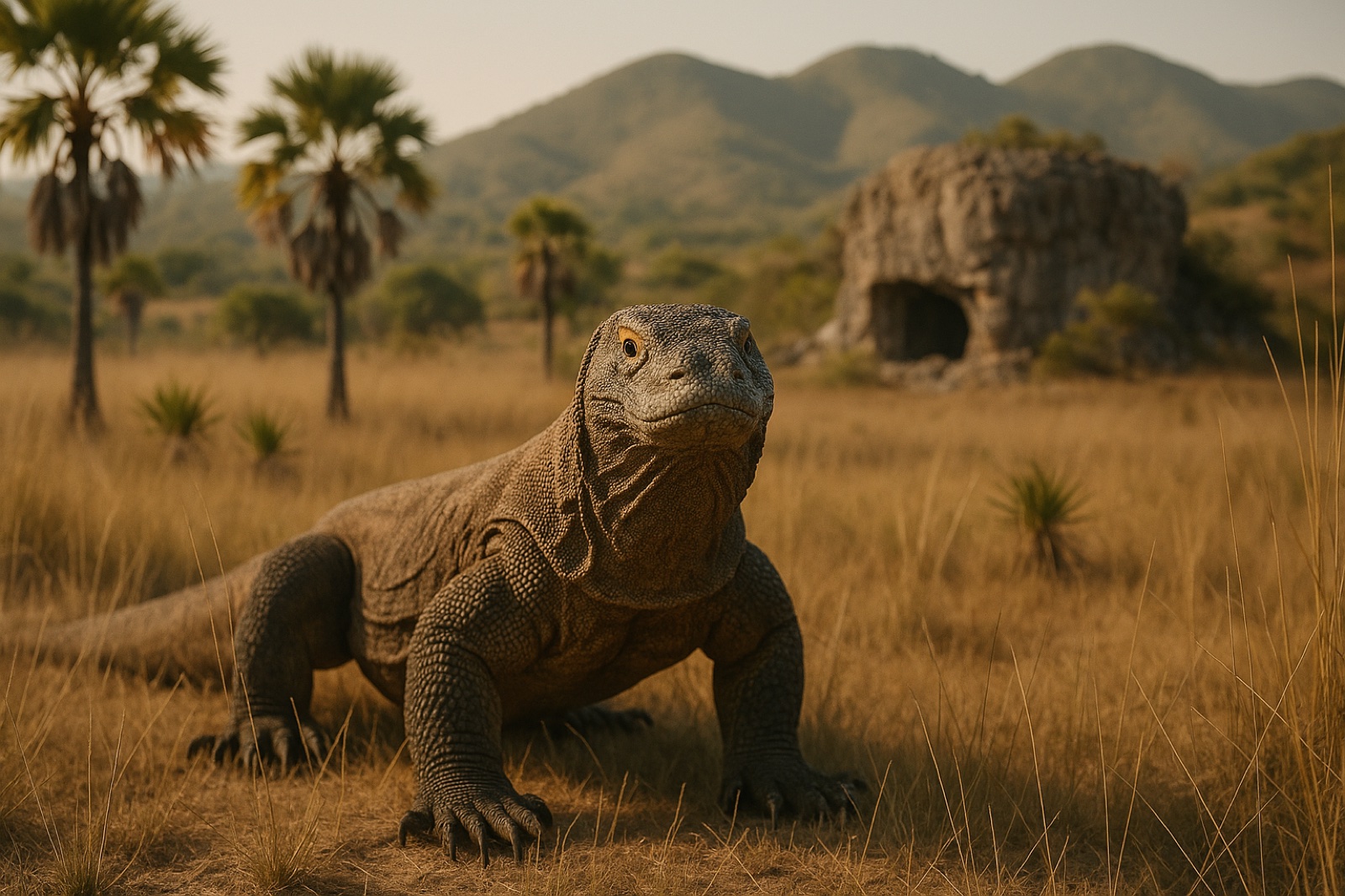
A study published in July 2026 went back to the bones and found something else. The hobbit humans of Flores probably never brought those elephants down. Something bigger got there first — and whatever got there first ate the good parts.
What the bones at Liang Bua actually show
The cave is called Liang Bua, in the western uplands of Flores. Researchers have been digging there since the early 2000s. In 2004 they described a new species from the bones they found: Homo floresiensis, quickly nicknamed the hobbit. The layers that hold those remains run from roughly 190,000 to 50,000 years ago.
A team led by Elizabeth Grace Veatch, of the Smithsonian’s National Museum of Natural History, went through more than 3,000 bone fragments from the island’s dwarf elephant, Stegodon florensis insularis. They counted every mark on every piece. Their findings were published in Science Advances.
They found 54 cut marks made by stone tools. They found close to twice as many tooth marks made by Komodo dragons.
But the count was not the interesting part. The placement was. The dragon tooth marks clustered on the meaty regions — shoulders, hips, the parts you would go for first. The human cut marks sat on the skull, the spine and the feet. The leftovers. The places you scrape when the good meat is already gone.
And on 3,000-plus fragments, not one impact mark from a spear tip.
A goat, a Komodo dragon, and a zoo after closing time
Here is the problem with reading a tooth mark that is 100,000 years old: you need to know what a fresh one looks like.
So the team went to Zoo Atlanta. After visiting hours, they gave a goat carcass to a Komodo dragon named Rinca and let the animal eat. Afterwards they collected the 72 bones that remained and put every scratch and gouge under the microscope and through 3-D imaging.
That gave them a reference library — a record of exactly what damage a Komodo dragon leaves behind. Then they compared it to the ancient elephant bones from the cave. The patterns lined up.
Timescales like this are genuinely hard to hold in your head, and that is not a failure of imagination — 190,000 years is simply longer than a mind is built to picture. If you enjoy sitting with numbers that size, our free How Old Is the Universe? explorer walks through them one step at a time.
There was no fire either
The same study looked for burning, and this is where the evidence gets unusually strong.
Out of more than 3,000 elephant bone fragments, exactly one showed charring — and that one most likely came from modern humans who used the cave much later. Out of more than 4,000 rodent bones from the hobbit layers, none showed signs of heating at all.
Normally “we did not find any” is a weak argument. Here it is not, because the same cave contains a control. In the layers left by Homo sapiens, roughly one in five rodent bones shows heating. Same cave, same kind of bone, same excavation, same people counting. One group’s rodent bones are burnt. The other group’s are not.
That contrast is much harder to explain away than a simple absence.
Not everyone is convinced
This is an inference, not a recording. The authors say so themselves. Nobody watched a Komodo dragon kill a dwarf elephant, and nobody watched a small human walk up afterwards. What exists is a pattern of marks and where they sit.
Veatch has described the work as a genuine test rather than a confirmation. She said she wanted to see whether the hunter story that had stood for decades could actually be shown to be true.
At least one specialist is not sold on the conclusion. Mika Rizki Puspaningrum, a palaeontologist who was not part of the study, has pointed out that Komodo dragons strip a carcass almost completely — sometimes leaving as little as about 12 percent of it behind. Her question is a fair one: if the dragons ate first, how much was actually left worth scavenging?
Others find the result unsurprising. Martin Porr, of the University of Western Australia, has said the findings bring Homo floresiensis more into line with what is already known about other small-bodied human relatives.
The meal nobody pictures
And here is the part that gets lost in the argument about elephants.
Something like 275,000 identifiable animal bones have come out of Liang Bua. Around four out of every five of them are rats.
Not one kind of rat, either. Earlier research on the cave identified six different genera across roughly five size classes — from something like the rat you would find in a city, up to animals about the size of a small terrier. They are, overwhelmingly, what the cave is made of.
Which reframes the whole debate. Everyone is arguing about the elephant. The elephant was the rare event — the windfall, the thing that happened occasionally, and even then only after the dragons had finished. The rats were dinner. Most nights. For tens of thousands of years.
The hobbits did not live on dwarf elephants any more than you live on the best meal you ate last year.
What survival actually looked like
Put together, the picture is not heroic. It is steady. Small animals, caught close to home, eaten cold, day after day after day. And when something enormous died nearby, they went and took whatever was still on it.
There is a very old idea sitting inside that arrangement, and it is older than the study by a long way. Some of the oldest farming laws anyone ever wrote down tell harvesters to stop short of the edges of the field — and, having dropped something, not to go back for it. The edges were left standing on purpose. Not out of carelessness, and not quite as charity either. Whoever wrote those rules believed provision was supposed to come with edges built in, that God had designed enough to include the people who arrived second. A widow gathering at the margin of somebody else’s field was not scraping by on an accident. She was collecting something left there deliberately. It is the same instinct behind provision that shows up daily rather than in a pile.
Nobody left the edges of a field for the people at Liang Bua. They had no such law, and no such neighbours. But the shape of how they lived looks oddly like it anyway — enough, at the margins, most days.
If you needed these people to be great hunters, this is a demotion. It does not have to be one.
Nothing in that cave suggests they were failing. They held on to that island for something close to a hundred thousand years, which is longer than our own species has been doing much of anything we would recognise. They managed it on small animals, on edges, and on what the dragons did not finish.
That is not a lesser way to live. It is a quieter one. Most survival is. Almost nobody is carried through a hard stretch by one big rescue; they are carried by a lot of small, unglamorous, repeated things that never make a headline — the same arithmetic that lets one person guard a stretch of beach for thirty years and actually change what happens there.
The hobbits were not living on scraps because the world had forgotten them. They were living on what was there. It turned out to be enough for a hundred thousand years.
Questions People Ask
What did Homo floresiensis eat?
Evidence from Liang Bua cave on Flores, Indonesia points to a diet built mostly on small animals, especially rats. Around 80 percent of the roughly 275,000 identifiable animal bones recovered from that cave belong to murine rodents, across about five size classes. Dwarf elephant meat appears in the record too, but as an occasional addition rather than a staple — and, according to a 2026 study, mostly as leftovers from carcasses that Komodo dragons reached first.
Did the hobbit humans of Flores hunt dwarf elephants?
Probably not. A study published in Science Advances in July 2026, led by Elizabeth Grace Veatch of the Smithsonian’s National Museum of Natural History, examined more than 3,000 dwarf elephant bone fragments from Liang Bua. Komodo dragon tooth marks appeared on the meat-rich areas such as shoulders and hips, while stone tool cut marks appeared on low-value parts like the skull, spine and feet. No spear-tip impact marks were found. The pattern suggests scavenging after the dragons, not hunting. The authors present this as an inference drawn from bone damage, not as direct proof, and at least one outside palaeontologist has questioned how much edible meat a Komodo dragon would leave behind.
Did Homo floresiensis use fire?
The current evidence says no. In the Liang Bua layers associated with Homo floresiensis, only one of more than 3,000 dwarf elephant bone fragments showed charring, and none of more than 4,000 rodent bones showed signs of heating. In the same cave, layers left by later modern humans tell a different story: roughly one in five rodent bones there shows heating. That side-by-side contrast within a single site is what makes the finding persuasive rather than simply an absence of evidence.
What is Liang Bua?
Liang Bua is a large limestone cave in the western uplands of Flores, Indonesia. Excavations there produced the remains that led researchers to describe a new human species, Homo floresiensis, in 2004. The deposits associated with that species date from roughly 190,000 to 50,000 years ago, and the cave has also yielded remains of dwarf elephants, giant rats, Komodo dragons and a large stork.
Are Komodo dragons still found on Flores?
Yes. Komodo dragons still live on Flores today, as well as on several neighbouring Indonesian islands including Komodo and Rinca. At Liang Bua specifically, the fossil record shows Komodo dragons present in that upland area until roughly 2,000 years ago, after which they disappear from the local sequence while surviving elsewhere in the region.
One Question Worth Arguing About
Here is the one worth batting around: does learning that the hobbits scavenged rather than hunted make them less impressive to you, or more?
Plenty of people feel the story just got smaller — the tiny spear-throwers turned into cleanup crew. Others think that lasting a hundred thousand years on one island by being resourceful and unfussy is by far the harder trick, and that hunting is the easy legend.
Tell us which way you land in the comments. We read them.
If You Want to Share This
- For twenty years we pictured the “hobbit” humans of Flores hunting dwarf elephants. New bone analysis says they mostly ate what Komodo dragons left behind — and that their actual staple was rats. Survival is quieter than the legend. bgodinspired.com
- Researchers fed a goat to a Komodo dragon at a zoo, then compared the tooth marks to 100,000-year-old elephant bones. That experiment just rewrote what we thought the “hobbit” humans of Flores ate. bgodinspired.com
- Everyone argues about whether the hobbit humans hunted elephants. Meanwhile, 4 out of every 5 animal bones in their cave are rats. The big meal was never the point — the small steady one was. bgodinspired.com