 0
0
 0
0
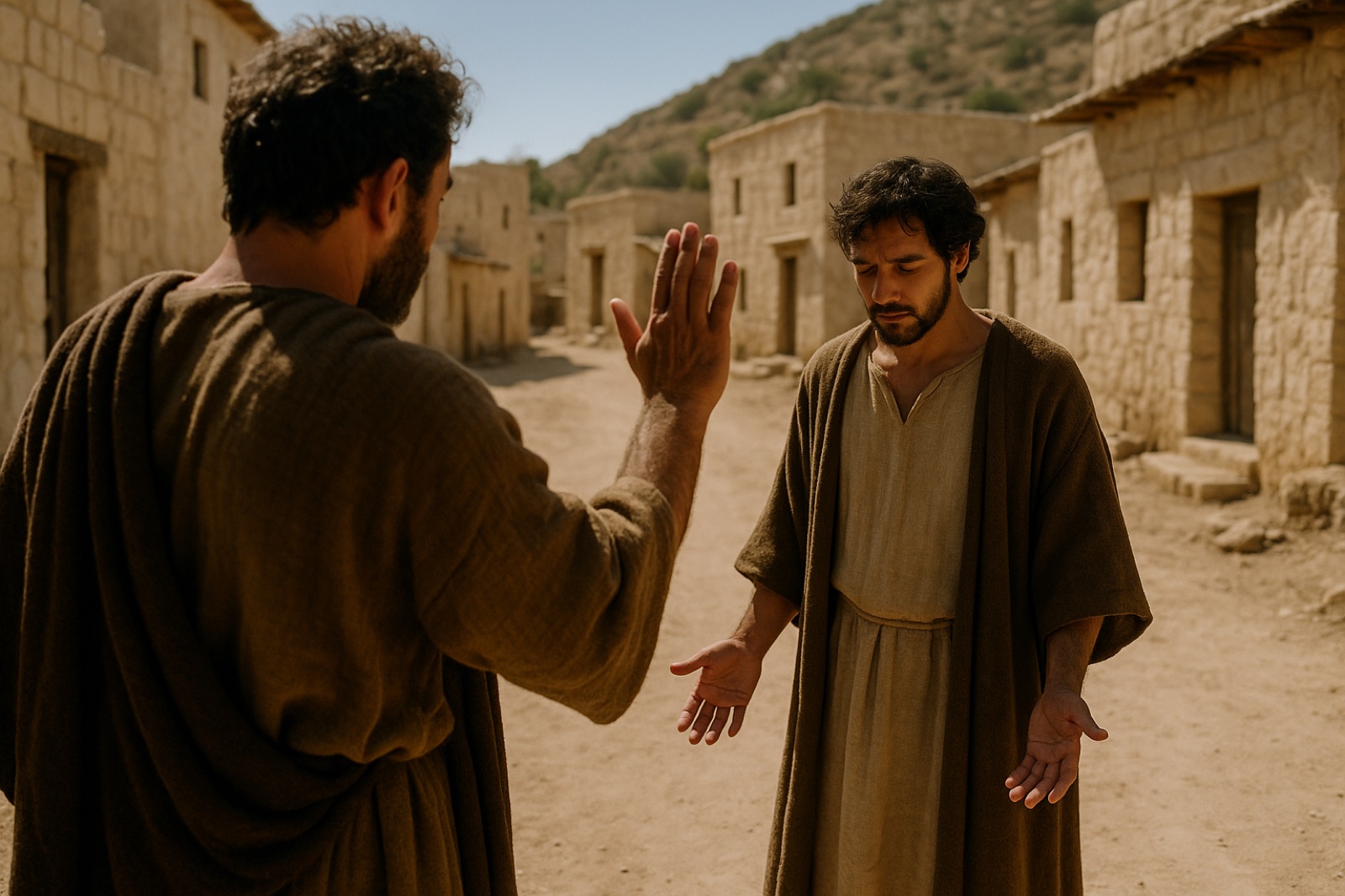
You know the look. Someone at the table says something, and you don’t shout. You don’t even argue. You just let your eyes roll, breathe out through your nose, and say, “Okay. Sure.”
No bad word. No raised voice. And yet the other person feels it land like a slap.
That small, quiet move is very close to the raca meaning Jesus had in mind in Matthew 5:22. It’s a word most of us skim past, because our Bibles leave it untranslated. But Jesus put it in the same breath as murder. Then, one sentence later, he told his listeners to stop in the middle of worship and go fix it.
Let’s look at why.
Raca Meaning: What Does Raca Mean in the Bible?
Raca isn’t Greek, even though Matthew’s Gospel was written in Greek. It’s a word carried over from Aramaic, the everyday language Jesus and his neighbours spoke. Most scholars connect it with an Aramaic word meaning empty. Said to a person, it meant something like “empty-head,” “nobody,” or “you’re worthless.”
Notice what kind of word that is. It isn’t crude. You could say it in front of your grandmother. It isn’t really about losing your temper, either. It’s a verdict. It says: I have looked at you, and there is nothing there.
That’s why an eye-roll is such a close modern match. It says the same thing without a single syllable.
We looked at this word from another side in What Does the Bible Say About Cussing?, where the surprise is that the one word Jesus singled out wasn’t a swear word at all. This time, let’s follow his sentence all the way to the end, because the most important part comes after the insult.
The Ladder Jesus Built in Matthew 5:22
Jesus is teaching on a hillside in Galilee (Matthew 5:1). He has just quoted one of the oldest commands his listeners knew:
“Ye have heard that it was said by them of old time, Thou shalt not kill; and whosoever shall kill shall be in danger of the judgment:” (Matthew 5:21, KJV)
Then he goes further:
“But I say unto you, That whosoever is angry with his brother without a cause shall be in danger of the judgment: and whosoever shall say to his brother, Raca, shall be in danger of the council: but whosoever shall say, Thou fool, shall be in danger of hell fire.” (Matthew 5:22, KJV)
Read it slowly and you can see three steps, each one more serious than the last:
- Anger brings danger of “the judgment,” a local court.
- “Raca” brings danger of “the council.” The Greek word is synedrion, the Sanhedrin, the highest Jewish court, which sat in Jerusalem.
- “Thou fool” brings danger of “hell fire.” The Greek says “the Gehenna of fire,” a name taken from a valley just outside Jerusalem.
Here’s the strange part. The three things barely differ. A hot feeling. A word. Another word. But the danger jumps from a local court to the high council to the fire.
Jesus isn’t handing out a price list for insults. He’s showing that the small thing and the big thing grow from the same root. Murder doesn’t start with a knife. It starts with deciding that a person doesn’t count.
One honest note for careful readers: the words “without a cause” are missing from several of the oldest Greek copies of Matthew, which is why many modern translations leave them out. The King James keeps them. Either way, the weight of the sentence falls on where the anger goes next: into words that write a person off.
Why Contempt Sits Next to Murder
Anger and contempt can feel alike, but they are different animals.
Anger says, you did something wrong. It’s about what happened. In a strange way it can even be a kind of respect, because you’re still treating the other person as someone who should have done better.
Contempt says, you are nothing. It isn’t about what happened anymore. It’s about who they are.
Anger says you did something wrong. Contempt says you are nothing.
And that’s exactly the claim the Bible won’t let anyone make about another human being. It’s there on the very first page:
“So God created man in his own image, in the image of God created he him; male and female created he them.” (Genesis 1:27, KJV)
You can’t call someone empty when God has put the image of God in them. Raca isn’t only unkind. It’s untrue. It calls a full thing empty.
Murder takes a life because the killer has decided that life doesn’t matter. Contempt makes the very same decision, just without the weapon. That’s why Jesus sets them side by side.
A Rabbi Who Said “Empty One,” and the Answer He Got
Here’s something that brings this to life, and it doesn’t come from the New Testament at all.
The Babylonian Talmud, a large collection of Jewish teaching written down centuries after Jesus, tells a story about a teacher remembered as Rabbi Elazar, son of Rabbi Shimon, who lived in the second century (Ta’anit 20a–b). He was riding home on a donkey, very pleased with himself because he had studied so much.
On the road he met a man who was very ugly. The man greeted him. The rabbi didn’t greet him back. Instead he said, in effect: Reika, empty one, how ugly this man is. Is everyone in your town as ugly as you?
That’s our word, in the rabbis’ spelling.
The man’s reply is one of the best answers ever written down. He said: I don’t know. But go to the Craftsman who made me, and say, “How ugly is this vessel you made.”
The rabbi saw what he had done. He got down from his donkey, bowed low, and begged to be forgiven. The man refused, and told him to take it up with the Craftsman instead.
So the rabbi did the only thing left. He walked behind the man, all the way to town, still trying to make it right. Only when people from the town pleaded for him did the man finally forgive him, on one condition: that the rabbi not make a habit of this.
This story isn’t a comment on Jesus, and it comes from a different time and setting. But it shows how that word landed in that world. The ugly man understood something the learned rabbi forgot for a moment: when you call a person empty, you aren’t only insulting them. You’re insulting the one who made them.
But Didn’t Jesus Call People Fools?
He did, and it’s better to face that than to hide it. In Matthew 23, Jesus speaks to the religious teachers of his day:
“Ye fools and blind: for whether is greater, the gold, or the temple that sanctifieth the gold?” (Matthew 23:17, KJV)
It’s the same Greek word as “Thou fool” in Matthew 5:22. So what’s going on?
Look at what he’s arguing about. Some teachers were saying that a promise sworn “by the temple” didn’t count, but one sworn “by the gold of the temple” did. That kind of teaching gave people a neat way to wriggle out of their word. Jesus is attacking a way of thinking that was hurting people, and he does it with the force of the old prophets.
And look at how that same chapter ends. Not with a door slammed shut, but with grief:
“O Jerusalem, Jerusalem, thou that killest the prophets, and stonest them which are sent unto thee, how often would I have gathered thy children together, even as a hen gathereth her chickens under her wings, and ye would not!” (Matthew 23:37, KJV)
Contempt walks away. Jesus kept reaching. Later, on the cross, he prayed for the very people putting him there: “Father, forgive them; for they know not what they do” (Luke 23:34).
Here’s one honest way to hold both passages. Jesus could see hearts, and his hardest words came wrapped in grief and aimed at harm being done to others. We can’t see hearts, and our eye-rolls usually come from somewhere much smaller. So the safe path for us is the plain one in Matthew 5.
The Turn: Leave Your Gift and Walk Back
Jesus doesn’t stop at the warning. The very next thing he says is the cure:
“Therefore if thou bring thy gift to the altar, and there rememberest that thy brother hath ought against thee; Leave there thy gift before the altar, and go thy way; first be reconciled to thy brother, and then come and offer thy gift.” (Matthew 5:23-24, KJV)
Two details here are easy to miss.
First, look at who is upset. Jesus doesn’t say, “if you remember that you are angry with your brother.” He says, if you remember that your brother “hath ought against thee.” The other person has something against you. Maybe you think they’re wrong to feel that way. Jesus still sends you.
Second, think about the distance. Jesus was speaking to a crowd in Galilee. The altar he meant was in Jerusalem, several days away on foot. Picture it: you’ve made the long trip, you’re standing there with your offering in your hands, and a face comes to mind. Jesus says, put it down. Go. Find that person. Then come back.
That’s a startling order of things. Jesus puts making peace with a person ahead of finishing an act of worship.
And here’s what makes it the perfect cure for raca. Contempt is a way of looking down on someone. You can’t keep looking down on a person while you’re walking toward them to say sorry. Remember the rabbi on the road? The moment he saw his contempt for what it was, he got off his donkey and walked. The cure Jesus gives isn’t a feeling you have to work up first. It’s a walk. Your feet go where your heart isn’t ready to go yet, and your heart follows.
You probably don’t need a journey of several days. Most of us are one message, one knock on a door, or one quiet “can we talk?” away. If you’re not sure how to apologise in a way the other person will actually hear, our free What Is My Apology Language? quiz can help you find words that land.
And if the contempt you’re carrying was stirred up online, where it’s easy to sneer at strangers all day, Is It a Sin to Ragebait? looks at why that fire spreads so fast and how to stop feeding it.
What This Looks Like Today
Actions to Take
- Catch one eye-roll. Today, notice one moment of contempt in yourself: a sigh, a smirk, a “typical.” When you catch it, say one true sentence to yourself about that person’s worth. Just one.
- Write one name. Not someone who hurt you. Someone who has something against you. Write their name, and one sentence about what they would say you did.
- Send the walk-back message. Send that person a short note: “I’ve been thinking about how I treated you when ___. I was wrong, and I’m sorry.” No “but.” You don’t control their answer. You only control the walk.
One caring word: if reaching out to someone would put you in danger, don’t. Paul wrote, “If it be possible, as much as lieth in you, live peaceably with all men” (Romans 12:18). Sometimes the part that lies in you is simply letting go of the contempt, without opening a door that should stay shut.
Journaling Prompts
- Who do you roll your eyes at most often, even if only inside your head? When did that start?
- What would change in how you treat that person if you truly believed they carry the image of God as fully as you do?
- Is there a good thing you do for God right now that has quietly become a way to avoid a hard conversation with someone?
A Prayer You Can Pray Right Now
God, I’ve rolled my eyes at people you made on purpose. I’ve called full people empty, sometimes out loud and more often in my head. Show me the face I need to walk back toward, and give me the courage to go before I finish anything else. Where I can’t fix it, soften me anyway. Thank you that you never looked at me and saw nothing. Amen.
Discussion Question
Which do you think does more damage over time in a family or a friendship: one loud argument, or a quiet habit of eye-rolls and sighs? Tell us what you think in the comments.
Share This
- “Raca” wasn’t a swear word. It meant “empty one.” Jesus put it in the same sentence as murder. Anger says you did something wrong. Contempt says you are nothing. (Matthew 5:22)
- Jesus said if you’re at the altar and remember someone has something against you, leave your gift there and go make it right. Not after. First. I needed that today.
- An old story tells of a rabbi who called a man “empty one” for being ugly. The man said, “Go tell the Craftsman who made me how ugly this vessel is.” The rabbi ended up walking behind him all the way to town to say sorry.
Raca Meaning: Questions and Answers
What does raca mean in Matthew 5:22?
Raca is an Aramaic term of contempt that Jesus names in Matthew 5:22. Most scholars link it to an Aramaic word meaning “empty,” so calling someone “raca” meant calling them empty-headed or worthless. The King James Version leaves the word untranslated. Jesus says whoever says “Raca” to a brother “shall be in danger of the council,” placing the insult inside a teaching that begins with the command “Thou shalt not kill.”
Why did Jesus compare calling someone raca to murder?
In Matthew 5:21-22, Jesus quotes the command against killing and then extends it to anger and to insults such as “Raca” and “Thou fool.” Murder and contempt rest on the same decision: that another person’s life does not matter. The Bible teaches that every person is made in the image of God (Genesis 1:27), so contempt for a person is treated as the root from which murder grows.
What is the council in Matthew 5:22?
The word translated “council” in Matthew 5:22 is the Greek synedrion, which refers to the Sanhedrin, the highest Jewish court in Jerusalem in the time of Jesus. In the verse, anger brings danger of “the judgment,” saying “Raca” brings danger of “the council,” and saying “Thou fool” brings danger of “hell fire.” The rising sequence shows how seriously Jesus viewed contempt for another person.
Did Jesus break his own teaching by calling the Pharisees fools?
In Matthew 23:17, Jesus calls the scribes and Pharisees “fools and blind,” using the same Greek word as “Thou fool” in Matthew 5:22. The context is a rebuke of a teaching that let people escape sworn promises, and the chapter ends with Jesus grieving over Jerusalem in Matthew 23:37. Many readers see a difference between a prophetic rebuke meant to protect people and contempt that writes a person off, though the tension is real and worth reflecting on honestly.
What does “leave there thy gift before the altar” mean?
In Matthew 5:23-24, Jesus says that if someone bringing an offering to the altar remembers that another person “hath ought against thee,” they should leave the gift, go and be reconciled first, and then return to offer it. The teaching places restoring a damaged relationship ahead of completing an act of worship, and it applies when the other person holds the grievance, not only when the worshipper does.