 0
0
 0
0
You pat your pockets. Then you pat them again, as if they might have changed their mind. You tip out your bag on the table. You open the same drawer for the third time, knowing it isn’t there, and look anyway.
Keys. A phone. A ring that belonged to your grandmother. A passport the day before a trip. Whatever it is, your chest gets tight, and somewhere between the sofa cushions and the coat hooks you start praying. If you typed “prayer for lost things” into a search bar just now, you are in good company. People have been losing things, and praying about it, for as long as there have been things to lose.
So let’s start with what you came for. Then there’s a story in the Bible about a lost-and-found search that might change what you’re really asking God for.
A Prayer for Lost Things You Can Pray Right Now
Say this slowly. Breathe out between the lines.
God, I’ve lost something and I’m starting to panic. You see every room I’m standing in and every place I’ve already forgotten I went. Calm my mind so I can look clearly instead of frantically. Help me find it if it can be found. And whatever happens, remind me that I’m not lost to You. Amen.
Now take one slow breath before you start looking again. There are practical steps near the end of this article that genuinely help. But first, a man who spent three days looking for something he never found.
Saul Spent Three Days Looking for His Father’s Lost Donkeys
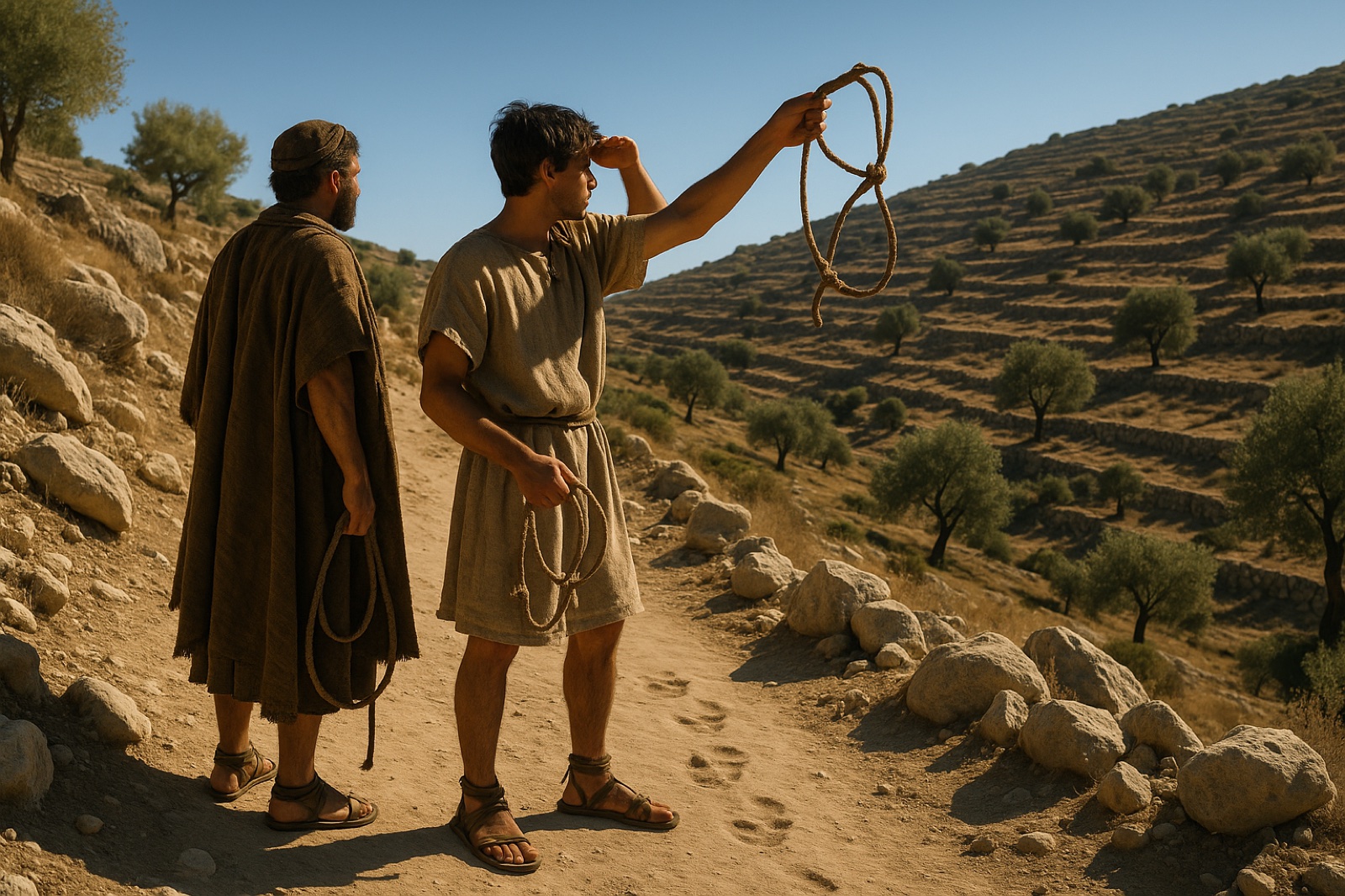
Before Saul was the first king of Israel, he was a young man from the tribe of Benjamin with a very ordinary problem. His family’s donkeys had wandered off.
That was no small thing. In that world, donkeys carried loads, worked the land and moved goods. Losing them was a real blow to a family, a bit like losing the vehicle and the tools at the same time.
“And the asses of Kish Saul’s father were lost. And Kish said to Saul his son, Take now one of the servants with thee, and arise, go seek the asses.” (1 Samuel 9:3, KJV)
So Saul and a servant set out. And the Bible records the search with a kind of tired rhythm you might recognise from your own afternoon:
“And he passed through mount Ephraim, and passed through the land of Shalisha, but they found them not: then they passed through the land of Shalim, and there they were not: and he passed through the land of the Benjamites, but they found them not.” (1 Samuel 9:4, KJV)
Found them not. There they were not. Found them not. It reads like someone checking the same drawer for the third time.
The Detail Most People Read Past: Saul Already Knew
Here is the part that is easy to skip. After days of walking, Saul wants to give up and go home. But listen to why:
“Saul said to his servant that was with him, Come, and let us return; lest my father leave caring for the asses, and take thought for us.” (1 Samuel 9:5, KJV)
Saul isn’t worried that his father will be angry about the donkeys. He’s worried his father will stop caring about the donkeys altogether and start worrying about him. Somewhere on that dusty road, the lost son already understood something true about his father. Once your child has been gone too long, you stop counting animals.
Keep that line in mind. It comes back, almost word for word.
The Donkeys Were Found, Just Not by Saul
Saul’s servant has an idea. There’s a man of God in the nearby town. “Peradventure he can shew us our way that we should go” (1 Samuel 9:6, KJV). That man is the prophet Samuel, and God has already told Samuel that Saul is coming.
When they meet, the very first thing Samuel does is put the donkey problem to rest:
“And as for thine asses that were lost three days ago, set not thy mind on them; for they are found.” (1 Samuel 9:20, KJV)
Notice what happened. Saul searched region after region and found nothing. Meanwhile, the donkeys had been found without him. His three days of walking didn’t find them. What they did was lead him to the place where he was meant to be.
Then, as Saul heads home, Samuel tells him what he’ll hear on the road. Two men will meet him near Rachel’s tomb, and they will say:
“The asses which thou wentest to seek are found: and, lo, thy father hath left the care of the asses, and sorroweth for you, saying, What shall I do for my son?” (1 Samuel 10:2, KJV)
There it is. The exact thing Saul guessed back in chapter 9 turns out to be true. His father had “left the care of the asses.” The donkeys were no longer the worry. The only question in that house was, What shall I do for my son?
Who Is Really Doing the Searching?
Jesus told a story that belongs right next to Saul’s. It’s about a woman who loses one of her ten silver coins:
“Either what woman having ten pieces of silver, if she lose one piece, doth not light a candle, and sweep the house, and seek diligently till she find it?” (Luke 15:8, KJV)
Anyone who has lost something knows that scene. The lamp comes on. The broom goes under the furniture. You don’t stop until you find it.
But Jesus wasn’t telling this story to teach people how to find coins. It’s one of three stories in Luke 15, about a lost sheep, a lost coin and a lost son, and all three are about God. In the story, the woman sweeping the house is the picture of God. The coin is the person. And when she finds it, she throws a party. (We wrote more about those three celebrations in Bible Verses About Joy: It Was Never Meant to Be Felt Alone.)
Put Saul’s story and the coin story side by side, and a pattern shows up. In Saul’s story, the father stops caring about the donkeys and grieves for his son. In Jesus’ story, the lost coin stands for a person, and the one sweeping the whole house stands for God. Either way, the real search is for a person.
What Your Prayer for Lost Things Is Really Asking
When you pray to find your keys, you’re not being silly or small. God cares about the details of your day, and nothing in the Bible says you’re too ordinary to pray about a lost phone. Pray about it.
If you’re Catholic, you may already be used to asking St. Anthony, traditionally known as the patron saint of lost things, to pray with you. This story isn’t here to take that away. It simply sets a Bible story beside it.
And here’s what Saul’s story adds. Sometimes, underneath “help me find it,” there’s a bigger fear. What will people think? How will I pay for this? I’m so careless. I always ruin things. The lost object can quickly start to feel like a verdict on you.
Saul’s father gives the answer to that fear. The donkeys mattered. They mattered less than the son. And if a worried father in ancient Israel could stop counting animals and simply want his child home, how much more does God care about you than about whatever just slipped out of your pocket?
It’s also worth being honest: Saul never found those donkeys himself. Some things we lose don’t come back. A ring goes down a drain. A letter from someone who has died is gone for good. If that’s where you are, the story doesn’t promise you a happy ending for the object. It promises something steadier. You are not the thing that’s lost. God knows exactly where you are, even in the moments you can’t say the prayer out loud. (If panic has left you with no words at all, Can God Hear Your Thoughts? Even the Anxious Ones is for you.)
“God was never counting the donkeys. God was watching the road for you.”
How to Find Something You Lost (Without Panicking)
Faith doesn’t replace looking. Even the woman in Jesus’ story lit a lamp and picked up a broom. Here are some calm, practical steps. They cost nothing.
- Stop for sixty seconds. Panic makes us check the same few spots again and again. Sit down, breathe out slowly, and pray the short prayer above.
- Replay, don’t guess. Think back to the last moment you are sure you had it. Not the last place you think it should be. Then walk through what you did next, step by step.
- Light a candle, like the woman did. In other words, get more light. Use a torch or your phone’s light under furniture, inside bags and in car footwells. Small things hide in shadows.
- Look one layer deeper. Check inside the coat pocket, under the cushion, behind the item it usually sits beside, and in the bag you didn’t take today.
- Search in order, once. Pick one room and go around it slowly from left to right, instead of darting between rooms.
- Ask someone else to look. Saul didn’t find his way forward alone. His servant had the idea to ask for help. Fresh eyes don’t carry your assumptions about where the thing “can’t be.”
- Take a break if it’s not urgent. Sometimes things turn up when we stop hunting for them. Saul’s donkeys did.
Actions to Take Today
- Pray the short prayer out loud, then do the sixty-second pause before you search again.
- Write down the last three places you are certain you had it. Search those, in order, with extra light.
- Text or call one person and ask them to look with you, or simply to pray with you. Tell them what it means to you, not just what it is.
Journaling Prompts
- When you lose something, what is the first thing you tell yourself about you? Where did that voice come from?
- Saul guessed his father would stop worrying about the donkeys and start worrying about him. What would it change if you believed God feels that way about you today?
- Is there something you lost long ago that still hurts? What would it look like to hand that loss to God instead of carrying it alone?
A Prayer for When Something Is Lost
God, I’ve been searching, and part of me is scared of what it means if I don’t find it. Thank You that the one who matters most to You in this room isn’t the thing I lost. It’s me. Give me clear eyes to keep looking, and a quiet heart if it never turns up. Help me remember that I am found by You, even on days I can’t find my own keys. Amen.
If you’d like help putting your own words to a prayer, for a lost pet, a lost document or anything else, you can use our free Prayer Anywhere AI assistant (it opens in ChatGPT).
Discussion Question
Why do you think losing something small can shake us so much more than we expect? Share your thoughts in the comments below.
Share This
- Saul searched three days for his father’s lost donkeys and never found them. The message that came back: his father had stopped worrying about the donkeys and was worried about him. 🙏
- Lost my keys today and found this: God was never counting the donkeys. God was watching the road for me.
- If you’ve ever prayed to find something you lost, read 1 Samuel 9 and 10. The donkeys were found, just not by the one searching. And the father only wanted his son home.
Questions People Ask About Prayer for Lost Things
Is there a prayer for lost things in the Bible?
The Bible does not contain a set prayer for finding lost objects, but it contains lost-and-found stories that shape how Christians pray about them. In 1 Samuel 9 and 10, Saul searches three days for his father’s lost donkeys, and the message sent back says his father “hath left the care of the asses, and sorroweth for you.” In Luke 15:8, Jesus describes a woman who lights a candle and sweeps the house until she finds a lost silver coin. A simple prayer for lost things can ask God for a calm mind, clear eyes and help finding the item, while trusting that the person matters more to God than the object.
Is it okay to pray to find lost keys or a lost phone?
Yes, it is okay to pray about lost keys, a lost phone or any everyday item. The Bible repeatedly shows God caring about ordinary details of human life, and Jesus used a woman searching for one lost coin as a picture of how God cares for people. Praying about a lost object can also calm panic, which helps a person search more clearly. The prayer does not guarantee the item will be found, but it is never too small to bring to God.
Did Saul ever find his father’s lost donkeys?
Saul did not find the donkeys himself. According to 1 Samuel 9, Saul and a servant searched mount Ephraim, Shalisha, Shalim and the land of the Benjamites without success. The prophet Samuel then told Saul, “as for thine asses that were lost three days ago, set not thy mind on them; for they are found” (1 Samuel 9:20, KJV). The donkeys had been found while Saul was away searching, and the search led Saul to Samuel, who anointed him as the first king of Israel.
Who is the patron saint of lost things?
In Catholic tradition, St. Anthony of Padua is known as the patron saint of lost things, and many Catholics ask for his prayers when something goes missing. Christians from many traditions also turn to scripture stories such as Saul’s search for his father’s donkeys in 1 Samuel 9 and 10, and the parable of the lost coin in Luke 15:8-10, when praying about something they have lost.
What should I do if what I lost is never found?
If something precious is never found, it is normal to grieve it, especially if it was a gift, a keepsake or something connected to a person who has died. In 1 Samuel 10:2, Saul’s father stops worrying about his lost donkeys and worries only about his son, which many Christians read as a picture of God caring about the person more than the possession. Practical steps include telling someone what the item meant, writing down the memory attached to it, and bringing the loss honestly to God in prayer rather than blaming yourself.