 0
0
 0
0
You have done this a hundred times. You could do it half asleep. And that seems to be the problem, because apparently you did.
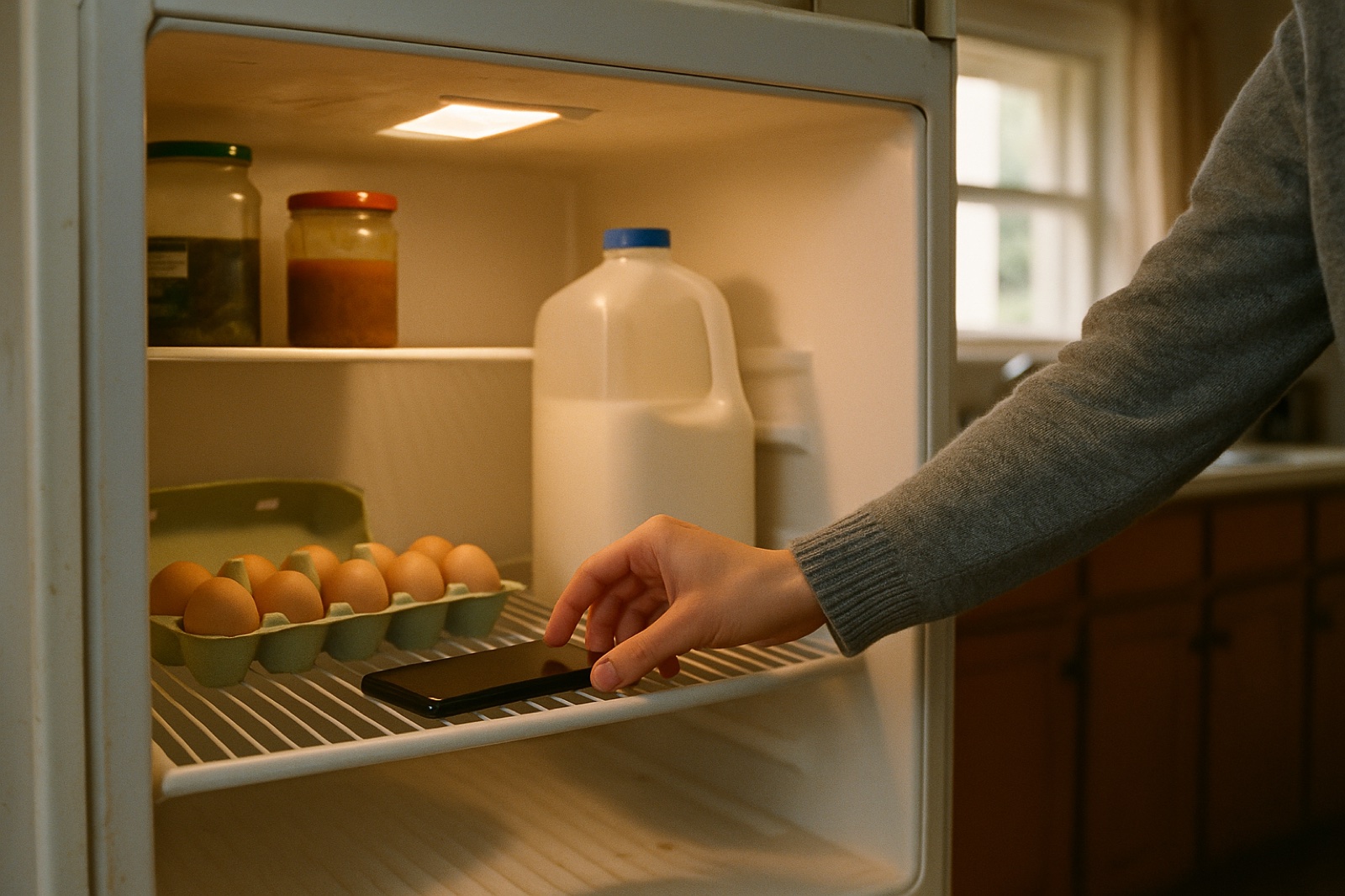
The message went to the wrong person. The number had one zero too many. You salted the pot twice. You found your phone in the fridge, next to the eggs. You locked the door and left the key on the table inside.
None of it was hard. That is what stings. You handle the difficult parts of your day just fine. It is the easy parts that keep tripping you up.
So the question comes back at night: why do I keep making careless mistakes on things I am actually good at? Am I getting worse? Am I just not trying? Is something wrong with me?
Probably not in the way you fear. But something real is going on, and it has a shape you can work with.
Why careless mistakes happen on the things you are good at
The usual answer is that you are tired, distracted or rushing. That is partly true. But look closely at your own list of slip-ups and you will notice something odd. They almost never happen on the new, hard, scary task.
When something is new, you check every step, because you do not trust yourself yet. The nerves do the checking for you. The mistakes live somewhere else. They live where you feel safe.
The British psychologist James Reason spent his career studying human error, and he drew a helpful line here. He separated mistakes, where your plan itself is wrong, usually because you do not know enough, from slips and lapses, where the plan is fine but your hands or your memory go wrong while you carry it out. Slips and lapses, as he described them, turn up in routine, well-practised tasks, often in familiar places, usually when your attention has wandered off to something else.
Put simply: these are the errors of people who know what they are doing. A beginner cannot put the phone in the fridge on autopilot. You need skill for that.
So the root is not that you are careless. It is that you are competent. Somewhere along the way, the task moved from “something I watch” to “something I just do”. Your brain handed it to autopilot. That is a gift most of the time. It is how you can cook and talk at once. But autopilot does not stand guard. When you stop feeling unsure, you stop checking, and the checking was the thing quietly keeping you safe the whole time.
There is a second, sneakier layer. When you are good at something, checking it can feel a little insulting. Re-reading a message you have written a thousand times feels like something a beginner does. So even when a small voice says “look again”, a louder one says “you don’t need to”. That louder voice is not laziness. It is a quiet kind of pride. Not the showing-off kind. Just the settled feeling that this part is beneath checking.
Being good at it and checking it are two different jobs
Most advice says “slow down and pay more attention”. It rarely works, because you cannot force attention onto something your brain has already marked as done. And the answer is not to lose your confidence either. A nervous person does not make fewer mistakes. They just make different ones.
Here is the turn. Doing a task well is one job. Checking it is a second job. As you get better at the first, the second does not get easier. It gets harder, because it feels less and less needed. So the more skilled you become, the more deliberately you have to protect the check. And you have to keep it somewhere outside your feelings, because your feelings will always tell you it is fine.
The clearest proof of this comes from aviation. On 30 October 1935, at Wright Field in Ohio, Boeing flew its new Model 299 bomber for the US Army. At the controls was Major Ployer Hill, who ran the Army’s flying branch there. Beside him was Boeing’s test pilot Leslie Tower. These were not beginners. Just after take-off, the plane pitched up, stalled and crashed. Both pilots died.
The investigation found that the crew had left the gust locks on. Those are simple catches that hold the control surfaces still while a plane sits on the ground. Releasing them is a basic step. Two expert pilots missed it.
What happened next is the useful part. The fix was not a search for better pilots. Instead, test pilots came up with a short written checklist: plain steps, read out every single time, precisely because skilled people skip the plain steps. Checklists like it have been part of flying ever since.
That idea is a lot older than aeroplanes. It turns up in Proverbs, of all places: “Pride goeth before destruction, and an haughty spirit before a fall.” It is usually read as a warning about loud, obvious arrogance, but it fits the quiet kind just as well – the head comes up, the eyes leave the ground, and the stumble comes from exactly where you stopped looking. It does not need a religious framework to be true. It is simply good sense with very old roots.
How to stop making careless mistakes
None of these cost money or need special tools. The first one takes about five minutes.
Find your safe zone, and stop trusting it. Think back over your last few careless mistakes and jot them down on paper or in your phone. Next to each one, write whether the task was new or routine. Most people find the mistakes bunch up in two or three familiar places. Those places are where your checks belong. You do not need to double-check your whole life – only the parts you have stopped watching.
Move the check outside your head. For the one task where you slip most often, write a tiny checklist of two or three questions. Keep them almost insultingly simple: “Right person? Right number? Right date?” Stick it where the task happens, or save it as a note. Then actually read it, every time, even when it feels silly. That feeling of silliness is the exact voice that has been letting the mistakes through.
Check at the point of no return. Slips sneak in while your mind is somewhere else, so checking halfway through does not help much. Put one pause right before the moment you cannot undo: before you press send, before you close the door, before you hand it in. Train crews in Japan do a version of this called pointing and calling – they point at a signal and say its state out loud. You can do the same thing quietly. Point at the key in your hand. Say the name in the “To” line under your breath. It sounds odd. It drags your attention back to the thing in front of you.
Break the autopilot on purpose. Autopilot runs on sameness, so change one small thing about how you do the routine. Read an important message from the bottom up. Read a long number backwards. Put your keys in a new spot that forces you to think about them. A tiny bit of awkwardness is enough to wake your attention up again.
When you slip, get curious instead of cruel. Calling yourself stupid feels like taking it seriously, but it mostly teaches you to rush past your mistakes so you do not have to feel them. Ask a better question: “Where was my attention when this happened?” The answer is usually useful – tired, worried, doing two things at once. If harsh self-talk is a pattern for you, why you are so hard on yourself is worth a read. And if the answer keeps coming back as “exhausted”, the How Much Sleep Do I Need? calculator or the free Am I Burned Out at Work? quiz may tell you more than any checklist can.
The part you are best at
Careless mistakes do not mean you are bad at what you do. More often, they mean you have got good enough to stop looking.
So here is a small challenge for today. What is the one thing in your day you are so sure of that you have not really looked at it in months? Go and look at it this afternoon. Not because you are bad at it. Because you are good at it.
What is the careless mistake you keep making on something you could do in your sleep – and have you ever found anything that actually stopped it? I would love to hear about it in the comments.
Questions people ask about careless mistakes
Why do I keep making careless mistakes on easy things?
Careless mistakes on easy things usually happen because the task has become automatic. Once a person is skilled at something, the brain runs it on autopilot and stops checking each step, so small slips get through when attention drifts elsewhere. The psychologist James Reason described these errors, which he called slips and lapses, as typical of routine, well-practised tasks rather than new or difficult ones.
Do careless mistakes mean I am not smart?
No. Careless mistakes on familiar tasks are usually a sign of skill, not a lack of intelligence. Slips such as sending a message to the wrong person or leaving keys behind happen during automatic, well-practised behaviour, which a beginner does not yet have. Highly trained experts, including experienced pilots, make exactly these kinds of errors, which is why professions like aviation rely on written checklists.
How can I stop making careless mistakes at work?
To stop making careless mistakes at work, first notice which routine tasks the mistakes cluster around, then add a simple check to those tasks only. A short written checklist of two or three plain questions, read every time, works better than trying to “pay more attention”. Placing one pause right before the step that cannot be undone, such as pressing send, catches most slips. Changing the routine slightly, like reading a message from the bottom up, also helps wake attention up.
Can being tired cause careless mistakes?
Yes. Tiredness makes it harder to hold attention on a task, and careless mistakes on routine tasks tend to happen when attention wanders. Poor sleep, stress and doing several things at once all make slips more likely. A person who notices their mistakes rising when they are exhausted may get more benefit from rest than from any checking system.
When are careless mistakes a sign of something more?
Occasional careless mistakes on familiar tasks are normal for everyone. It may be worth talking to a health worker or doctor if careless mistakes have been frequent for most of a person’s life, happen across home, school and work, show up on new tasks as well as routine ones, and cause real problems. Making careless mistakes and struggling to keep attention on details are among the signs doctors look at when assessing attention conditions such as ADHD, though only a proper assessment can tell.
Share this
“Turns out I don’t make careless mistakes because I’m bad at stuff. I make them on the things I’m best at, because I stopped checking. That actually helps.”
“In 1935 two expert test pilots crashed a brand-new bomber because they forgot one basic step. The fix wasn’t better pilots. It was a checklist. Writing one for the task I keep messing up.”
“Being good at something and checking it are two different jobs. The better you get at the first, the easier it is to skip the second.”