 0
0
 0
0
It has been a few days now. You prayed something — out loud, or under your breath, in a car or at the back of a room — and you meant it. Something actually moved.
And then Tuesday arrived anyway. Same commute, same kitchen, same three people who have no idea. Somebody handed you a list: get a Bible, find a church, get baptised, start praying, join a group, read this book. Most of it is good advice. None of it tells you what you are supposed to do at 7:15 tomorrow morning — and underneath the list sits the quiet worry that you are going to do this wrong and drift off before you have properly started.
One man asked Jesus this exact question, and got told no
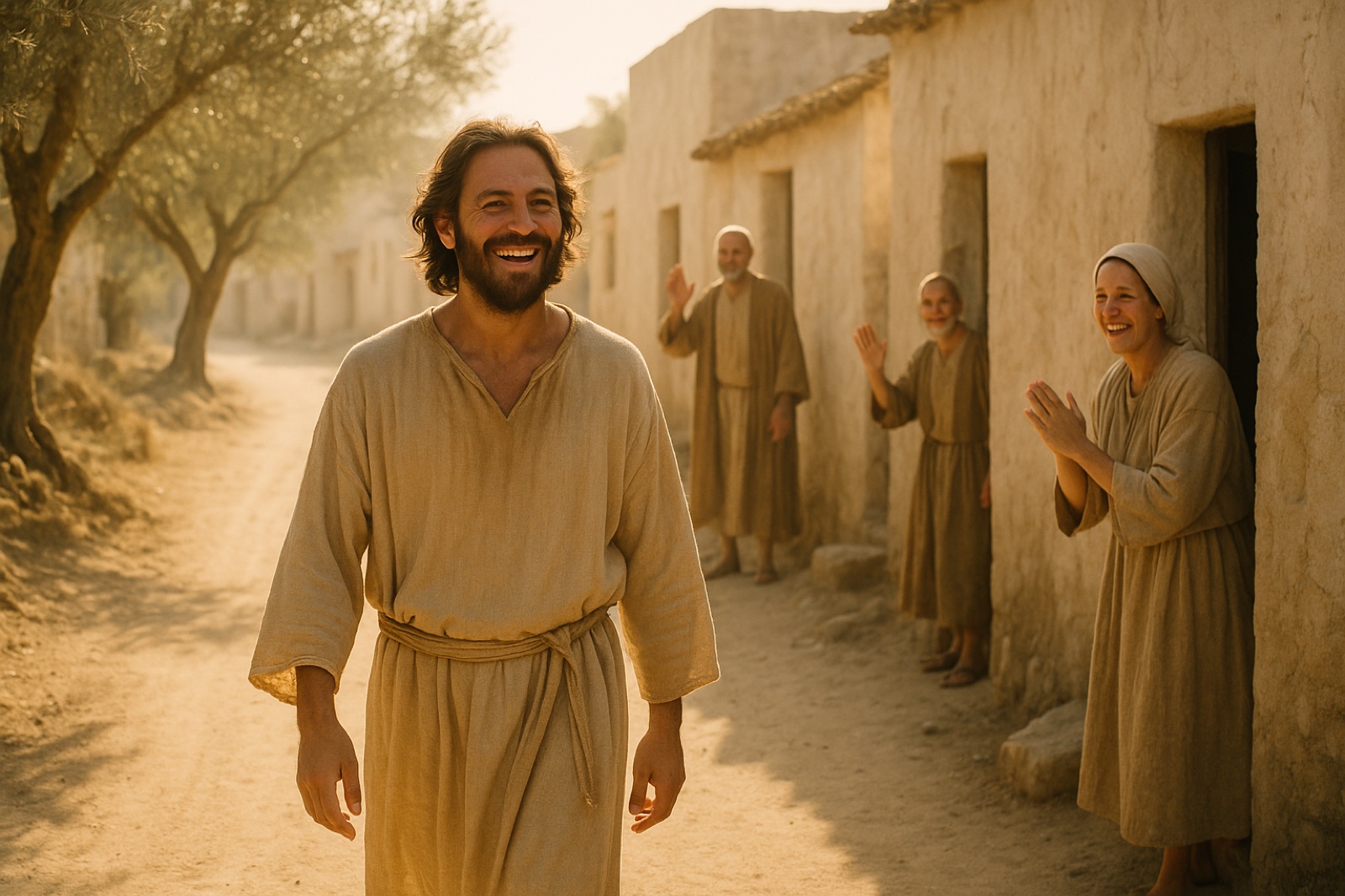
In Mark 5 a man is living among the tombs in the country of the Gadarenes. Chains had not held him. People had stopped trying. Then Jesus arrives, and by the middle of the chapter the man is sitting down, clothed, and in his right mind — and the townspeople are so unsettled that they ask Jesus to leave. So Jesus goes. And as he is getting into the boat, the newest believer in the story asks the most natural question there is:
“And when he was come into the ship, he that had been possessed with the devil prayed him that he might be with him.” — Mark 5:18
What do I do now? Come with you. It is the obvious answer, and it is the one thing Jesus said no to.
“Howbeit Jesus suffered him not, but saith unto him, Go home to thy friends, and tell them how great things the Lord hath done for thee, and hath had compassion on thee.” — Mark 5:19
The assignment was smaller and closer to home than he expected
Look at what is not in that sentence. No reading list. No training period. No qualification to earn first. Not even “go to the synagogue and find someone who knows more than you.”
Go home. To thy friends. The people who knew him before — the ones who had watched the chains fail and had learned to walk the long way round that stretch of road. And tell them one thing: what happened to you, and that God had compassion on you.
That man had been living in a graveyard that morning. He had no theology. He could not have named a single book of the Bible in order. He had one story, and one story was apparently enough to be sent with. Whatever you are worried you do not know yet — he knew less.
The one word he changed
Here is the detail almost everyone reads straight past. Jesus told him to tell his friends what the Lord had done for him. The very next verse says what the man actually went and did:
“And he departed, and began to publish in Decapolis how great things Jesus had done for him: and all men did marvel.” — Mark 5:20
He swapped one word. Sent out to speak about the Lord, he found himself speaking about Jesus. Mark does not stop to comment on it. But it is what happens to somebody who has actually met Jesus rather than merely agreed with facts about God: the enormous general thing becomes a specific person with a name and a face.
And notice where he went. Decapolis was a cluster of Greek-speaking cities east and south of the Sea of Galilee — the name simply means ten cities — and it was not home turf for a Jewish teacher. The first person Jesus sent out to talk about him in that region was not one of the twelve. It was a man with no training whose entire message was look what happened to me.
Two chapters later Mark mentions, almost in passing, that Jesus came back through that same region — and this time people brought their friends to him instead of asking him to leave. Mark never draws a line between the two, and it would be overclaiming to draw it for him.
What the first three thousand new Christians actually did
There is one other place where a crowd becomes brand-new Christians on the same day and somebody records what they did next. In Acts 2 Peter preaches, and Luke writes that “the same day there were added unto them about three thousand souls” — three thousand people with no idea what happens on Wednesday. Luke sums up the entire answer in one verse:
“And they continued stedfastly in the apostles’ doctrine and fellowship, and in breaking of bread, and in prayers.” — Acts 2:42
Count them. Four things. Learning from people who knew Jesus. Each other. Shared meals. Prayer. That is the whole list, and the striking thing about it is how ordinary it is — and that three of the four need another person in the room. Not one of them is something you achieve on your own by trying harder.
So here is what to do as a new Christian, starting tomorrow
- Read about Jesus before you read anything else. Start in a Gospel, not at page one. Mark is the shortest and the fastest-moving. Genesis is the beginning of the book, not the beginning of your story — and starting there is how a lot of people quietly stall out in Leviticus by February.
- Size it for your worst morning, not your best one. Ten minutes you will actually keep beats forty-five you will abandon. Choosing a reading plan for your worst day rather than your best one is the single decision that decides whether you are still reading in six weeks.
- Talk to God in your own words, badly, out loud. There is no vocabulary to acquire first, and the fear of praying it wrong has an old and surprisingly kind answer.
- Tell one person. This is the Mark 5 assignment, and it is smaller than it sounds. Not a speech, not an argument you have to win — one sentence to somebody who knew you before: something happened, and I want to tell you about it. You are not being asked to explain God. You are being asked to report what you saw.
- Go find the other people. Three of the four things in Acts 2:42 need a room with other humans in it — a church, a small group, a couple of friends further along. This is the step most new believers put off longest and regret putting off most.
- Expect ordinary. Most of this will not feel dramatic, and that is not a sign anything has gone wrong. The first two people who ever followed Jesus got an afternoon, not a lightning bolt.
What a month of this actually feels like
Here is the change worth wanting, and it is quieter than you are probably imagining.
Right now every morning contains a negotiation. Whether today. Whether you have time. Whether it counts if you were distracted. That negotiation is most of the real cost, and it wears people down long before boredom does. Somewhere in the third or fourth week of a rhythm small enough to keep, it stops. You open it the way you put the kettle on.
And the question changes without anybody telling you to change it — from did I do it today? to where was I?, because you are following a story now and you want to know what happens next. That is the difference between knowing about Jesus and knowing him: not a feeling, a familiarity. One ordinary Tuesday you notice you missed it on the day you skipped.
If you would rather not assemble it yourself
Everything above you can build on your own, and if you build it you should. Pick Mark. Ten minutes. Tie it to the kettle. Tell one person this week. Find a room. That genuinely works.
What it will not do is sit down beside you at 6:40 and tell you what you just read. That gap — not the reading, the meaning of the reading — is where most new Christians stall, and it is exactly what 30 Days Walking with Jesus was built to close. It walks through the life of Jesus one day at a time, in order, so you are never deciding what comes next. Each day carries a short devotional video of under a minute and a full-chapter audio reading, plus a PDF study guide of journal prompts so the reading has somewhere to land and five quick-reference scripture guides for finding something fast. Under ten minutes a day — and it ends. Thirty days, and you will have finished something.
It is free. Not free-for-now, not free-if-you-hand-over-a-card. Free, because the words of Jesus should not sit behind a paywall. No payment, no card, no expiration, and no upsell waiting on the other side. Access is instant on any device, and it is yours to keep.
The man in Mark 5 wanted a boat and a teacher and a plan. He got sent home with one story and no instructions at all. You have rather more than he did. Thirty mornings is a good place to start using it.
Questions People Are Asking
Q: What should I do as a new Christian?
A: Start smaller and closer to home than the usual checklist suggests. A workable first month looks like this: read a Gospel rather than starting at Genesis, in a portion small enough that you would still manage it on a bad morning; talk to God in your own words, out loud, without worrying about the vocabulary; tell one person who knew you before what happened; and find other people to do this alongside. That last one matters more than it looks — in Acts 2:42, which records what the first large group of new Christians did next, three of the four things listed require other people to be present.
Q: What is the first thing Jesus told a new believer to do?
A: In Mark 5, the man Jesus had just freed asked to come with him, and Jesus said no. Instead he told him, “Go home to thy friends, and tell them how great things the Lord hath done for thee, and hath had compassion on thee” (Mark 5:19). There was no training period, no reading list, and no qualification to earn first. The man had been living among the tombs that same day. His entire assignment was to go back to the people who knew him and tell them what had happened to him.
Q: Where should a new Christian start reading the Bible?
A: In one of the four Gospels — Matthew, Mark, Luke or John — rather than at the beginning of the Bible. Mark is the shortest and moves fastest, which makes it a common first choice. Reading front to back means starting with Genesis and then Exodus and Leviticus, which is where a lot of new readers stall, because those books assume a great deal of context and are not about Jesus. Reading a Gospel in sequence over a few weeks gives you a person to follow rather than a stack of disconnected verses.
Q: How long does it take to feel like a Christian?
A: There is no schedule for this, and expecting a dramatic shift is often what makes people think something has gone wrong. What tends to change first is smaller: after a few weeks of a daily rhythm you can actually keep, opening it stops being a decision you have to make each morning, and you start wanting to know what happens next in the story rather than checking whether you completed the task. Most people notice it in hindsight rather than as it happens.
Q: Is there a free plan for new Christians?
A: Yes. 30 Days Walking with Jesus walks through the life of Jesus one day at a time and is free — no payment, no card required, no expiration and no upsell. It includes 30 short devotional videos of under a minute each, 30 full-chapter audio readings, a PDF study guide with journal prompts, and five quick-reference scripture guides. It takes under ten minutes a day, access is instant on any device, and it is yours to keep.