 0
0
 0
0
You cry. Properly cry — the kind that makes your breathing go ragged and your face hot. And then, at some point you could never name exactly, the pressure in your chest is smaller than it was.
Almost everyone has had that. So it is fair to ask why do I feel better after crying, and to want a real answer instead of a shrug.
There is a popular one. You have probably heard it: tears carry stress chemicals out of the body, so crying literally flushes the bad stuff away. It is a tidy explanation. It is also the one part of this story that has never actually been confirmed.
The famous answer nobody has been able to repeat
The idea comes from work done in the 1980s by William Frey, a biochemist who studied tears and wrote a book about them. He reported that emotional tears were chemically different from the reflex tears you produce chopping an onion — that the emotional ones carried more of certain stress-related substances, including a natural painkiller the body makes on its own.
That finding travelled fast. It is still repeated in health articles today as settled fact.
It is not settled. Ad Vingerhoets, a Dutch psychologist at Tilburg University and one of the most active crying researchers alive, has said plainly that the finding has not been verified in the decades since — and not for lack of trying. It has not been disproven either. It simply has never been replicated, which after forty years is its own kind of information.
And there is a second problem, one that does not depend on the chemistry at all. Even if emotional tears do carry those substances, the amount of fluid involved in a cry is tiny. Removing a trace of anything in that volume is not enough to change how a whole body feels. Whatever is making you feel better, it is almost certainly not leaving through your eyes.
This is a pattern worth noticing, because it happens with a lot of comforting explanations. The popular chemical answer for why sad music makes you feel better ran into the same wall — tested, and not supported. The feeling is real in both cases. The explanation we reach for just is not the reason.
The relief shows up much later than you expect
Here is where it gets interesting, and it is the part almost nobody mentions.
In 2015, Asmir Gračanin, Vingerhoets and colleagues published a study in the journal Motivation and Emotion. Sixty people watched sad films while being recorded, so the researchers could tell who genuinely cried and who did not — twenty-eight of them did. Then, instead of measuring mood once and stopping, they measured it four separate times.
The results ran in an order most people would not guess:
- Straight after the film, the people who cried felt worse. The people who did not cry showed no change at all.
- Twenty minutes later, the criers had come back down close to where they started.
- Ninety minutes later, the criers were below their own starting point — meaning they felt better than they had before the film even began. The non-criers stayed flat the whole way through.
Sixty people in one laboratory watching films is not the final word on human grief, and the researchers would not claim it is. But the design caught something a lot of earlier work missed by accident: most lab studies measured mood right after the crying and stopped there, and right after the crying is the exact moment you feel worst.
Which means if you judge a cry by how you feel in the first ten minutes, you will conclude that crying does not work. You are checking at the bottom of the curve.
Why do I feel better after crying? Often, because of who was in the room
The bigger clue comes from outside the lab entirely.
Jonathan Rottenberg and Lauren Bylsma, working with Vingerhoets, looked at detailed accounts of more than three thousand real crying episodes — actual bad days in actual lives, not films. Their summary was published in Current Directions in Psychological Science in 2008.
Most people did report feeling better afterwards. But the rest of the breakdown is the part that should be famous and is not: around a third reported no improvement at all, and roughly one in ten felt worse.
So the honest answer to whether crying helps is: sometimes, and it depends on things you can partly control.
The single strongest thing separating the people who felt better from the people who did not was whether someone supported them while they were crying. Criers who received support during the episode were the most likely to report their mood improved. Two other factors mattered too — whether the situation that caused the crying got resolved, and whether the person came away understanding it differently than before.
The people who tended not to benefit were those with little insight into their own emotional life, and those living with anxiety or mood disorders. If you have ever wondered why you can feel emotionally numb rather than sad, that is the same territory — and it explains why “just have a good cry” is advice that quietly fails a lot of people.
The researchers’ own conclusion was that the benefits of crying depend on the what, the where and the when of the particular episode. Not on the tears.
What your body is actually doing
There is a physical story here, it is just a different one.
Your nervous system has an alarm branch and a settling branch. What researchers have observed around crying is that the alarm side rises first — before and during — while the settling branch, the one that slows your heart rate and calms you down, stays switched on for a while after the crying starts.
The alarm passes. The calming stays running. That fits the delayed timing far better than the flushing idea ever did, and it is currently the more supported picture — though it is worth saying clearly that this is still being worked out. Researchers describe increased calming activity as something that may contribute to the improved mood people report, not as a solved mechanism.
Put the pieces together and crying starts to look less like a valve releasing pressure and more like a message. Tears are one of the very few human signals visible from across a room. They are hard to fake, hard to hide, and they say something words often cannot get out: this is more than I can carry right now.
Which is a strange thing for a valve to be. A valve does not need anyone to see it. A message does.
And that is the quiet problem with crying alone into a pillow at two in the morning. It is a signal sent to nobody. It is also, according to the research, the version of crying least likely to leave you feeling better.
Long before anyone thought to measure any of this, someone wrote a poem in Hebrew — thousands of years old now — that did something unexpected with tears. It was written in a world where weeping in public was read as weakness, where you would expect the advice to be stop. Instead the writer asks God to gather up his tears and keep them. Not stop them. Not explain them. Keep them, like something valuable enough to store.
Whoever wrote that had arrived, with no laboratory at all, at roughly what the data now says: tears want a witness. The oldest recorded response to crying was not get it out of your system. It was someone is counting these.
What to do with this the next time
None of this costs money, needs an appointment, or requires you to be well.
- Do not judge the cry in the first ten minutes. That is the worst point of the curve, not the verdict. Give it the rest of the evening before deciding it did not help.
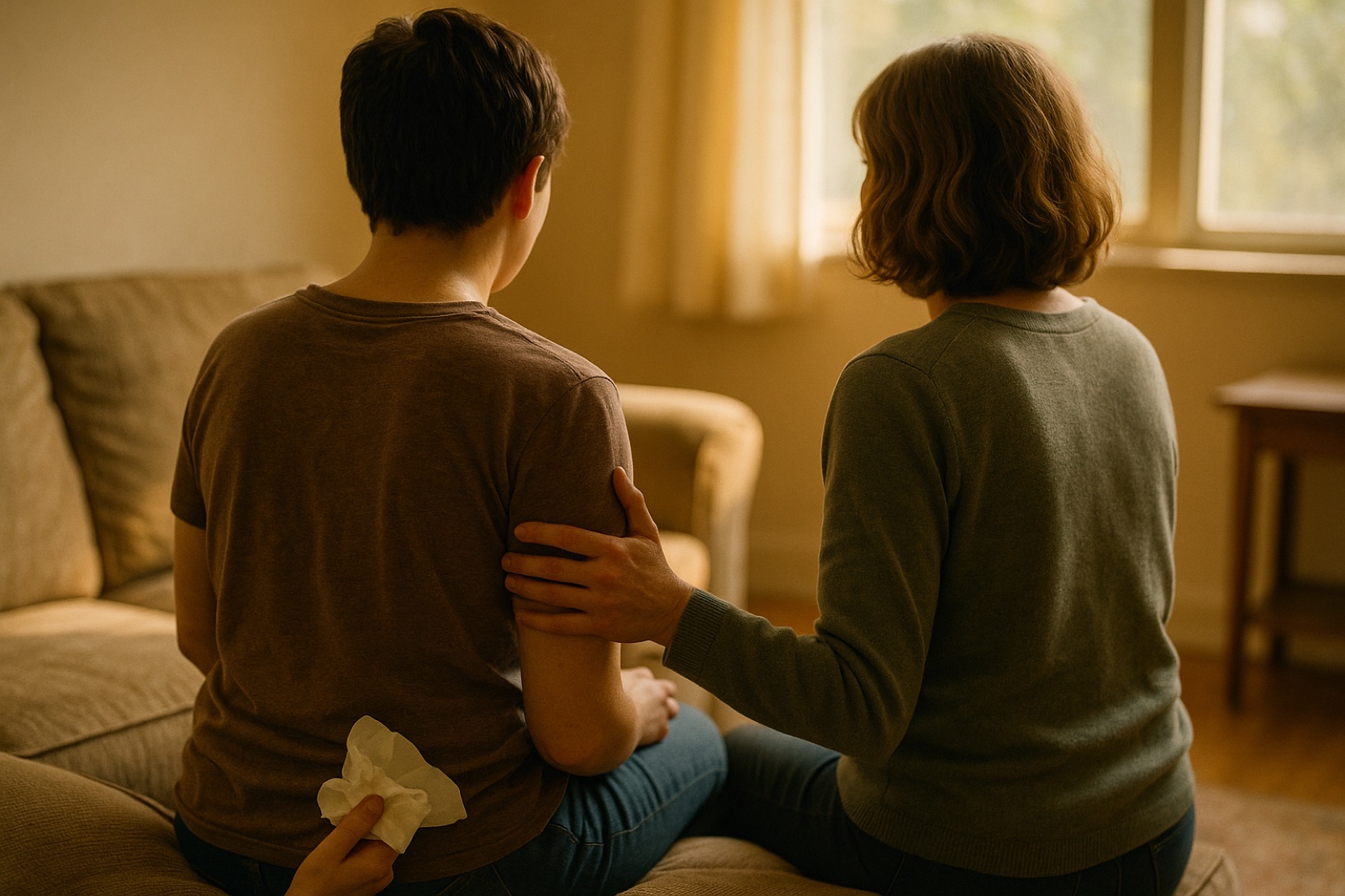
- If you can, do not cry alone. Support during the episode was the strongest predictor of feeling better. It does not have to be a big conversation — being on a call, sitting near someone, sending one honest message all count as not being alone.
- If no one is available, work the other two levers. Does anything about the situation move, even slightly? Can you see it differently than you did this morning? Those were the other two factors linked to feeling better, and both are free.
- Stop treating a cry that did not help as a personal failure. In the largest look at real crying episodes, a large minority got no lift from it either. That is a known outcome, not a flaw in you.
And if you are in that two-in-the-morning version and want something to hold rather than advice to follow, this free Bible verse for how I feel finder will meet you at whatever you are actually feeling instead of the feeling you think you should have.
Common questions about crying and mood
Do emotional tears really contain stress hormones?
The claim comes from research by biochemist William Frey in the 1980s, who reported that emotional tears differ chemically from reflex tears. That finding has never been independently replicated in the decades since, according to Tilburg University crying researcher Ad Vingerhoets. It has not been disproven either — it simply remains unconfirmed. Separately, the volume of fluid in a cry is far too small for removing any substance through tears to plausibly change how a person feels.
How long after crying do you feel better?
Longer than most people expect. In a 2015 study by Gračanin, Vingerhoets and colleagues published in Motivation and Emotion, sixty participants watched sad films; those who cried felt worse immediately afterwards, returned close to their starting mood about twenty minutes later, and were below their original baseline — meaning better than before — at ninety minutes. Those who did not cry showed no mood change at any point.
Why does crying sometimes make you feel worse?
Crying does not reliably improve mood for everyone. In a review of more than three thousand real crying episodes published in Current Directions in Psychological Science in 2008, most people reported feeling better, but around a third reported no improvement and roughly one in ten felt worse. People with limited insight into their own emotions, and people living with anxiety or mood disorders, were least likely to feel better afterwards.
What actually makes crying help?
The strongest predictor identified in the research is receiving support from another person during the crying episode. Two other factors were also linked to feeling better: the situation that triggered the crying reaching some resolution, and the person arriving at a new understanding of what happened. The benefits appear to come from what surrounds the crying rather than from the tears themselves.
Is crying good for you?
Crying appears to be beneficial under certain conditions rather than automatically. Evidence supports a physical calming effect, with the body’s settling branch of the nervous system staying active after crying begins, and self-reports show most people feel better eventually. But the effect depends heavily on context — particularly whether the person was alone — and researchers do not describe crying as a guaranteed release.
Your turn
Here is what we would genuinely like to know: do you think crying in front of another person is a strength or a weakness? Most cultures have a strong opinion about this and they do not agree with each other. Tell us which side you land on in the comments — and whether the people around you growing up would have said the same.
Worth passing on
If this was useful, here it is condensed for someone who needs it:
Turns out the “tears flush out stress chemicals” thing was never actually replicated. What the research does show: you feel worst right after crying, and better than baseline about 90 minutes later. So if you judge a cry by the first ten minutes, you’ll always think it failed. https://bgodinspired.com/index.php/health-and-wellness/why-do-i-feel-better-after-crying/
The biggest thing separating people who feel better after crying from people who don’t isn’t the crying. It’s whether someone was with them. Tears are a signal, not a valve — and a signal sent to nobody at 2am is the version least likely to help. https://bgodinspired.com/index.php/health-and-wellness/why-do-i-feel-better-after-crying/
About a third of people report no improvement in mood after crying, and roughly one in ten feel worse. If “just have a good cry” has never worked for you, that’s a documented outcome — not something wrong with you. https://bgodinspired.com/index.php/health-and-wellness/why-do-i-feel-better-after-crying/