 0
0
 0
0
The Prophet Who Won Everything, Then Asked to Die
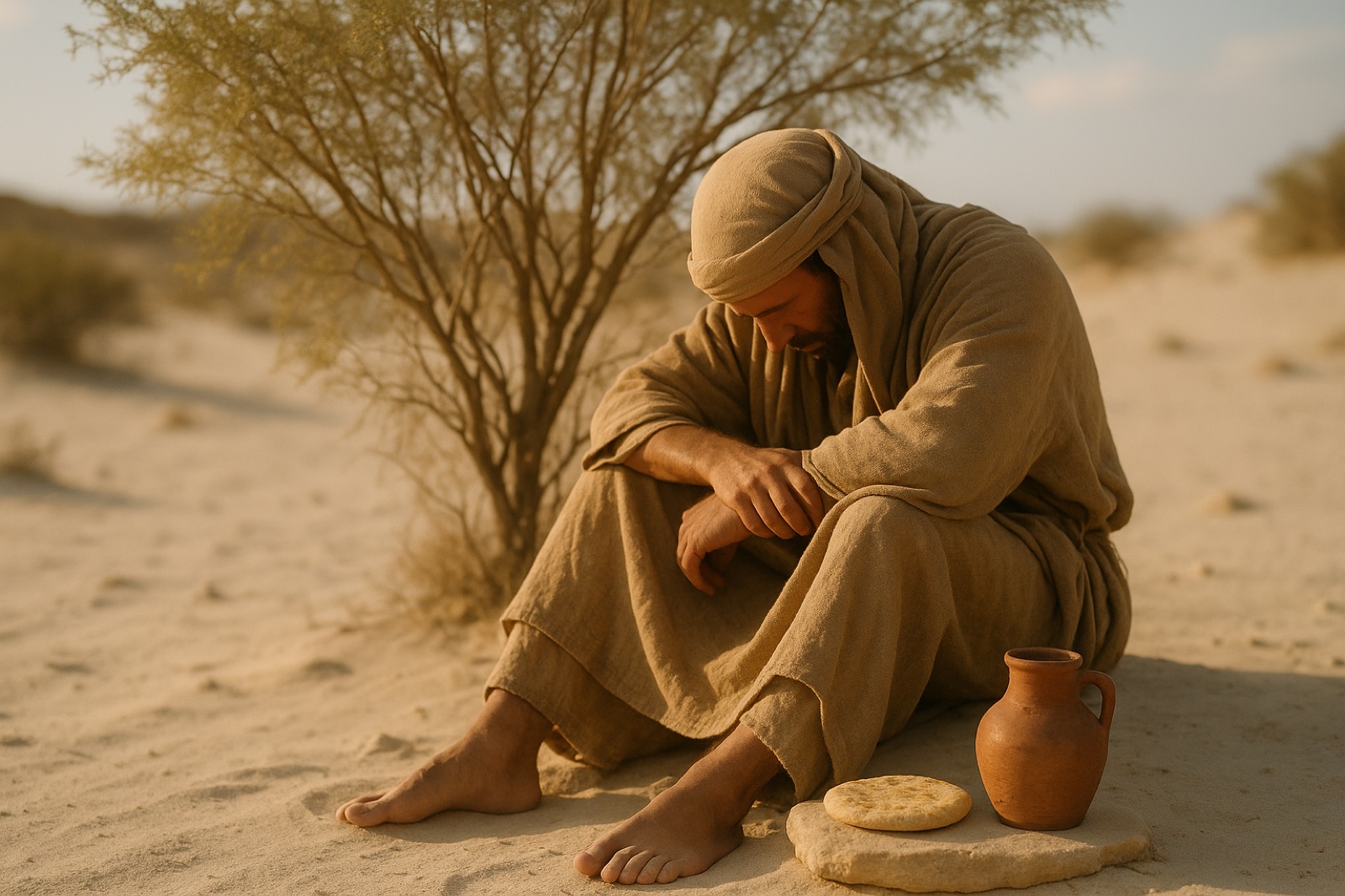
Elijah ran ahead of a king’s chariot the whole way to Jezreel, soaked through, at the highest point of his life. One message from Jezebel later he was a day’s walk out into the desert, sitting under a juniper tree, asking God to end him. Two chapters. Almost no distance in between.
Spiritual exhaustion rarely announces itself while the work is still going well. It shows up on the far side of the win, when the adrenaline drains out and there is nothing underneath it holding you up. That is the part of Elijah’s story people skip past on the way to the dramatic bit on the mountain.
There is a modern name for the slower, office-shaped version of this. In March 2025 the training company TalentLMS surveyed 1,000 employees in the United States and called what it found quiet cracking — workplace satisfaction eroding from the inside while the person keeps turning up and keeps delivering. In that survey, 54% reported experiencing it at some level, and 20% said they felt it frequently or constantly. Elijah’s collapse was neither quiet nor slow. But the shape rhymes: the breaking starts underneath, and it starts after the fight, not during it.
Sleep First. Food Second. Orders Much Later.
Read what actually happens next, because it is almost stubbornly practical. “And as he lay and slept under a juniper tree, behold, then an angel touched him, and said unto him, Arise and eat” (1 Kings 19:5). He finds a cake baked on coals and a jug of water. He eats, drinks, and lies straight back down. Then it happens a second time: “And the angel of the LORD came again the second time, and touched him, and said, Arise and eat; because the journey is too great for thee” (1 Kings 19:7).
Two meals. Two sleeps. No correction. No plan. No reminder of what he had been called to do and was currently not doing.
One detail in that second visit is worth sitting with. The angel does not tell him he is being dramatic. The angel says the journey is too great for thee — which is an agreement, not a rebuke. The load really was heavier than the man carrying it, and heaven said so out loud before it said anything else. If you have been quietly waiting for permission to admit that, it was given to a prophet three thousand years ago, in the desert, with his mouth full.
The instructions did come. They arrive in verse 15, after forty days of walking, at a mountain, to a rested and fed man: go and anoint Hazael, anoint Jehu, anoint Elisha. Real work, and hard work. But not first. This is the same order Jesus later used with His own worn-out friends, which is worth reading if the idea of resting before you have earned it still feels like cheating — you don’t have to earn rest first.
The Question God Asked Twice, and the Answer That Never Changed
At Horeb, God does not open with a command. God opens with a question: “What doest thou here, Elijah?” (1 Kings 19:9). His answer is a speech about how faithful he has been and how thoroughly everyone else has failed, ending on the line that gives the whole scene away: “and I, even I only, am left; and they seek my life, to take it away.”
Then comes the famous part. A wind strong enough to break rocks, an earthquake, a fire — and God in none of them. What follows is rendered in the King James as “a still small voice.” The Hebrew behind it, qol demamah daqqah, sits closer to “a sound of thin silence.” Not quite a whisper. A hush with something inside it. Scripture is describing a quiet you can hear, which is a strange thing to write down and a stranger thing to experience.
Here is what almost nobody points out. After the mountain, after the silence, after the voice, the question comes again — and Elijah’s answer is the same one, almost word for word (set 1 Kings 19:10 beside 19:14 and see). The encounter did not talk him out of his despair. He came down off that mountain still saying he was the only one left.
So it was answered a different way. Not with an argument, but with two facts. First: “Yet I have left me seven thousand in Israel, all the knees which have not bowed unto Baal” (1 Kings 19:18). He was simply wrong about being alone, and he was told so plainly — but only after the sleeping, the eating and the silence, never before. Second: Elisha, a named person, told to follow him. The cure for I only am left was not a better feeling. It was a companion and a job.
Actions to Take This Week
Sleep before you solve — take the one night this week you would normally stay up fixing something, and go to bed instead.
Eat one real meal sitting down, away from a screen, on the day your calendar looks worst.
Name one person, out loud or in a message, who is still standing with you, which is the specific antidote to believing you are the last one left.
A Prayer for Spiritual Exhaustion
God, I am tired in a way that sleep has not fixed. I have kept going. I have kept showing up. And underneath all of it something has been quietly coming apart, and I have not said that out loud until right now. I am not asking You to explain it yet. Just meet me the way You met Elijah — rest first, food second, the rest of it later. Feed me. Sit with me. Please do not leave. Amen.
Journal Prompts
- What is the thing you are still performing well while it comes apart underneath?
- When did you last rest before you had earned it, and what stopped you every other time?
- Elijah said, “I only am left.” Where does that sentence feel true for you, and what evidence have you not been counting?
- If the question came to you today — what doest thou here? — what would you honestly answer?
Share This
The first thing God gave a man who had just asked to die was a nap and a meal. Not a lecture. Not a plan. Sleep, food, and then both again, because the road really was too long for him.
#SpiritualExhaustion #Elijah #1Kings19 #RestIsHoly #FaithAndBurnout
Q&A: What God Did When Elijah Finally Cracked
Is spiritual exhaustion a sign of weak faith?
Not according to 1 Kings 19. Elijah collapses immediately after the most public act of faith in his life, and the response he gets is food, sleep and an angel agreeing that the load is too heavy. Nothing in the passage treats his exhaustion as a failure of belief.
What did God give Elijah first in 1 Kings 19?
Sleep, then a cake baked on coals and a jug of water, then more sleep, then a second meal. The assignment — anoint Hazael, Jehu and Elisha — does not arrive until verse 15, after forty days of travel.
Why did Elijah want to die after his greatest victory?
The text gives the trigger as Jezebel’s threat on his life (1 Kings 19:2), arriving right after he had run ahead of Ahab’s chariot to Jezreel. Scripture does not psychoanalyse him, but it records the sequence carefully: the peak, the threat, the flight, the collapse.
What does “still small voice” mean in Hebrew?
The phrase is qol demamah daqqah, literally something like “a sound of thin silence.” Modern translations render it as a gentle whisper or a low whisper. The King James “still small voice” keeps the paradox: a quiet that carries something.
Is quiet cracking the same thing as burnout?
TalentLMS, which coined the term in 2025, describes quiet cracking as workplace satisfaction eroding from within — disconnection and stalled growth rather than the visible exhaustion burnout is usually pictured as. The two overlap, but quiet cracking is defined by how little of it shows on the outside.
Spiritual Exhaustion Is Not Spiritual Absence
The man who ran ahead of a chariot and the man who asked to die under a bush are the same man, one day apart. Nothing had gone wrong with his calling. He was simply spent, and being spent is not the same as being abandoned — it is usually just unattended. God attended to it in the plainest possible order: rest, food, silence, then truth, then a companion. If the crash tends to arrive for you right after the finish line rather than before it, there is an old word for that pattern, and a Greek word for the kind of rest that happens inside the work rather than after it.
If you are somewhere under that tree right now, say so in the comments. Not the tidy version. The real one. Somebody reading this is sitting under the same branches thinking they are the only one left.
What God Did When Elijah Finally Cracked on YouTube