 0
0
 0
0
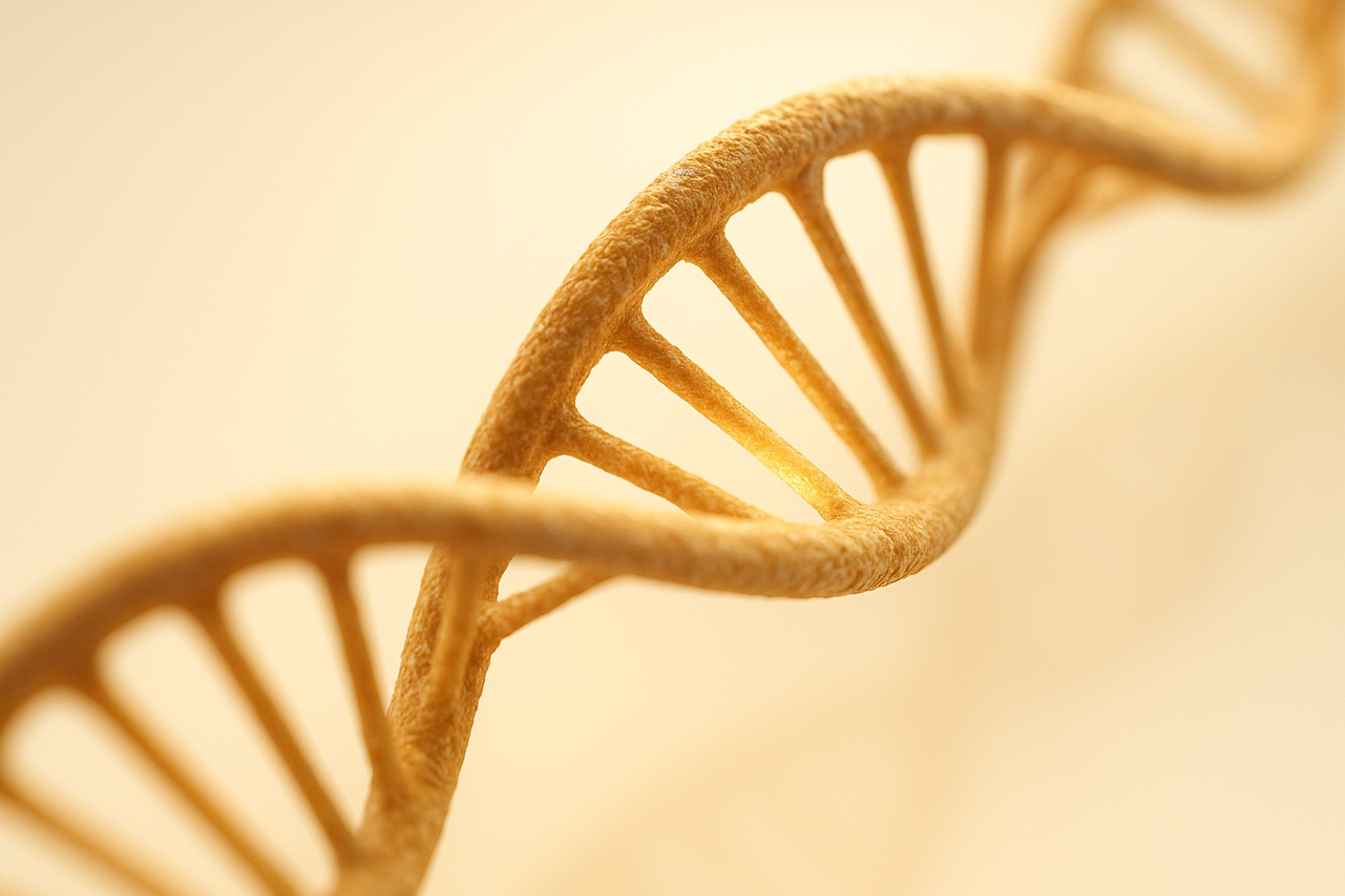
Inside almost every cell in your body there is a strand of DNA that would stretch about two metres if you pulled it straight. Written along it are roughly six billion chemical letters.
There are no spaces. No full stops. No capital letter marking where a sentence starts. Just letters, running edge to edge, six billion of them.
And yet right now, inside you, the machinery that reads all this is finding the exact spot where each instruction begins. Not three letters early. Not thirty letters late. Exactly there. In August 2026, researchers at the University of California San Diego announced they had used AI to decode a big piece of how that works, and the piece they cracked has a name most people have never heard: the DNA initiator.
What the DNA initiator actually does
Think of a gene as a set of instructions. Before anything can be made from those instructions, the cell has to answer one question first: where does this start?
The initiator is the answer. It is a short stretch of DNA sitting right at the front of the instruction, and it marks the spot where reading begins. Nothing gets built until that mark is found. Not a protein, not a cell, not a heartbeat.
Scientists have known the initiator existed for decades. What they could not do was read it. Unlike some other signals in DNA, the initiator does not follow one tidy, repeating pattern you can spot by eye. It varies. So for years it was a bit like knowing a friend’s handwriting is in a stack of papers somewhere, without being able to describe what makes it theirs.
How they finally read it
The team, led by graduate researcher Torrey Rhyne-Carrigg in the laboratory of Professor James T. Kadonaga, did something fairly blunt and fairly brilliant. Instead of trying to reason out the pattern, they built roughly 500,000 different versions of the initiator and measured how well each one actually worked.
Then they handed all of it to machine learning and let the models find what the eye could not.
It worked. As Kadonaga put it, the models gave for the first time, strong predictions of the presence or absence of the initiator in human genes.
With that pattern in hand, the researchers could finally go looking through the genome for it — and they found it in about 60% of promoters. The work was published in the journal Genes & Development, and the university announced it in August.
That is a genuinely large number. Roughly three out of every five instructions in the human genome carry the same little mark at the front saying begin here.
The part almost nobody reported
Here is where it gets more interesting than the headlines suggested.
A lot of the coverage described this as decoding the “on switch” of human DNA — one hidden switch, finally cracked. The paper itself is more careful, and more honest. It states plainly that there are no universal core promoter elements, and that many human promoters carry none of the known ones at all.
In other words: there is no single switch. There never was.
And by the researchers’ own accounting, roughly 30% of human promoters contain none of the recognised starting signals. None. Not the initiator, not any of the others catalogued over forty years of work. Something is telling those instructions where to begin, and at the moment nobody knows what it is.
Kadonaga did not oversell it either. He described the new model as a small but important part
of the gene expression code — the code that decides when, where and how much each of your genes is switched on. Six billion letters. This is one signal in one region at the front of some of them.
That kind of restraint is easy to skip past. It shouldn’t be. It is the difference between a finding and a headline.
Why a mark, and not a mechanism?
Sit with the shape of the thing for a moment, because it is strange.
You might expect a cell to start building the way a factory does — with material, with parts, with something physical arriving first. That is not what happens. What comes first is a signal. A short pattern that means something. The machinery has to read before it can make.
Biology is full of this once you notice it. It is the same reason building a living cell from raw chemical parts turned out to be so much harder than assembling the ingredients, and the same reason a single cell can become a brain with 170 billion neurons each sitting in exactly the right place. The parts were never the hard part. The instructions were.
Which is an old idea, older than any of this.
The oldest accounts of how things began do not open with dust, or heat, or matter. They open with speech. Something is said, and then things are. For a long stretch of history that read like poetry standing in for chemistry — a nice way of saying something nobody could explain yet.
It is a little harder to read it that way now, sitting in front of a genome that will not build a single thing until it finds the mark that tells it where to begin.
What is still unread
None of this closes the question. If anything, it opens it wider.
We now have a decent description of one starting mark, found at the front of a majority of promoters. We have a clear admission that no mark is universal. And we have roughly a third of the genome’s promoters starting correctly, every second of every day, by a signal nobody has learned to recognise.
That last part is worth carrying around with you. Right now, in your own cells, instructions are being read correctly by something we cannot read at all.
People have always found that kind of gap uncomfortable — and it is fair enough, because a gap can feel like a threat. But it is also the only place discovery has ever happened. Every mark we can now read was, not long ago, in exactly that pile. If you enjoy standing at the edge of what is known, you might like our free How Old Is the Universe? explorer — same territory, much bigger scale.
Six billion letters. No spaces. And somehow, reliably, something knows where to start.
Frequently asked questions
What is the DNA initiator?
The DNA initiator is a short sequence of DNA located at the front of a gene’s promoter region, marking the precise spot where the cell’s machinery begins converting genetic instructions into a functional product. It is one of several known “core promoter elements.” Scientists have known it existed for decades but could not reliably identify it by sequence, because its pattern varies rather than repeating exactly.
What percentage of human genes contain the initiator?
Research from the University of California San Diego, published in Genes & Development in 2026, found the initiator present in about 60% of promoters. Some news coverage of the study reported this as 60% of human genes; the paper’s own wording refers to promoters, which is the more precise description.
How did researchers decode the DNA initiator?
A team led by graduate researcher Torrey Rhyne-Carrigg in Professor James T. Kadonaga’s laboratory built roughly 500,000 different variants of the initiator sequence and measured the gene expression activity of each one using high-throughput DNA sequencing. They then trained machine learning models on that data, and the models learned to predict the presence or absence of an initiator from the DNA sequence alone.
Does this mean the human gene expression code has been solved?
No. Kadonaga described the finding as “a small but important part” of the gene expression code. The study also notes that there are no universal core promoter elements, and that roughly 30% of human promoters contain none of the currently known starting signals — meaning the mechanism that starts those genes has not yet been identified.
What is a core promoter?
A core promoter is the stretch of DNA immediately surrounding the point where transcription of a gene begins. It contains short signal sequences, called core promoter elements, that help the cell’s machinery locate and start reading a gene. The initiator is one such element; the TATA box is another. No single element appears in every promoter.
A question worth arguing about
Science reporting almost always frames a discovery as a lock being opened — “the code cracked,” “the switch decoded.” The researchers here were noticeably more careful than that.
So which do you think serves people better: the confident headline that gets the finding read by millions, or the careful wording that gets it understood by far fewer? Is a little overstatement a fair price for reaching people — or does it quietly cost us something? Tell us where you land in the comments.
Share this
Short version:
Your DNA has six billion letters and no spaces. AI just decoded the mark that tells a cell where to start reading — and what starts the other 30% is still unknown. https://bgodinspired.com/index.php/bgodinspired-news/bgodinspired-science-news/ai-decoded-dna-initiator-gene-start/
Longer version:
I did not expect a genetics story to sit with me this long. Researchers used machine learning on half a million DNA variants to finally read the “initiator” — the mark at the front of a gene that says begin here. Nothing gets built until it’s found. And the honest part, which most coverage skipped: about a third of human promoters carry no known start signal at all. They still work. We just can’t read them yet. https://bgodinspired.com/index.php/bgodinspired-news/bgodinspired-science-news/ai-decoded-dna-initiator-gene-start/
For the sceptics:
Headlines said scientists decoded DNA’s “on switch.” The actual paper says there is no universal switch and about 30% of promoters have no known element at all. Worth reading what the researchers actually claimed. https://bgodinspired.com/index.php/bgodinspired-news/bgodinspired-science-news/ai-decoded-dna-initiator-gene-start/