 1
1
 0
0
There’s a version of Jesus that a lot of people carry around in their heads — standing apart from the crowd, untouchable, always calm, never rattled. A kind of spiritual superhero in a robe.
And if that’s the version you learned, it makes sense that following him would feel distant. Like reading a biography of someone so extraordinary that their life offers no real map for yours.
But that’s not the Jesus you find when you actually read his story.
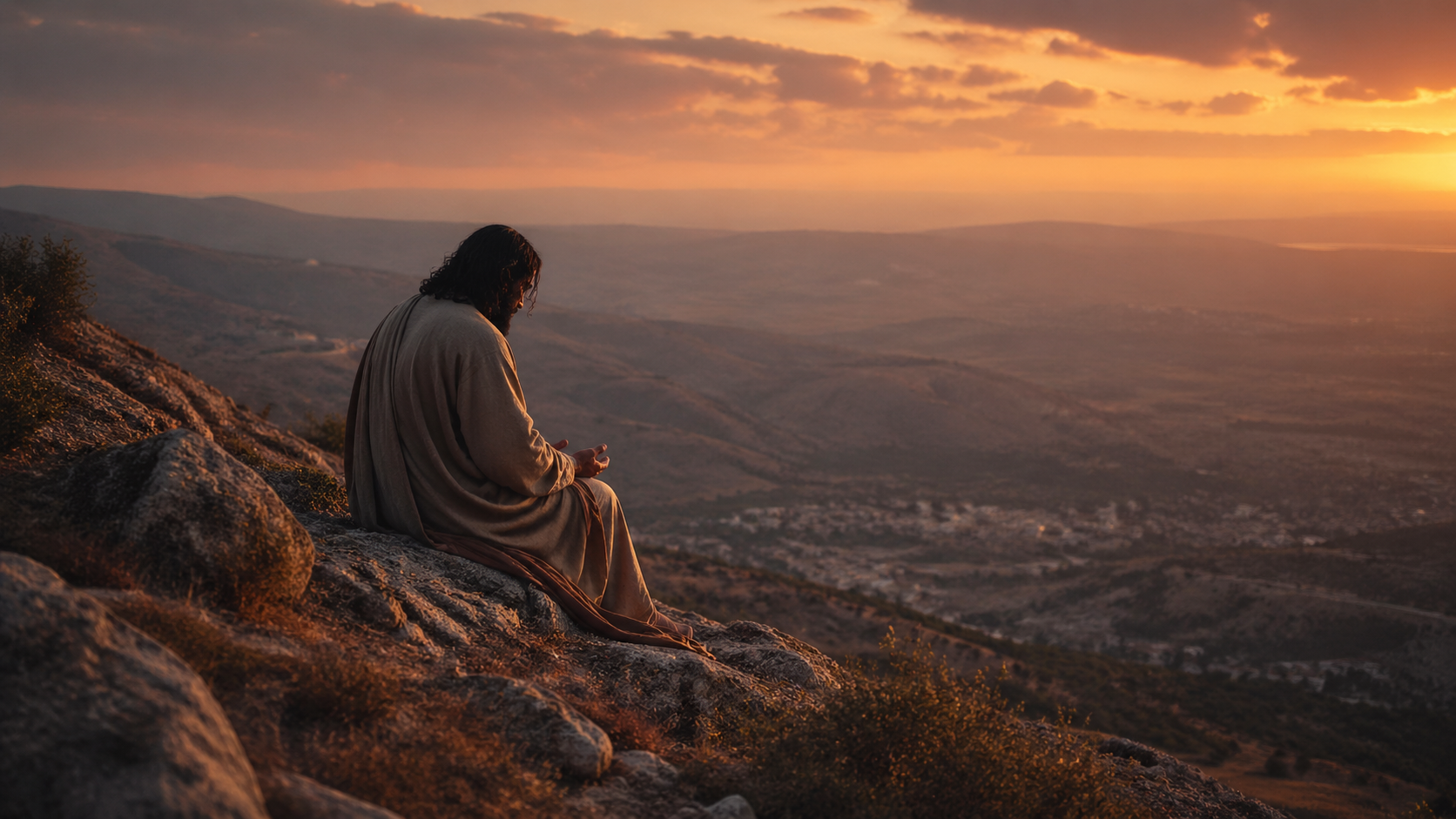
The Jesus of the Gospels is someone who got tired. Someone who cried. Someone who, in his darkest hour, felt completely alone. He was — and Christians believe this is the point — fully human. Not human the way we’re human on a good day. Human the way we’re human on the hard days too.
Here are five moments from his life that might change how you see him.
1. He Went Into the Wilderness Hungry and Alone
Right after his baptism — a high point, a moment of affirmation — Jesus was led into the desert for forty days. He didn’t eat. He was isolated. And by the end of it, he was exhausted and being confronted with some of the oldest temptations in the human playbook: Take the shortcut. Prove yourself. Grab what you could have right now.
Sound familiar?
There’s something worth sitting with here: Jesus didn’t go into the wilderness because something had gone wrong. He went right after a moment of clarity and purpose. And still — he faced doubt, hunger, and the very human pull toward easier paths.
The wilderness isn’t a sign you’re off track. For Jesus, it came with the territory of being human.
2. He Needed to Get Away From People
If you’ve ever hit a wall after too many social obligations, you might be surprised to find that Jesus did too.
Throughout the Gospels, after moments of intense demand — crowds pressing in, people reaching for him, need after need — Jesus would slip away. To a quiet place. To pray. To be alone.
He didn’t power through indefinitely. He didn’t perform strength when he needed rest. He recognized his own limits and honored them.
For someone who is trying to figure out what it means to live faithfully, this is actually significant. The model Jesus sets isn’t endless output. It’s rhythm. Work, then rest. Presence, then solitude. Giving, then returning to the source.
3. He Wept
This is one of the shortest verses in the Bible — “Jesus wept” (John 11:35) — and one of the most quietly stunning.
His friend Lazarus had died. He knew, as the story goes, that he was about to raise him. And yet when he saw the grief of those who loved Lazarus, he didn’t stand apart from it. He felt it. He cried.
He didn’t skip the sorrow to get to the miracle.
This tells you something about who Jesus is. He’s not a God who watches grief from a safe distance and waits for it to be over. He steps into it. He weeps inside it. Whatever you believe about his nature, the moment is human — raw, present, moved by love.
4. He Asked for Another Way
The night before his crucifixion, Jesus went to the Garden of Gethsemane to pray. What he prayed is not the language of someone with no fear. He asked, if it was possible, to be spared what was coming.
He didn’t want to go through it.
That is not a small thing. It’s easy to read the Passion story as inevitable — a man marching calmly toward a fate he accepted without flinching. But Gethsemane tells a different story. He struggled. He sweated. He asked for another way. And then, in the same breath, he surrendered.
The surrender isn’t less meaningful because the struggle came first. It might be more meaningful. Anyone can comply with something they’re not afraid of. What Jesus shows in that garden is a willingness to walk through genuine fear.
5. He Cried Out From the Cross
This may be the most human moment of all.
Near the end of the crucifixion, Jesus called out — and the words he used were from Psalm 22: “My God, my God, why have you forsaken me?”
He felt abandoned. In his most suffering moment, the silence of heaven felt unbearable.
If you’ve ever prayed and felt like no one was there, you’re not experiencing something Jesus would look down on. You’re in the company of Jesus himself.
That cry from the cross doesn’t mean God left. But it means Jesus felt the weight of feeling left. He went there, into that darkness, and he named it.
So What Does This Mean For You?
If you’re new to faith — or just trying to figure out what it means to follow Jesus — here’s a starting point: you’re not following a distant, untouchable ideal. You’re following someone who knew what it was to be tired, afraid, overwhelmed, and alone.
That doesn’t make him less worth following. It makes him a more credible guide.
Christians talk about Jesus as the blueprint for how to live — not because his life was easy or painless, but because he showed what it looks like to stay grounded, stay loving, and stay faithful when life is hard.
Want to Walk Through His Life, Day by Day?
If this resonated with you, 30 Days Walking with Jesus was written for exactly this kind of journey.
It takes 30 key moments from Jesus’ life — his birth, his baptism, his miracles, his teachings, his death and resurrection — and walks through each one with reflection, prayer, and questions to help you apply what you’re learning to your own life.
It’s designed for people who are new to Christianity, returning to faith, or simply asking: Who is Jesus, and what does following him actually look like?
No theology degree required. Just a willingness to look at his life and see what it has to say to yours.