 0
0
 0
0
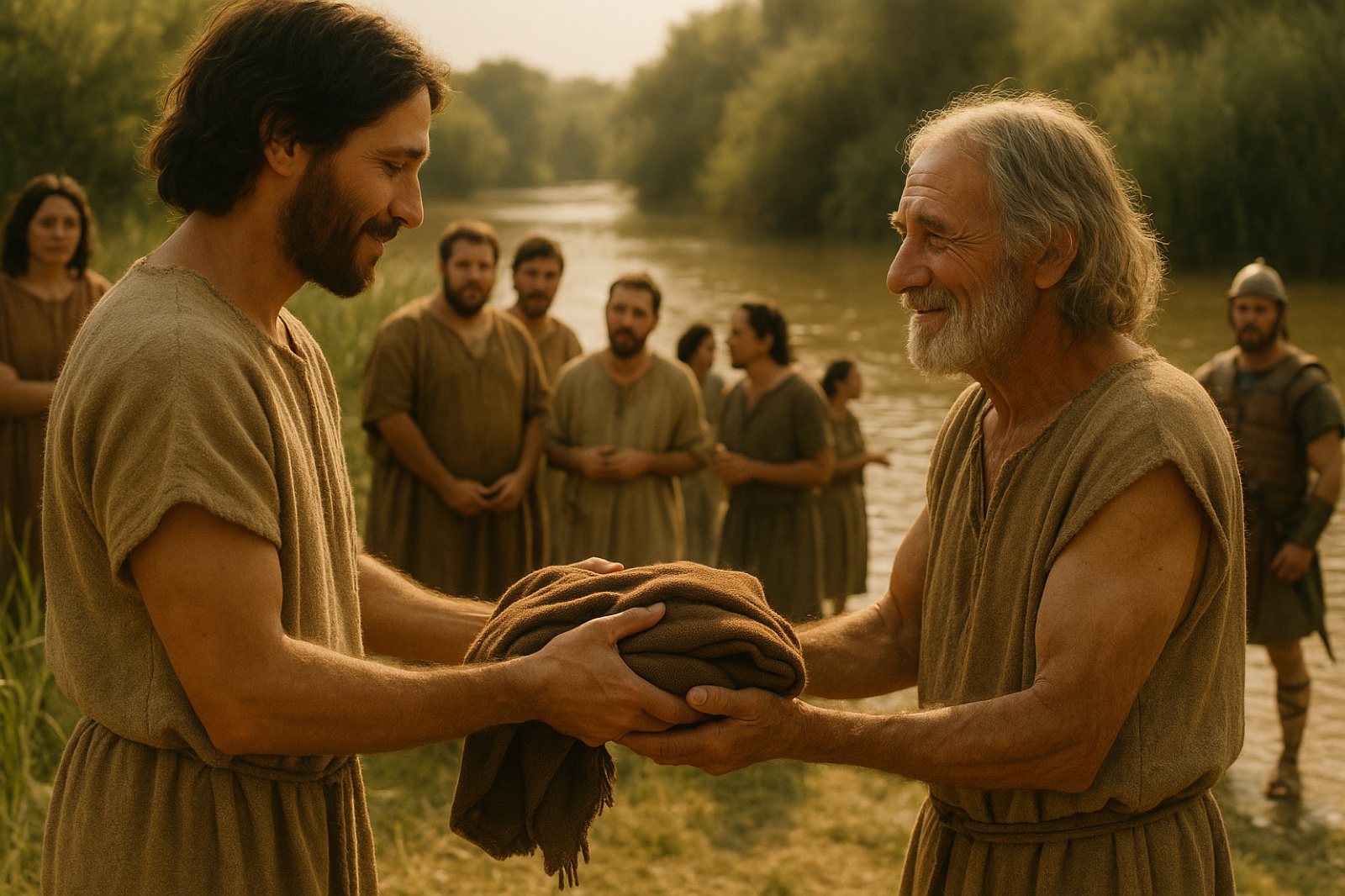
A crowd is standing on a riverbank, dripping or about to be. A preacher in rough clothes has just told them to stop leaning on their family tree and start producing something real. And somebody in that crowd asks the question you typed into a search bar tonight.
Not in fancy words. Just this: “What shall we do then?” (Luke 3:10). It is the plainest version of “how to repent” anyone ever asked. And the answer they got was so ordinary it is easy to read right past it.
The Day Three Groups Asked How to Repent
The preacher was John the Baptist, and Luke says he “came into all the country about Jordan, preaching the baptism of repentance for the remission of sins” (Luke 3:3). People came out in crowds. John did not soften it. He told them: “Bring forth therefore fruits worthy of repentance” (Luke 3:8).
Fruit. Something you can see. Something that grows where you actually live.
So they asked him what that looks like. Only Luke records what happened next, and he records it three times, because three different kinds of people asked the same question.
The ordinary crowd asked first. John said: “He that hath two coats, let him impart to him that hath none; and he that hath meat, let him do likewise” (Luke 3:11).
Then the tax collectors asked. These were the people everyone assumed were beyond hope, because they collected money for Rome and could pad the bill. They said, “Master, what shall we do?” John answered: “Exact no more than that which is appointed you” (Luke 3:13).
Then the soldiers asked. “And what shall we do?” John said: “Do violence to no man, neither accuse any falsely; and be content with your wages” (Luke 3:14).
What John Did Not Say
He did not tell anyone to feel worse. He did not hand them a prayer to recite perfectly. He did not tell the tax collectors to quit, or the soldiers to leave the army. He did not ask anyone to list every wrong thing they had ever done.
Each answer was about tomorrow, and each one was shaped like that person’s actual life. The coat. The tax ledger. The soldier’s hands and paycheck. Repentance was not a trip away from their ordinary day. It happened right inside it.
That is the gold nugget most people miss. When the question “how do I repent?” was actually asked out loud, the answer was not “go feel something.” It was “go back to your job, your table, and your closet, and treat people differently there.”
If you want the word behind all this, the New Testament word for repentance means a change of mind that turns into a change of direction. There is a whole piece on what metanoia really means if you want to go deeper. But Luke 3 shows you what that turn looked like on a Tuesday.
How to Repent: Ask John’s Question About Your Own Life
Here is a way to use this tonight. Ask the same question the crowd asked, but aim it at your real life, one place at a time.
- Where do I have “two coats”? Where am I holding extra that someone near me needs? Time, money, attention, a kind word I keep not saying.
- Where am I “exacting more than appointed”? Where do I take a little extra? At work, in an argument, in how much I expect from the people around me.
- Where am I “accusing falsely”? Who have I described unfairly, even just in my head? Who needs the truth told about them?
- Where am I not “content with my wages”? Where is resentment about what I have pushing me to treat people badly?
You will probably find one thing, not ten. Good. Start there. Name it honestly to God, and then decide one specific thing you will do differently tomorrow. That is fruit. If you want help with the words part, this guide on what to actually say when you repent to God walks through it.
The Tax Collector Who Did It Without Being Told
Sixteen chapters later, Luke tells a story that answers Luke 3 like an echo.
Zacchaeus “was the chief among the publicans, and he was rich” (Luke 19:2). A chief tax collector. The same line of work as the men who once walked up to John and asked what to do.
Jesus stopped under the tree Zacchaeus had climbed and said: “Zacchaeus, make haste, and come down; for to day I must abide at thy house” (Luke 19:5). No lecture first. No list of conditions. An invitation to dinner. The crowd grumbled that Jesus “was gone to be guest with a man that is a sinner” (Luke 19:7).
And then Zacchaeus stood up and said: “Behold, Lord, the half of my goods I give to the poor; and if I have taken any thing from any man by false accusation, I restore him fourfold” (Luke 19:8).
Look how specific that is. Half. Fourfold. The coat, and the tax ledger, the very things John had named. Nobody in the story tells him to say it. (Some readers take his words as describing what he already did; others read them as a decision made that day. Either way, notice how concrete he gets.)
Then comes the detail almost everyone reads past. Back in Luke 3, John warned the crowd not to say, “We have Abraham to our father.” Being born into the right family was not the point. Here in Luke 19, after Zacchaeus turns, Jesus says: “This day is salvation come to this house, forsomuch as he also is a son of Abraham” (Luke 19:9).
The man everyone had written off is the one Jesus calls a son of Abraham. And notice the order. The welcome came first. The turning came right after it.
What Changes for You
This is why repentance does not have to be a guilt spiral. You are not trying to feel bad enough to be let back in. You are answering an invitation that is already open, and the answer looks like your ordinary life, pointed a new direction.
Picture next week. You still go to the same job. You still sit at the same table. But you share the thing you used to hold onto. You stop padding the story. You say the true, kind thing about the person you used to complain about. Nobody sees a big moment, but you feel lighter, with less to hide.
And here is the honest part. One turn is a start, not a finish. Jesus began preaching with this same word: “Repent: for the kingdom of heaven is at hand” (Matthew 4:17). The people who followed Him did not repent once and move on. They walked with Him, day after day, and kept getting turned around by what they saw Him do. If you are wondering what that turn looked like for people who had just met Him, this piece on how to give your life to Christ follows a few of them.
A Path That Makes the Turn a Daily Walk
That is what 30 Days Walking with Jesus is built for. It walks through the life of Jesus in the Gospels one day at a time, in under 10 minutes a day. You get 30 short devotional videos (each under 60 seconds), 30 full-chapter audio readings, a complete PDF study guide with journal prompts, and 5 quick-reference scripture guides.
The journal prompts are a natural place to keep asking the crowd’s question for yourself (what shall I do, then?) about one real corner of your life at a time, while you watch how Jesus treated people.
It is free. No payment, no card, no upsell, and it is yours forever on any device. The words of Jesus should not sit behind a paywall.
Questions People Are Asking
Q: How do you repent, step by step?
A: Repenting means turning, not just feeling sorry. Name the specific thing honestly to God, stop defending it, and decide one concrete thing you will do differently tomorrow. In Luke 3, when crowds asked John the Baptist “What shall we do then?”, his answers were practical: share your extra coat and food, don’t take more than you are owed, don’t accuse people falsely. The turn shows up in ordinary actions.
Q: Do I have to feel really bad for repentance to count?
A: No. None of the answers John the Baptist gave in Luke 3:10-14 mention how sorry anyone felt. They are all about what people would do next. Feelings may come and go, but repentance is measured by a change of direction, not by how many tears come first.
Q: Do I have to quit my job or change my whole life to repent?
A: Not necessarily. When tax collectors and soldiers asked John the Baptist how to repent, he did not tell them to quit. He told tax collectors, “Exact no more than that which is appointed you,” and soldiers to do violence to no one, accuse no one falsely, and be content with their wages. Repentance usually changes how you live inside your ordinary life.
Q: What is an example of repentance in the Bible?
A: Zacchaeus in Luke 19 is one of the clearest. He was a rich chief tax collector. After Jesus invited Himself to his house, Zacchaeus said he would give half his goods to the poor and repay anyone he had cheated fourfold. Jesus answered, “This day is salvation come to this house.” His repentance was specific, and it came right after he was welcomed.