 0
0
 0
0
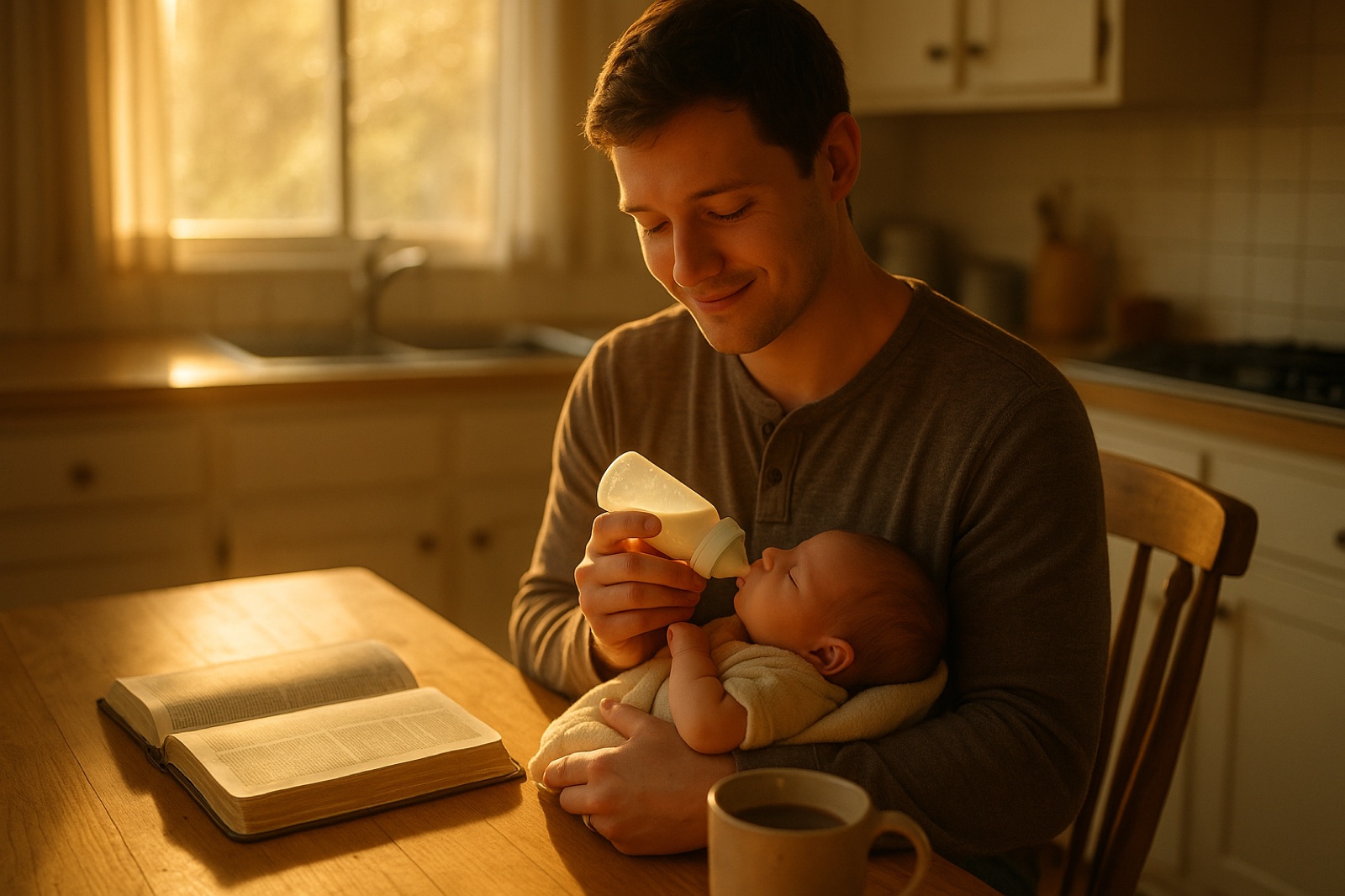
At three in the morning, a newborn can’t do a single thing on anybody’s list. It can’t hold up its own head. It doesn’t know its name. Nobody leaning over the crib is worried about any of that. The one thing everyone watches for is simple: is the baby hungry? Because hunger is how you know a new life is alive and growing.
If you typed “born again Christian” into a search bar, you might be quietly wondering whether those words describe you. Maybe someone asked you straight out and you froze. Maybe you don’t remember a big, emotional moment, and you’re afraid you missed something everyone else got. Here’s what might loosen your shoulders: one of the only people in the Bible who ever wrote the words “born again” answered that exact worry with that exact picture of a hungry newborn. By the end of this, you’ll know what the phrase means, the one sign worth looking for, and what to do tomorrow morning.
A Label the Bible Never Actually Uses
In the King James Bible, the words “born again” show up in just three verses. The word “Christian” (or “Christians”) also shows up in just three verses. The two are never put side by side. There is no verse that says “born again Christian.”
That matters, because a lot of people hear the phrase as a special kind of Christian, a more intense level you graduate into. The Bible doesn’t talk that way. In scripture, being born again isn’t a tier. It’s how a life with Jesus starts for anyone. Saying “born again Christian” is a little like saying “a born baby.” Every baby was born. That’s how they got here.
When people use the label today, they usually mean something good and simple: a person who has personally trusted Jesus, not just grown up near a church. That’s a fair meaning. Just don’t let it turn into a club you have to prove you belong to.
Two Places Say It. The Second One Gets Skipped.
Two of those three “born again” verses come from one night, when Jesus told a religious teacher named Nicodemus, “Except a man be born again, he cannot see the kingdom of God” (John 3:3, KJV). We walked through it in what it means to be a born again Christian, and there’s more on the man himself in who Nicodemus was.
The third verse is in a short letter that opens, “Peter, an apostle of Jesus Christ” (1 Peter 1:1, KJV). And here’s a small surprise: that same little letter is the only book in the King James Bible that uses both “born again” and “Christian.”
Why Peter, of All People?
Think about who Peter was. On the night Jesus was arrested, Peter stood by a “fire of coals” and warmed himself (John 18:18, KJV), and he said three times that he didn’t know Jesus. Luke records what happened next: “And Peter went out, and wept bitterly” (Luke 22:62, KJV).
After Jesus rose, He found Peter again. John says there was “a fire of coals there, and fish laid thereon, and bread” (John 21:9, KJV). Same kind of fire. Jesus asked Peter three times if he loved Him. And the very first job Jesus gave him afterward was this: “Feed my lambs” (John 21:15, KJV).
So when Peter writes about being born again, he isn’t describing a spiritual trophy. He’s describing what happened to a man who failed badly and was welcomed back anyway.
What Peter Said a Newborn Needs
Here is his line: “Being born again, not of corruptible seed, but of incorruptible, by the word of God, which liveth and abideth for ever” (1 Peter 1:23, KJV).
Now read just a few verses further, because this is the part almost everyone skips: “As newborn babes, desire the sincere milk of the word, that ye may grow thereby” (1 Peter 2:2, KJV).
Notice what Peter does not say. He doesn’t say newborns need to prove they were born. He doesn’t hand them a checklist of feelings. He doesn’t expect them to understand everything. He says they need to be hungry, and they need to be fed. The man Jesus told to “feed my lambs” grew up to write to spiritual newborns about milk.
Even the word “sincere” is gentle. The Greek word behind it is adolos, which means without deceit, or pure, with nothing mixed in. Just one verse earlier, Peter tells readers to lay aside “all guile,” and the Greek word for guile there is dolos. Put down the tricks; pick up the pure thing.
The One Sign Worth Looking For
If you’re wondering whether you’re really born again, Peter’s picture gives you a kinder question to ask: Do I want to know Jesus more?
Not “Did I cry at the right moment?” Just: is there some appetite there? Even a small one. Even one mixed with doubt and questions. A newborn’s hunger isn’t polished. It’s just real.
And if the appetite feels weak right now, Peter has a word for that too. The very next line says, “If so be ye have tasted that the Lord is gracious” (1 Peter 2:3, KJV). Tasting comes first. Craving grows from there. Nobody gets hungry for food they’ve never had.
Newborns Eat Small, and They Eat Often
A newborn doesn’t eat one enormous meal on Sunday and then go all week on it. It eats small amounts, over and over, and it grows without trying to grow.
That’s what a new life with Jesus looks like too. Not a heroic three-hour Bible marathon you can’t keep up. More like this: coffee still warm, phone face down, and a few quiet minutes with one moment from Jesus’s life. What He said to a worried woman. Who He ate dinner with. How He treated the person everyone else walked past. You close it and carry that one scene into your day.
Keep that up for a month, and things tend to shift. The Bible stops feeling like a locked building. Jesus stops being a name you know about and becomes someone you actually know. If you’re brand new and not sure what comes after that first yes, what to do as a new Christian is a good next read.
A Simple Place to Start Tomorrow
If the idea of small, daily feeding sounds right but you don’t know where to begin, that’s exactly why 30 Days Walking with Jesus exists. It’s a beginner-friendly reading plan that walks through the life of Jesus in the Gospels, one day at a time, in under 10 minutes a day.
It includes 30 short devotional videos (each under 60 seconds), 30 full-chapter audio readings you can listen to on a drive, a complete PDF study guide with journal prompts, and 5 quick-reference scripture guides.
And here’s the honest part: it’s free. No payment, no card, no upsell. You get instant access on any device, and it’s yours forever. The words of Jesus shouldn’t sit behind a paywall. A newborn doesn’t pay for milk.
Questions People Are Asking
Q: What is a born again Christian?
A: A born again Christian is someone who has personally trusted Jesus and received new spiritual life, rather than simply growing up around church. The Bible never actually puts the words “born again” and “Christian” side by side. In scripture, being born again is not a special level of Christian. It is how a life with Jesus begins for anyone.
Q: Where does the Bible use the phrase “born again”?
A: In the King James Bible, “born again” appears in three verses: John 3:3 and John 3:7, where Jesus speaks with Nicodemus, and 1 Peter 1:23, which says, “Being born again, not of corruptible seed, but of incorruptible, by the word of God, which liveth and abideth for ever.” A few verses later, 1 Peter 2:2 compares new believers to newborn babies who desire milk.
Q: Do you need a dramatic conversion experience to be born again?
A: No. The Bible does not give a required feeling or a specific emotional moment. In 1 Peter 2:2, the picture for new life is a newborn who is hungry for “the sincere milk of the word.” A real desire to know Jesus more, even a small one mixed with questions, matters more than how dramatic the starting moment felt.
Q: What should a new born again Christian do first?
A: Start small and stay consistent, the way a newborn is fed a little at a time. A few quiet minutes a day reading about the life of Jesus in the Gospels builds more than an occasional long session. 30 Days Walking with Jesus is a free, beginner-friendly plan that walks through the Gospels one day at a time in under 10 minutes a day.